

Executive Overview
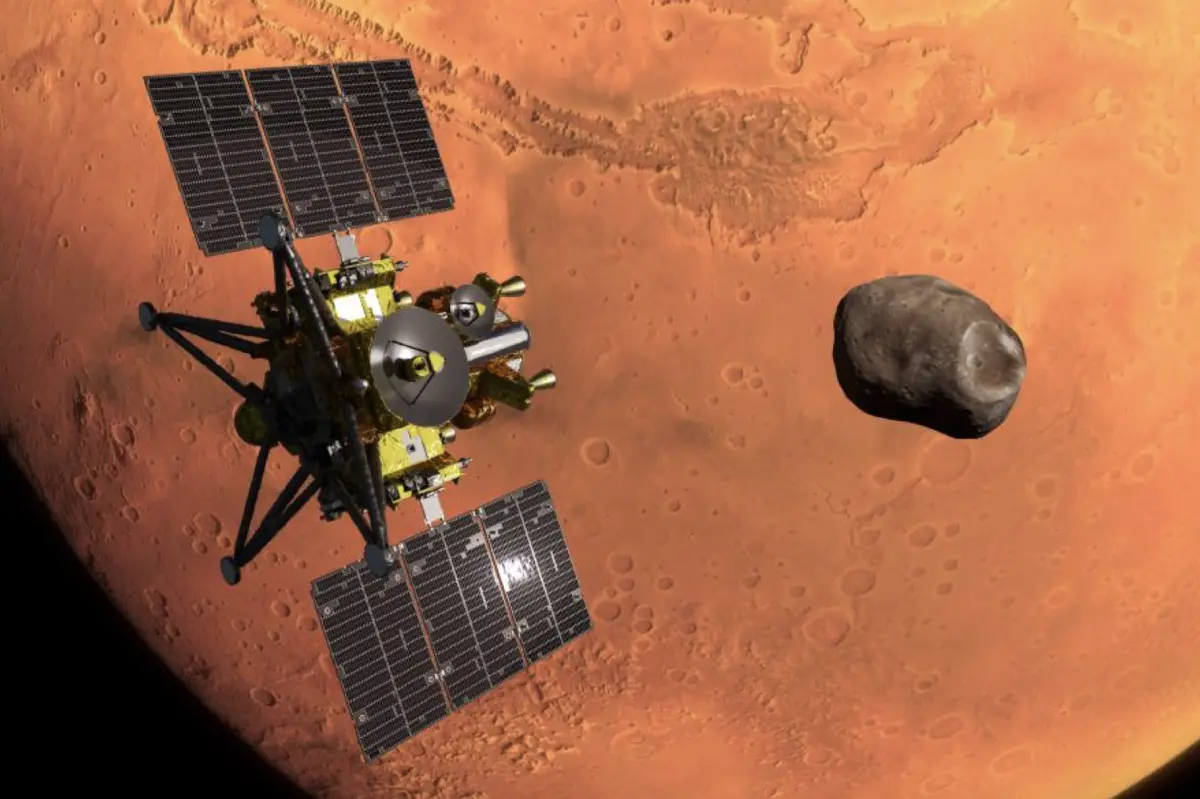
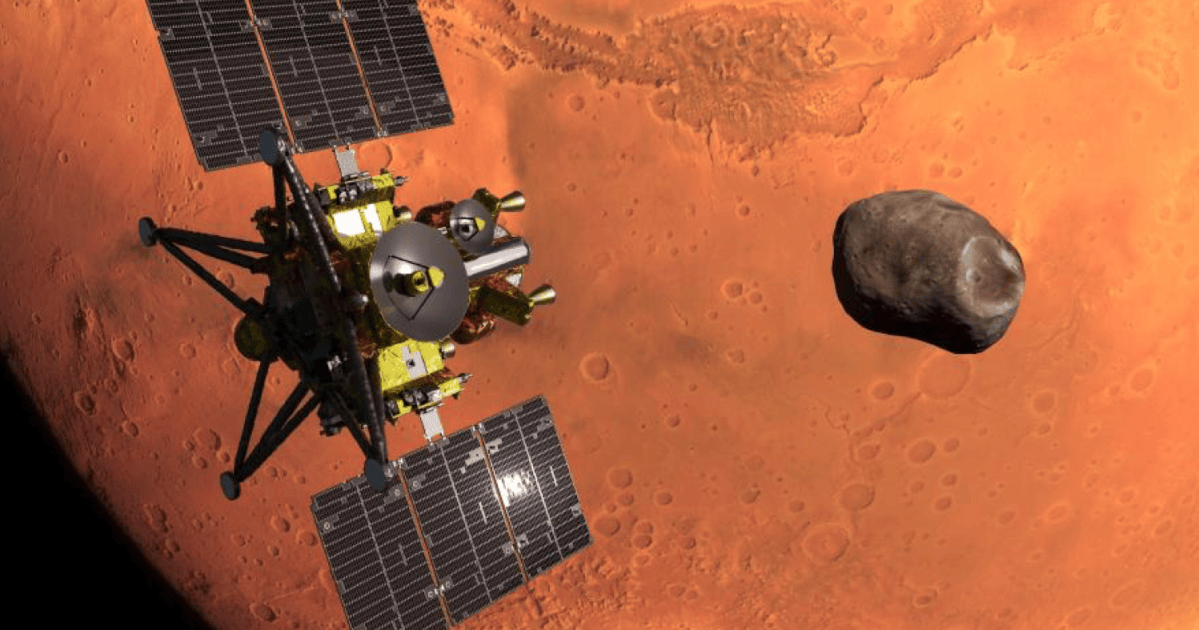
In a landmark milestone for interplanetary exploration, the Japan Aerospace Exploration Agency (JAXA) successfully launched its flagship Martian Moons eXploration (MMX) spacecraft. Blasting off aboard an H3 rocket from the Tanegashima Space Center in Kagoshima Prefecture, the mission marks a monumental leap forward in humankind’s quest to unravel the secrets of the Red Planet and its surrounding orbit.
Weighing an impressive 4,480 kilograms (9,877 pounds), the MMX is one of the largest and most complex spacecraft ever constructed by Japan. Its primary objective is as historic as it is challenging: to become the first spacecraft in history to successfully land on a Martian moon, collect pristine physical samples, and journey back to Earth.
While JAXA has previously demonstrated world-class technical prowess by landing on and returning samples from deep-space asteroids, the MMX mission introduces an entirely unprecedented set of gravitational, mechanical, and logistical hurdles. Operating within the complex gravitational well of both Mars and its largest moon, Phobos, the spacecraft relies heavily on precision engineering and massive fuel reserves. Furthermore, the mission places Japan at the forefront of an international planetary race, engaging in a high-stakes celestial timeline with global rivals as both space agencies and private sectors vie to bring back the first pristine pieces of the Martian system.
Detailed Chronology of the Launch and Trajectory
The countdown to the MMX launch culminated at precisely 4:41 a.m. local time on October 20, as the state-of-the-art H3 launch vehicle ignited its engines at the Tanegashima Space Center. Ascending through the pre-dawn skies of Kagoshima Prefecture, the rocket cleanly separated its stages, placing the massive robotic explorer into its preliminary Earth-parking orbit.
Telemetry data confirmed by mission controllers shortly after liftoff indicated that all primary and secondary systems were operating normally. The spacecraft is currently performing nominal health checks as it prepares for the complex series of orbital maneuvers required to break free from Earth’s gravitational pull and set a course toward the Martian system.
However, the path to this launch pad has been fraught with delays. The MMX mission was originally slated for a 2024 lift-off. Unfortunately, complex technical development hurdles regarding the heavy-lift H3 rocket caused critical timeline slips. Because Earth and Mars align in an optimal orbital configuration only once every 26 months, missing the 2024 launch window meant waiting years for the planets to re-align.
Despite these setbacks, JAXA’s engineering teams utilized the intervening time to rigorously test the spacecraft’s avionics, autonomous landing systems, and sampling mechanisms. With the successful October 20 launch now behind them, mission operators are shifting their focus to the multi-year interplanetary cruise, scheduled to culminate with a rendezvous at Mars and a historic touchdown on Phobos around the turn of the decade.
Supporting Context, Scientific Goals, and Technical Metrics
The scientific ambitions underpinning the MMX mission extend far beyond a mere technological demonstration. By targeting Phobos—the larger and more enigmatic of Mars’ two natural satellites, alongside Deimos—researchers hope to answer fundamental questions regarding the formation of the inner solar system.
Unlocking Planetary Genesis
Two primary hypotheses dominate current astrophysical models regarding the origin of Martian moons:
- Captured Asteroids: Phobos and Deimos were once primitive carbonaceous asteroids hailing from the main asteroid belt that drifted too close to Mars and were captured by the planet’s gravitational pull.
- Impact-Derived Debris: The moons coalesced from a vast ring of debris ejected into orbit following a catastrophic collision between Mars and a massive impactor early in the planet’s history.
By landing on Phobos, extracting subsurface and surface materials, and returning them to terrestrial laboratories, scientists will be able to analyze isotopic compositions and mineral signatures that can definitively confirm one of these theories.
The Martian Connection
Intriguingly, Phobos holds a hidden bonus for planetary scientists. Because Mars lacks a thick, protective atmosphere relative to Earth, meteorite impacts on the Martian surface routinely blast regolith and soil high into the atmosphere and out into space. Calculations suggest that roughly 0.1 percent of the material resting on the surface of Phobos is actually pristine Martian soil that traveled across the void and settled on the moon.
The MMX mission’s baseline requirement is to collect a minimum of 10 grams of material from Phobos. If current geological models hold true, this sample haul will naturally contain an estimated 0.01 grams of authentic Martian surface material. While seemingly minute, this fraction is more than enough for modern mass spectrometers and analytical laboratories on Earth to study the geochemical history of the Red Planet.
Engineering Feats and Fuel Dynamics
Executing a landing on Phobos might initially sound easier than landing on an asteroid, given that Phobos is up to ten times the physical size of previous sample-return targets like Ryugu or Itokawa. However, the true challenge lies in celestial mechanics: Phobos is tightly locked into the gravitational domain of Mars.
To accomplish its mission, the MMX must enter orbit around Mars, match velocities with Phobos, perform a delicate soft landing, anchor itself, acquire the required samples, and subsequently blast off from the moon to escape both Phobos’ and Mars’ combined gravity wells.
This multi-stage choreography demands an unprecedented amount of energy. Consequently, approximately 68 percent of the spacecraft’s total 4,480-kilogram mass at launch consists entirely of chemical propellant. Every gram of structural weight was heavily scrutinized to ensure the craft carried enough fuel to make the round-trip journey.
Official Statements and International Context
The launch of MMX has garnered significant international attention, not only for its scientific merit but also because it represents a key milestone in global space exploration dynamics. JAXA leadership has emphasized the spirit of international cooperation, noting that scientific instruments from international partners—including NASA, the European Space Agency (ESA), and the Centre National d’Études Spatiales (CNES) in France—are integrated into the spacecraft to maximize data return.
However, the mission also exists within a competitive geopolitical landscape. JAXA is not the only space agency racing to secure the first physical pieces of the Martian system. China’s national space program is aggressively developing its ambitious Tianwen-3 mission, which aims to land directly on the surface of Mars, collect roughly 500 grams of pure Martian soil, and transport it back to Earth.
Both the Japanese MMX mission and China’s Tianwen-3 are currently scheduled to complete their respective sample returns to Earth around 2031. This convergence creates a de facto photo-finish in planetary science history. If both nations adhere to their projected timelines, humanity may witness back-to-back technological triumphs as humanity physically brings home pieces of the Martian environment for the first time.
Nevertheless, experts note that such high-complexity endeavors carry inherent risks. Just as JAXA experienced launch vehicle delays that pushed MMX out of its original 2024 window, China’s Tianwen-3 program must navigate a similarly unforgiving launch schedule ahead of its planned 2028 window to avoid facing its own multi-year orbital delay.
Future Outlook: Beyond Mars and the Search for Life
As the MMX spacecraft cruises deeper into the solar system, the implications of its potential discoveries stretch far across astrobiology. Analyzing pristine samples from Phobos—and by extension, trapped traces of ancient Martian ejecta—will vastly refine our understanding of the Martian paleoclimate. Scientists will search for chemical biosignatures and markers of water-rock interactions that could indicate whether Mars ever harbored microbial life in its distant past, or if localized environments capable of supporting life persist today.
Beyond the immediate neighborhood of Mars, successful execution of sample-return architectures like MMX paves the way for deeper human and robotic expansion into the solar system. By mastering precision navigation, multi-body gravity management, and automated sample acquisition, space agencies are building the foundational toolkit required for crewed missions to Mars in the coming decades.
Once these pressing questions regarding our crimson neighbor are addressed, planetary scientists may finally redirect sustained focus toward other neglected corners of our solar system—such as Venus. Wrapped in dense, boiling clouds of sulfuric acid, Earth’s "twin" planet remains one of the most hostile yet least explored terrestrial worlds in our stellar neighborhood. As researchers half-jokingly ponder whether colonies of resilient extremophile microbes might be quietly waiting in the upper clouds of Venus, missions like MMX prove that humanity’s curiosity knows no bounds. For now, all eyes remain fixed on the heavens as Japan’s robotic pioneer charts its historic course toward the moons of Mars.







Belum ada komentar. Jadilah yang pertama berkomentar!