

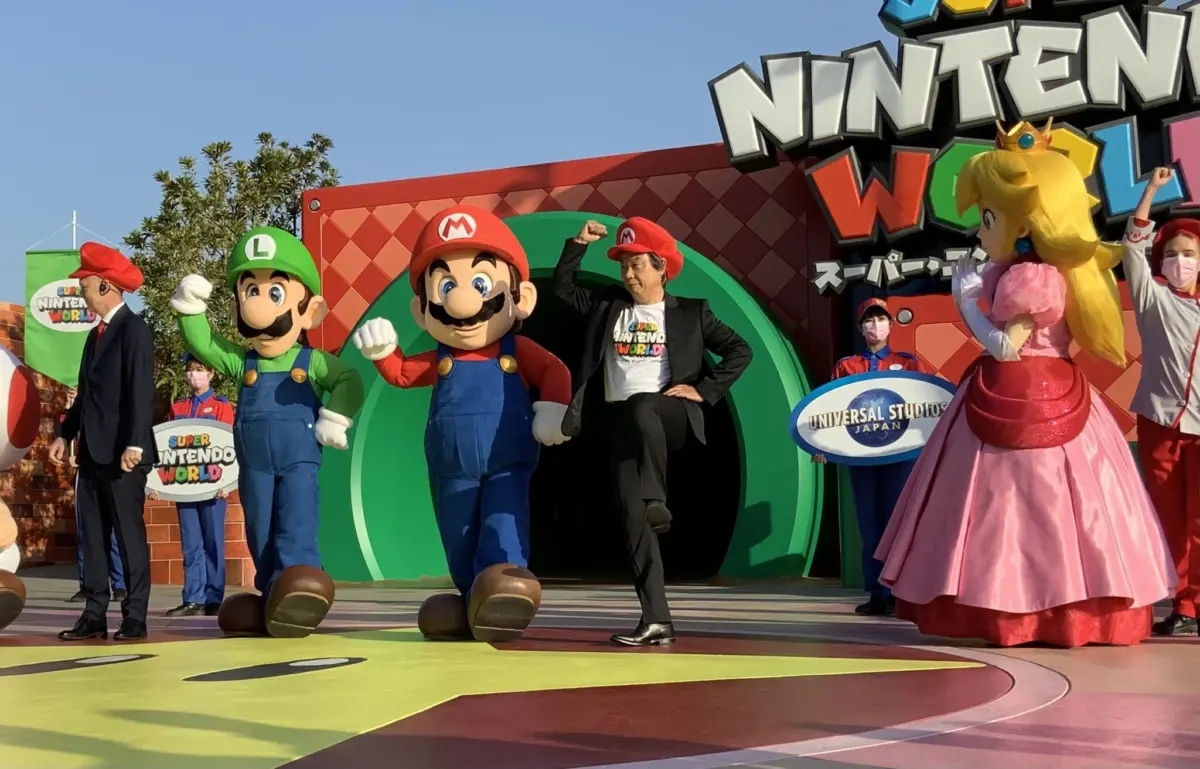
In a historic cultural milestone that bridges the gap between traditional prestige and modern interactive entertainment, legendary game designer Shigeru Miyamoto has been named a recipient of Japan’s prestigious Order of Culture (Bunka Kunshō). Bestowed annually by the Emperor of Japan on November 3—National Culture Day—this esteemed honor recognizes individuals who have made monumental, lasting contributions to the arts, sciences, and societal fabric of Japan.
Miyamoto’s inclusion in the elite roster of 2026 honorees marks a monumental paradigm shift. He stands as the very first figure from the video game industry to receive the Order of Culture in its history. Joining an elite cohort that includes Nobel laureates and legendary composers, Miyamoto will receive his medal from Emperor Naruhito at the Imperial Palace.
This recognition cements what generations of players and industry professionals have known for decades: video games are not merely fleeting digital pastimes, but a profound, culturally transformative artistic medium. From the coin-op arcades of the early 1980s to global multimedia empires, Miyamoto’s creative fingerprints have shaped global consciousness, redefined interactive storytelling, and elevated game design into an internationally celebrated high art.
Detailed Chronology: A Legacy Carved in Pixels and Wonder
To understand the magnitude of Miyamoto’s imperial recognition, one must trace a career spanning more than four decades—a timeline defined by relentless innovation, artistic intuition, and an unwavering commitment to pure, unadulterated play.
The Dawn of an Icon: Donkey Kong (1981–1983)
Long before he was a household name, Shigeru Miyamoto joined Nintendo in 1977 as its first staff artist, possessing a degree in industrial design rather than computer science. Tasked with turning around a struggling arcade machine import (Radar Scope), Miyamoto pivoted toward an original concept inspired by Popeye, Beauty and the Beast, and King Kong.
The result was Donkey Kong (1981). Featuring "Jumpman" (later named Mario), a besieged damsel, and a barrel-throwing ape, the game introduced environmental storytelling, distinct character motivations, and platforming mechanics that laid the foundational grammar for modern video games. It was an instant global phenomenon, rescuing Nintendo of America from financial ruin and setting the stage for a creative revolution.
Rescuing the Industry: Super Mario Bros. (1985)
By 1983, the global video game market—particularly in North America—was suffering from a catastrophic crash caused by market saturation and a lack of quality control. The medium was widely dismissed as a dying fad.
Everything changed in 1985 with the Japanese release of Super Mario Bros. Designed by Miyamoto alongside engineer Takashi Tezuka, the game was a masterclass in game pacing, level design, and intuitive learning. Players didn’t need a manual to understand that moving right, jumping over a Goomba, and grabbing a mushroom felt inherently satisfying. Super Mario Bros. single-handedly revitalized the global gaming industry, re-establishing Japan as the epicenter of digital entertainment and creating cultural icons that would rival Mickey Mouse in global recognition.
Expanding Horizons: The Legend of Zelda and Beyond
Not content with mastering the side-scrolling platformer, Miyamoto turned his attention to adventure. In 1986, he released The Legend of Zelda, drawing heavily from his childhood explorations of the hills, forests, and caves surrounding his hometown in Sonobe, Japan. The game introduced open-world exploration, save batteries, and a profound sense of mystery and discovery to millions of players.
Throughout the late 20th and early 21st centuries, Miyamoto’s creative output read as a masterclass in industry-defining franchises:
- Super Mario Kart (1992): Invented the kart-racing genre, creating the ultimate couch-multiplayer experience.
- Star Fox (1993): Pioneered accessible 3D polygon graphics on home consoles using Nintendo’s Super FX chip.
- Pikmin (2001): Demonstrated Miyamoto’s enduring interest in gardening, nature observation, and strategic management, wrapped in a whimsical, emotionally resonant package.
Supporting Context & Metrics: Cultural Impact and Global Resonance
The Order of Culture is not awarded lightly. It is reserved for those whose lifetime achievements have permanently altered the cultural landscape of Japan and resonated across the globe. Miyamoto’s inclusion places him alongside elite company in the 2026 honors list, which includes Kenso Soai, a Nobel Prize laureate in Chemistry, and Shunichi Tokura, the legendary composer of Pink Lady’s smash hit "UFO" and current chairman of the Japanese Society for Rights of Authors, Composers and Publishers (JASRAC).
Quantitative Metrics of a Creative Titan
- Global Sales Dominance: Franchises overseen or created by Miyamoto—principally Mario and Zelda—have collectively sold hundreds of millions of copies worldwide, making Mario one of the highest-grossing media franchises in human history.
- Pop-Culture Integration: Miyamoto’s creations have crossed every conceivable cultural boundary. Notably, former Japanese Prime Minister Shinzo Abe famously emerged from a green pipe dressed as Mario during the closing ceremonies of the 2016 Rio de Janeiro Olympics to hand off the games to Tokyo.
- Celebrity Fandom: Miyamoto’s global influence transcends demographics. Famously, music icon Sir Paul McCartney once requested Miyamoto’s autograph upon meeting him, greeting the legendary designer by spontaneously singing the Super Mario theme song.
- Physical Landmarks: The legacy of his work culminated physically with the opening of the Nintendo Museum in Uji, Kyoto, where giant, fully functional vintage controllers allow modern fans to physically step inside the history of Nintendo’s hardware evolution.
Official Statements: Wisdom from the Master Designer
During a press conference following the government’s official announcement, Miyamoto expressed humility and boundless enthusiasm for the medium that defined his life’s work.
"I am truly happy to have found video games. As a creator, I have just as much fun developing games as the players do playing them. It is a joy to be able to keep doing this."
When asked about his philosophy on creative direction, Miyamoto offered profound advice for the next generation of digital artists and game designers—cautioning against the trap of iterative imitation:
"I often tell them it is better not to start with a game they’re already a big fan of and find entertaining and just try to tweak it to make it ‘more fun.’ Instead of refining something that already exists, it is much more rewarding to start at the core and ask yourself, ‘Wouldn’t it be interesting if I tried this?’ Then focus your energy on building something from that idea."
Public and Online Sentiment
The announcement sent waves of joy through Japanese social media and global gaming communities alike. Commenters flooded platforms with personal reflections on how Miyamoto’s work shaped their formative years:
- "It’s long overdue, but wonderful news. Mario and Zelda are beloved not just in Japan but all over the world."
- "When he started out, video games were seen negatively. Now, his characters have appeared at the Olympics!"
- "Miyamoto never pandered to trends and always asked himself if his creations made people feel something."
- "His work influenced our youths, the way we spent time with our family, and some of our unforgettable memories."
Future Outlook: The Enduring Legacy of Play
Shigeru Miyamoto receiving the Order of Culture marks a vital turning point in how society evaluates digital entertainment. For decades, video games fought an uphill battle against cultural stigma, often dismissed as juvenile or anti-social. Today, under the golden seal of the Japanese Imperial Palace, interactive design stands recognized as a high art form on par with classical literature, avant-garde cinema, and symphonic composition.
As Nintendo continues to expand its cultural footprint—ranging from the runaway success of The Super Mario Bros. Movie to Super Nintendo World theme park expansions across the globe—Miyamoto’s philosophy of "kusuri-seishin" (the playful spirit) remains the guiding light of the company.
Furthermore, industry analysts note that this historic recognition opens the door for other pioneers of the golden age of electronic arts. Speculation is already brewing among fans and critics alike that composers like Koji Kondo—whose timeless, bouncy orchestrations for Super Mario Bros. and The Legend of Zelda are etched into the global psyche—may soon find themselves part of similar high-level cultural conversations.
Ultimately, Shigeru Miyamoto’s Order of Culture is a celebration of curiosity, joy, and imagination. By inviting millions of players into worlds crafted purely out of wonder, he didn’t just build video games—he helped build the childhoods of generations across the globe.






Belum ada komentar. Jadilah yang pertama berkomentar!