Every year on October 14, Japan observes Railway Day (Tetsudou no Hi), a national celebration commemorating the official opening of the nation’s first rail line between Shimbashi and Yokohama in 1872. Over the course of more than a century and a half, railways have transformed from an industrial marvel of the Meiji restoration into the backbone of Japan’s urban infrastructure and cultural identity.
To mark this historical milestone, media publication Anime! Anime! conducted a comprehensive reader poll titled "Speaking of ‘Railway’ Characters, Who Comes to Mind?" This marked the first time in five years that the outlet updated its definitive national ranking. Running from October 1 to October 8, the survey gathered perspectives across a broad demographic to examine how pop culture incorporates, subverts, and celebrates rail transport.
The results reveal a fascinating intersection of international childhood nostalgia, contemporary anime phenomena, mecha engineering tropes, and psychological horror subversions. From iconic steam locomotives that defined generations of childhood media to sinister demons that physically merge with passenger cars, the polling data highlights the dynamic role railways play within anime, games, and tokusatsu franchises.
       [ anime! anime! READER POLL: TOP RAILWAY CHARACTERS ]
       -----------------------------------------------------
       1. Thomas the Tank Engine  [Thomas & Friends]     ~12%
       2. Enmu (Tied)             [Demon Slayer]         ~10%
       2. Hayato Hasugi (Tied)    [Shinkansen Shinkalion] ~10%
       4. Kamen Rider Den-O (Tied)[Kamen Rider Den-O]    Top 5
       4. Maito Senpuuji (Tied)   [Brave Express Might Gaine]
Detailed Chronology: The Evolution of Rail Motifs in Media
The relationship between rail transportation and visual entertainment in Japan has evolved through distinct technological and artistic eras. Understanding the results of this poll requires examining how railway motifs have shifted over decades of broadcasting.
+-----------------------------------------------------------------------------+
| ERA 1: The Cosmic Era (1970s–1980s)                                         |
| Key Example: Galaxy Express 999                                             |
| Themes: Existential journeys, mechanical transcendence, steam nostalgia     |
+-----------------------------------------------------------------------------+
                                      |
                                      v
+-----------------------------------------------------------------------------+
| ERA 2: The勇者 (Brave) & Mecha Golden Age (1990s)                            |
| Key Example: Brave Express Might Gaine                                      |
| Themes: Corporate heroism, Transforming bullet trains, Punctuality slogans  |
+-----------------------------------------------------------------------------+
                                      |
                                      v
+-----------------------------------------------------------------------------+
| ERA 3: Modern Tokusatsu & Hybrid Media (2000s–2010s)                        |
| Key Examples: Kamen Rider Den-O, Shinkansen Henkei Robo Shinkalion           |
| Themes: Temporal travel, localized railway enthusiasm, official JR collabs   |
+-----------------------------------------------------------------------------+
                                      |
                                      v
+-----------------------------------------------------------------------------+
| ERA 4: Genre Subversion & Regional Tourism (2020s–Present)                   |
| Key Examples: Demon Slayer: Mugen Train, Yuru Camp△                        |
| Themes: Claustrophobic horror, real-world regional line preservation        |
+-----------------------------------------------------------------------------+
The Early Pioneers: Cosmic & Mecha Foundations
In the late 1970s, legendary manga artist Leiji Matsumoto redefined sci-fi storytelling with Galaxy Express 999. By placing a vintage steam engine in the vacuum of space, the series established the train as an enduring symbol of passage, growth, and existential longing.
By the 1990s, Sunrise’s Brave Series (Yusha Series) transformed railways from passive transportation into active, crime-fighting machinery. Brave Express Might Gaine (1993) tapped into Japan’s economic pride and engineering prowess, presenting high-speed trains that reconfigured into formidable heroic mecha.
In 2007, tokusatsu hit Kamen Rider Den-O introduced the Den-Liner, a bullet train that navigates the complex streams of time. A decade later, Shinkansen Henkei Robo Shinkalion established an official collaboration with Japan Railways (JR), turning authentic Shinkansen models like the E5 Hayabusa into high-tech defenders of the nation.
Most recently, franchises have either leaned into hyper-realistic regional railway travel—as seen in slice-of-life anime like Yuru Camp△—or completely subverted the safety of passenger trains, as demonstrated by the record-breaking Demon Slayer: Kimetsu no Yaiba – Mugen Train.
The Anime! Anime! poll provides a clear snapshot of current audience demographics and fandom preferences.
Demographic Overview
Gender Ratio: Approximately 65% Male, 35% Female.
Primary Age Bracket: Respondents in their 30s formed the largest single bloc, representing roughly 40% of the total vote.
Key Driving Factor: The heavy representation of adults in their 30s correlates strongly with voting patterns that bridge nostalgic 1990s childhood media with modern hits watched alongside their own children.
Rank 1: Thomas the Tank Engine (Thomas & Friends) — ~12% Support Rate
Taking the top spot overall, the globally recognized blue engine proved that cross-generational appeal and international legacy remain unmatched. Originally created by the Rev. W. Awdry and brought to television through model animation—before transitioning to 3DCG and eventually 2D animation—Thomas & Friends holds a deeply cherished position in Japanese broadcasting history.
Demographic Resonance: Readers highlighted the soothing Japanese dubbing, particularly the legendary narration by the late Leo Morimoto.
Symbolic Value: Thomas represents the fundamental archetype of a living locomotive: hard-working, curious, and prone to misadventures due to over-enthusiasm.
Rank 2 (Tied): Enmu (Demon Slayer: Kimetsu no Yaiba) — ~10% Support Rate
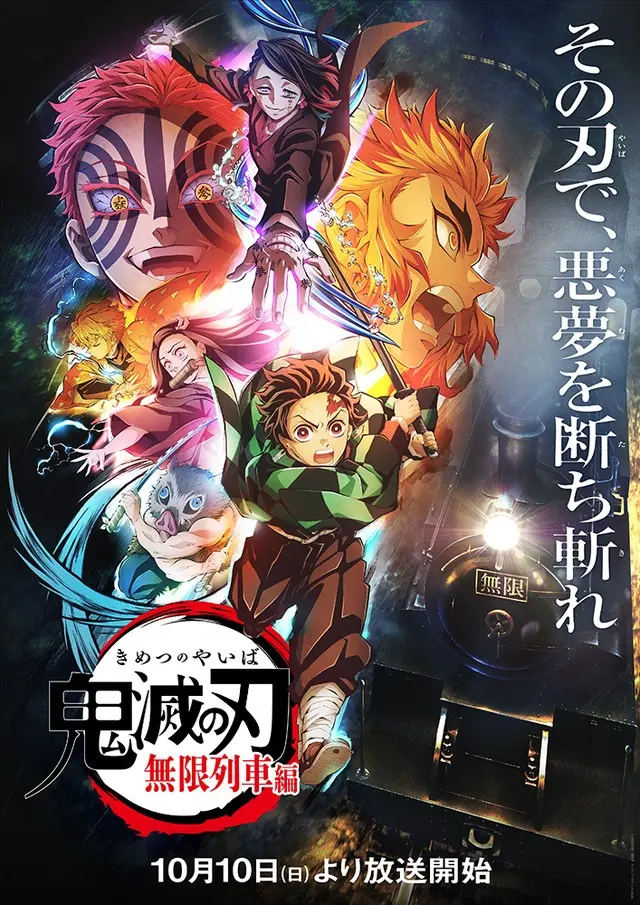
Securing a second-place tie, Enmu stands out as the sole antagonist in the top tier. As Lower Rank One of the Twelve Kizuki under Muzan Kibutsuji, Enmu serves as the central villain of the Mugen Train Arc.
Narrative Function: Enmu uses Blood Demon Art to force passengers into deep, manipulative dreams before physically merging his flesh with the Mugen Train itself.
Impact: Respondents noted that Enmu turned the train vehicle into a living, breathing nightmare, making the character inextricably linked with railway lore in modern anime.
Sharing second place is the primary protagonist of Shinkalion, Hayato Hasugi. A elementary school student with an encyclopedic, borderline-obsessive passion for bullet trains, Hayato serves as the driver of the Shinkalion E5 Hayabusa under the Omiya branch of the Ultra Evolution Institute.
Character Archetype: Hayato embodies the pure, wholesome spirit of the real-world Japanese railway fan (Tetsudo-otaku).
Audience Sentiment: Voters praised how his overwhelming love for Shinkansen—often to the point of comical tunnel vision—becomes his ultimate strength when protecting the rail network.
Rank 4 (Tied): Kamen Rider Den-O (Kamen Rider Den-O)
Tied for fourth place, Kamen Rider Den-O represents tokusatsu excellence. Operating out of the time-traveling Den-Liner, main protagonist Ryotaro Nogami and his Imagin companions rely on railway tracks laid through time streams to combat temporal threats.
Also sharing fourth place, Maito Senpuuji is the quintessential 1990s mecha hero. As the billionaire high school head of the Senpuuji Concern, he commands a specialized crime-fighting express train network. His famous declaration—"Arriving right on schedule!"—mirrors the real-world operational precision of Japan’s railway systems.
Key Highlights & Honorable Mentions
Character
Origin Work
Key Railway Connection / Motif
Thomas
Thomas & Friends
The quintessential steam engine; multi-generational icon.
Enmu
Demon Slayer: Kimetsu no Yaiba
Merges physically with the Mugen Train; uses dreams on passengers.
Hayato Hasugi
Shinkansen Henkei Robo Shinkalion
Unapologetic Shinkansen fanboy; pilots E5 Hayabusa mecha.
Kamen Rider Den-O
Kamen Rider Den-O
Commands the temporal Den-Liner train through time.
Maito Senpuuji
Brave Express Might Gaine
Wealthy leader of train-based mecha force; iconic punctuality slogans.
Dvořák
ClassicaLoid
Hippo-like character inspired by real composer Antonín Dvořák’s train obsession.
Nadeshiko Kagamihara
Yuru Camp△
Promotes local regional line travel; inspired real-world wrapping trains.
The Conductor / Tetsuro
Galaxy Express 999
Legendary space railway personnel carrying human destiny to the stars.
Official Statements & Reader Perspectives
The poll results offer direct insight into how viewers emotionally process railway-centric storytelling. Survey respondents provided detailed testimonials explaining why specific characters left lasting impressions.
On Thomas the Tank Engine
"When you think of a train character, the protagonist who is an actual steam engine comes to mind immediately. There is simply no character more perfectly fitted to the theme than Thomas."
— 30-something Survey Participant
"I grew up watching the model animation version. I can still vividly hear the late Leo Morimoto’s gentle, comforting narration starting with ‘This is a story about…’. That warm voice and those realistic train models are unforgettable."
— 30-something Survey Participant
On Enmu (Demon Slayer)
"In the Mugen Train Arc, Enmu manipulated passengers through dreams while taking over the entire locomotive. His line ‘Go to sleep~’ was chilling. Beyond just commandeering the train, he literally fused with the train itself. He is completely inseparable from the concept of railways in modern anime."
— 20-something Survey Participant
On Hayato Hasugi (Shinkalion)
"When Hayato starts talking about Shinkansen, he gets so absorbed that he loses sight of everything around him, which is strangely adorable. Seeing him bond with former enemy Seiryu over shared train enthusiast talks was wonderful. His love for railways drives the entire series."
— Survey Participant
On Cultural & Historical Icons
"Hearing the classic narration for Galaxy Express 999—’Now, sounding the steam whistle loaded with endless feelings…’—still gives me goosebumps every single time. It represents the ultimate romanticized vision of train travel."
— 40-something Survey Participant
Media Analysts’ Perspective
Industry observers note that the poll reflects how railways serve a dual narrative purpose in Japanese culture:
The Safe & Reliable Infrastructure: Symbolized by Hayato Hasugi, Maito Senpuuji, and Yuru Camp△, emphasizing comfort, engineering marvels, regional beauty, and absolute schedule precision.
The Mysterious & Uncontrollable Frontier: Symbolized by Enmu, Galaxy Express 999, and Kamen Rider Den-O, where train tracks extend beyond normal human comprehension into space, time, or psychological nightmares.
Future Outlook: The Next Track for Railway Metaphors
The persistent popularity of train-centric characters highlights an enduring synergy between Japan’s transport industry and its creative export market. As regional lines face economic challenges due to shifting demographics, partnerships between railway operators and animation studios have evolved from simple marketing tactics into vital preservation efforts.
+-------------------------------------------------------------------+
|                  THE DUAL FUTURE OF RAIL MEDIA                    |
+-------------------------------------------------------------------+
|                                                                   |
|   1. REAL-WORLD REGIONAL BOOSTING                                 |
|      - Wrapping trains (e.g., Tenryu Hamanako Railroad x Yuru Camp△)|
|      - Pilgrimage tourism (Seichi Junrei) along local lines       |
|      - Official JR & Private Railway co-productions               |
|                                                                   |
|   2. TECHNOLOGICAL & FORM EVOLUTION                               |
|      - Transition from physical model sets to 3DCG & 2D animation |
|      - Blending physical infrastructure with sci-fi / fantasy     |
|      - Cross-generational appeals targeting parents and kids      |
|                                                                   |
+-------------------------------------------------------------------+
Regional Tourism and "Anime Pilgrimages"
Anime projects like Yuru Camp△ demonstrate the tangible impact of media on real-world transit. The introduction of official wrapping trains on lines like the Tenryu Hamanako Railroad brings fans directly onto rural platforms, generating tourism revenue and fostering local appreciation.
Expanding Visual Technologies
Technological shifts remain central to how train characters are rendered. The transition from physical stop-motion/model work (as seen in early Thomas episodes) to cutting-edge 3DCG rendering (used in Shinkalion) allows animators to portray complex mechanical transformations with unprecedented speed and realism.
Conclusion
Whether serving as heroic transformable mecha, nostalgic childhood companions, or claustrophobic settings for supernatural battles, railways remain one of the most versatile storytelling mechanisms in pop culture. The 2026 Anime! Anime! survey underscores that as long as trains continue to run on real-world tracks, creators will find imaginative new journeys to lay down on screen.






Belum ada komentar. Jadilah yang pertama berkomentar!