

Executive Overview
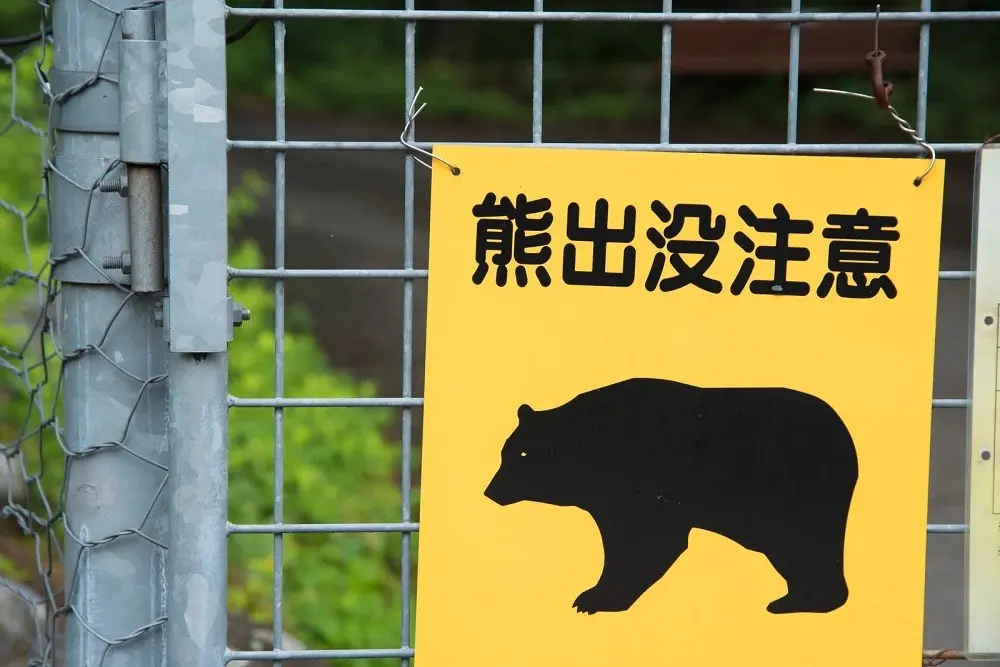
As the crispness of autumn settles over the Japanese archipelago, a familiar and increasingly grim apprehension takes hold of local communities. The seasonal transition triggers a critical biological imperative for the nation’s wild bear populations: gorging in preparation for winter hibernation. During this high-stakes window, bears grow bolder, expanding their foraging ranges and venturing dangerously close to human settlements in search of calorie-dense food sources.
Against the backdrop of a concerning surge in human-wildlife conflicts and bear attacks in recent years—particularly across the rugged, bear-dense landscapes of northern Japan—innovation has stepped into the breach. Akita Prefectural University recently spearheaded the Bear-Tech Solution Contest, inviting faculty and students to submit visionary technological proposals to mitigate this escalating public safety crisis. From a robust pool of 41 entries, one standout concept captured the imagination of the public and judges alike: a surprisingly cute, highly sophisticated anti-bear robot dog named Hacchan.
Named in honor of Hachiko, Japan’s most famous Akita Inu immortalized by loyalty at Shibuya Station, Hacchan trades urban waiting for high-tech rural defense. Inspired by the historical Akita Inu hunting dogs that once accompanied traditional northern woodsmen, this quadrupedal mecha is engineered for peaceful deterrence. Armed with computer vision, localized audio playback, and a networked swarm intelligence capable of summoning reinforcement units, Hacchan represents a paradigm shift in wildlife management. Rather than relying on lethal force, this autonomous canine sentinel aims to scare bears back into the wild, promising a safer coexistence between rural Japanese communities and their formidable forest neighbors.
Detailed Chronology: From Concept to Canine Cybernetics
The genesis of Hacchan traces back to the strategic initiatives launched earlier this year by Akita Prefectural University. Recognizing that traditional deterrents—ranging from fences and bells to increasingly overburdened local hunters—were proving insufficient against shifting bear migration and foraging patterns, the university’s administration established the Bear-Tech Solution Contest.
The Call for Innovation
The contest served as an academic crucible, calling upon the collective ingenuity of the university’s researchers, professors, and student body. The prompt was clear: design scalable, practical, and technologically viable solutions to protect rural boundaries from wandering bears. By the close of the submission window, 41 diverse concepts had been logged, highlighting a deep institutional and regional awareness of the crisis.
The October Showcase in Akita City
On October 13, the contest culminated in a high-profile presentation event in Akita City. Amidst a diverse array of proposed hardware and software countermeasures, the presentation of Hacchan commanded significant attention. Showcased alongside footage demonstrating its prototype capabilities, the robot bridged the gap between cutting-edge robotics and deeply rooted regional heritage. The presentation detailed not just a single mechanical guard dog, but an entire ecosystem of autonomous defense designed to operate along the volatile urban-wilderness interface.
Upcoming Field Trials
The development cycle is moving rapidly from the conceptual drawing board to real-world testing. Under the leadership of researcher Masayuki Yoshida, the engineering team at the university’s Regional Collaboration and Research Promotion Center is preparing for the ultimate proving ground. Field tests for Hacchan are slated to begin before the end of the year, marking a critical milestone in determining how effectively consumer-grade and specialized robotics can adapt to the unpredictable elements of rural Japanese geography.
Supporting Context & Metrics: The Escalating Human-Bear Interface
To fully appreciate the urgency driving the creation of Hacchan, one must examine the broader socio-ecological pressures currently facing rural Japan.
The Biological Imperative of Hyperphagia
In ecology, the period leading up to winter hibernation is known as hyperphagia—a state of extreme hunger driven by the biological need to accumulate fat reserves. For Asiatic black bears (Ursus thibetanus) and Ussuri brown bears (Ursus arctos yesoensis), this means consuming massive amounts of acorns, beechnuts, agricultural crops, and even household refuse. In years when natural mountain food sources fail, or when populations expand beyond traditional ecological carrying capacities, bears are forced down the mountain slopes.
The Northern Stronghold and National Statistics
Akita Prefecture, situated in the Tohoku region of northern Honshu, boasts some of Japan’s most expansive forested tracts and, consequently, its largest bear populations. Historically, encounters were managed through localized vigilance and traditional hunting practices. However, over the past decade, Japan has recorded an alarming upward trajectory in bear-human confrontations.
- Surging Incident Rates: Ministry of the Environment data highlights record-breaking numbers of injuries and fatalities resulting from bear attacks across multiple prefectures, stretching resources thin for local municipalities, police forces, and wildlife management divisions.
- Demographic Shifts: Rural depopulation and an aging agrarian workforce in prefectures like Akita mean fewer human eyes and ears are actively managing farm boundaries and forest edges, creating passive buffer zones where wildlife can encroach unchecked.
The Technological Response: Bridging Heritage and High-Tech
Hacchan’s design is deeply rooted in local history, paying homage to the Akita Inu breed historically prized for its courage, stamina, and hunting prowess alongside Matagi hunters. However, modern engineering has transformed this heritage into a non-lethal, highly scalable digital asset. Rather than engaging a bear physically—a dangerous prospect for both dog and beast—Hacchan utilizes psychological deterrence and networked communication.
Official Statements & Technological Architecture
The mechanics behind Hacchan reveal a sophisticated blend of robotics, artificial intelligence, and ecological awareness.
Nonviolent Deterrence Philosophy
Project lead Masayuki Yoshida and his team at Akita Prefectural University emphasized from the project’s inception that Hacchan’s core directive is peaceful conflict resolution. In an interview regarding the project’s design philosophy, the development team noted:
"While historical Akita hunting dogs worked alongside humans to track and corner game in deep forests, Hacchan has been created with a fundamentally nonviolent outcome in mind. Our goal is not to harm or trap the wildlife, but to reclaim the borderlands of our communities through smart psychological deterrence."
How Hacchan Operates in the Field
The operational framework of the quadrupedal robot is designed for autonomous, round-the-clock vigilance along the vulnerable perimeters of farms, residential outskirts, and local roads:
- Visual Detection and Identification: Equipped with an onboard high-definition camera system integrated with computer vision algorithms, Hacchan continuously scans its environment for biological anomalies matching the profile of a foraging bear.
- Auditory Countermeasures: Upon confirming a target, the robot immediately deploys its internal speaker system, broadcasting high-decibel recordings of an aggressive, barking dog. This auditory stimulus exploits the natural wariness wild animals possess toward territorial canine rivals, encouraging the bear to re-evaluate the risk and retreat back into the safety of the woods.
- Swarm Intelligence and Reinforcement Calling: One of Hacchan’s most innovative features is its networked communication array. If a single robot encounters a particularly bold bear or an animal unresponsive to initial audio cues, Hacchan broadcasts its precise GPS coordinates to neighboring units. This triggers an automated response, calling other Hacchan units to the scene to converge and create an intimidating, multi-directional "pack" of robotic defenders.
- Behavioral Data Logging: Beyond active defense, Hacchan acts as an intelligence-gathering node. The robot logs time-stamped location data, frequency of sightings, and behavioral responses, feeding this information back into a central database. This data allows researchers and municipal planners to map bear movement corridors and optimize patrol routes for future deployments.
Future Outlook: The Road Ahead for Robo-Canine Guardians
As Hacchan prepares for its inaugural field trials before the end of the year, the broader implications of the project extend far beyond the borders of Akita Prefecture. If successful, this initiative could establish a new blueprint for wildlife management across Japan and potentially global markets grappling with similar human-wildlife encroachment issues.
Challenges and Scalability
Transitioning from a controlled contest presentation to harsh, real-world deployment presents several engineering hurdles:
- Terrain Adaptability: Rural boundaries in northern Japan feature uneven terrain, heavy mud, deep autumn leaf litter, and accumulating winter snows. Ensuring that a quadrupedal robot can maintain traction and mobility in these conditions is a primary focus for Yoshida’s team.
- Power Management: Continuous autonomous patrolling and audio playback demand significant battery resources. Developing efficient power-saving sleep modes or solar-assisted charging stations along patrol routes will be essential for long-term operational sustainability.
- Habituation Risks: Wildlife ecologists note a persistent challenge in wildlife deterrence: habituation. Over time, animals can learn to distinguish between genuine threats and repetitive artificial deterrents. Future iterations of Hacchan may require dynamic audio variations or complementary sensory stimuli (such as flashing lights or scent deterrents) to prevent bears from becoming desensitized to the robotic barks.
A Harmonious Future
Despite these technical challenges, the public reception of Hacchan points toward an optimistic future where technology bridges the gap between conservation and community safety. By removing the lethal necessity of culling and offering a scalable, humane alternative for border defense, Akita Prefectural University’s robotic Akita Inu stands as a testament to human ingenuity. As Hacchan hits the dirt tracks and farm fringes this winter, it carries with it not just the digital echoes of its ancestral namesakes, but the hopes of rural communities seeking peace at the edge of the wild.








Belum ada komentar. Jadilah yang pertama berkomentar!