

Executive Overview
For decades, the boundaries separating Japan’s densely populated urban centers and agricultural lowlands from its rugged, forested interior were well-defined. While rural communities long learned to coexist—and contend—with the country’s native ursine residents, residents of major cities and those working along Japan’s extensive coastline operated under a comforting assumption: the wilderness stayed in the mountains.
That comforting illusion was shattered on September 19, when a one-meter-tall wild bear was discovered actively sheltering aboard a docked commercial fishing vessel in Shiogama, Miyagi Prefecture. The incident, which culminated in the animal executing a midnight aquatic escape into the Pacific Ocean, highlights an escalating ecological and public safety crisis. Japan’s burgeoning bear population, driven down from depopulated rural mountains by shrinking food sources and demographic shifts, is no longer confining its search for sustenance to farmland and suburban fringes. They are taking to the docks, and as recent events prove, they are taking to the sea.
This alarming event underscores a deeper systemic vulnerability. As rural depopulation accelerates and human-bear interactions multiply across the archipelago, the traditional defenses protecting Japanese communities are eroding. A graying network of local hunters, outdated municipal response frameworks, and a national political apparatus heavily concentrated in the concrete expanse of Tokyo face mounting pressure to address a crisis that is increasingly defying geographical logic.
Detailed Chronology: The Shiogama Port Incident
The sequence of events on September 19 unfolded with cinematic suddenness, turning a routine morning at a commercial fishing wharf in Miyagi Prefecture into a high-stakes standoff between local authorities and an unexpected maritime stowaway.
Dawn on the Wharf
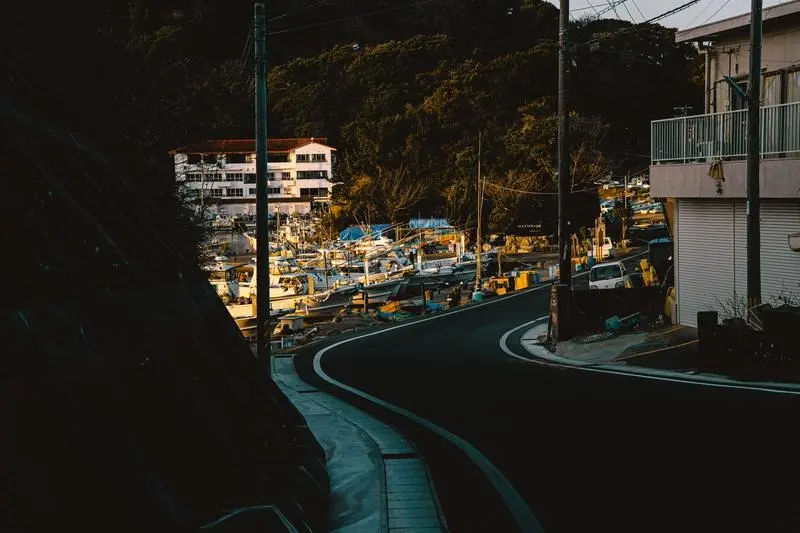
At approximately daybreak, local authorities in the coastal city of Shiogama received frantic reports from port workers. A wild Asiatic black bear—measuring roughly one meter in height—had been spotted roaming the concrete wharves of the commercial fishing port. The sight of an apex predator on a salt-sprayed dock surrounded by commercial trawlers and fish-processing facilities immediately galvanized local law enforcement.
Recognizing the acute danger to port personnel, the Miyagi Prefectural Police moved swiftly to secure the perimeter. They cordoned off the docks, restricting civilian access and deploying municipal officials to track the animal’s movements.
The Stowaway on the Trawlers
Cornered by the arrival of police units, the bear abandoned its open-air reconnaissance of the wharf and sought refuge aboard a vessel moored at the pier: a longline tuna fishing boat outfitted for deep-sea expeditions.
At the time of the breach, three crew members were on board the vessel. Alerted to the unfolding danger, the fishermen displayed remarkable composure, immediately retreating into the safety of their private interior cabins and locking the doors behind them. For hours, the trio remained sequestered below deck as the ursine intruder paced the upper decks, turning the specialized commercial fishing boat into an impromptu wildlife enclosure.
The Midnight Plunge
Faced with a volatile situation involving an unpredictable wild animal on a complex maritime structure, local officials and police opted for a containment strategy. Rather than risking a chaotic confrontation in the dark, authorities established a secure holding pattern with a clear tactical objective: wait for specialized local hunters to arrive at first light to neutralize the threat safely.
However, wildlife operates on its own timeline. At approximately 1:00 a.m., well before the arrival of the morning hunting details, the bear decided it had exhausted its hospitality. Evading the heavy police cordon completely, the animal leaped from the deck of the tuna boat directly into the dark, churning waters of Shiogama harbor.
Emergency personnel rushed to monitor the nearby shoreline, sweeping the black waters with flashlights and thermal equipment to track where the animal would surface. Despite their vigilance, the bear vanished into the Pacific. Search efforts yielded no further sightings, leaving authorities with the surreal realization that their suspect had quite literally swum away.
Supporting Context & Metrics: The Anatomy of Japan’s Ursine Crisis
While the image of a bear leaping from a tuna boat into the ocean possesses a dark comedic surrealism that quickly sparked viral commentary online—inspiring quips about "bear swim" skills and "shark bears"—the underlying reality is deeply sobering. The Shiogama incident is not an isolated anomaly, but the latest chapter in a nationwide ecological emergency.
The Demographic Driver
To understand why bears are turning up in fishing ports and urban centers, one must look to the changing demographics of rural Japan. Decades of declining birth rates and relentless rural flight have hollowed out farming and forestry villages across Honshu and Hokkaido. Homes have been abandoned, fields have gone fallow, and once-active orchards have been left unharvested.
With human interference receding, Japan’s wild bear populations—primarily the Asiatic black bear (Ursus thibetanus) and the Ussuri brown bear (Ursus arctos yesoensis)—have experienced a significant demographic rebound. According to data from the Ministry of the Environment, bear sightings and human-bear conflicts have surged to record-breaking highs over the past five years. In late 2025, the situation reached such a national consciousness that the traditional kanji character of the year vote heavily reflected the public’s pervasive anxiety regarding the animals.
Expanding Horizons
As bear numbers swell in the highlands, resource competition intensifies. Compounding the pressure, mast crop failures—particularly unpredictable yields of acorns and beechnuts, which form the dietary foundation for bears preparing for winter hibernation—frequently drive the animals down from the mountains in desperation.
Historically, these excursions terminated in agricultural fields, rural train stations, or the occasional suburban backyard. In recent years, however, bears have exhibited an unprecedented willingness to breach urban defenses. From security guards ambushed in public restrooms in Numata City to bold daytime raids in residential neighborhoods across Fukushima and Kyoto prefectures, the geographic boundary of the crisis has dissolved.
The Shiogama incident marks the logical, if startling, extension of this expansion: the collision of terrestrial wilderness with the maritime domain. While marine biologists and wildlife experts have long known that bears are surprisingly proficient swimmers capable of crossing rivers, bays, and narrow straits between islands, seeing an animal utilize maritime infrastructure as a temporary refuge forces a complete reassessment of where these animals can—and will—appear.
Official Responses and Public Reaction
The Shiogama port incident triggered an immediate wave of media coverage across Japan, broadcast nationally via outlets like TBS News Dig and heavily discussed across social media aggregation platforms.
Public Humor Masks Deepening Anxiety
True to the internet’s coping mechanisms, Japanese social media users transformed the surreal nature of the event into a wellspring of dark humor. X (formerly Twitter) and domestic forum boards lit up with satirical commentary:
- "Looks like it ‘bearly’ got away!"
- "A bear that doesn’t swim is just an ordinary bear."
- "Imagine going to the beach and seeing a bear swim in from the sea."
- "If that bear managed to sneak aboard while they set sail, it would have been a perfect B-movie plot."
Yet beneath the jokes lies an unmistakable undercurrent of fatigue and apprehension. Commentators frequently pointed out the broader, unsettling theme of the story: Bears are everywhere. The psychological safety net that once allowed urban residents and coastal workers to dismiss wildlife threats as a rural tax has fundamentally disintegrated.
The Failure of Traditional Mitigation
Municipal authorities in Miyagi Prefecture defended their handling of the incident, emphasizing that public safety was preserved and no human injuries occurred during the hours the bear roamed the docks. However, wildlife management experts point out that the peaceful resolution was largely a matter of luck.
Current protocols rely heavily on localized reactions—mobilizing police cordons, evacuating civilians, and calling in licensed hunters after an animal has already penetrated a high-density human zone. There is a glaring absence of proactive containment or population management strategies that can scale with the expanding geographic range of the ursine population.
Future Outlook: A Crisis Calling for Systemic Reform
As Japan looks toward future seasons, the Shiogama incident serves as an urgent warning flare for national policymakers. The current trajectory of human-bear conflicts is unsustainable, pointing toward several structural vulnerabilities that must be addressed if public safety is to be maintained.
The Graying of Japan’s Hunter Corps
At the heart of Japan’s wildlife management crisis is a severe human capital shortage. The frontline defense against nuisance and dangerous wildlife has historically been Japan’s network of licensed hunters. However, this workforce is aging rapidly, with the average age of registered hunters now exceeding 65.
Compounding the demographic cliff are Japan’s exceptionally strict firearm control laws. Obtaining and maintaining a hunting license and gun permit involves a rigorous, expensive, and time-consuming bureaucratic process that acts as a profound deterrent for younger generations. Without aggressive government intervention to recruit, subsidize, and train a new generation of wildlife management professionals, local municipalities will soon find themselves entirely unequipped to handle basic pest and predator control.
The Tokyo Disconnect
Critics and regional commentators have long accused the national government—headquartered in the urban fortress of Metropolitan Tokyo—of treating the bear crisis as a localized, provincial nuisance rather than a national emergency. Protected by miles of concrete and skyscrapers, central bureaucrats have been slow to allocate federal funding for large-scale habitat management, modernization of hunting infrastructure, or comprehensive public education campaigns in coastal and urban transition zones.
If the national government continues to view the crisis through a localized lens, incidents like the Shiogama maritime standoff will cease to be bizarre outliers and become part of a terrifying new normal. Until systemic reforms are implemented to bridge the gap between rural ecological realities and urban political priorities, the residents of Japan—whether treading mountain trails, walking urban sidewalks, or casting nets from the deck of a coastal trawler—will be forced to live with the lingering, unsettling knowledge that they can never truly be sure where a bear will turn up next.








Belum ada komentar. Jadilah yang pertama berkomentar!