


Executive Overview
In the hyper-competitive landscape of Japanese convenience stores—commonly known as konbini—brand loyalties are fiercely guarded, particularly when it comes to quick-service treats. For decades, the undisputed titan of fresh soft-serve ice cream has been Ministop, a chain whose identity is practically synonymous with its signature dairy swirls. However, recent developments across the capital suggest that a seismic shift may be quietly underway.
Family Mart, one of Japan’s monolithic "Big Three" convenience store chains, has begun quietly test-marketing its own fresh soft-serve program. Deployed with virtually no official fanfare, public relations campaigns, or corporate press releases, the initiative has materialized in precisely four undisclosed or low-profile locations across Tokyo.
This stealth rollout—unveiled during the unusually brisk month of October—has caught food critics, industry analysts, and sweet-toothed consumers entirely off guard. Rather than relying on traditional marketing blitzes, Family Mart appears to be testing the waters organically, allowing word-of-mouth and curious foot traffic to drive the experiment.
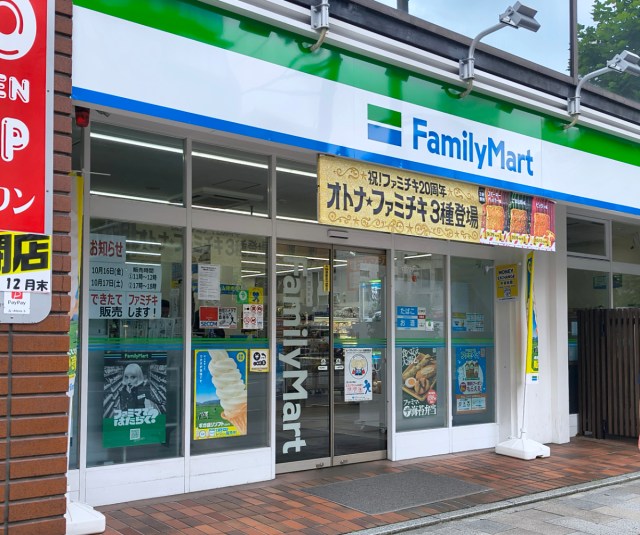
To investigate this phantom dairy phenomenon, SoraNews24’s veteran reporter and confectionery connoisseur, Mr. Sato, tracked down one of the trial outposts at the Family Mart Kanda Awaji-cho branch. What he discovered was a surprisingly robust menu featuring three distinct flavors, two sizing tiers, and a streamlined ordering process that signals a deliberate, if cautious, challenge to Ministop’s long-standing monopoly on counter-served frozen treats.
Detailed Chronology: Mr. Sato’s Investigative Journey to Kanda Awaji-cho
The story of Family Mart’s secret soft-serve trial began not with a corporate announcement, but with a whispered tip circulating among Tokyo’s dedicated food bloggers. Armed with little more than a rumor and an insatiable appetite for frozen desserts, Mr. Sato set out to verify whether one of Japan’s largest retail networks was genuinely venturing into fresh dairy dispensing.
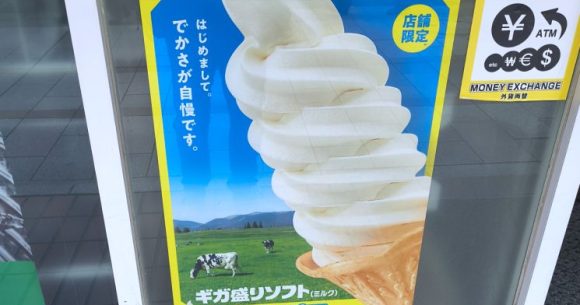
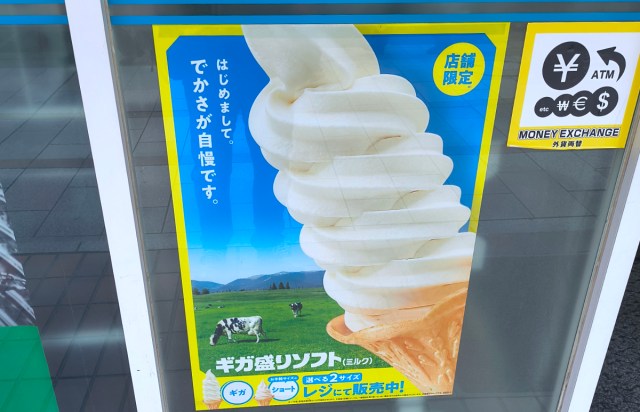
His destination: the Family Mart branch located in Kanda Awaji-cho, nestled within Tokyo’s bustling Chiyoda ward. Approaching the storefront, an objective observer might easily have missed the operation entirely. There were no flashing neon lights, no towering inflatable ice cream cones flanking the automatic doors, and no street-side barkers luring in pedestrians. Instead, Mr. Sato encountered a single, unassuming promotional poster affixed near the entrance. It was a remarkably understated introduction for a product line that directly challenges a core competency of a major rival chain.
Stepping inside the brightly lit interior, the investigator navigated past the standard rows of bento boxes, canned coffees, and manga magazines to inspect the front counter. Unlike fast-food chains where automated soft-serve machines are hidden from view, Family Mart has integrated the hardware directly into the counter space, serviced by staff upon order placement.
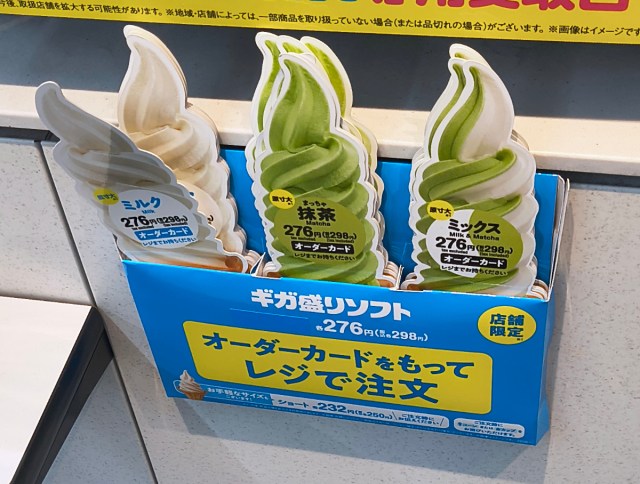
To streamline transactions and prevent bottlenecks during peak hours, the store has introduced a clever system of physical ordering cards. Customers simply select the card corresponding to their desired flavor—milk, matcha, or a dual-flavor "mix"—and hand it across the register. Because "giga size" portions appear to be the default setting on the promotional materials, patrons must explicitly state if they prefer the more modest "short size."
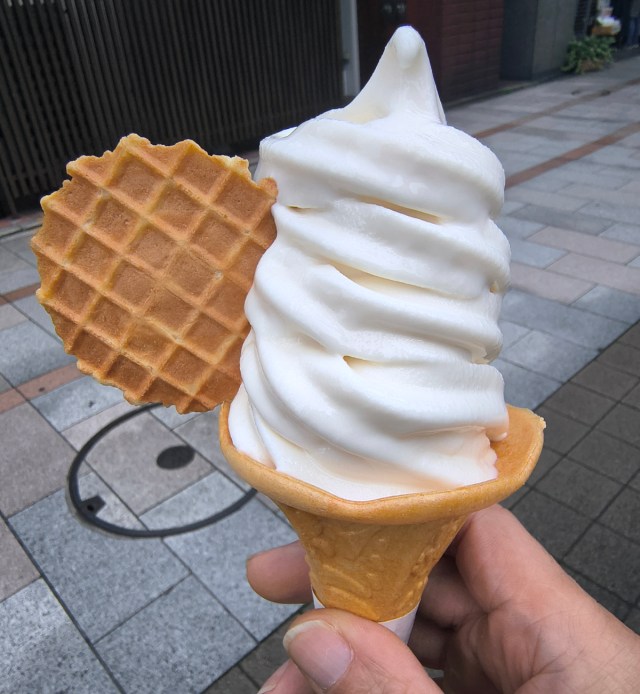
Placing his order for a giga-sized milk soft-serve cone, Mr. Sato watched as the clerk deftly operated the machine. Within moments, his inaugural Family Mart frozen dessert was handed across the counter, standing tall and pristine. True to the nature of authentic, high-fat dairy soft serve, the confection immediately began to succumb to ambient room temperature, prompting a rapid series of photographs before the inevitable structural collapse.
First impressions, according to Mr. Sato’s expert palate, were overwhelmingly positive. The milk flavor delivered a rich, deeply creamy profile characterized by a moderate, highly palatable level of sweetness. Rather than the icy or artificial aftertaste sometimes associated with low-cost novelties, this soft serve boasted a full-bodied, velvety texture that coated the mouth luxuriously. While a definitive comparative verdict against Ministop’s legendary benchmark will require a rigorous side-by-side taste test, the initial performance suggests that Family Mart’s product is more than capable of holding its own in the fiercely contested konbini dessert arena.
Supporting Context & Metrics: Breaking Down the Menu and Pricing Strategy
To fully understand the scope and economic positioning of Family Mart’s pilot program, one must examine the specific product metrics, pricing architecture, and logistical framework governing the rollout.
The Flavor Lineup
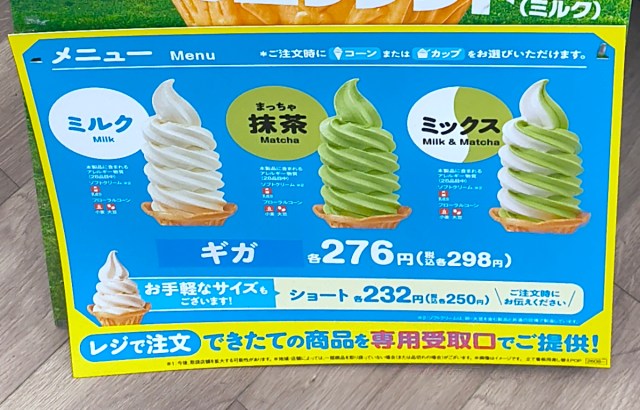
Family Mart has opted for a classic, crowd-pleasing triad of flavors designed to appeal to both traditionalists and lovers of Japanese culinary staples:
- Milk: A pure, dairy-forward flavor emphasizing high cream content and a smooth, unadulterated sweetness.
- Matcha: A distinctly Japanese variant incorporating green tea powder, offering a sophisticated balance of earthy bitterness and creamy sweetness.
- Mix: A harmonious swirl combining both the milk and matcha soft-serve bases into a single cone or cup, catering to indecisive consumers.
Sizing and Pricing Architecture
Understanding that value is paramount in the Japanese convenience store sector, Family Mart has structured its soft-serve pricing to remain highly competitive against both fast-food chains like McDonald’s and specialized dessert shops:
- Short Size: Priced at an accessible 250 yen (approximately $1.60 USD), this option is tailored for customers seeking a light post-lunch treat or a quick sugar fix.
- Giga Size: Priced at 298 yen (approximately $1.90 USD), this oversized portion delivers exceptional value, providing a towering swirl that dominates the visual presentation and satisfies heavier cravings.
Both sizes are fully customizable according to vessel preference, available in either a traditional crispy waffle cone or a convenient plastic cup.
Operational Integration
The integration of soft-serve machines into existing convenience store infrastructure represents a significant operational hurdle. Konbini staff in Japan are already tasked with an extraordinary array of responsibilities—ranging from handling parcel deliveries and processing utility bill payments to managing freshly fried chicken warmers (famichiki bins) and brewing artisanal coffees.
By introducing physical ordering cards, Family Mart has demonstrated an acute awareness of operational friction points. The cards minimize miscommunication at the register, reduce training times for part-time staff (baito), and maintain transaction speeds during high-volume rushes. Furthermore, while the host stores operate on a 24-hour basis, management has wisely instituted operational windows where soft-serve dispensing is paused—likely during late-night sanitation cycles required to maintain rigorous food safety standards for dairy equipment.
Official Statements & Corporate Silence
Perhaps the most intriguing aspect of Family Mart’s soft-serve initiative is the conspicuous absence of corporate communication. A thorough review of Family Mart Co., Ltd.’s official Japanese media portal and corporate website yields zero press releases, promotional banners, or investor relations mentions regarding the Tokyo soft-serve trial.
In the hyper-calculated world of Japanese corporate retail, major product launches are typically preceded by months of market research, high-profile celebrity endorsement contracts, and coordinated public relations blitzes. The deliberate choice to bypass this traditional playbook strongly suggests that Family Mart is executing a "silent test" or stealth beta test.
Retail giants frequently utilize localized, unannounced trials to gather authentic, unskewed consumer data. By avoiding promotional hype, the company ensures that the customers purchasing the soft serve are ordinary, unsuspecting shoppers rather than hyper-partisan food bloggers or manufactured crowds seeking novelty items. This method allows operational logistics, machine reliability, waste management, and profit margins to be evaluated under real-world conditions without risking corporate reputation should the pilot encounter unforeseen bottlenecks or quality-control issues.
Industry insiders note that if these four initial Tokyo locations successfully hit their internal performance metrics—measuring repeat customer rates, waste reduction, and profit yields per square foot of counter space—Family Mart will likely greenlight a broader capital expenditure program to scale the hardware infrastructure chain-wide.
Future Outlook: Implications for the Konbini Wars
The quiet emergence of Family Mart’s soft-serve program casts a long shadow over the broader Japanese convenience store ecosystem, most notably impacting Ministop.
Ministop, a subsidiary of the Aeon retail group, has historically carved out its distinct market niche precisely through its dedication to counter-served fast food, headlined by its legendary soft-serve ice cream and seasonal fruit parfaits. While competitors like Lawson and Seven-Eleven dominate raw store-count metrics across the archipelago, Ministop has relied on its unique hot-food and dessert counters to maintain customer loyalty. If Family Mart—with its massive network of over 16,000 stores nationwide—successfully standardizes and rolls out a competing fresh soft-serve program, Ministop’s primary defensive moat will face a formidable existential threat.
Current industry rumors indicate that Family Mart has ambitious plans to expand the trial by the end of the year, targeting an additional four locations within the greater Tokyo metropolitan area. This expansion would double the footprint of the test to eight stores, widening the demographic sample pool across different neighborhood profiles—shifting from business-heavy districts like Kanda to residential or entertainment hubs.
For consumers, this corporate rivalry is an unmitigated triumph. As chains vie for supremacy in the frozen dessert category, quality is destined to rise while price points remain aggressively competitive. Whether you are a dedicated Ministop loyalist or a curious observer watching Family Mart’s stealth expansion, the streets of Tokyo have officially become a sweeter, colder battleground.
As long as reporters like Mr. Sato continue pounding the pavement in search of hidden culinary treasures, the konbini landscape will never cease to surprise. One thing is certain: when it comes to the relentless pursuit of convenience store perfection, the ice cream wars are only just beginning to melt.






Belum ada komentar. Jadilah yang pertama berkomentar!