

Executive Overview
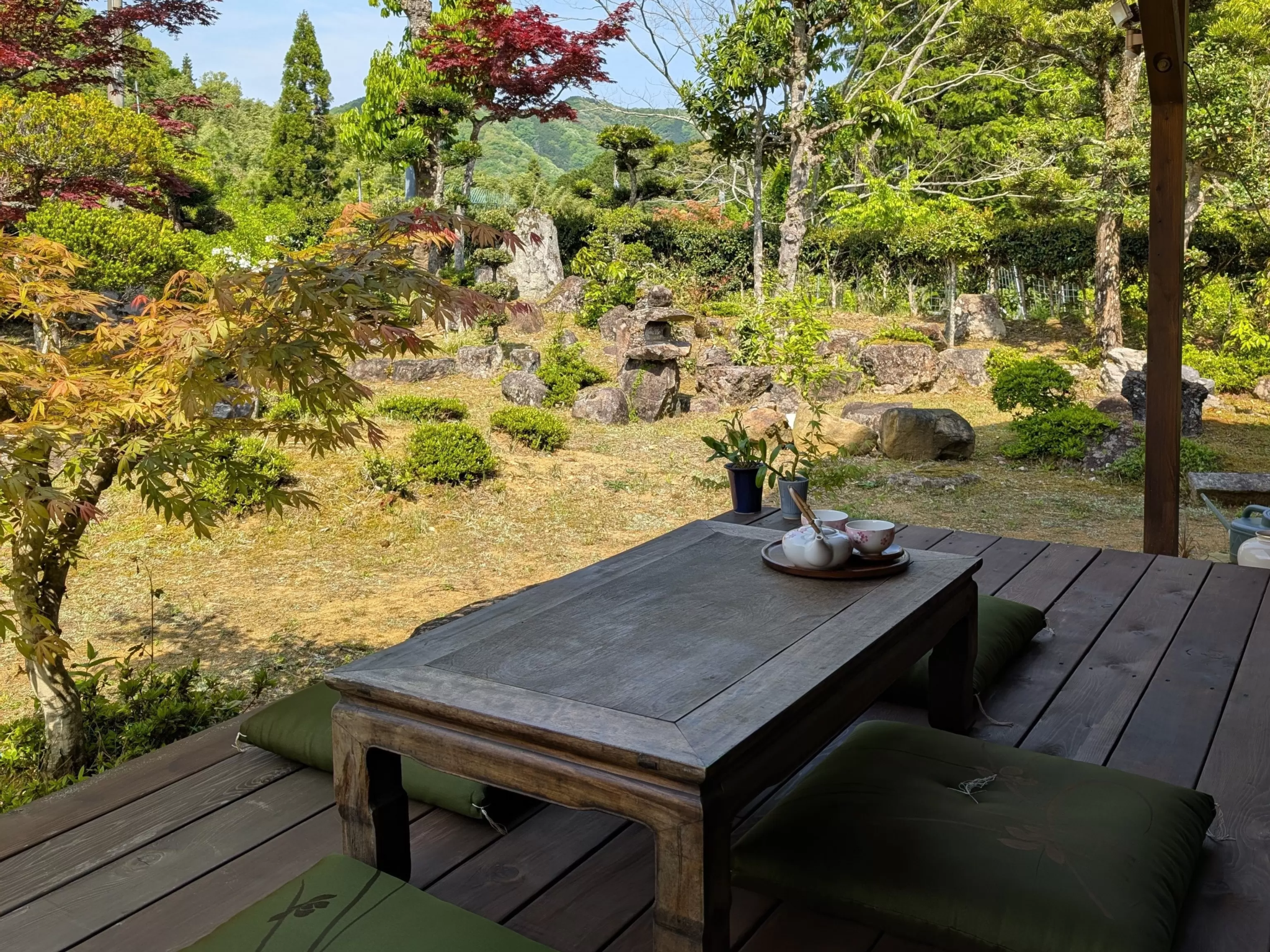
In an era defined by hyper-connectivity and fast-paced urban existence, a quiet revolution is taking place in the travel preferences of international and domestic explorers alike. Modern travelers are increasingly moving away from conventional, heavily touristed routes in search of depth, authenticity, and emotional connection. Nowhere is this trend more vividly demonstrated than in the mountainous rural expanses of Fukuchiyama City, Kyoto Prefecture.
Famous historically as a castle town established by the legendary Sengoku-period warlord Akechi Mitsuhide, Fukuchiyama is undergoing a contemporary renaissance. Beyond its historical battlements and urban center, the surrounding countryside has emerged as a premier destination for "farm stays" (nōhaku) and immersive rural homestays. Offering a delicate balance between preserved agrarian traditions and modern intercultural hospitality, these accommodations are capturing the imagination of travelers from Europe, the United States, and beyond.
![[ Fukuchiyama City , Kyoto Prefecture ] Experience rural Japanese life at a farm stay or traditional Japanese house.](https://resources.matcha-jp.com/resize/720x2000/2026/06/02-264978.webp)
This comprehensive report examines the structural expansion of Fukuchiyama’s rural lodging sector, profiles its standout properties—ranging from Edo-period thatched-roof retreats to international co-living spaces—and analyzes the broader socio-economic implications of this sustainable tourism movement. Furthermore, it provides critical logistical insights for travelers seeking to transition from the glittering metropolis of Tokyo or Osaka to the tranquil valleys of northern Kyoto.
Detailed Chronology & Evolution of Fukuchiyama’s Rural Tourism Sector
The Shift from Sightseeing to Immersive Living
For decades, tourism in Kyoto Prefecture followed a predictable, high-volume trajectory. Millions of visitors crowded the historic temples, shrines, and alleys of Kyoto City, seeking snapshots of ancient Japanese architecture. However, over the past several years, structural shifts in traveler psychology—accelerated by a global desire for sustainable, uncrowded, and meaningful travel experiences—have catalyzed a decentralization of tourism.
![[ Fukuchiyama City , Kyoto Prefecture ] Experience rural Japanese life at a farm stay or traditional Japanese house.](https://resources.matcha-jp.com/resize/720x2000/2026/05/20-264283.webp)
Fukuchiyama City recognized this shift early, leveraging its unique geography. Situated in the northwestern corridor of Kyoto Prefecture, the municipality bridges the gap between urban convenience and pristine natural mountain landscapes. Recognizing the vulnerabilities of depopulation in its agricultural districts, local leaders and enterprising residents began spearheading initiatives to repurpose vacant traditional structures.
Milestones in Sustainable Hospitality
- The Pioneer Phase (Late 2010s): Independent visionaries, including bi-cultural couples and relocated urbanites, identified the architectural and cultural value of Fukuchiyama’s abandoned or underutilized heritage homes. They began acquiring properties, meticulously restoring centuries-old farmhouses while integrating modern amenities.
- The Internationalization Wave (2020–2024): Properties such as Furaibo Farm Stay, Furumaya House, and Kitairo established themselves as benchmarks for intimate, single-group-per-day rural tourism. By bridging language barriers and offering multi-lingual support (English, German, French, and Italian), these guesthouses opened rural Japan to international explorers who desired direct cultural exchange rather than passive observation.
- Diversification into Medium- and Long-Term Stays (2025–Present): Reflecting global trends in remote work and slow travel, accommodations like One Big Family Wpeace introduced hybrid models. These initiatives combined short-term guesthouse stays with "relocation experience share houses," inviting digital nomads and long-term cultural seekers to live in rural Japan for periods ranging from one month to an entire year.
Featured Properties & Unique Lodging Experiences
Fukuchiyama’s farm stay and traditional house network is characterized by diversity, intimacy, and a commitment to preserving local ecosystems. Below is a detailed profile of the region’s premier accommodations.
![[ Fukuchiyama City , Kyoto Prefecture ] Experience rural Japanese life at a farm stay or traditional Japanese house.](https://resources.matcha-jp.com/resize/720x2000/2026/05/20-264284.webp)
1. Furaibo Farm Stay: An International Rural Sanctuary
- Concept: A harmonious blend of German, Japanese, and international lifestyle philosophies nested in the mountains of Hoonji. Run by a Japanese-German family alongside their children and a rescue dog, this guesthouse prides itself on dismantling language and national barriers.
- Atmosphere: Operating on a strict "one group per day" policy, guests are welcomed with an immediate sense of belonging. The property encourages visitors to slow down, attuning their senses to the sounds of native wildlife and the unhurried passage of rural time.
- Activities & Offerings: Stargazing, traditional rice planting, firewood splitting, Japanese garden maintenance, and the harvesting of seasonal vegetables and medicinal herbs.
- Language Support: English, German, and Italian.
- Location: 67 Hoonji, Fukuchiyama City, Kyoto Prefecture 620-1301.
2. Furumaya House: The Edo-Period Thatched-Roof Retreat
- Concept: Housed within a meticulously restored traditional thatched-roof farmhouse dating back to the Edo period, this retreat is managed by a Japanese-French couple. It offers an exclusive, high-end escape from the noise of modern civilization.
- Atmosphere: A masterclass in rustic luxury, the property revolves around a traditional wood-burning stove (maki-nabe). Meals are crafted primarily from home-grown organic vegetables cultivated directly on-site. The hosts’ dedication to preserving architectural heritage while delivering warm, individualized hospitality has earned the property critical acclaim domestically and internationally.
- Activities & Offerings: Chopping firewood, vegetable harvesting, authentic cooking classes, and guided rural cycling tours.
- Language Support: English and French.
- Location: 156 Kamikawai, Sanwa-cho, Fukuchiyama City, Kyoto Prefecture 620-1311.
3. Kitairo: The 180-Year-Old Merchant House Revival
- Concept: Originally a historic merchant house with a legacy spanning over 180 years, Kitairo was brought back to life by a couple who previously ran a celebrated guesthouse in central Kyoto City. Seeking an environment that retained the untouched landscape of early Japan, they relocated to Sanwa-Ohara.
- Atmosphere: Dripping with antique charm, the property features a traditional sunken hearth (irori) and a serene, meditative moss garden. It offers a seamless bridge where historical craftsmanship and contemporary comfort coexist.
- Activities & Offerings: Hearth-side dining and storytelling, seasonal firefly viewing along pristine local waterways, and immersive river activities.
- Language Support: Comprehensive support via advanced translation tools.
- Location: 209 Ohara, Sanwa-Ohara, Fukuchiyama City, Kyoto Prefecture 620-1301.
4. One Big Family Wpeace: Community Living and Relocation Hub
- Concept: Addressing the demand for flexible residency models, Wpeace offers a dual-format accommodation structure: a medium- to long-term "relocation experience share house" (1 month to 1 year) and a short-term guesthouse for transient sightseers.
- Atmosphere: Designed for intimate community living, the property features five rooms—four dedicated to shared-house residents and one reserved for short-term guests. With a cap of 3 to 5 residents at any given time, privacy is fully protected while organic social connections are easily forged. International residents frequently partake in the community, ensuring a global perspective in a rural setting. In addition, the operators manage a separate building available for whole-facility private rentals.
- Activities & Offerings: Seed planting, vegetable harvesting, and seasonal strawberry picking.
- Language Support: English.
- Location: 416 Ouchi, Fukuchiyama City, Kyoto Prefecture 620-0836.
Supporting Context & Regional Metrics
Geographical and Historical Significance
Fukuchiyama City spans the northwestern expanse of Kyoto Prefecture. Historically, its identity was permanently shaped during the Sengoku period when the brilliant tactician and warlord Akechi Mitsuhide constructed Fukuchiyama Castle. Today, the castle stands as a striking urban landmark, contrasting sharply with the deep-set rural valleys of districts like Sanwa and Hoonji.
The municipality successfully maintains a dual identity: a functional regional hub complete with modern infrastructure, and a sanctuary of preserved rural hamlets (satoyama).
![[ Fukuchiyama City , Kyoto Prefecture ] Experience rural Japanese life at a farm stay or traditional Japanese house.](https://resources.matcha-jp.com/resize/720x2000/2026/05/26-264597.webp)
Demographic Trends in Tourism
According to regional tourism reports, interest in rural accommodations (nōhaku) across Japan has experienced a steady upward trajectory. While domestic travelers initially drove the demand for weekend farm stays, post-pandemic travel data indicates a dramatic surge in visitors from North America and Europe. These international travelers stay an average of 3.4 nights in Fukuchiyama’s rural accommodations—significantly higher than the national average for urban sightseeing stops—reflecting a deep commitment to slow, experiential travel.
Official Statements and Local Perspectives
Local administrative bodies and tourism stakeholders have increasingly thrown their weight behind the farm-stay movement, viewing it as an essential tool for regional revitalization and cultural preservation.
![[ Fukuchiyama City , Kyoto Prefecture ] Experience rural Japanese life at a farm stay or traditional Japanese house.](https://resources.matcha-jp.com/resize/720x2000/2026/05/26-264596.webp)
"Fukuchiyama is uniquely positioned to offer what modern travelers are desperately seeking: authenticity, silence, and genuine human connection," notes a representative from the Fukuchiyama City official tourism division. "When a visitor sits around an irori hearth with a local host, helps harvest organic vegetables, or hears the stories of a restored Edo-period home, they aren’t just consuming a vacation—they are becoming part of our community’s living history. We are committed to supporting sustainable tourism models that protect our landscape while welcoming the world."
Host operators echo this sentiment, emphasizing that the cross-cultural exchange inherent in these stays transforms both guest and host.
![[ Fukuchiyama City , Kyoto Prefecture ] Experience rural Japanese life at a farm stay or traditional Japanese house.](https://resources.matcha-jp.com/resize/720x2000/2026/05/28-264759.webp)
"When guests step through our doors and say ‘I’m home,’ national borders and language barriers simply dissolve," shares a co-owner of a local farm stay. "In the quiet mountains of Fukuchiyama, time moves differently. People rediscover the joy of eating food pulled from the earth that very morning, listening to the wind through the trees, and engaging in conversations that linger long into the night."
Future Outlook: Sustainable Tourism and Long-Term Viability
Looking ahead, Fukuchiyama City’s rural accommodation sector is poised for calculated, sustainable growth. Rather than pursuing aggressive mass-tourism expansion, local stakeholders are prioritizing quality over quantity. The preservation of the "one group per day" operational model ensures that the delicate balance of rural ecosystems and local community dynamics remains undisturbed.
![[ Fukuchiyama City , Kyoto Prefecture ] Experience rural Japanese life at a farm stay or traditional Japanese house.](https://resources.matcha-jp.com/resize/720x2000/2026/05/20-264278.webp)
Key areas of future development include:
- Green Infrastructure Integration: Expanding eco-friendly practices among farm stays, including solar power adoption, organic permaculture scaling, and zero-waste kitchen initiatives.
- Workation and Digital Nomad Infrastructure: Enhancing high-speed internet connectivity across remote mountain guesthouses to safely accommodate the growing demographic of remote professionals seeking extended stays in rural Japan.
- Educational Agricultural Partnerships: Deepening collaborations with domestic and international educational institutions to offer accredited agricultural and cultural immersion programs.
Logistical Guide: How to Get to Fukuchiyama City
Fukuchiyama acts as a major rail convergence point, making it remarkably accessible from Japan’s primary metropolitan centers despite its secluded rural charm.
![[ Fukuchiyama City , Kyoto Prefecture ] Experience rural Japanese life at a farm stay or traditional Japanese house.](https://resources.matcha-jp.com/resize/720x2000/2026/05/20-264279.webp)
From Tokyo
- Take the Tokaido Shinkansen ("Nozomi" or "Hikari" services) from JR Tokyo Station to JR Kyoto Station (approx. 2 hours and 10 minutes).
- At JR Kyoto Station, transfer to the Limited Express train "Hashidate" or "Kinosaki", arriving directly at JR Fukuchiyama Station (approx. 1 hour and 20 minutes).
From Osaka
- Take the Limited Express train "Kounotori" directly from JR Osaka Station to JR Fukuchiyama Station (approx. 1 hour and 40 minutes).
Gateway Hub: Fukuchiyama Station
Fukuchiyama Station serves as the principal gateway to the northern Kinki region, where the JR San’in Main Line, Fukuchiyama Line, Maizuru Line, and Kyoto Tango Railway’s Miyafuku Line intersect.
Upon exiting the north side of the station, travelers have access to a fully equipped Tourist Information Center, which offers:
![[ Fukuchiyama City , Kyoto Prefecture ] Experience rural Japanese life at a farm stay or traditional Japanese house.](https://resources.matcha-jp.com/resize/720x2000/2026/05/26-264595.webp)
- Luggage storage and temporary holding services.
- Bicycle rentals for local exploration.
- Mobile battery rental services.
- Multilingual tourism maps, souvenirs, and localized assistance.
For travelers seeking to step off the beaten path, trade the neon lights of Tokyo or Osaka for the star-studded night skies of Hoonji, and discover the heartbeat of authentic agrarian Japan, Fukuchiyama City stands ready to welcome you home.
For further information, official itineraries, and municipal updates, travelers are encouraged to visit the Official Fukuchiyama City Website.




Belum ada komentar. Jadilah yang pertama berkomentar!