

Executive Overview
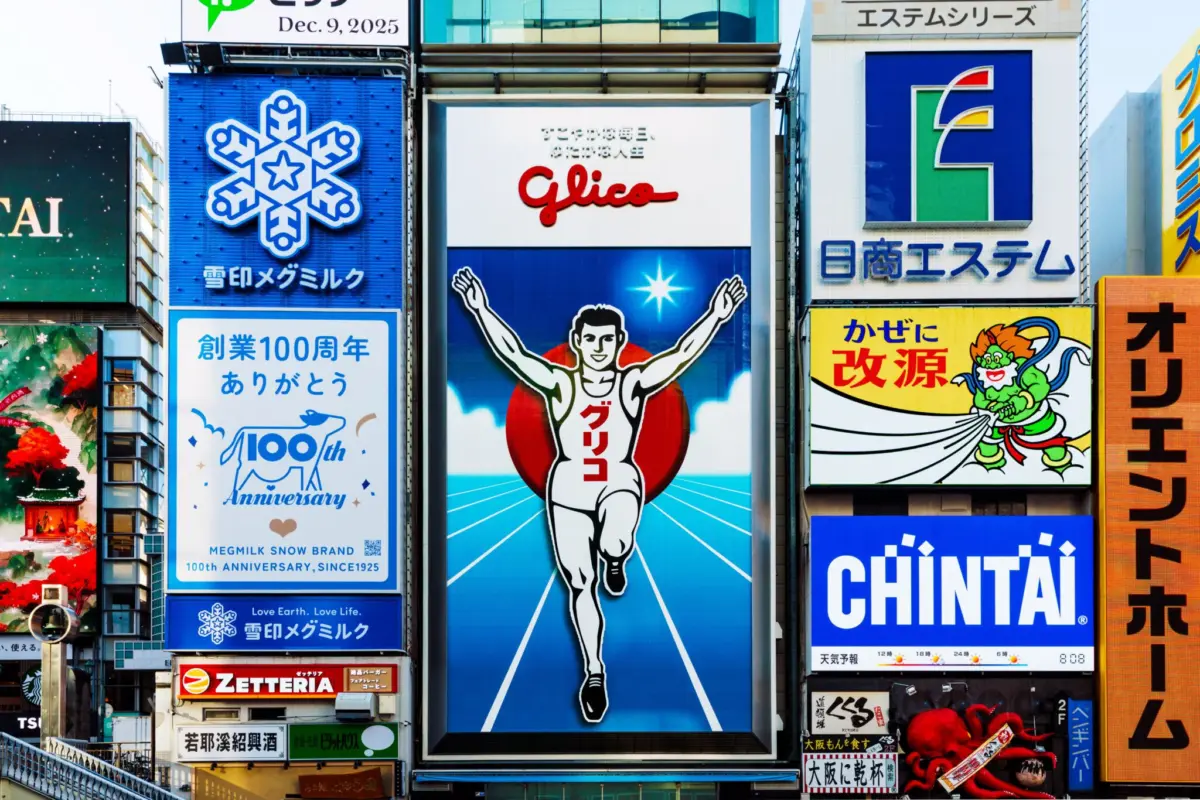
For nearly a century, the neon-lit horizon of Osaka’s bustling Dotonbori district has been anchored by a single, universally recognized silhouette: the Glico "Running Man." A masterclass in commercial endurance that transcended its origins as a simple confectionery advertisement, the giant signboard overlooking the Ebisubashi Bridge has evolved into an irreplaceable cultural heartbeat for Japan’s vibrant Kansai region.
Now, an era is coming to a temporary close. Confectionery giant Ezaki Glico announced during a high-profile press conference in Osaka that the current, sixth-generation Glico running man sign—which has watched over the Dotonbori canal since 2014—will be dismantled this winter. The landmark is scheduled to go dark in December, making way for a highly anticipated, seventh-generation successor slated to debut in the spring of 2027.
As word of the impending removal reverberates across national headlines and international travel forums, travelers and locals alike are rushing to the neon-drenched banks of the canal to capture their final photographs with generation number six. While Ezaki Glico has tightly guarded the visual specifics of the upcoming redesign, company representatives emphasize that the core spirit of the runner—representing health, vitality, and the enduring corporate ethos of the brand—will remain completely intact.
Detailed Chronology: The Evolution of a Dotonbori Icon
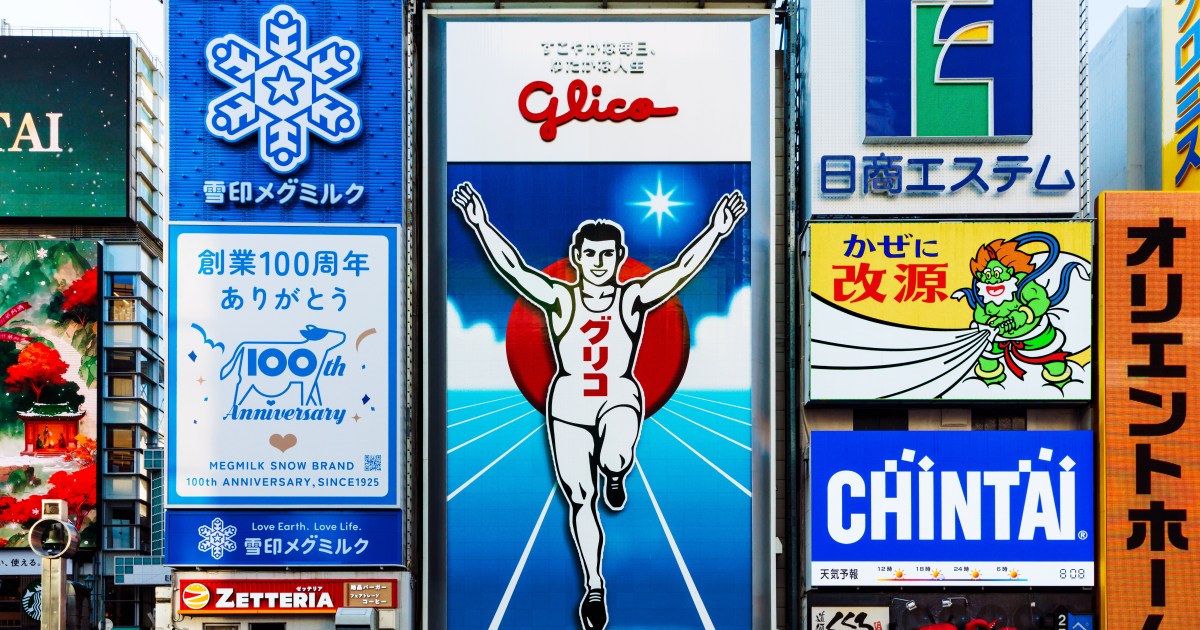
The history of the Glico Running Man is inextricably linked to the modernization of Osaka itself. Ezaki Glico, founded in the city 104 years ago in 1922, established its roots in the commercial and cultural hub of western Japan. Over the decades, the display above the Ebisubashi Bridge has transformed from a static neon sign into a dynamic cultural canvas that has weathered wartime requisition, shifting architectural landscapes, and the digital revolution.
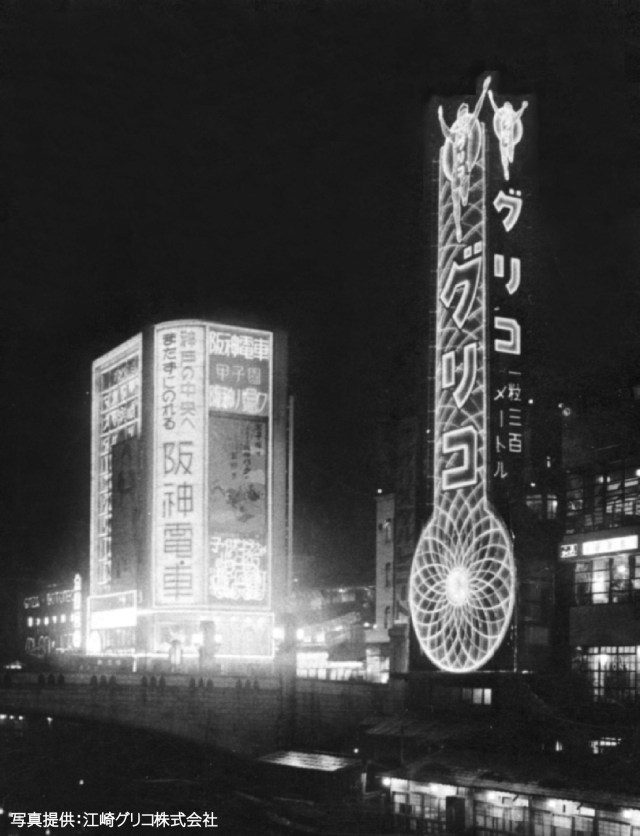
1. The Genesis: The 1935 Original
The Glico sign first illuminated the Dotonbori skyline in 1935. Towering at an impressive 33 meters (108 feet) and utilizing state-of-the-art neon lettering for its era, the installation instantly established itself as a premier local landmark. However, its initial run was cut short. In 1943, as World War II intensified and raw materials became desperately scarce across the Japanese mainland, the pioneering signboard was dismantled to aid the national war effort.
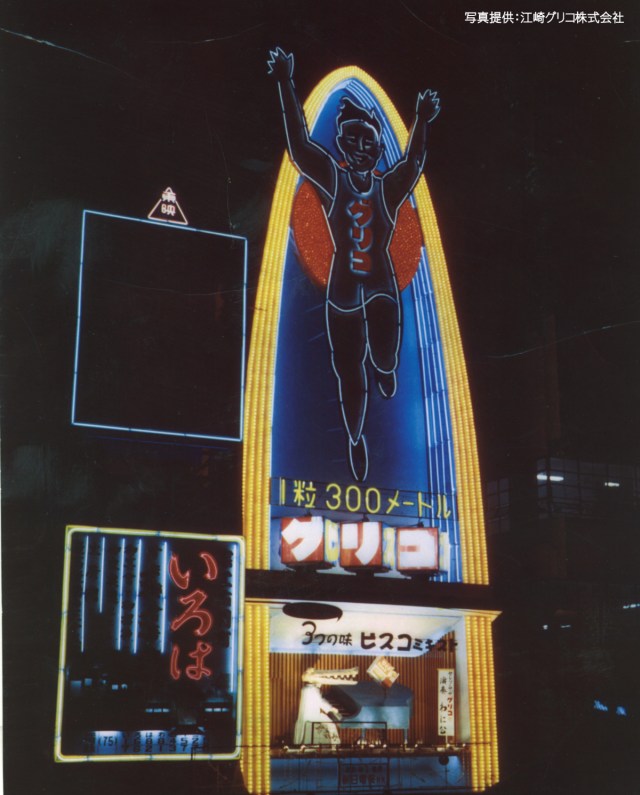
2. The Post-War Revival: Generation Two (1955–1963)
Following a decade-long absence, the iconic runner returned to the same canal-side real estate in 1955. The second incarnation brought a whimsical flair to the post-war recovery era, positioning the running man directly above a theatrical stage featuring a giant toy crocodile enthusiastically playing the piano—a testament to the playful, eccentric marketing spirit that would come to define Osaka’s advertising culture.
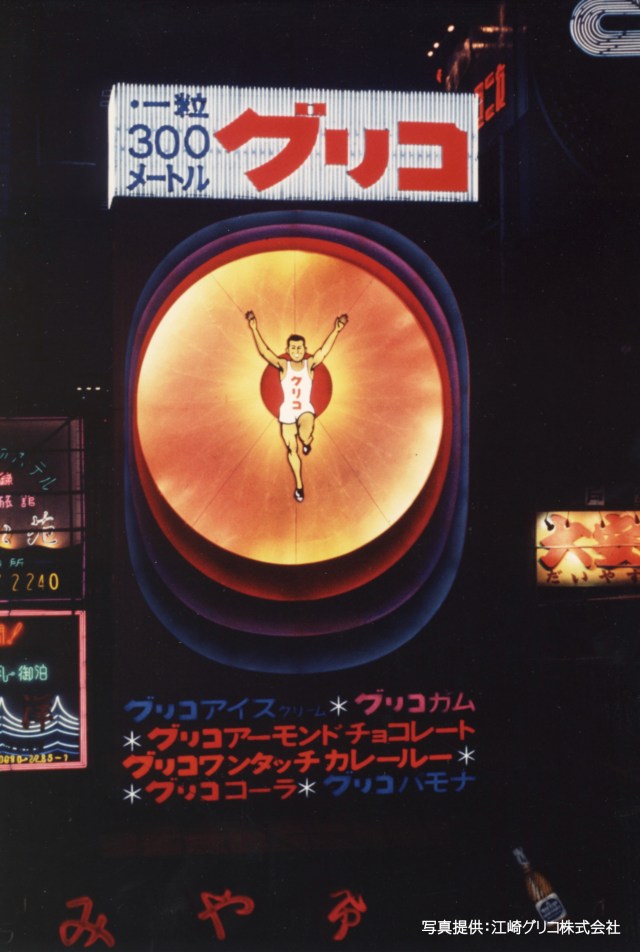
3. The Water-Powered Spectacle: Generation Three (1963–1972)
Pushing the boundaries of outdoor signage technology, the third-generation sign (1963–1972) introduced an elaborate water feature. The installation incorporated 150 nozzles arranged dynamically around the runner, spraying a staggering 12 tonnes of water illuminated by hundreds of synchronized, multicolored lights. This aquatic-neon hybrid created a breathtaking visual spectacle that cemented Dotonbori’s reputation as a neon wonderland.
4. Modernizing the Track: Generation Four (1972–1996)
The fourth iteration, operational for nearly a quarter of a century from 1972 to 1996, laid the structural and visual foundation for the running track motif recognized globally today. However, urban development waits for no one; when extensive renovation work commenced on the adjacent building in the late 1990s, the sign had to be powered down and removed, leaving Osaka briefly without its signature athletic mascot for an entire year.
5. Passing Time: Generation Five (1998–2014)
Marking a technological leap into the turn of the millennium, the fifth-generation sign utilized sophisticated lighting techniques to simulate the passage of an entire day. Passersby watching the display would witness the background subtly shift, creating the illusion that the runner was racing through the streets of Osaka from the bright light of morning, through the golden hues of sunset, and deep into the neon-lit depths of night.
6. The LED Revolution: Generation Six (2014–Present)
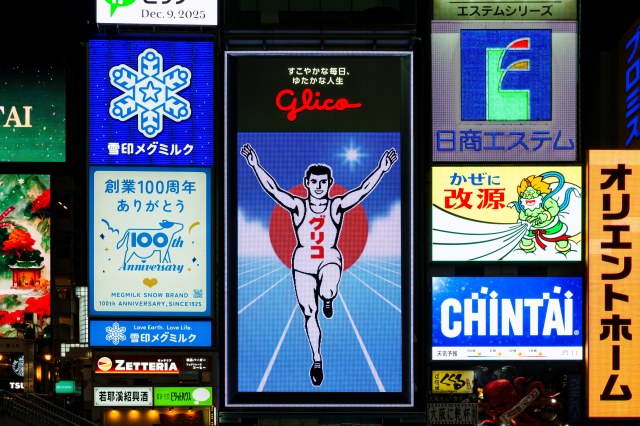
Unveiled in the autumn of 2014, the current sixth-generation sign embraced cutting-edge energy-efficient technology. Powered by approximately 140,000 high-intensity LED lights, this iteration expanded the narrative scope of the display. Beyond merely simulating the local time of day, the background graphics dynamically expanded to showcase the runner journeying across iconic landscapes throughout Japan and major international destinations worldwide.
Supporting Context & Metrics
The Glico Running Man is far more than a corporate billboard; it is an economic and cultural heavyweight for Osaka’s tourism industry. Industry analysts and local tourism boards estimate that the area surrounding the Ebisubashi Bridge attracts a staggering 70,000 to 80,000 visitors every single day.
For international tourists, striking the signature "arms-raised, chest-puffed" running pose in front of the sign has become an obligatory travel ritual, frequently compared in cultural significance to posing in front of Tokyo’s Shibuya Crossing or London’s Big Ben. This immense foot traffic directly bolsters the surrounding Dotonbori economy, driving millions of visitors into nearby restaurants, street food stalls, and retail establishments.
The announcement of the upcoming renovation also arrives at a delicate time for public sentiment regarding public landmarks in Japan. Just weeks prior, widespread national discourse erupted following announcements regarding changes to other iconic Japanese symbols, such as Tokyo’s beloved Suica penguin character. Consequently, Ezaki Glico’s decision to temporarily retire generation number six has transformed into a major cultural talking point, highlighting the public’s deep emotional attachment to corporate mascots that double as public art.
Official Statements and Corporate Vision
At the October 14 press conference held in Osaka, Ezaki Glico executives addressed the media to outline the timeline and philosophical motivation behind the overhaul. Company representative Yoriko Miki fielded questions regarding the upcoming transition, offering reassurance to devoted fans of the brand.
"The running man is not merely an advertising asset; he is the living embodiment of our founding corporate spirit," Miki told reporters. "He represents our enduring brand purpose: helping individuals achieve ‘Healthy days, a fulfilling life.’ While the physical structure must be updated to ensure safety, modern efficiency, and technological excellence, the runner will forever remain the undisputed main attraction of the Dotonbori skyline."
Glico confirmed that deconstruction and reconstruction work on the physical framework will officially commence in December. The multi-month engineering effort will require the complete removal of the sixth-generation sign, leaving a temporary void in the Osaka skyline that will undoubtedly feel conspicuous to millions of daily commuters and international sightseers.
Future Outlook: What to Expect Next
As the countdown to December ticks away, visitors in Osaka face a strictly limited window to witness the sixth-generation running man in all his LED-illuminated glory. Travel authorities and local tourism agencies are strongly advising anyone planning a winter trip to the Kansai region to adjust their expectations: the running man will indeed not be running this winter.
Speculation is already running rampant across social media regarding what the seventh-generation iteration will look like. Will Ezaki Glico incorporate augmented reality elements, hyper-realistic holographic displays, or entirely new interactive features that allow fans worldwide to connect with the sign in real time?
Answers will remain under wraps until Ezaki Glico unveils the finished product in the spring of 2027. Until then, the message to travelers is clear: make your way to the bustling banks of the Dotonbori canal, capture your farewell memories with the sixth-generation icon, and prepare to witness the dawn of a brand-new chapter in Osaka’s legendary neon history.








Belum ada komentar. Jadilah yang pertama berkomentar!