

Executive Overview
In early 2012, while coordinating an interview through his press representative, a pervasive sense of caution clouded the communication. David S. Ware was resting, and the conversation would have to wait until his vitality returned. At the time, this felt like a routine administrative delay for an artist who had navigated lifelong health complications. Yet, these complications had seemingly turned a corner following a successful kidney transplant in 2009, which followed a grueling decade of dialysis. Only months later, following his untimely passing in October 2012, did those fleeting exchanges acquire a poignant, final significance.
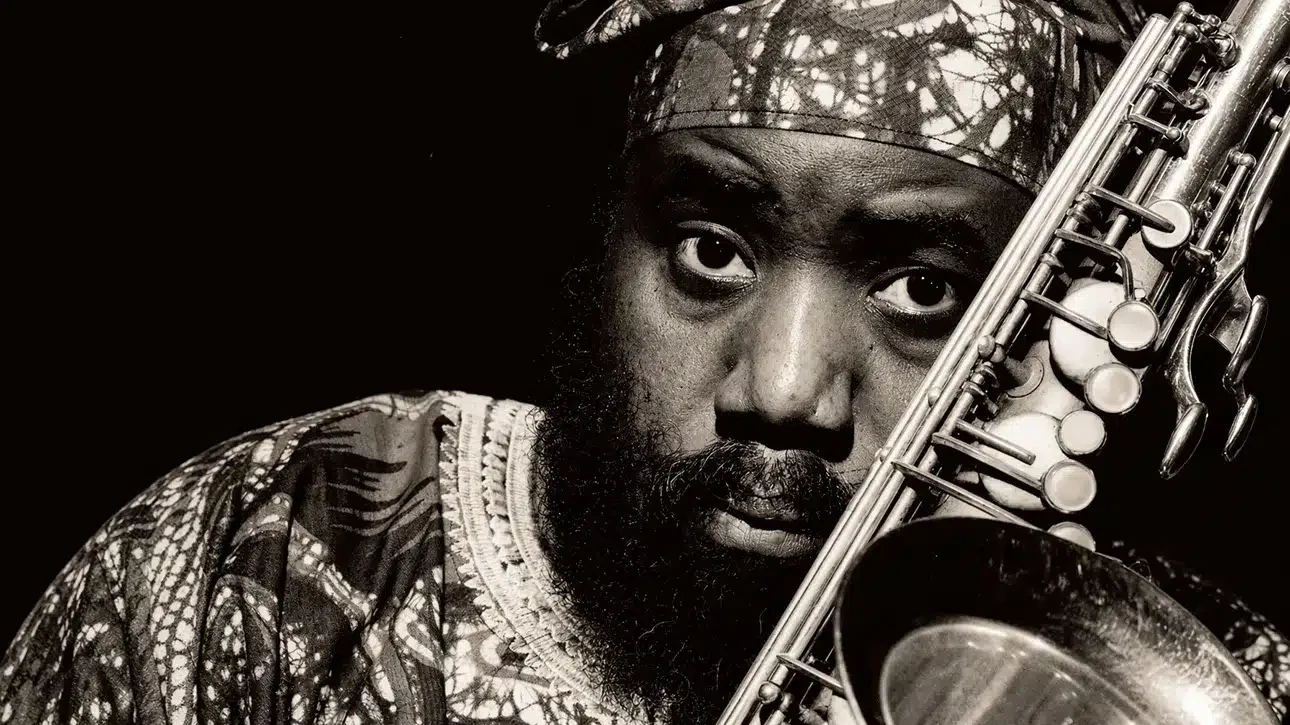
With the loss of David S. Ware, the global jazz community was deprived of one of its most monumental modern practitioners—a titan of the free jazz saxophone whose singular methodology forged an unbreakable bridge between forward-thinking abstraction and historical reverence, all bound by an unshakeable spiritual core. While Ware was far from an unsung hero—commanding a fiercely dedicated international following among connoisseurs and critics alike—his departure felt profoundly premature, cutting short a creative trajectory that still held vast, uncharted potential. Thanks to the vigilant stewardship of his longtime record label, AUM Fidelity, which has continuously resurrected and maintained his legacy through an essential series of archival live recordings and carefully curated reissues, his flame continues to burn.
The conversation detailed herein—one of the absolute final interviews granted by David S. Ware before his death, preserved here in English for the very first time—serves as the foundational bedrock of this retrospective. It captures a man whose relationship with music transcended commercial utility, viewing art as an act of spiritual communion.
Detailed Chronology
Roots in Rhythm: New Jersey, Berklee, and the Shadow of Sonny Rollins
Born David Spencer Ware in Plainfield, New Jersey, in November 1949, the saxophonist’s initial musical impulse was not tied to the horn that would ultimately cement his legendary status. His earliest obsession was percussion.
"It’s like being attracted to a certain car; it fits you," Ware remarked during our 2012 interview. "Rhythm is part of life, and I gravitated towards expressing those rhythms. Not that they cannot be expressed on other instruments."
Before long, however, those rhythms found a permanent home in the melodic and harmonic possibilities of the tenor saxophone. Following his graduation from high school in suburban Scotch Plains, Ware ventured north to Boston to attend the iconic Berklee College of Music. Yet, his tenure there was brief and largely unformative. In an era when academic institutions were notoriously ill-equipped to comprehend the surging avant-garde currents of the late 1960s, Berklee offered little to a young musician whose aesthetic compass was already firmly pointed toward the outer limits.
Reflecting on those three semesters, Ware noted:
"Basically, at 17 years old, my concept, my direction of what kind of musician I wanted to be was already set. So at Berklee, I learned what I did not want to do."
While maintaining ties to New Jersey and Boston, Ware frequently gravitated toward New York City, immersing himself directly in the crucible of jazz innovation. Those exploratory field trips proved infinitely more influential than any formal schooling. Most notably, they led to an improbable mentorship with legendary tenor titan Sonny Rollins.
Accounts of their initial meeting vary—some sources point to a chance encounter in a Greenwich Village grocery store, while Ware himself confirmed they connected through mutual acquaintances via a steady exchange of letters while he was still a teenager. In either case, Rollins took the ambitious young musician under his wing, imparting wisdom that included the mastery of circular breathing.
When asked how he managed to secure the mentorship of such an established luminary, Ware was refreshingly candid:
"There was no convincing. I used to go see him play in Greenwich Village and, at one point, I told him I wanted him to listen to me play. That’s when the musical relationship began. We started to practice together from that point. There was never any form of instruction: we just practiced freely together. There was no word passed or anything."
The "Third World" Enigma and Transcendental Visions
Ware’s earliest recorded documentation remains one of the most compelling and shrouded mysteries in modern jazz history. In 1968, a collective of Boston-area musicians gathered at the home of alto saxophonist and flutist Abdul Hannan to capture a series of uncompromising, spiritually charged free jazz sessions. Aligning stylistically with the late-era output of John Coltrane, Albert Ayler, Marion Brown, and Pharoah Sanders, the group sought to expand the genre’s lexicon by incorporating unorthodox instrumentation—such as the violin and electric piano—alongside nascent world music textures. They intended to release the material under the title The Third World, circulating test tapes to labels in hopes of securing a deal.
Eagle-eyed jazz historians may note an uncanny parallel: a 1970 album of the identical title released by Gato Barbieri, which explored strikingly similar sonic terrain. According to Ware, this overlap was far from accidental.
"In 1968, Abdul, myself, and a friend of ours had a meeting in New York with someone from a magazine. I think it was Jazz Magazine," Ware recalled, his memory slightly fuzzy on the exact publication, though vividly retaining the circumstance. "I remember they were supporting Gato Barbieri a lot. We spoke to that person about our concept of The Third World, and we left a tape. A little later, we called to get their feeling about the music, and their response, which sounded silly or crazy to us, was that they didn’t have a machine to play the tape. Not long after that, Gato came out with that album. Right away we thought they stole the concept we had introduced to them. I don’t think it was a coincidence, but what could we do? None of us knew anything about how things were working at the time; we were naive."
While Barbieri’s record indeed shared thematic motifs, it favored a Latin-oriented framework devoid of the severe, mystical intensity of Ware and Hannan’s sessions. Hannan eventually issued the 1968 recordings (bolstered by a later track) as an extremely limited private pressing in 1971. The narrative deepened further when Hannan abruptly retreated from the jazz scene, subsequently blocking all modern reissue efforts for The Third World. Today, original copies are virtually mythical artifacts, commanding four-figure sums on the secondary collector’s market.
More importantly, The Third World codified the inseparable link between Ware’s art and his metaphysical worldview.
"Spirituality will manifest itself through everyone in different ways," Ware reflected. "It gives anything meaning; nothing has meaning without spirituality. Because this is the base of all subjects."
Around this period, Ware committed himself to Transcendental Meditation (TM)—a practice that would profoundly shape his daily existence and artistic output. Decades later, this commitment led to his involvement in the 2011 short documentary David S. Ware: A World of Sound, produced by the David Lynch Foundation (filmmaker David Lynch being a fellow advocate of the practice). Clarifying the collaboration, Ware noted:
"I did not have any direct contact with David Lynch. They were interested in artists who meditate; that was the connection. They contacted us and came to New York. They filmed some live music and did the interview. That’s how it came about."
Loft Era Immersion and European Breakthroughs
Relocating permanently to New York City around 1973, Ware integrated himself directly into the legendary "loft jazz" movement—a self-sustained ecosystem where musicians and audiences nurtured free jazz outside the commercial constraints of mainstream clubs. Operating both as a bandleader and a sought-after sideman, Ware performed and recorded with foundational figures such as pianist Cecil Taylor and drummer Andrew Cyrille.
Describing the contrasting methodologies of these two masters, Ware observed:
"It was two different ways of approaching improvisation. Cecil Taylor has his music set up a certain way, which makes you improvise a certain way: a specific system that runs through all his music. Andrew is different: you go from piece to piece with him."
Recordings like Taylor’s Dark to Themselves and Cyrille’s Junction and Metamusicians’ Stomp elevated Ware’s profile, propelling Apogee—his collaborative trio with pianist Gene Ashton (Cooper-Moore) and drummer Marc Edwards—onto international stages, particularly across Europe.
Europe proved instrumental in facilitating Ware’s debut recordings as a leader. Following a self-financed New York studio session in 1977, the Swiss imprint HatHut acquired the tapes, releasing them in 1979 as Birth of a Being. This followed his true debut, From Silence to Music, released a year prior via the French label Palm—a striking, idiosyncratic studio excursion featuring solo tenor work alongside sparse accompaniment from violinist Jean-Charles Capon. Birth of a Being, conversely, offered a truer snapshot of his ferocious, rhythmically driving ensemble sound, bridging the volcanic intensity of Coltrane and Ayler with unexpected, crystalline lyricism.
The Taxi Years and the Resurgence of the David S. Ware Trio
Despite critical acclaim within avant-garde circles, commercial breakthroughs proved elusive. As the music industry tilted aggressively toward jazz-fusion and conservative acoustic revivals, the broader public appetite for uncompromising free jazz dwindled. Facing financial realities, Ware stepped back from active performance in the early 1980s, earning his living as a New York City taxi driver. Asked if hacking a cab matched the gritty cinematic depictions found in films like Martin Scorsese’s Taxi Driver, Ware offered a characteristically terse, pragmatic reply:
"There is nothing I want to share about that."
Salvation arrived by chance in the East Village when Ware crossed paths with his old friend, bassist William Parker. Hesitantly, Parker floated the idea of collaborating once more, sparking an ecstatic affirmation from Ware that quietly reignited his musical career. Even as his profile steadily recovered, Ware continued driving cabs until 1995, when his taxi career was abruptly terminated after a motorist ran a red light, severely fracturing his knee.
For Ware, commercial viability was never the primary metric of artistic success:
"I play music because I love it, because I am excited about the potential of a certain band. Making a living is like a side effect, and I am fortunate I don’t have to think of playing music as a way to make a living. Even though I am making a living with it, that is not the first consideration. It is not the first intention. The first intention is always the music itself."
The partnership with Parker birthed the David S. Ware Trio, rounded out by drummer Marc Edwards. Their 1988 album Passage to Music, released on the Swedish label Silkheart Records, heralded the second act of Ware’s career. His tone was heavier, more mature, and layered with unprecedented emotional nuance. Expanding his sonic palette, Ware began incorporating specialized reeds like the saxello and the stritch.
This period also crystallized Ware’s commitment to unaccompanied solo performance.
"With a player like me, this tradition exists," he explained. "My playing stays on top of the tradition, and that is why I want to play more solo. By listening to one instrument, people can have a chance to hear how tradition runs through my playing."
The Quartet Era and Final Chapters
By the early 1990s, the trio expanded into a powerhouse quartet with the addition of visionary pianist Matthew Shipp. Supported by a revolving cadre of elite drummers—including Whit Dickey, Susie Ibarra, and Guillermo E. Brown—the quartet delivered definitive masterworks such as Great Bliss, Flight of I, and Third Ear Recitation.
Ware’s compositional and improvisational approach walked a delicate tightrope between structural rigor and unbridled freedom:
"Apogee was a group concept, but I felt I was already working on my own sound with them. Long before we got to New York, I always thought I was working on my own personal sound, so by the time the quartet formed, there was a huge reservoir of concepts to delve into. That including music that had set melodies and music without set melody."
A brief, high-profile signing with Columbia Records—orchestrated during Branford Marsalis’s tenure as creative consultant for the jazz division—resulted in Go See the World (1998), widely regarded as his most accessible entry point. Characteristically, Ware subverted expectations by transforming Marvin Hamlisch and Barbra Streisand’s pop ballad "The Way We Were" into a sprawling, 14-minute modal tour de force marked by telepathic dialogue with Shipp.
Late-career milestones included Shakti (2009), which integrated guitarist Joe Morris into his sonic architecture for the first time, and his final quartet, Planetary Unknown. Featuring Parker, Cooper-Moore, and legendary drummer Rashied Ali, the group released a self-titled studio album in 2010 that honored jazz lineage while aggressively pushing the idiom into the future.
Looking ahead with characteristic optimism, Ware noted of the project:
"If my health allows, there will be much more coming from this band."
Supporting Context & Metrics
To fully contextualize David S. Ware’s impact on the modern jazz ecosystem, several key metrics and historical markers must be acknowledged:
- Discographical Output: Ware recorded over 25 albums as a leader across prestigious independent and major imprints, including HatHut, Silkheart, DIW, Columbia, Thirsty Ear, and AUM Fidelity.
- The Transplant Milestone: Following a decade-long regimen of peritoneal dialysis that shadowed his most prolific recording years, Ware received a life-saving kidney transplant in May 2009, generously donated by a fan, Yumiko Tanaka. This medical intervention granted him a vital final chapter of creativity.
- Critical Acclaimed Reissues: Following his death, AUM Fidelity spearheaded comprehensive archival campaigns, releasing essential box sets such as The Apothecary – 1992/1993 and Live in Vilnius, cementing his status as a pillar of late-20th-century improvised music.
Official Statements
Reflecting on Ware’s monumental contributions upon his passing, fellow musicians and critics universally lauded his peerless integrity:
"David S. Ware was a giant of the tenor saxophone who possessed a sound as massive as his spiritual depth. He took the foundational lessons of Coltrane and Ayler and built a cathedral entirely his own." — AUM Fidelity Statement
"He didn’t just play the horn; he projected his entire soul through it. His music was a rigorous, beautiful discipline rooted in absolute honesty." — Matthew Shipp
Future Outlook
More than a decade after his passing on October 18, 2012, David S. Ware’s musical architecture stands impervious to the shifting tides of genre and commercial fashion. As modern jazz continues to grapple with its identity between retro-traditionalism and digital-age pastiche, Ware’s uncompromising stance serves as a permanent North Star.
Through the ongoing archival efforts of labels like AUM Fidelity, unreleased studio sessions and incendiary live performances continue to trickle into the public sphere, ensuring that subsequent generations of improvisers will reckon with his monumental sound. Ware summarized the ultimate ethos of his art best:
"Jazz is a very gracious way of self-expression, to express oneself through a musical instrument. And it should be a very creative way. Creativity is the biggest part: one should not repeat oneself in jazz as much as possible."
David S. Ware never repeated himself. His towering body of work remains an open invitation to listen deeper, think broader, and experience music as a vehicle for the infinite.






Belum ada komentar. Jadilah yang pertama berkomentar!