Twenty-five years after its initial theatrical release in September 2001, Ben Stiller’s Zoolander occupies a unique space in modern cinematic history. Long remembered by the general public for its quotable dialogue, vibrant visual palette, and the gravity-defying, pouty-lipped facial expression known as "Blue Steel," the film has steadily matured into a masterclass of high-concept satire. Beneath its seemingly featherweight, deliberately dim-witted exterior lies a remarkably prescient critique of hyper-commercialism, the intoxicating allure of celebrity culture, and the insular absurdity of the global fashion industrial complex.
Helmed, co-written, and starring Ben Stiller at the height of his comedic powers, Zoolander arrived at a distinct cultural crossroads. It parodied an era when supermodels achieved household-name status on par with Hollywood movie stars, and when the intersection of high fashion, corporate wealth, and mass media was reaching a fever pitch. Yet, its journey to the screen was fraught with unconventional origins, legal challenges, and profound historical coincidences—including its release in the immediate wake of the September 11 attacks.
As we look back at a quarter-century of Derek Zoolander’s legacy, a comprehensive re-examination of the film reveals a meticulous creative process, an extraordinary ensemble of celebrity cameos, and a cultural staying power that far outlived its initial box-office returns.
Detailed Chronology: From VH1 Skits to the Silver Screen
The Genesis: 1996 VH1 Fashion Awards
The roots of Derek Zoolander trace back several years before the 2001 feature film. During the late 1990s, public fascination with the fashion industry reached a fever pitch. Supermodels such as Naomi Campbell, Claudia Schiffer, and Cindy Crawford commanded global attention, transforming the runway into mainstream pop culture. Sensing an opportunity for pointed satire, Emmy Award-winning television writer Drake Sather conceived the character of a clueless male supermodel for a series of short comedic sketches intended for the 1996 VH1 Fashion Awards.
Brought in to bring the character to life, Ben Stiller adopted the persona with immediate, deadpan conviction. Director Russell Bates, who helmed the original broadcast skits, is credited with coining the name "Derek Zoolander," pulling inspiration from the real-life Calvin Klein male models Johnny Zander and Mike Vanderloo. These initial television spots established the core DNA of the character: absolute vanity coupled with a total vacuum of intellect, an aesthetic obsession, and an unshakeable belief in his own supreme importance.
Casting and Production Inflections
Encouraged by the positive reception of the VH1 shorts, Stiller, alongside Sather and co-writer John Hamburg, expanded the premise into a feature-length narrative. The production process brought together a tightly knit collective of comedic talent, many of whom belonged to the informal fraternity of actors often referred to as the "Frat Pack."
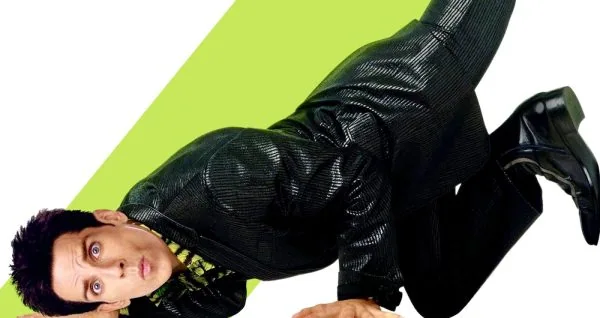
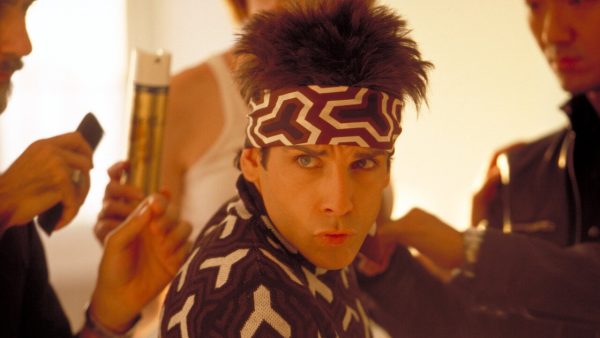
The Birth of "Blue Steel": The iconic, squinting facial expression that defines Derek Zoolander was not born in a writers’ room, but rather in front of a domestic mirror. Stiller frequently made the exaggerated facial contortion while drying and styling his hair at home. While his wife, actress Christine Taylor, initially poked fun at the expression during domestic downtime, Stiller recognized its comedic potential and repurposed it as the character’s ultimate signature look.
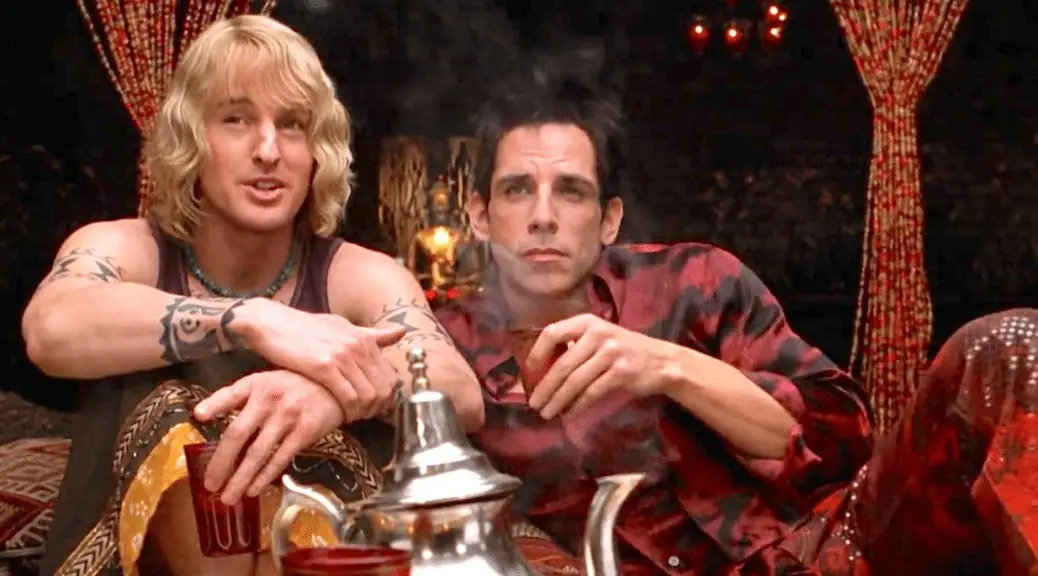
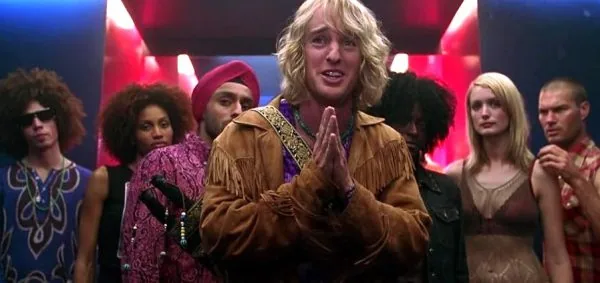
Securing Owen Wilson as Hansel: The role of Derek’s chief rival-turned-ally, the bohemian counter-culture model Hansel McDonald, was written explicitly with Owen Wilson in mind. However, due to early uncertainties regarding Wilson’s casting availability, Stiller briefly opened auditions to other actors. Wilson ultimately secured the part, donning a distinct blonde wig throughout the entirety of the principal photography due to scheduling overlaps with his role in the action-thriller Behind Enemy Lines.
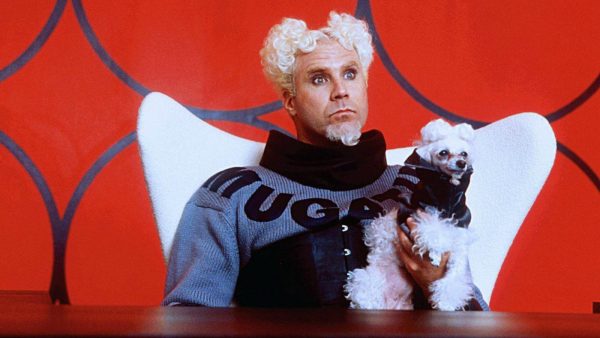
Mugatu’s Nomenclature: Will Ferrell’s unhinged, flamboyant portrayal of the villainous fashion mogul Jacobin Mugatu remains one of the film’s standout performances. Initially, the role was offered to comedian Andy Dick. When Dick had to pass due to commitments on the NBC sitcom Go Fish (ultimately taking on a smaller cameo as Olga the masseuse), the part fell to Ferrell. Stiller named the character "Mugatu" as a direct homage to the white-haired, horned gorilla creature from the planet Neural featured in the classic Star Trek television series.
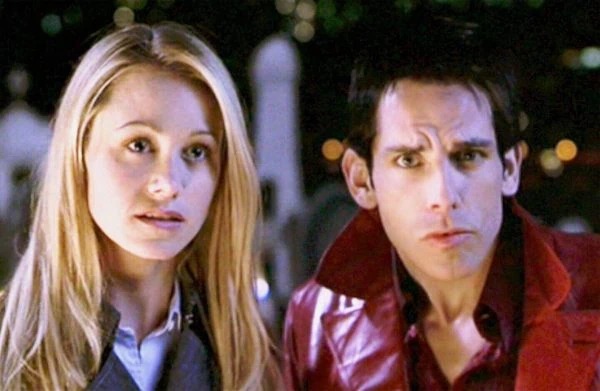
A Family Affair: Stiller integrated much of his immediate family into the production. Christine Taylor played investigative journalist Matilda Jeffries; his father, comedy legend Jerry Stiller, portrayed predatory modeling agent Maury Ballstein; his mother, Anne Meara, appeared as a protestor who hurls an egg at Mugatu; and his sister, Amy Stiller, made a brief appearance as one of Hansel’s entourage members.
Legal and Geopolitical Complications
As Zoolander moved toward post-production and its scheduled late-2001 release, it encountered unexpected hurdles that tested the studio’s resolve.
In 1998, literary provocateur Bret Easton Ellis published Glamorama, a satirical novel following a dim-witted male model drawn into an international terrorist conspiracy involving operatives from the fashion world. Following the release of Zoolander, Ellis noted striking conceptual similarities between his novel’s plot and the film’s narrative—specifically regarding a fashion icon brainwashed into a political assassination plot. Ellis pursued legal action against Ben Stiller and the studio for copyright infringement; the matter was eventually resolved out of court through an amicable settlement.
Simultaneously, the film faced international resistance due to its central plot point: Mugatu and his co-conspirators brainwashing Derek Zoolander to assassinate the newly elected, progressive-leaning Prime Minister of Malaysia. Citing the narrative as "definitely unsuitable," the Malaysian government censorship board promptly banned the film. Neighboring Singapore similarly restricted the release due to its satirical and controversial elements, though the ban was lifted five years later under an NC-16 rating. In select Asian theatrical distributions, references to Malaysia were digitally or textually altered to the fictional island nation of Micronesia to appease regional sensitivities.
Supporting Context & Metrics
Box Office Performance and Critical Reception
Released domestically on September 28, 2001, Zoolander faced a profoundly delicate box-office landscape in the weeks following the tragic events of September 11. Operating on a relatively modest production budget of $28 million, the film performed respectably, grossing $60.8 million worldwide.
Critical response upon release was mixed-to-positive, though time has been remarkably kind to its reputation. On the review aggregator Rotten Tomatoes, the film holds a 64% approval rating. The site’s critical consensus aptly captures its appeal:
"A wacky satire on the fashion industry, Zoolander is one of those deliberately dumb comedies that can deliver genuine laughs."
Prominent contemporary critics recognized its unique tonal balancing act. Writing for The Hollywood Reporter, Kirk Honeycutt noted how the film deftly bridged the gap between "silly and smart." Meanwhile, British film critic Nev Pierce praised its sharply observed skewering of industry excess. Unlike subsequent cinematic explorations of fashion—such as the glossy, accessible workplace satire The Devil Wears Prada—Zoolander embraced a surreal, high-camp absurdity that weaponized avant-garde aesthetics against themselves.
The 9/11 Digital Alteration
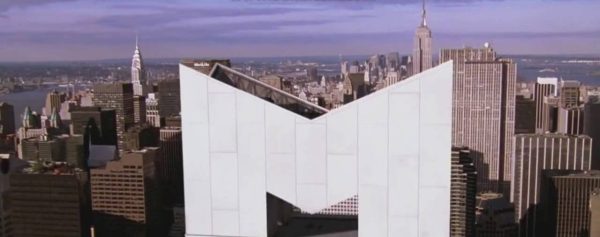
In the wake of the September 11 attacks, filmmakers faced unprecedented choices regarding visual effects in media depicting New York City. Because Zoolander was completed prior to the tragedy, several background sequences featured sweeping shots of the World Trade Center’s Twin Towers. Out of respect for the victims and the national mood, Ben Stiller and the production team made the conscious decision to digitally erase the towers from all background plates before the film hit theaters. Fifteen years later, for the film’s 2016 Blu-ray release, the original background compositions were quietly restored.
A Masterclass in Cameo Culture
Few comedies in cinematic history boast the sheer density of star-studded cameos found in Zoolander. The film functioned as a massive crossover event between Hollywood cinema, the music industry, and the international fashion elite.
Fictionalized Self-Portraits: Rock legend David Bowie appeared as the impartial referee for the legendary "walk-off" sequence between Derek and Hansel, while actor Billy Zane famously appeared as Derek’s loyal confidant, delivering the immortal line: "Listen to your friend Billy Zane. He’s a cool dude."
The Hollywood Enclave: The opening red-carpet sequence featured rapid-fire appearances by Winona Ryder, Christian Slater, Cuba Gooding Jr., Stephen Dorff, and Natalie Portman, among others.
The Fashion Royalty: To lend an air of authentic absurdity to the proceedings, actual fashion luminaries—including Donatella Versace, Tom Ford, Tommy Hilfiger, Karl Lagerfeld, Heidi Klum, Tyson Beckford, and Fabio Lanzoni—participated as themselves, cheerfully embracing the joke at their own industry’s expense.
Official Statements and Retrospective Insights
Reflecting on the film’s legacy decades later, Ben Stiller has often expressed astonishment at how deeply ingrained the characters have become in popular culture. In various retrospective interviews, the filmmaker-actor noted that what began as a lark for a televised awards show snowballed into an enduring cultural touchstone largely because the real-life fashion world frequently mirrored the film’s heightened reality.
"We were aiming at a moving target of vanity and self-seriousness," Stiller remarked during a retrospective discussion on the film’s anniversary. "The funny thing about the fashion world is that it has always possessed a wonderful, begrudging self-awareness. Long after the movie came out, designers and supermodels would come up to us and quote lines back, or strike the ‘Blue Steel’ pose on actual runways. They got the joke."
Industry analysts have similarly noted that Zoolander anticipated the democratization of vanity via social media. Long before Instagram influencers weaponized aesthetic perfection and filtered self-obsession, Derek Zoolander was pioneering the concept that looking exceptionally attractive was a full-time vocation disconnected from cognitive reality.
Future Outlook: The Franchise Ceiling and Enduring Legacy
The enduring cultural footprint of the original film inevitably sparked conversations regarding expansion. For over a decade, fans clamored for a continuation of Derek Zoolander’s journey.
When Zoolander 2 finally materialized in February 2016—fifteen years after the original—it arrived with immense anticipation, heavily relying on nostalgia, updated celebrity cameos, and returning core cast members. However, the sequel failed to capture the lightning-in-a-bottle spontaneity of its predecessor. Plagued by shifting comedic sensitivities and an over-reliance on callbacks, Zoolander 2 underperformed both critically and commercially, effectively halting any plans for a planned cinematic trilogy. A simultaneous venture into adult animation via Netflix, titled Zoolander: SuperModel, similarly failed to make a lasting impression on critics or audiences.
Despite the misfire of its belated extensions, the original 2001 film remains entirely untarnished by its sequels. Twenty-five years on, Zoolander stands as a monumental achievement in high-concept cinematic satire. It proved that a comedy could be profoundly silly on the surface while operating as a razor-sharp sociological deconstruction underneath. As long as society continues to grapple with the superficialities of fame, the echo of Derek Zoolander warning us that we must learn to turn left—because we are not ambi-turners—will remain as relevant and resonant as ever.











Belum ada komentar. Jadilah yang pertama berkomentar!