

Executive Overview
In 1956, literary critic Harold Rosenberg diagnosed consumerism as an insidious "process of depersonalization and passivity." Fast-forward seven decades, and the contemporary attention economy has taken Rosenberg’s thesis and weaponized it. Today, systemic alienation and worker exploitation are easily bypassed with a swift algorithmic scroll—drowning out labor grievances with viral videos of talking dogs. We are invited to be happy or depressed digital cogs together, willingly participating in a grand, state-of-the-art false consciousness.
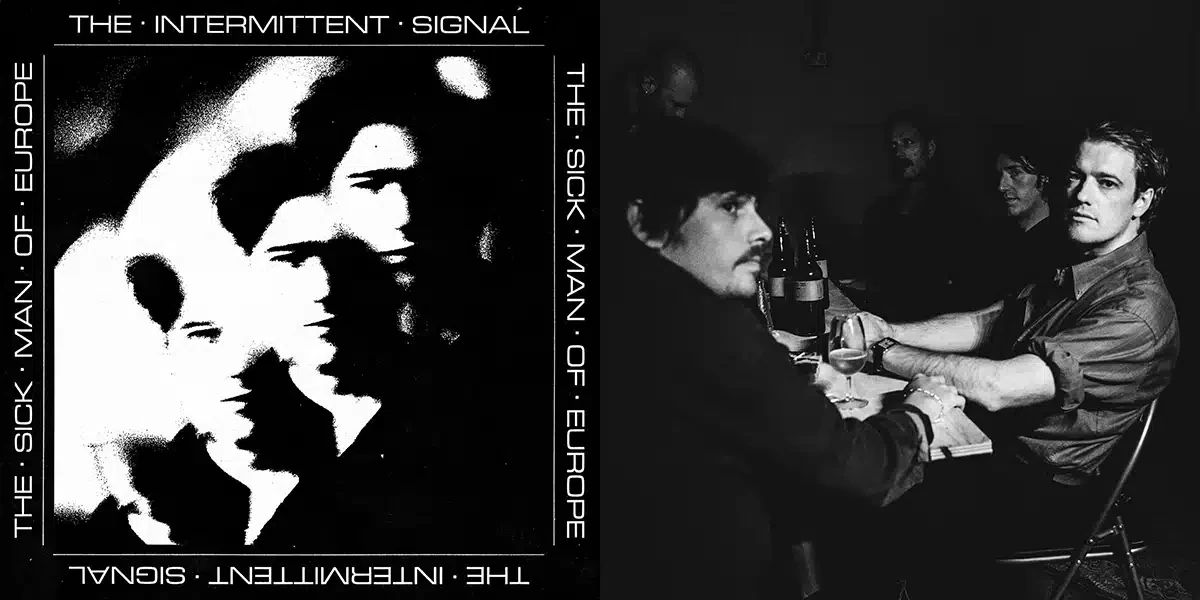
Yet, within this hyper-saturated digital panopticon, rare cultural artifacts emerge to act as a pail of cold water splashed across our faces. Enter The Sick Man of Europe, a politically charged musical collective whose sophomore album, The Intermittent Signal, arrives not merely as a collection of songs, but as a diagnostic critique of our collective docility.
This piece explores the band’s latest release through the lens of critical theory, tracing how modern art navigates political apathy, the traps of algorithmic capitalism, and the evolution of protest music in an era where dissent itself threatens to become just another marketable commodity.
Detailed Chronology: From Subversive Mouthpiece to Direct Protest
The Pre-Capitalist Roots of Passivity
To understand the current state of algorithmic pacification, one must look backward. Passivity, after all, long precedes modern capitalism. The Roman satirist Juvenal famously coined the phrase panem et circenses—"bread and circuses"—to describe how the Roman state maintained social control. By merely catering to the public’s most basic biological and recreational needs, the government effectively silenced dissent.
When modern audiences sink into velvet theater seats with buttery popcorn to consume multi-million-dollar blockbuster franchises, they are indulging in a tradition thousands of years old. The actors have changed—Ancient Rome had no Chris Hemsworth, though perhaps a Russell Crowe—but the mechanism remains identical.
The Frankfurt School in the Age of Silicon Valley
What would twentieth-century philosophers Theodor W. Adorno and Max Horkheimer have made of TikTok? While history has left that question unanswered, their pioneering concept of the "culture industry" remains startlingly relevant. Adorno and Horkheimer posited that culture, under modern industrialism, becomes a commodity. Entertainment is deployed to numb the masses, stymie political inquiry, and erode personal autonomy.
In the 21st century, however, we no longer require traditional mass-produced Hollywood machinery to keep us distracted. The "tech bros" of Silicon Valley have streamlined the process, engineering an attention economy so frictionless and immersive that algorithms dictate our daily rhythms, leaving us too docile to even question what day of the week it is.
The Evolution of The Sick Man of Europe
It is against this backdrop of algorithmic paralysis that The Sick Man of Europe operates. On their self-titled debut album, the group offered a breath of fresh air: a clever political collective that eschewed preaching to the converted. Rather than trying to sound like French theorist Jean Baudrillard fronting Gang of Four, they evoked an uncanny synthesis—as if Joy Division’s Ian Curtis had spent a previous life fronting the 1970s New York synth-duo Suicide, but trading pure nihilism for an acute awareness of the digital age.
Backing their dense lyrical frameworks with propulsive synthesizers and motorik drumbeats, a phlegmatic baritone voice delivered bleak news as if it were an inevitable, pre-written script. This was a narrator trapped within their own compromised psyche, spouting corporate and workplace jargon as if they genuinely bought into the institutional bullshit. It was a terrifyingly brilliant personification of the capitulation of the Self—a stark warning of how political apathy seamlessly transitions into active complicity.
Their debut utilized Dadaist nonsense, Letterist International détournement, and Symbolist vulgarity reminiscent of Arthur Rimbaud. By embracing a monochrome aesthetic that sharply contrasted with the hyper-fixated, color-drenched vanity of the digital age, the band subverted capitalism by ingeniously becoming its unblinking mouthpiece.
The Shift on The Intermittent Signal
With their sophomore LP, The Intermittent Signal, the collective has pivoted. Retaining their stark monochrome aesthetic, they have transitioned into a more traditional protest group rallying explicitly against the attention economy.
Yet, this shift introduces a profound artistic paradox. In the inescapable grip of late-stage capitalism, the overt protest artist risks becoming just another commodity—a distinct viewpoint packaged, marketed, and sold back to the consumer. As cultural critics have long noted in comparing the prickly, contradictory brilliance of The Mekons to the straightforward moralizing of Billy Bragg, direct political reportage devoid of irony or internal contradiction often lacks the subversive punch of ambiguity.
On their debut, The Sick Man of Europe offered no easy solutions or comforting solidarity; hope emerged organically precisely because the narrator unknowingly voiced their own political enslavement. On The Intermittent Signal, the adversary is clearer, but the psychological complexity risks dilution.
Supporting Context & Metrics: Sound, Structure, and Style
Despite the debate surrounding their lyrical pivot, the sonic architecture of The Intermittent Signal is nothing short of a triumph. Musically, the album plunges the listener into a chiaroscuro world—a space suspended between life and death, echoing within Gothic corridors where shadows are the only view.
Sonic Indicators and Instrumentation
- Rolling Synthesizers: Piling up like snow or sorrow, establishing a heavy, enveloping atmosphere.
- Punchy Drum Machines: Crafting intricate sonic oddities that propel the tracks forward.
- Jagged Guitars: Striking with sudden, startling precision, leaping out at the listener unexpectedly.
- Undulating Rhythms: Replacing the rigid, repetitive synth lines of the debut, these flexible rhythms suggest an open door out of interminable bureaucracy.
Track-by-Track Evolution
The LP showcases a distinct expansion in the band’s compositional range, favoring larger hooks and expansive choruses without sacrificing their signature bleakness:
- "Chromophobia": Retains the icy, atmospheric dread reminiscent of Depeche Mode.
- "Apathy": Dives deep into Krautrock territories, driven by relentless, motorik synth lines.
- "The Cadogan Gate": Introduces unexpected melodic accessibility.
- "Eyeless/Mindless": Driven by a pounding, unrelenting beat that anchors the album’s heavier moments.
Official Statements and Critical Reception
Cultural theorists and music critics alike have rushed to contextualize the release of The Intermittent Signal. While formal press releases from the band’s label, The Leaf Label, emphasize the record as a direct sonic assault on digital distraction, independent music critics have focused on the philosophical implications of the band’s evolution.
Musicologists note that effective political art historically relies on raising questions rather than drafting stalwart platforms of support. When listeners already agree with an artist’s premise, explicit protest music risks preaching to the converted—making well-meaning messages fall flat or ring hollow.
Yet, The Sick Man of Europe continues to defy easy categorization. By forcing listeners to confront their own digital complicity through towering synth soundscapes and unflinching baritone deliveries, they remain one of the most vital political acts in the contemporary cultural landscape.
Future Outlook
As the attention economy continues to tighten its grip on public discourse, the role of political art faces an existential crossroads. Algorithms will continue to optimize for engagement, turning human attention into a harvested resource, and culture will continue to grapple with its own commodification.
Where The Sick Man of Europe goes from here remains an open question. Whether they return to the slippery, ironic subversion of their debut or continue to refine their role as direct sonic protestors, their work serves as an indispensable mirror to our digital age. The Intermittent Signal proves that even when the signal threatens to break, the noise of resistance is still worth tuning into.






Belum ada komentar. Jadilah yang pertama berkomentar!