

Executive Overview
In the contemporary cinematic and political landscape, few subjects carry the immediate, volatile weight of the ongoing conflict in Gaza. Director Poh Si Teng’s documentary, American Doctor, attempts to navigate this fraught terrain by examining the humanitarian crisis through the eyes of three American volunteer physicians who served in Gaza before, during, and after the 2025 ceasefire.
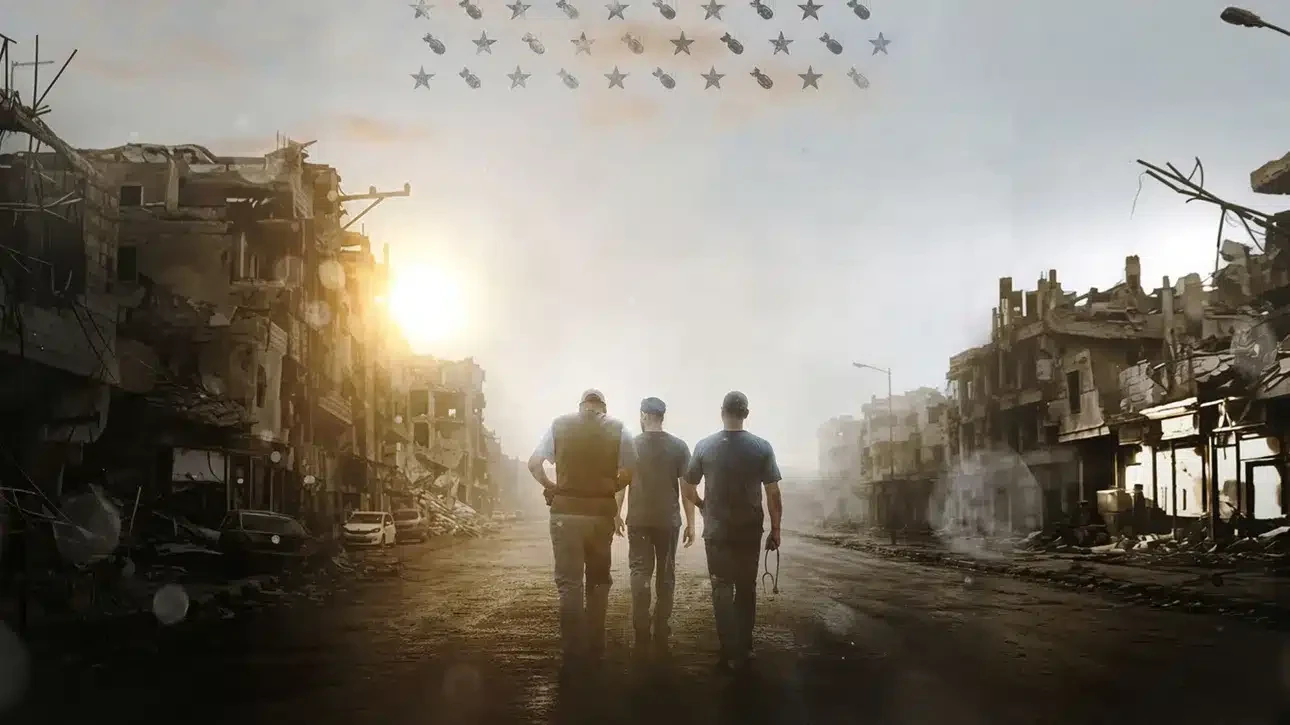
The film centers on three "birthright" U.S. citizens: Dr. Mark Perlmutter, a Jewish-American orthopedic surgeon from North Carolina; Dr. Thaer Ahmad, a Palestinian-American emergency room physician from Illinois; and Dr. Feroze Sidhwa, a Parsi-American trauma surgeon from California. By deploying these medical professionals as its primary narrative anchors, the documentary plunges headfirst into the physical and psychological debris of a pulverized enclave.
However, American Doctor raises profound questions regarding the responsibilities of modern documentary filmmaking. Operating in an era marked by digital saturation and severe political polarization, the film adopts an observational, old-school approach. It presents raw, unvarnished imagery and unfiltered testimonials, largely forgoing deep historical contextualization, institutional fact-checking, or authorial perspective.
This review-driven investigative analysis explores the structural choices, ethical dilemmas, and socio-political implications of Teng’s work. By examining the tension between showing explicit trauma and maintaining journalistic objectivity, American Doctor challenges audiences to consider whether purely observational filmmaking illuminates complex geopolitical conflicts—or merely flattens them into aesthetically polished pieces of modern media consumption.
Detailed Chronology: From the Operating Room to the Halls of Congress
The structural arc of American Doctor moves purposefully from the microscopic horrors of emergency triage in Gaza to the macro-level political inertia of Washington, D.C. This progression exposes the limitations of relying solely on eyewitness testimony within a system structurally indifferent to humanitarian appeals.
Act I: The Ethics of Representation
The film opens with an immediate meta-textual debate between Director Poh Si Teng and Dr. Mark Perlmutter over a photograph depicting dead children. Teng initially argues for blurring the image, invoking the standard of the "dignity of the dead" and aligning with guidelines promoted by human rights audiovisual organizations like WITNESS. Her underlying creative dilemma is clear: Does displaying graphic human devastation deepen a documentary’s critical rigor, or does it rely on cheap shock value to manipulate viewer perception?
Perlmutter successfully pushes back against this impulse. He argues that blurring sanitizes an already sanitized media ecosystem, and that restoring unvarnished visibility to the victims is a necessary act of reclaiming their dignity. Backed by family consent, Perlmutter wins the argument. The photograph shown is unexpectedly tranquil, carrying a sublime weight rather than a visceral shock. From this moment onward, the documentary pulls fewer punches, plunging the viewer into increasingly graphic representations of war.
Act II: Abstract Violence and the Hollywood Aesthetic
As the narrative advances, Teng captures sweeping drone footage hovering above miles of flattened urban landscapes. The decimated apartment blocks, skeletal frameworks, and cleared thoroughfares bear an eerie resemblance to post-World War II Berlin or Tokyo.
This framing invites a dangerous cinematic comparison. The aerial shots of Gaza could easily double as establishing sequences for a Hollywood post-apocalyptic blockbuster, waiting for an A-list action star to walk into frame. This visual normalization of destruction highlights a central crisis of our era: images of mass violence have become so ubiquitous across media platforms that they risk losing their moral urgency. Fictional movies mimic reality, but documentaries about real atrocities increasingly risk being consumed as indistinguishable from fiction.
While subjects like Perlmutter do not hesitate to direct pointed invective at Israeli military strategy—even utilizing terms like "Zionism" and "genocide"—Teng maintains a strict observational distance. When Dr. Feroze Sidhwa dismisses Israeli claims regarding Hamas tunnels beneath hospitals, or when Dr. Thaer Ahmad describes the nine-month campaign as "horrific," the camera records these assertions without offering independent journalistic verification, expert corroboration, or counter-analysis.
Act III: Political Futility in Washington
The final movement of American Doctor shifts its focus away from the operating tables of Gaza and toward the echoing corridors of the U.S. Capitol. Here, the exhausted physicians and their advocacy entourages make the rounds through congressional office buildings, meeting with aides, addressing press conferences, and testifying before panels.
The dynamic in Washington is marked by institutional fatigue. Some lawmakers listen politely; many are conspicuously absent; others rely on scripted diplomatic platitudes or outright pushback. The rapid-fire editing captures a frantic, spinning-wheels-in-mud reality. The underlying tragedy of this sequence is not that the world refuses to listen to the doctors, but that it already knows every word they have to say. The facts of the humanitarian catastrophe have never truly been in dispute; what remains missing is the political will to alter them.
Supporting Context & Metrics: The Global Landscape of Indifference
To properly contextualize American Doctor, one must step outside the micro-narrative of Gaza and examine the broader architecture of global humanitarian crises. The criticism that Teng’s film presents a localized view without exploring the wider ecosystem of international suffering is a valid structural critique.
Global Humanitarian Crises at a Glance
- Ukraine: The Yale Humanitarian Research Lab has meticulously documented the systematic, forced deportation and mass kidnapping of approximately 20,000 Ukrainian children by Russian state actors since the invasion began.
- Sudan: United Nations investigators have accumulated extensive evidence detailing the systematic use of mass sexual assault and gender-based violence as weapons of war amid the ongoing civil conflict.
- Myanmar and Bangladesh: More than one million Rohingya refugees remain trapped in sprawling, underfunded camps in Bangladesh, having fled what the U.S. State Department and international human rights monitors formally designate as an ongoing genocide.
- Domestic Detentions: Domestically, the United States presents its own staggering metrics. According to Department of Homeland Security internal tracking, federal immigration enforcement detained an average of roughly 50,000 individuals per day—surpassing 500,000 total detainees annually—while executing over 1,000 deportations daily.
- Middle Eastern Escalations: Simultaneously, international human rights bodies and UN agencies continue to collect documentation regarding potential violations of international humanitarian law stemming from indiscriminate civilian strikes across regional conflicts, including operations involving Iranian infrastructure.
Against this vast, multi-theater backdrop of global suffering, American Doctor focuses its lens entirely on a single theater. This hyper-focus raises an unavoidable editorial question: In an interconnected world plagued by systemic humanitarian collapses, what drives a filmmaker to isolate one conflict while leaving the broader geopolitical machinery of international complicity unexamined?
Official Statements & Critical Reception
The ideological polarization surrounding the Gaza conflict ensures that American Doctor will not be evaluated in a vacuum. Instead, it serves as a Rorschach test for preexisting ideological alignments.
- The Pro-Israel Perspective: Critics aligned with Israeli state policy and pro-Israel advocacy organizations are likely to view the documentary as an unbalanced piece of agitation propaganda. They would argue that by highlighting unilateral medical testimony—such as unverified dismissals of military intelligence regarding underground tunnel networks—while omitting strategic security context, the film functions as an emotional indictment rather than a balanced journalistic investigation.
- The Pro-Palestinian Perspective: Conversely, activists and advocates supporting Palestinian rights view the documentary as a long-overdue, visceral validation of realities they argue have been systematically sanitized by Western media coverage. For this audience, the raw, unfiltered anger of physicians like Perlmutter provides an authentic window into human suffering that requires no editorial counterbalance.
- The "Complexities" Middle: For viewers who reject black-and-white framing and view the conflict through a lens of tragic complexity, American Doctor risks inducing profound emotional fatigue without offering intellectual clarity. It records immense sadness, but it struggles to equip the audience with analytical tools to understand why the tragedy persists beyond immediate battlefield trauma.
Future Outlook: The Cinematic Legacy of Modern Conflict Documentaries
As American Doctor circulates through film festivals, streaming platforms, and academic screenings, its ultimate legacy may not be found in its immediate political impact, but in its contribution to the evolution of war documentary ethics.
Key Takeaways for Future Filmmakers
- The Trap of Pure Observation: When a documentary relies exclusively on observational footage and unvetted expert testimony, it risks abdicating its journalistic duty. Showing raw pain is not the same as explaining systemic causes. Future projects must balance empathy with rigorous investigative depth.
- Aestheticization of Trauma: Filmmakers must grapple with the danger of cinematic beauty. When drone footage of pulverized cities is composed with stunning lighting, precise color grading, and sweeping compositions, there is a distinct risk that the audience will consume war as entertainment rather than indictment.
- Archival Value vs. Narrative Completion: As noted by cultural critics, American Doctor functions exceptionally well as raw source material—a digital archive of letters, photographs, and testimonies that future historians can utilize. However, as a standalone analytical film, its refusal to contextualize leaves audiences adrift in an ocean of unresolved horror.
Ultimately, Poh Si Teng’s American Doctor succeeds in documenting the visceral, harrowing reality of medical triage under fire. Yet, by choosing to remain purely a mirror of suffering rather than a compass for political understanding, it leaves the audience with a haunting, unsettling takeaway: we do not lack information about the world’s worst humanitarian disasters. What we lack is the collective moral courage to change them.








Belum ada komentar. Jadilah yang pertama berkomentar!