


Executive Overview
Half a century after Stephen King published his debut novel, Carrie, the seminal telekinetic tragedy has undergone yet another metamorphosis. This time, the visionary behind the adaptation is master of horror Mike Flanagan, whose eight-episode limited series has officially debuted on Prime Video to widespread critical acclaim. Rather than merely recycling the iconic imagery of Carrie White drenched in a bloody prom dress—visuals cemented by Brian De Palma’s legendary 1976 feature film and decades of pop-culture parodies—Flanagan has reimagined the material from the ground up.
Streaming to high rankings among both Carrie adaptations and Stephen King screen translations at large, Flanagan’s version trades a swift two-hour runtime for a deliberate, character-driven eight-hour narrative. By expanding the canvas, the creative team—anchored by an entirely female roster of directors and predominantly female writers—deeply explores the psychological roots of cruelty, generational trauma, and societal indifference.
Far from feeling padded or bloated, this extended runtime allows the series to contextualize the systemic failures that drive its characters. From cyberbullying and social media toxicity to the chilling parallels between telekinetic devastation and modern mass shootings, Flanagan has engineered a culturally resonant, deeply unsettling television event. Furthermore, by weaving subtle Easter eggs that gesture toward The Dark Tower and introducing a clandestine network of individuals possessing "The Shining," this adaptation may well serve as the cornerstone for an interconnected Mike Flanagan-led Stephen King television universe.
Detailed Chronology: Expanding the Narrative Landscape
To understand why Mike Flanagan’s Carrie succeeds where previous adaptations occasionally struggled, one must examine how the extended episodic format alters the rhythm of King’s original narrative. In standard feature-length adaptations, the pacing is inherently compressed; the tragic trajectory from social isolation to violent retribution must be expedited. Flanagan, however, leverages the breathing room of an eight-episode television structure to deconstruct the anatomy of adolescent cruelty.

The Anatomy of Bullying in the Digital Age
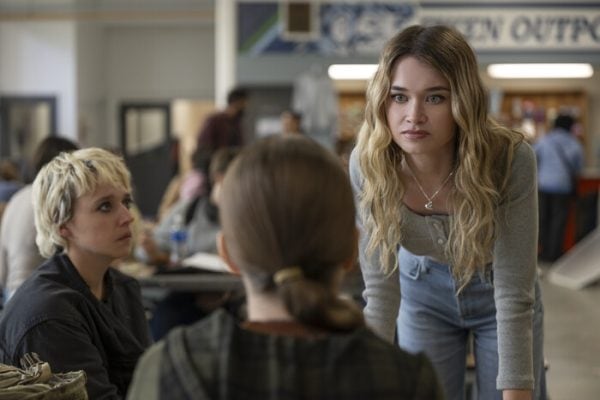
The modernization of Carrie is anchored first and foremost by the reinvention of its antagonists. Chief among them is Chris Hargensen, brought to life with chilling nuance by Alison Thornton. In this iteration, Chris remains the unapologetic ringleader who orchestrates the infamous shower room humiliation and spearheads the subsequent terror campaign against Carrie White. However, Flanagan avoids painting Chris as a one-dimensional villain acting out of simple, innate malice.
Instead, the series introduces a deeply revealing domestic subplot. Chris’s home life is a toxic ecosystem defined by patriarchal narcissism and maternal detachment. Her father operates as a domestic tyrant who deflects accountability and diminishes her struggles—most glaringly dismissing her anxieties over college tuition with the callous assertion that "Not everything is about you." Flashbacks and subsequent revelations reveal a dynamic where her father habitually covers up her escalating misdeeds rather than addressing the psychological roots of her behavior. Meanwhile, Chris’s mother is emotionally absent, occasionally drifting in and out of the household and remaining astonishingly oblivious to the school-wide chaos her daughter generates.
This meticulous character-building culminates in a powerhouse sequence in episode six. Isolated in the washroom, Carrie confronts Chris, detailing the meticulous emotional labor Chris expended to feign friendship before betraying her. Chris exhibits a fleeting, genuine confusion as to why Carrie expected genuine empathy, but she instantly reverts to narcissistic self-preservation, fixating entirely on how Carrie’s existence is supposedly "ruining" her future. When Principal Grayle offers Chris her first real chance at redemption and accountability, Chris instinctively looks to her father, who silently shakes his head, sealing her fate—and ultimately, the town’s.
Margaret White and Modern Extremism
Equally radical is the modernization of Carrie’s mother, Margaret White. While retaining the terrifying religious fanaticism that defines every iteration of the character, Flanagan updates her worldview to mirror contemporary radicalization. Margaret’s dogmatic zealotry is seamlessly blended with conspiracy theories and fringe paranoia that would feel right at home within modern extremist circles like QAnon.

Crucially, Flanagan frames Margaret’s suffocating control not merely as pure malice, but as a deeply warped, panic-driven attempt to protect her daughter from a world she perceives as irredeemably corrupted. In a dark twist of dramatic irony, Margaret is occasionally proven right about the institutions surrounding them. The series highlights the chilling normalization of active-shooter drills in schools and exposes the willful blindness of a faculty that sits stone-faced while Chris and her peers torment classmates in the classroom. Yet, Margaret’s invasive surveillance and toxic manipulation ultimately backfire, driving a wedge between her and Carrie just as the young girl attempts to forge a path into the wider world.
Supporting Context & Metrics: Themes of Trauma and Modern Fear
The critical resonance of Flanagan’s Carrie relies heavily on its thematic engagement with generational trauma and contemporary anxieties. By examining how emotional damage is passed down through families, the series establishes a web of shared suffering among its teenage cast.
| Character / Dynamic | Source of Trauma / Influence | Modern Reflection / Impact |
|---|---|---|
| Chris Hargensen | Narcissistic father, absentee mother, enabling household. | Entitlement, lack of accountability, cyberbullying via social media channels like @Carriered. |
| Emaline | Parental rejection, hidden telekinetic abilities ("The Shining"). | Generational isolation, finding solidarity in supernatural understanding. |
| Carrie White | Religious extremism, conspiratorial maternal control, systemic peer abuse. | Intersection of domestic isolation, school safety failures, and modern mass trauma. |
The Shadow of Modern Gun Violence
Perhaps the most potent and controversial modernization in Flanagan’s series is how it frames the prom massacre itself. In today’s sociopolitical climate—particularly in the United States—the imagery of a high school massacre carries an inescapable weight. Flanagan leans directly into this collective terror.
The series introduces Carrie’s first day of school with a grim, routine live-shooter drill, setting a tone of inescapable dread from the outset. When the telekinetic slaughter finally erupts at the senior prom, surviving students explicitly voice their initial terror that an active shooter has breached the venue. The prom massacre deliberately evokes the visceral, everyday fear that generations of American students and parents have wrestled with. By anchoring a supernatural story about a telekinetic teenager in the hyper-realistic terror of modern institutional violence, Flanagan ensures that the horror cuts far deeper than cinematic spectacle.
Official Statements and Creative Vision
The conceptual foundation of the series reflects a deliberate departure from past cinematic interpretations. Speaking on the collaborative creative process, the production team emphasized the necessity of shifting the narrative lens inward, exploring how systemic misogyny and institutional neglect foster the conditions for tragedy.
"We weren’t interested in simply telling a ghost story or a supernatural revenge fable," noted members of the creative team during early promotional rollouts. "Carrie White’s story is fundamentally about a society that fails its most vulnerable individuals at every conceivable level—from the home, to the classroom, to the digital square. To make this terrifying for a modern audience, we had to examine the machinery of everyday cruelty that precedes the supernatural explosion."
Furthermore, the integration of female directors and writers across the limited series was highlighted as instrumental in authentically capturing the psychological nuances of teenage female relationships, social stratification, and the complex, often suffocating bonds between mothers and daughters.
Future Outlook: A Connected Stephen King Universe?
Beyond its merits as a standalone adaptation, Flanagan’s Carrie may serve a much grander purpose within the broader landscape of genre television. For years, fans have speculated about how the various cinematic and television adaptations of Stephen King’s interconnected bibliography might be formally unified on screen.

Awakening "The Shining" and the Road to the Tower
In a bold narrative stroke, Flanagan introduces a major subplot involving a clandestine network of young people possessing psychic gifts, including the brand-new character Emaline. While King’s original 1974 novel casually noted in its closing epilogue that other individuals with latent telekinetic potential were occasionally discovered across the globe, no previous adaptation has ever elevated this concept into a prominent narrative arc.
By actively connecting Carrie to a broader tapestry of individuals wielding "The Shining," Flanagan establishes a logical framework for a shared universe. Given Mike Flanagan’s well-documented ambition to spearhead a definitive multi-season television adaptation of Stephen King’s magnum opus, The Dark Tower, the presence of subtle Easter eggs throughout the Carrie series takes on monumental significance.
With Flanagan mapping out a potential three-season trajectory for Carrie on Prime Video, viewers may be witnessing the foundational building blocks of an expansive, interconnected Stephen King television multiverse. As the series continues to dominate streaming charts and spark intense discourse across social media platforms like @FlickeringMyth, it is abundantly clear that the reign of horror’s most celebrated modern auteur is only just beginning.







Belum ada komentar. Jadilah yang pertama berkomentar!