

Executive Overview
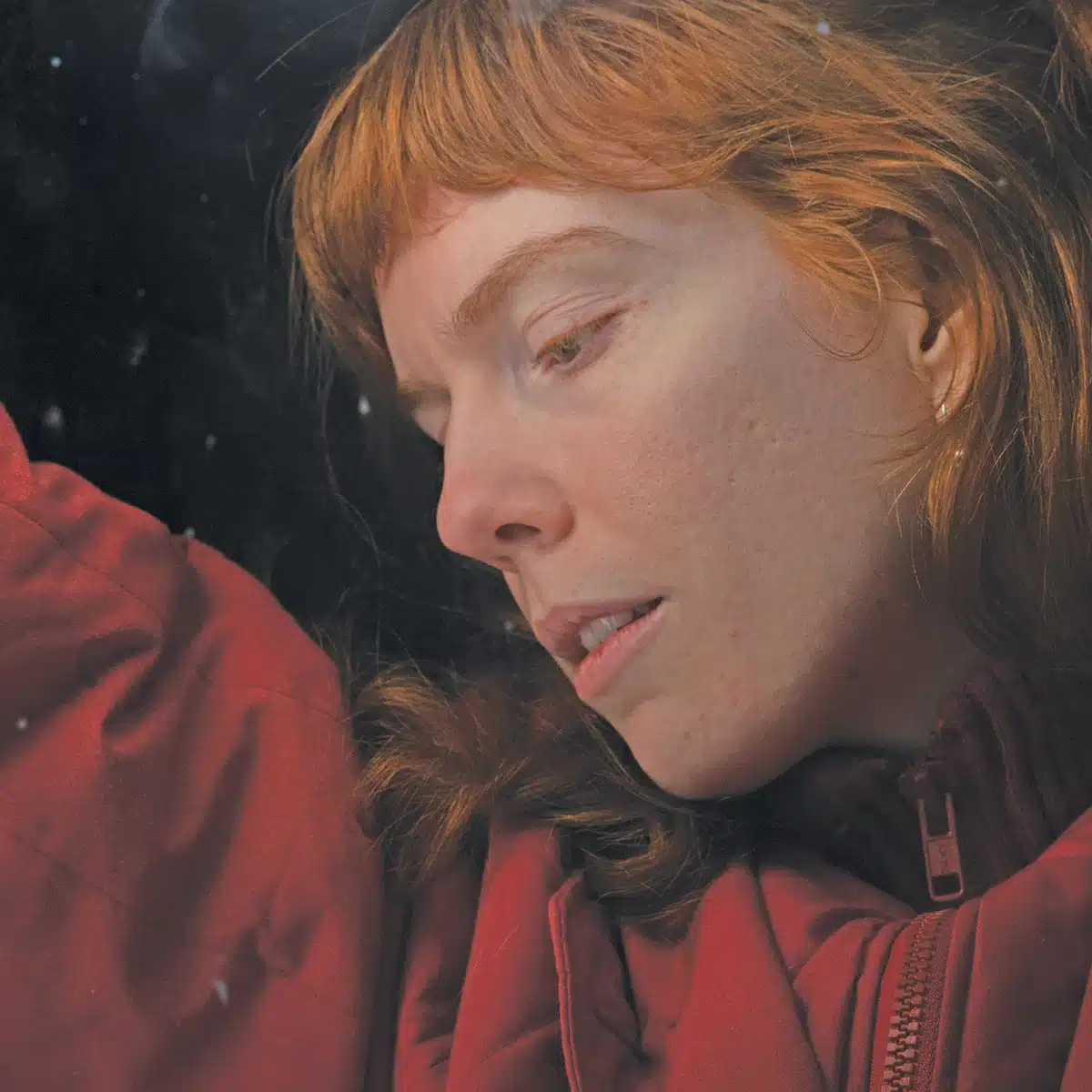
London-based singer-songwriter Elanor Moss does not write love songs in the traditional, saccharine sense. Instead, her compositions operate as scorched prayers—incantations where love systematically reduces itself to ash, only to miraculously reconstitute as something new. Throughout her arresting debut album, The Knife, The Needle, Moss interrogates a singular, unsettling premise: that love is simultaneously a mechanism for profound healing and devastating injury.
In Moss’s sonic universe, pain and beauty are not merely adjacent; they are co-dependent. You cannot have one without summoning the other. As subterranean truths inevitably breach the surface, listeners are plunged into a world where violence—whether real or imagined, enacted or internalized—casts a long, complicated shadow. These intimate, unassuming compositions resist easy answers. They function equally as lullabies for the broken-hearted and stark lovers’ laments, refusing to look away from uncomfortable emotional truths.
The Knife, The Needle is an album built on a foundation of profound duality. It navigates succor and violence, presence and absence, hope and despair, and love and hate with a steady, unflinching hand. Yet, for all its lyrical gravity, the true magic of the record lies in its minimalist architecture. Bolstered by Matthew Herd’s sparse, baroque orchestral arrangements, Moss has crafted a modern folk masterclass that evokes the melancholic wanderlust of Nick Drake’s Five Leaves Left while maintaining an entirely distinct, contemporary voice. It is a record that feels perpetually on the brink of falling apart—much like love itself—capturing the fragile, beautiful contingency of the human condition.
Detailed Chronology: The Making and Unmaking of a Debut
To understand the emotional resonance of The Knife, The Needle, one must trace the arduous physical and creative journey that brought it to life. The creation of the album was not a linear path of steady accumulation, but rather a dramatic process of destruction and rebirth.
The Great Pivot: Scraping the Canvas Clean
Initially, Elanor Moss approached her debut album with conventional momentum. She entered the studio, tracked a comprehensive suite of songs, and brought the project to a near-finished state. By all standard metrics, the record was practically done.
However, Moss experienced a profound artistic crisis of faith. Recognizing that the material lacked the specific spatial tension and atmospheric weight required to carry her complex lyrical themes, she made a radical decision: she walked away. Abandoning months of hard work, Moss chose to scrap the nearly finished LP from scratch.
The Matthew Herd Collaboration
The catalyst for this creative reset arrived in the form of composer Matthew Herd. Armed with a handful of Herd’s sparse, baroque arrangements, Moss re-envisioned the entire sonic landscape of her debut. This partnership introduced pockets of negative space that allowed the compositions to breathe, posture, and linger in the air.
Rather than filling every sonic frequency with instrumentation, Moss and Herd utilized silence and restraint. The resulting arrangements—imbued with woodwinds, delicate strings, and an organic weightlessness—recalled the effortless, floating orchestrations of Nick Drake’s classic 1969 debut, Five Leaves Left.
Track-by-Track Evolution
The structural sequencing of The Knife, The Needle tells its own chronological story of emotional descent and tentative recovery:
- "Fixer" (The Overture): Serving as the album’s opener, "Fixer" introduces the central thesis of the record and gives the project its overarching title. Driven by circular acoustic guitar fingerpicking and accented by succulent strings, it establishes the Janus-faced nature of love—the capacity of the needle to pierce, yet simultaneously mend a broken heart.
- "Again, My Love" & "Secrets of the Universe": As the album progresses, the focus shifts inward toward micro-moments of intense vulnerability. "Again, My Love" features an audible exhalation at its conclusion, while "Secrets of the Universe" opens with a sotto voce spoken-word preface. These unscripted-sounding audio verite elements get under the skin, mimicking the way the human mind retains random, uncontextualized minutiae of everyday trauma and affection.
- "Sarah Waiting in the Car": Tackling the grim reality of domestic violence, this track showcases Moss’s narrative distance. By the song’s conclusion, the narrator—initially positioned as the victim—begins to mirror the violent impulses of the perpetrator, blurring the lines of culpability and psychological survival.
- "Clothes in a Hotel Sink": In the latter half of the record, the album engages with classic folk and country idioms. Here, a lachrymose fiddle soars above a narrative vignette where a protagonist flirts with a barman while mentally tethered to an absent lover—a thematic nod to Bruce Springsteen’s melancholic classic, "One Step Up."
Supporting Context & Metrics: Analyzing the Soundscape
The critical weight of The Knife, The Needle is best understood through its placement within the modern British folk revival and its utilization of specific instrumental metrics.
Lyrical and Musical Lineage
Moss occupies a fascinating, inimitable liminal space between English fey psychedelic folk and traditional confessional singer-songwriter fare. Critics and musicologists have noted distinct sonic dialogues running through the record:
- The Laura Marling Parallel: On tracks like "Again, My Love," Moss’s melodic phrasing and specific vocal intonation bear a striking resemblance to the intricate acoustic cadence of Laura Marling (particularly recalling Marling’s 2024 work, Patterns in Repeat).
- The Clara Mann Contrast: The record’s acoustic foundation is deliberately destabilized by rough-hewn textures. Moss’s delicate, tremulous fingerpicking is frequently juxtaposed with the visceral sound of string squeaks and fretboard friction, echoing the raw, unpolished intimacy found on Clara Mann’s acclaimed debut, Rift (2025).
The Perils of Lyricism: Modern Tropes vs. Country Idioms
While the album’s musical arrangements are largely bulletproof, its lyrical landscape occasionally courts controversy. Moss walks a tightrope between timeless poetic imagery and contemporary conversational idioms.
A notable point of friction occurs on "Clothes in a Hotel Sink," where Moss drops a clunky, overtly modern line: "I picked up one of those self-help books to read, but it only reminds me of how much help I need." This brief excursion into pop-psychology vernacular momentarily breaks the spell of an otherwise devastatingly gorgeous arrangement, reminding listeners that even the most gifted songwriters occasionally stumble when attempting to marry millennial self-awareness with classic country storytelling traditions.
Official Statements & Critical Perspectives
In interviews and accompanying press materials surrounding the release of The Knife, The Needle, Moss has consistently emphasized that her primary objective was not to provide comfort, but to map out emotional contradiction accurately.
"Can you live with contradiction? That is the foundational question at the heart of this record," Moss explains through her representative notes. "We spend our lives running away from the fact that the things that sustain us are often the very things that dismantle us. Love is a knife and a needle. If you don’t feel the sting, you aren’t paying attention."
Cultural critics have rallied around the album’s refusal to offer tidy resolutions. Unlike commercial pop formats that prioritize catharsis and emotional closure, Moss’s debut treats trauma and affection as ongoing, unresolved negotiations.
Industry analysts tracking the British independent music scene have pointed to the album’s unorthodox production cycle—specifically the mid-stream abandonment of the first recording sessions—as a high-stakes gamble that ultimately paid off. By investing in Matthew Herd’s baroque arrangements, Moss successfully elevated her work from standard coffeehouse folk to an enduring piece of modern chamber-pop art.
Future Outlook: The Legacy of a Fearless Debut
As The Knife, The Needle establishes Elanor Moss as one of the most compelling new voices in London’s songwriting community, the trajectory for her career points toward broader international acclaim and critical reassessment of the contemporary folk canon.
Where Does Moss Go From Here?
The central challenge for Moss moving forward will be sustaining the razor-thin tension that defines her debut. The power of The Knife, The Needle relies on its fragility—the pervasive, trembling sensation that the entire musical structure could collapse under the weight of its own emotional honesty at any second.
Future releases will test whether Moss can continue to mine this territory of psychological ambiguity without repeating her thematic motifs. Furthermore, her willingness to court lyrical risks—such as the aforementioned self-help colloquialisms—suggests an artist who refuses to sanitize her work for the sake of pristine, predictable poetic perfection.
The Enduring Resonance of the Torch-Ballad
Ultimately, Elanor Moss has delivered a record that carries the heavy, wistful nostalgia of an old diary read years after the fact. It is music written not just for the present listener, but whispered to a future self. By refusing to flinch away from the brutality inherent in deep affection, Moss has not only answered her own artistic inquiries—she has challenged her audience to embrace the beautiful, painful mess of the human condition without demanding easy answers.





Belum ada komentar. Jadilah yang pertama berkomentar!