

Executive Overview
For horror enthusiasts and collectors alike, the autumn season is synonymous with the revival of classic cinematic chills. Just in time for Halloween, boutique home-video distributor Arrow Video has unleashed a definitive, extras-laden 4K Ultra HD release of Cujo, Lewis Teague’s 1983 screen adaptation of Stephen King’s iconic 1981 novel. Starring Dee Wallace, Daniel Hugh Kelly, and Danny Pintauro, this harrowing tale of canine terror has long occupied a unique, polarizing space within the pantheon of Stephen King film adaptations.
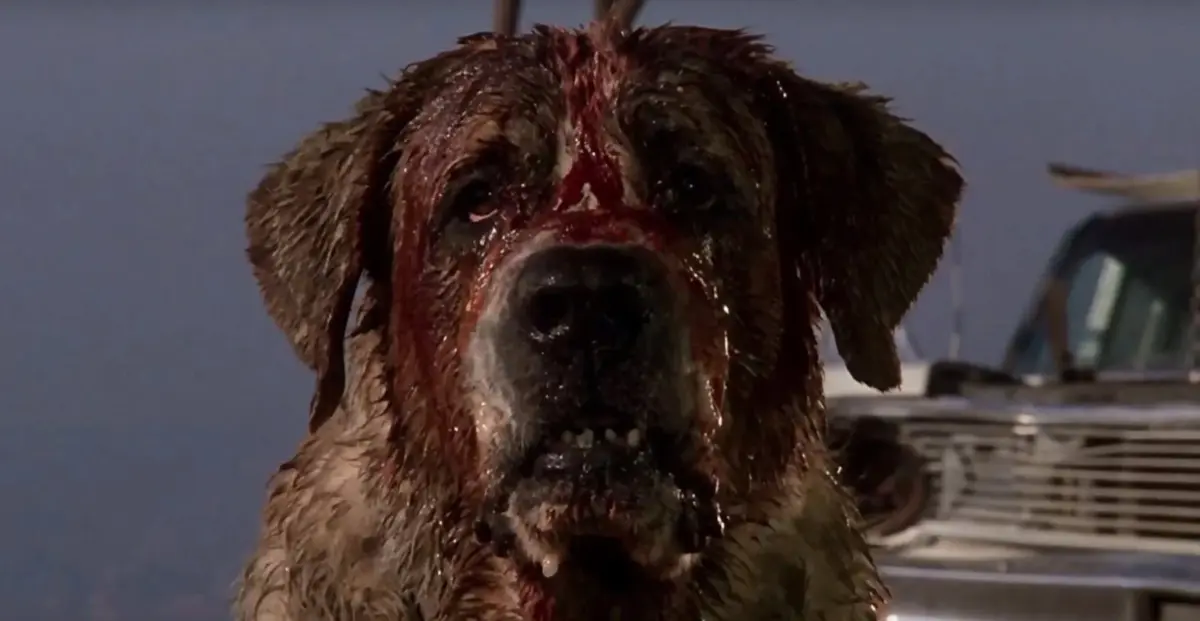
Bridging the gap between classical monster movies and modern psychological thrillers, Cujo pivots on a terrifyingly simple premise: a gentle, beloved St. Bernard contracts rabies and inadvertently becomes a relentless engine of slaughter for a stranded mother and child. While King’s original literary work was celebrated—and occasionally criticized—for its bleak, uncompromising tragedy, the cinematic translation opted for a more visceral, mainstream survival-horror trajectory.
More than four decades after its initial theatrical run, Arrow Video’s new physical media package invites audiences to reevaluate the film’s merits. Bolstered by a stunning 4K restoration that retains the organic warmth and film grain of its era, alongside an exhaustive archive of special features, this release begs a fundamental question: How does Cujo hold up in an era dominated by mainstream King revivals, and is this definitive edition worth a double-dip for long-time physical media aficionados?
Detailed Chronology: From Page to Celluloid and Beyond
To fully appreciate the scope of Arrow Video’s new release, it is essential to trace the journey of Cujo from its inception on the page to its grueling production on screen, and finally into its legacy within modern home media.

The Genesis of a Nightmare
Stephen King has famously noted that Cujo was written during a period of severe personal turmoil and substance abuse, a fact reflected in the dark, inescapable hopelessness of the source material. Published in 1981, the novel centers on Cujo, a massive, good-natured St. Bernard belonging to rural mechanic Joe Camber. After pursuing a rabbit into a subterranean crevice, Cujo is bitten by a rabid bat, contracting a disease that slowly erodes his noble disposition and plunges him into agonizing madness.
Simultaneously, the novel weaves a complex web of suburban malaise: Donna Trenton is struggling through a stagnant marriage to Vic Trenton, navigating an affair with local carpenter Steve Kemp, and attempting to raise their sensitive six-year-old son, Tad. When Donna brings their failing Ford Pinto to Joe Camber’s remote farm for repairs, the vehicle completely dies, stranding her and Tad just as a fully rabid Cujo launches his reign of terror.
Adapting the Un-Adaptable
When Warner Bros. greenlit the film adaptation for a 1983 release, screenwriters Don Carlos Dunaway and Barbara Turner (writing under the pseudonym Lauren Currier) faced a monumental challenge. King’s novel relied heavily on internal monologues, domestic drama, and an utterly bleak, devastating conclusion that left little room for cinematic catharsis.
Recognizing that general audiences buying tickets for a horror movie would reject a depressing domestic melodrama, the creative team stripped away extraneous subplots. They reduced the character roster, streamlined the marital conflict, and crucially altered the narrative’s devastating climax to deliver a more palatable, crowd-pleasing survival finale. Director Lewis Teague stepped behind the camera, inheriting a logistical nightmare: directing a horror film where the primary antagonist is a living, breathing animal that cannot comprehend the violence it is inflicting.

The Production Crucible
Filming Cujo was notoriously arduous. Rather than relying solely on computer-generated effects—which were non-existent in the early 1980s—the production utilized an ambitious mix of practical techniques. Four different live St. Bernards were trained for various temperaments and actions, supplemented by several intricate mechanical models for the violent attack sequences, and even a dedicated stuntman—Gary Morgan—strapped into a custom dog costume.
Despite the behind-the-scenes strain, the gamble paid off. The quick-fire editing, suffocating sound design, and claustrophobic framing managed to transform a family pet into one of the most memorable monsters in cinematic history.
Supporting Context & Metrics: Pacing, Performance, and Practicality
Running at a taut 92 minutes, Cujo is remarkably brisk by the standards of Stephen King cinematic adaptations. However, this brevity exposes distinct structural imbalances that critics and fans have debated for decades.
A Slow Burn in the Sun
The central conceit of the film—Donna and Tad trapped inside their sweltering car while Cujo prowls the perimeter—does not fully materialize until nearly the 50-minute mark. The first half of the runtime is heavily invested in exposition. Viewers spend substantial time establishing Donna, Vic, and their marital strife, alongside an extended subplot involving Mrs. Camber and her son leaving the farm to escape the abusive Joe.
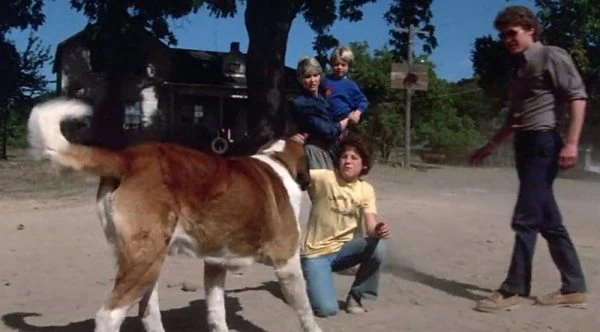
While this setup attempts to ground the characters in gritty realism, it ultimately feels padded. Mrs. Camber’s departure serves little narrative purpose other than removing potential rescuers from the property, making the prolonged setup feel increasingly unnecessary as the audience eagerly awaits the inevitable confrontation with the hound from hell.
Performances and Polarizing Dynamics
At the heart of the film’s emotional and physical trials is Dee Wallace as Donna Trenton. Wallace delivers a career-defining performance as a mother pushed to the absolute brink of physiological and psychological endurance. Even though Donna’s infidelity makes her a morally complex, occasionally unsympathetic protagonist at the outset, Wallace anchors the film with raw, desperate maternal ferocity.
Conversely, the performance of young Danny Pintauro as six-year-old Tad remains a frequent point of contention among viewers. Pintauro executes the director’s instructions faithfully, but the relentless, high-pitched sobbing and whining—amplified by the suffocating heat of the trapped car—can test the audience’s patience. In moments of extreme cinematic tension, the child’s continuous wailing has been known to provoke dark, paradoxical audience reactions, ironically testing viewer empathy.
The Technical Triumph of the Antagonist
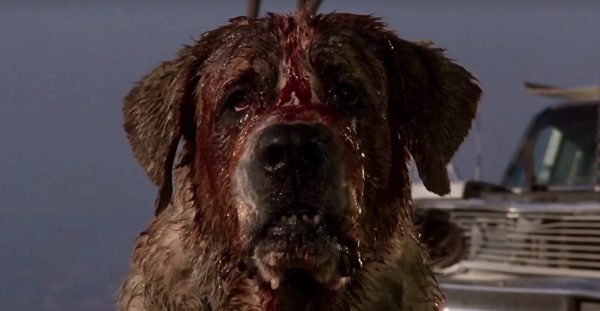
Where Cujo undeniably succeeds is in its creature effects and editing. Seldom has a rabid animal been portrayed with such visceral authenticity on film. Cujo always appears terrifyingly convincing, coated in convincing prosthetic slobber and foam. Through seamless editing and dynamic camera angles, the filmmakers masked the transition between live dogs, mechanical puppets, and stuntman Gary Morgan.

Placed in the broader landscape of 1980s Stephen King adaptations—landing well above commercial misfires but just shy of masterpieces like Brian De Palma’s Carrie or Tobe Hooper’s Salem’s Lot—Cujo firmly anchors itself in the upper tier of better King translations.
Official Statements and Content Breakdown: Arrow Video’s 4K UHD Package
Arrow Video has constructed an exhaustive, two-disc collector’s edition that caters directly to physical media enthusiasts. While the package leans heavily on archival interviews and previously released featurettes, the presentation and video transfer elevate this release above past iterations.
Disc One: The 4K Ultra HD Experience
The primary 4K UHD disc presents the theatrical cut of the movie, meticulously restored to preserve the authentic aesthetic of 1980s filmmaking. Unlike many modern digital restorations that ruthlessly scrub away celluloid texture in pursuit of a clinical image, Arrow’s transfer leaves the film grain entirely intact. The color grading introduces a natural, sun-baked warmth—exemplified in exterior shots of Cujo sitting patiently against low-horizon desert sunsets—that honors Jan de Bont’s original cinematography.
The release is packed with robust archival extras:
- Comprehensive Interviews: In-depth conversations with star Dee Wallace, stuntman Gary Morgan (the man in the dog suit), composer Charles Bernstein, and key crew members.
- The Reunion Roundtable: An engaging discussion featuring Dee Wallace, Danny Pintauro, Daniel Hugh Kelly, and director Lewis Teague.
- Audio Commentaries: Three distinct commentary tracks featuring director Lewis Teague, assistant director/production manager Jeff McKay, and film historian Lee Gambin.
- Retrospective Documentaries: The inclusion of Dog Days: The Making of Cujo (2007) alongside promotional trailers.
Disc Two: The Standard Blu-ray Companion
The secondary disc houses the International Cut of the film—running slightly longer without adding substantial narrative weight—alongside critical analysis. Highlights include an insightful interview with acclaimed author and critic Kim Newman, and a comprehensive 2015 Q&A session with Dee Wallace captured live at Cinemaniacs & Monster Fest.
Future Outlook: The Legacy of Cujo in the Modern Era
As the horror genre continues to evolve through high-concept psychological narratives and prestige streaming projects, the straightforward, visceral nature of 1980s creature features risks being overshadowed. Yet, Arrow Video’s definitive 4K UHD release proves that practical mastery and primal fears do not age.
For collectors who already own previous Blu-ray iterations, this release presents a classic physical media dilemma: the dreaded "double-dip." However, for those evaluating the upgrade based purely on visual fidelity, the 4K UHD restoration offers an unquestionably superior image that will likely never be surpassed on home video.
Four decades after its theatrical debut, Cujo endures. It stands as a testament to practical filmmaking ingenuity, anchored by Dee Wallace’s fierce lead performance and a timeless, inescapable fear of nature turned violently against man. For newcomers and seasoned horror veterans alike, this definitive edition offers the ultimate invitation to lock the car doors, roll up the windows, and face the hound from hell all over again.









Belum ada komentar. Jadilah yang pertama berkomentar!