


Executive Overview
The independent video game development ecosystem stands at a transformative crossroads. In an era dominated by skyrocketing production budgets, corporate risk aversion, and hyper-consolidated publishing conglomerates, indie developers have increasingly become the vital lifeblood of genuine creative innovation. At the epicenter of this global renaissance is the Busan Indie Connect Festival 2026 (BIC Festival 2026)—an international landmark event that continues to redefine the boundaries of what independent developers can achieve.
As the digital entertainment landscape shifts rapidly toward cross-platform accessibility, modular engines, and community-driven development pipelines, BIC 2026 has emerged as much more than a regional showcase. It functions as a critical barometer for the global games industry, offering a granular lens through which critics, investors, and enthusiasts can evaluate the future trajectory of interactive media.
Running parallel to other premier international celebrations of independent development—such as Japan’s revered BitSummit PUNCH—BIC 2026 has captured the imagination of the global gaming community. This year’s exhibition highlights an unprecedented surge in cross-disciplinary artistry, technical ambition, and fearless narrative design. From haunting 2D psychological platformers to sprawling 3D tactical simulations, the festival underscores a fundamental industry truth: while triple-A studios frequently retreat into predictable formulas and safe IP iterations, indie developers are pushing the artistic and mechanical envelope further than ever before.
Detailed Chronology: Unpacking the Exhibition Timeline and Core Highlights
The timeline of BIC 2026 has been meticulously structured to maximize both developer exposure and player engagement, creating a sustained wave of momentum throughout the festival’s lifecycle.
The Buildup and Early Revelations
Months ahead of the physical event, organizers initiated a series of digital teaser campaigns designed to build global anticipation. These early reveals offered early access to select indie titles, establishing a narrative of high quality and diverse gameplay mechanics. Industry veterans and casual fans alike were treated to sneak peeks of upcoming builds, setting high expectations for the physical and digital showcases that would follow.
The Submission Window and Selection Process
The journey to BIC 2026 began with a fiercely competitive submission phase. Independent developers from across the globe submitted hundreds of titles, vying for a coveted spot in the festival’s physical and virtual exhibition halls. The selection committee—comprising industry veterans, journalists, and past award winners—faced the daunting task of filtering through an ocean of talent to curate a lineup that represents the absolute pinnacle of contemporary indie development.
![[インタビュー]良い意味での“インディー感”が戻ってきた釜山(BIC 2026)で,コントローラー文化のない韓国に「英語とコントローラー対応を早く!」 30本のリストを片手に吉田修平氏が,韓国と世界のインディーシーンを語る](https://www.4gamer.net/games/991/G999110/20260819026/SS/002.jpg)
As the official selection was announced, attention quickly shifted to the standout titles that managed to capture the judges’ imaginations. Among the most discussed projects were:
- "Reverie," a striking narrative-driven experience blending atmospheric 2D platforming elements with deep 3D environmental exploration.
- "World War V," a title that pushes the limits of independent strategic combat through innovative real-time decision-making systems.
- "Master of Piece," which captured critical acclaim for its polished 1.0 release, striking a delicate balance between classic puzzle mechanics and modern accessibility.
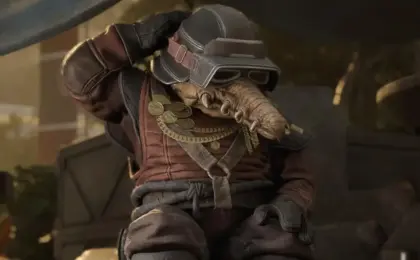
- "Crabmeat," an eccentric yet deeply engaging retro-style arcade project that pays homage to classic cabinet gaming while introducing modern quality-of-life features.
- "Hermit Computer," a stylistic triumph that merges retro computing aesthetics with razor-sharp writing and inventive puzzle design.
The Festival Window and Playable Demos
During the main event window, the spotlight shone brightly on the playable demos made available to the public. Unlike traditional trade shows where trailers and cinematic teasers dominate, BIC 2026 places an uncompromising emphasis on hands-on experience. Visitors and online participants were given unprecedented access to downloadable demos, allowing them to test mechanics, experience early builds, and provide direct feedback to the creators.
Organizers also leveraged virtual reality (VR) and cloud-streaming technologies to bridge the geographical gap. This hybrid approach ensured that enthusiasts unable to travel to Busan could still participate in playtests, vote for community awards, and engage in developer-led Q&A sessions streamed directly from the convention floor.
Supporting Context & Metrics: The State of Independent Development in 2026
To fully appreciate the significance of BIC 2026, one must examine the broader economic and technological landscape of the video game industry.
The AAA Crisis vs. Indie Agility
The mainstream games industry is currently grappling with a severe identity crisis. Escalating development costs—often exceeding hundreds of millions of dollars per title—have forced major publishers to adopt ultra-conservative strategies. Sequels, re-remakes, and live-service models are prioritized over original intellectual property to secure shareholder returns. Unfortunately, this risk-averse environment has led to widespread studio closures, mass layoffs, and creative stagnation within the triple-A sector.
Conversely, independent developers are thriving precisely because of their structural agility. Operating with lean teams, minimal corporate overhead, and fierce creative freedom, indie creators can pivot rapidly, experiment with unorthodox gameplay loops, and tell deeply personal stories that massive corporate entities would never greenlight.
![[インタビュー]良い意味での“インディー感”が戻ってきた釜山(BIC 2026)で,コントローラー文化のない韓国に「英語とコントローラー対応を早く!」 30本のリストを片手に吉田修平氏が,韓国と世界のインディーシーンを語る](https://www.4gamer.net/games/991/G999110/20260819026/TN/002.jpg)
Technological Democratization
The barrier to entry for game development has never been lower, thanks to the continuous evolution of powerful, accessible engines like Unreal Engine and Unity, alongside open-source middleware. However, this democratization has created a hyper-saturated market. With thousands of games releasing across Steam, consoles, and mobile platforms every month, simply making a good game is no longer enough. Developers must master community building, digital marketing, and festival circuits—like BIC—to cut through the noise.
Platform Evolution and Cross-Play Dynamics
BIC 2026 has prominently featured titles that seamlessly bridge PC and console environments, alongside mobile adaptations that refuse to compromise on depth. A prime example highlighted at the festival is "Crimson Pandemic," a title that successfully marries traditional strategy mechanics with streamlined mobile interfaces, proving that complex tactical depth is no longer the exclusive domain of high-end desktop rigs.
Furthermore, the integration of cross-platform multiplayer and cloud saving features has become a baseline expectation for modern indies. Developers are no longer just building games; they are constructing interconnected ecosystems that allow players to transition effortlessly from a living room console to a handheld gaming PC without losing momentum.
Official Statements and Industry Insights
The leadership behind BIC 2026 has been vocal about the festival’s evolving mission. In numerous press briefings, organizers emphasized that the event’s primary goal is to serve as a sustainable launchpad for global talent.
"We are no longer just an exhibition space; we are an incubator for the next generation of digital storytellers," stated one of the festival’s lead coordinators during the opening keynote. "The creativity we are seeing this year breaks conventional molds. Developers are taking emotional and mechanical risks that challenge the very definition of interactive entertainment."
Industry analysts attending the event have echoed these sentiments, noting a marked shift in investor attitudes. Venture capitalists and indie-focused publishers are increasingly using BIC as a primary scouting ground, looking past traditional metrics to invest in teams capable of delivering fresh, high-concept experiences.
![[インタビュー]良い意味での“インディー感”が戻ってきた釜山(BIC 2026)で,コントローラー文化のない韓国に「英語とコントローラー対応を早く!」 30本のリストを片手に吉田修平氏が,韓国と世界のインディーシーンを語る](https://www.4gamer.net/games/991/G999110/20260819026/TN/001.jpg)
Moreover, developers themselves have praised the festival’s collaborative atmosphere. Unlike cutthroat commercial expos, BIC fosters a sense of camaraderie among creators. Panels featuring breakout hits like "7Trials"—a narrative-heavy action platformer developed by a solo creator—highlighted the struggles and triumphs of independent production, offering invaluable mentorship to aspiring developers in attendance.
Future Outlook: Where Goes Indie, Goes the Industry
As the curtains close on another landmark year for the Busan Indie Connect Festival, the implications for the broader entertainment industry are clear. The innovations showcased at BIC 2026 are not isolated anomalies; they are the leading indicators of where interactive entertainment is heading.
As major publishers continue to navigate financial volatility and creative burnout, the independent sector remains a beacon of resilience and ingenuity. Events like BIC provide the oxygen these creators need to survive and scale. By championing bold narratives, mechanical experimentation, and cross-platform accessibility, BIC 2026 has once again proven that the future of video games does not belong solely to the biggest budgets—it belongs to the boldest ideas.
For developers, players, and investors alike, the message coming out of Busan is unmistakable: the indie renaissance is not slowing down. It is maturing, expanding, and permanently altering the DNA of modern gaming.




Belum ada komentar. Jadilah yang pertama berkomentar!