

Two decades after its initial broadcast, Yu-Gi-Oh! Duel Monsters GX continues to occupy a uniquely influential space within the annals of modern anime history. As the first fully original television spin-off carrying the mantle of Kazuki Takahashi’s monumental franchise, GX transitioned away from the brooding, mystical stakes of ancient Egyptian pharaohs and dark shadow games. Instead, it charted an optimistic, collegiate course through the halls of Duel Academia.
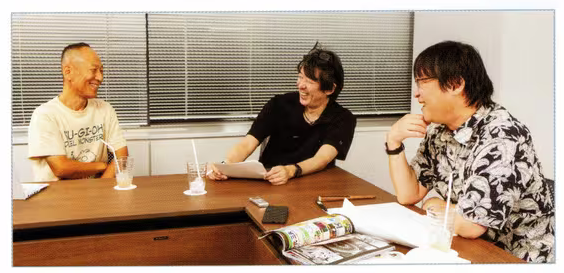
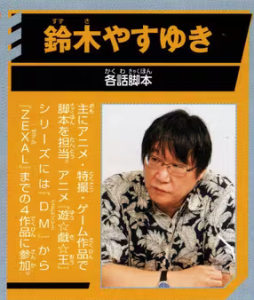
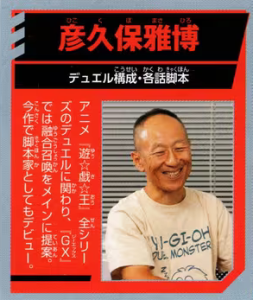
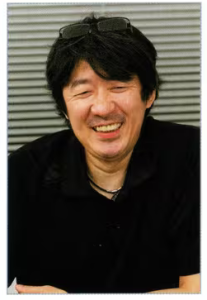
Recently, key creative minds behind the production—Series Composition veteran Shin Yoshida, episodic screenwriter Yasuyuki Suzuki, and Duel Composer/screenwriter Masahiro Hikokubo—sat down for a comprehensive retrospective featured in the Yu-Gi-Oh! Duel Monsters GX Animation Complete Guide Academia Duel Log. Examining the mechanics of its creation, the series reveals a production environment defined by creative freedom, structural pivots, and the guiding hand of chief series composer Junki Takegami.
This deep-dive retrospective explores the origins of Duel Academia, the risks of pioneering Fusion Summoning as a central series mechanic, the chaotic evolution of characters like Chazz Princeton (Manjome) and Aster Phoenix (Edo), and the enduring legacy of a show that proved failure is not the end of a duelist’s journey, but rather a prerequisite for true growth.
Detailed Chronology: From Concept to Climax
Phase 1: Conceptualization and the Shadow of Harry Potter
When planning for GX began, the overarching framework of the series was already being shaped by global multimedia trends. With the Harry Potter phenomenon sweeping popular culture in the early 2000s, the concept of a school-centric narrative where young duelists hone their craft at a specialized academy felt both timely and commercially viable.
The protagonist’s identity was meticulously engineered. The surname "Yuki" was constructed as a linguistic bridge between the past and the present: taking the "Yu" ($遊$) from Yugi and the "ki" ($城$) from Joey (Jonouchi). Meanwhile, original creator Kazuki Takahashi proposed the given name "Judai" ($十代$), meaning "teenager," as a thematic nod to society’s rallying cry for struggling youth: "Do your best, teen!"

Crucially, because GX was a completely original anime rather than a manga adaptation, the writers lacked source material. This liberated the staff from the constraints of adapting serialized chapters, yet it introduced unprecedented logistical hurdles.

Phase 2: The Carefree Beginnings and the Pivot to Seriousness
The initial half of GX favored a bright, comedic, episodic style. Protagonist Jaden Yuki (Judai Yuki) was designed as a carefree, approachable hero—a stark contrast to the burdened, high-stakes destiny of Yugi Muto. This tone was heavily influenced by Junki Takegami, who also managed series composition for One Piece at the time. Drawing inspiration from characters like Monkey D. Luffy, Takegami championed a hero who could goof off for most of an episode yet cut directly to the heart of matters when it counted.

However, as the series progressed into its second and third years—most notably with the Different Dimension Arc—the narrative underwent a dramatic tonal shift. To maintain a strong through-line, the writers introduced darker narrative threads, transforming Jaden from an optimistic schoolboy into the tragic Supreme King (Haou), and introducing the soulmate-turned-adversary Yubel.
Phase 3: Graduation and the Ultimate Clash
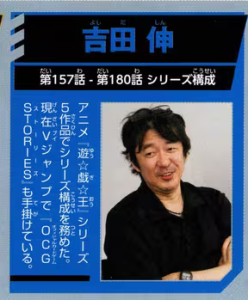
In the final stretch of the series (beginning with Turn 157), Shin Yoshida assumed control of series composition to steer the cast toward graduation. This era produced some of the most celebrated moments in the franchise, including Turn 167 ("A Duel of Gratitude! Chronos VS The O.G. Drop Out Boy"), which later claimed first place in the 2016 20th Duel Selection. The series culminated in an iconic, open-ended exhibition match between Jaden Yuki and Yugi Muto—a deliberate narrative choice designed not to rank the characters chronologically, but to emphasize that both duelists would continue to grow, win or lose.
Supporting Context & Metrics: Mechanics, Decks, and Production Realities
The Gamble of Fusion Summoning
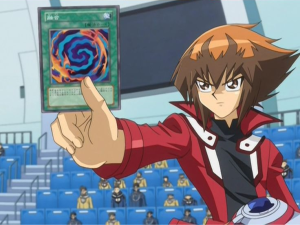
One of the most profound revelations from the roundtable concerns the series’ signature mechanic: Fusion Summoning. Today, Fusion Summoning is a foundational pillar of the Yu-Gi-Oh! Official Card Game (OCG). However, during the early development of GX, Masahiro Hikokubo fought to make it the central gimmick despite industry skepticism.
At the time, Fusion Summoning was widely considered resource-heavy, slow, and mechanically restrictive because it required multiple specific cards in hand (such as Polymerization and specific monsters). Hikokubo argued that no other trading card game possessed such an innovative combination mechanic, making it too brilliant to waste. To alleviate the physical game’s cost barriers, the anime leaned into versatile, mix-and-match combinations of standard monsters, eventually creating varied iterations of Polymerization and "Fusion" spells to keep the pacing brisk.
Writing Under Pressure: The Evolution of Chazz Princeton
Character arcs within GX were often subject to spontaneous, organic shifts during production. A prime example is Chazz Princeton (Manjome), whose journey took a wildly unexpected turn with Turn 24 ("Reborn! Manjome Thunder"). Shin Yoshida, intending to step away from the project after completing the episode, was given complete creative freedom by Takegami.
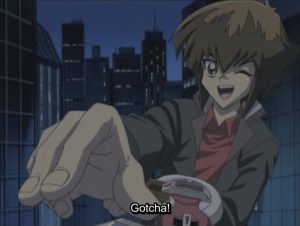
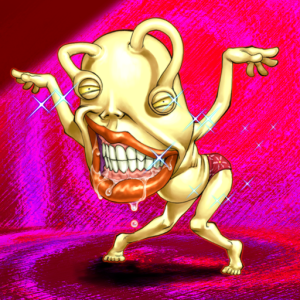
Wishing to give Chazz his own mascot monster akin to the franchise’s traditional "Kuriboh" variants, Yoshida introduced Ojama Yellow. The director was initially stunned, questioning whether Yoshida was genuinely committing to such a bizarre character direction. The script became a runaway success, convincing producers to keep Yoshida on board and cementing Chazz’s comedic yet resilient identity.
Official Roundtable Statements
The creative synergy between Yoshida, Suzuki, and Hikokubo underscored a production environment fueled by mutual trust and spontaneous ideation:
- On Junki Takegami’s Leadership Style:
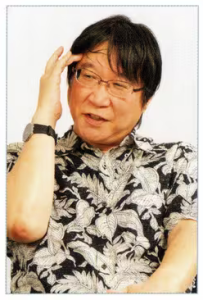
Suzuki: "Takegami Junki-san, who was in charge of Series Composition, wrote some hints into the overall structure he created. He would tell us who would be in charge of what and assigned us our responsibilities. But he otherwise told us we were free to do what we wanted."

- On the Creation of Duels and Decks:
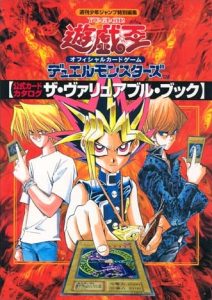
Hikokubo: "During meetings, we’d flip through V Jump’s The Valuable Books while discussing things… The screenwriter for that episode would come up with a lot of ideas even before the plot was finalized. I remember having discussions based around those ideas, and adopting the ideas we found most interesting."
- On Jaden’s Legacy and Character Growth:
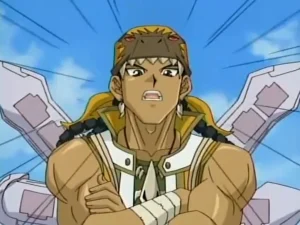
Suzuki: "I really like how cheerful and carefree Judai is… The show has many twists and turns, but Judai never lets you down. So, I hope people feel better after watching Judai."
Future Outlook and Legacy
As Yu-Gi-Oh! GX celebrates its 20th anniversary, its structural framework continues to inform how fans and creators view long-form trading card game anime. Unlike later series that adhered strictly to rigid formulas, GX thrived on experimentation, blending high-concept theories—ranging from quantum physics and superstring theory to dramatic psychological breakdowns—with heartfelt, character-driven storytelling.
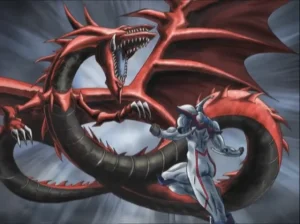
When asked about Jaden’s post-graduation life, Hikokubo and Yoshida envisioned a wanderer traveling the globe, utilizing his dueling prowess to resolve mysteries, injustices, and cosmic conspiracies. For a show that began as an optimistic school experiment, GX proved that even when characters are allowed to fail, stumble, and fall into darkness, the resilience forged through those trials creates an enduring legacy that resonates nearly two decades later.
![[Chronicles] Sinful Spoils ep 3 Teaser](https://youganba.com/wp-content/uploads/2026/10/chronicles-sinful-spoils-ep-3-teaser-420x260.webp)




Belum ada komentar. Jadilah yang pertama berkomentar!