

Executive Overview
The evolution of real-time computer graphics has long been defined by a constant tug-of-war between computational brute force and visual realism. While ray tracing and full path tracing deliver the holy grail of lighting—generating physically accurate reflections, refractions, and soft shadows—they come with an astronomical computational toll. To make these features playable at acceptable frame rates, the industry has leaned heavily on approximate ray sampling and AI-driven denoising algorithms.
However, these traditional denoising passes have historically struggled with temporal stability. When scenes shift, camera angles move, or objects travel across a viewport, players are routinely subjected to visual artifacting, ghosting, shimmering textures, and distracting ghost trails.
Enter Nvidia’s latest breakthrough: DLSS 4.5 Ray Reconstruction (RR). Powered by an upgraded, sharper second-generation Transformer model initially introduced with DLSS 4.5 Super Resolution earlier this year, this new iteration replaces hand-tuned denoisers with advanced artificial intelligence. The goal? To bridge the gap between sparse ray samples and a fully realized, stable, cinematic frame. Released today via a simple override within the Nvidia App, DLSS 4.5 Ray Reconstruction promises to rid modern blockbusters of "boiling" textures and smeared details. Yet, as hardware analysts test the feature across titles like Cyberpunk 2077, Alan Wake 2, and Resident Evil Requiem, the question remains: does this represent the final nail in the coffin for path-tracing artifacting, or just another evolutionary stepping stone?
Detailed Chronology: The Road to DLSS 4.5
To understand the significance of DLSS 4.5 Ray Reconstruction, one must trace the recent history of Nvidia’s deep learning graphics pipeline.
The Path-Tracing Bottleneck
For decades, pre-baked lighting techniques allowed developers to fake illumination efficiently. As real-time ray tracing entered the mainstream, the industry transitioned to tracking photons bouncing off geometry. True path tracing calculates every light interaction, but tracking every single photon or pixel requires an unfeasible amount of raw compute.
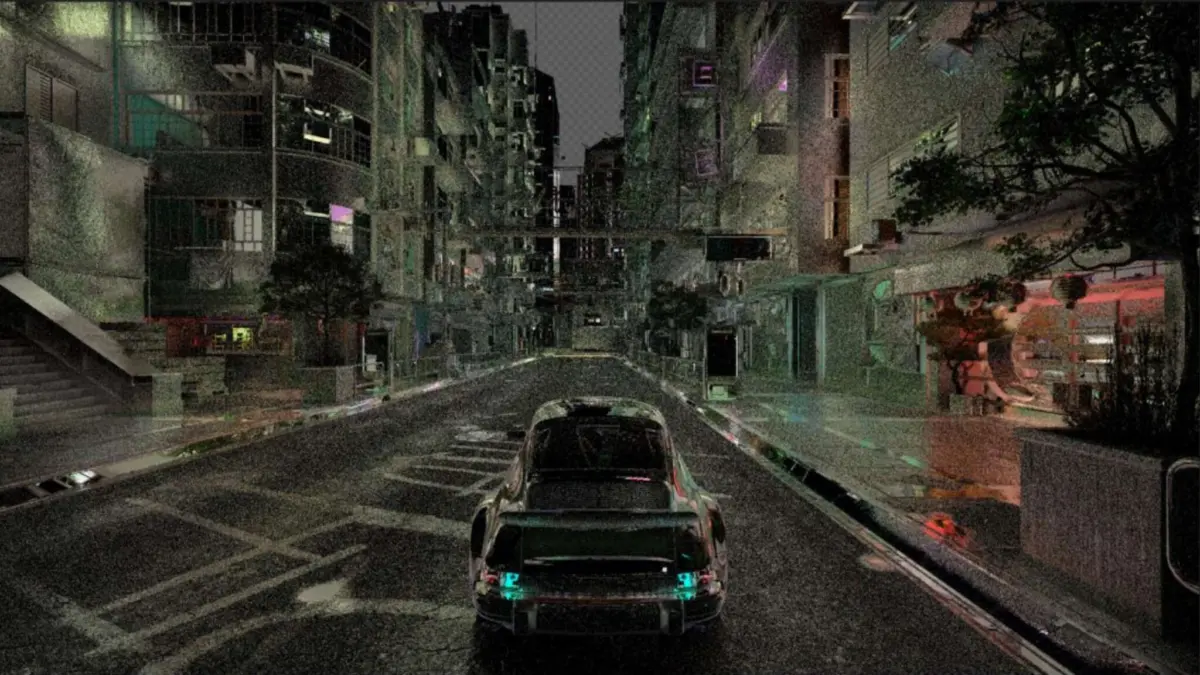
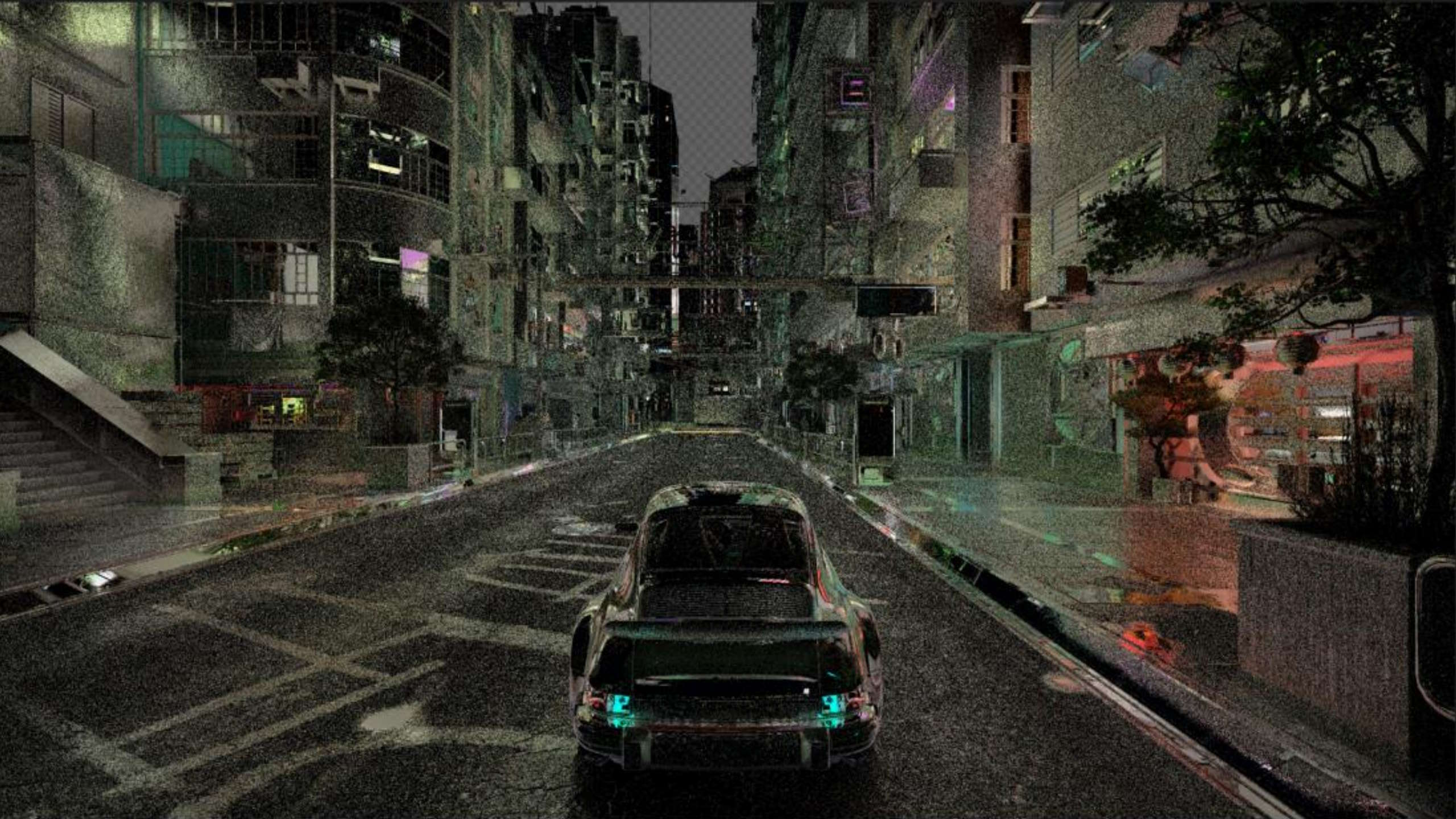
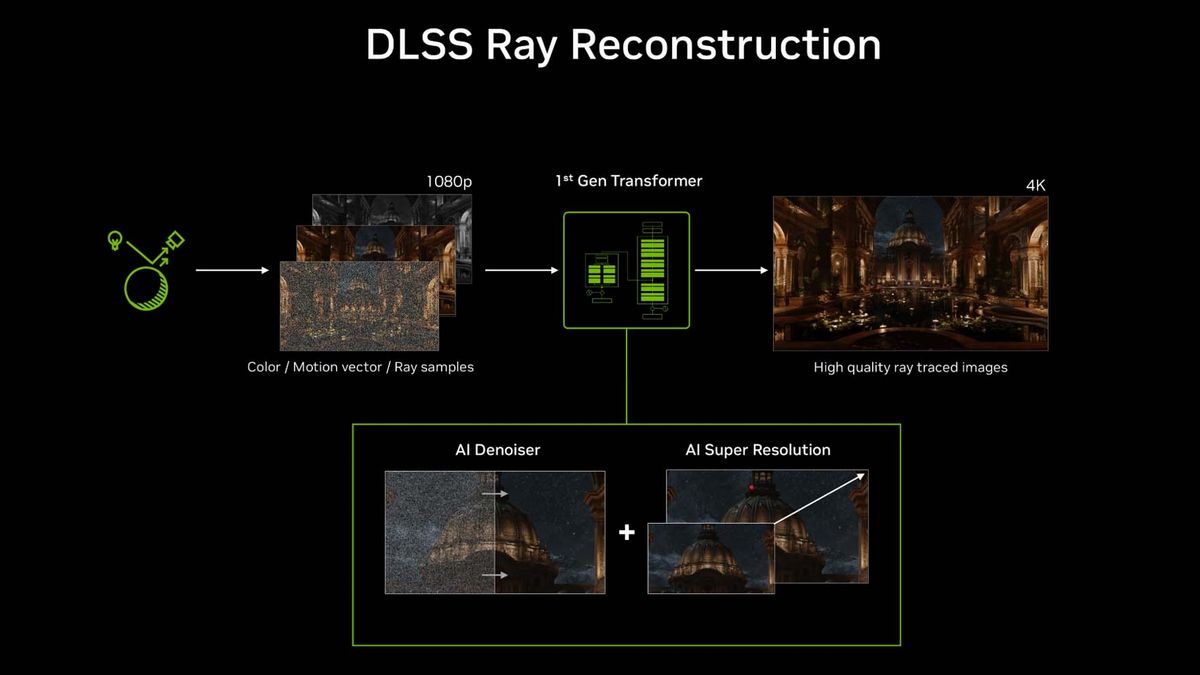
To circumvent this, engines track only a tiny, representative sample of bouncing rays. The resulting sparse data looks akin to a 3D ASCII rendering—jagged, noisy, and unplayable on its own. Historically, developers relied on hand-tuned denoisers that grouped and interpolated pixels across multiple frames to fill in the blanks. While this worked reasonably well for static screenshots, any camera movement or character animation caused these pixels to break down, resulting in the infamous visual smearing and trail artifacts.
The Inception of AI Denoisers
Nvidia shook up the rendering paradigm by introducing the original Ray Reconstruction feature (commonly tied to DLSS 3.5). By swapping out traditional hand-tuned denoisers for an AI-based model trained on supercomputers, Nvidia allowed graphics cards to dynamically generate missing pixels between sampled rays with far greater contextual awareness.
Despite these massive leaps forward, a glaring architectural disconnect remained. While Nvidia rolled out its vastly improved second-generation Transformer models for DLSS Super Resolution in early 2025, Ray Reconstruction lagged behind, forced to rely on older underlying architectures. This discrepancy left lingering tell-tale artifacts in even the most graphically advanced games.
The DLSS 4.5 Rollout
Today marks the official deployment of DLSS 4.5 Ray Reconstruction, unifying Nvidia’s suite under the advanced second-generation Transformer framework. Rather than requiring developers to patch their games individually, Nvidia has streamlined the user experience: players can now inject the new model directly into supported games using the Nvidia App, navigating to ‘DLSS Override – Model Presets’, and selecting ‘Preset F’ under the ‘Ray Reconstruction’ dropdown menu.
Supporting Context, Implementation, and Performance Metrics
The implementation of DLSS 4.5 Ray Reconstruction is designed to target four core visual improvements: enhanced temporal stability, sharper texture fidelity, reduction of ghost trails, and superior handling of complex geometry in motion.
How to Enable DLSS 4.5 Ray Reconstruction
For hardware enthusiasts eager to test the feature, the process bypasses traditional in-game graphics options entirely:
- Ensure your software suite is updated to the latest version of the Nvidia App.
- Select your desired game title from your installed library within the application.
- Locate the ‘DLSS Override – Model Presets’ setting.
- Choose ‘Preset F’ from the ‘Ray Reconstruction’ dropdown menu.
- Apply settings and launch the game.
Supported Game Ecosystem
The roster of games supporting or slated to support DLSS 4.5 Ray Reconstruction spans a massive ecosystem of current-gen and upcoming blockbusters:
| DLSS 4.5 Ray Reconstruction Supported Games | ||
|---|---|---|
| Alan Wake 2 | EVERSPACE 2 | NTE (Neverness to Everness) |
| Avatar: Frontiers of Pandora | F1 25 | Portal with RTX |
| Backrooms: Escape Together | FBC: Firebreak | PRAGMATA |
| Call of Duty: Black Ops 7 (Coming Aug 20) | Half-Life 2 RTX | Resident Evil Requiem |
| Crimson Desert | Hogwarts Legacy | Samson |
| Cyberpunk 2077 | I Am Jesus Christ | Star Wars Outlaws |
| Death Relives | Incursion Red River | Subliminal |
| Directive 8020 | Indiana Jones and the Great Circle | Sword of Justice |
| DOOM: The Dark Ages | Marvel’s Spider-Man 2 | The First Descendant |
| Enlisted | NARAKA: BLADEPOINT | War Thunder |
Real-World Analysis: Case Studies
1. Resident Evil Requiem
In the opening sequences of Resident Evil Requiem, heavy rain effects and complex lighting historically overwhelmed older denoisers. Under the previous model, textures on a white car shimmered persistently behind rainfall. With DLSS 4.5 RR enabled, those textures remain remarkably stable. More importantly, the second-generation Transformer model restores micro-details on the ground environment that were previously washed out or smeared away by interpolation errors.
2. Cyberpunk 2077
As Nvidia’s classic showcase for ray and path tracing, Cyberpunk 2077 highlights the strengths of temporal stability. Inside neon-lit stores, quick camera pans previously left faint, after-image ghosting trails (imprinting screen edges onto floors). DLSS 4.5 RR eliminates these artifacts entirely. Similarly, looking up at underpass ceilings reveals vastly accelerated texture resolution; where older iterations hesitated and "boiled" over what the stone should look like, DLSS 4.5 RR snaps into focus with absolute conviction.
3. Alan Wake 2
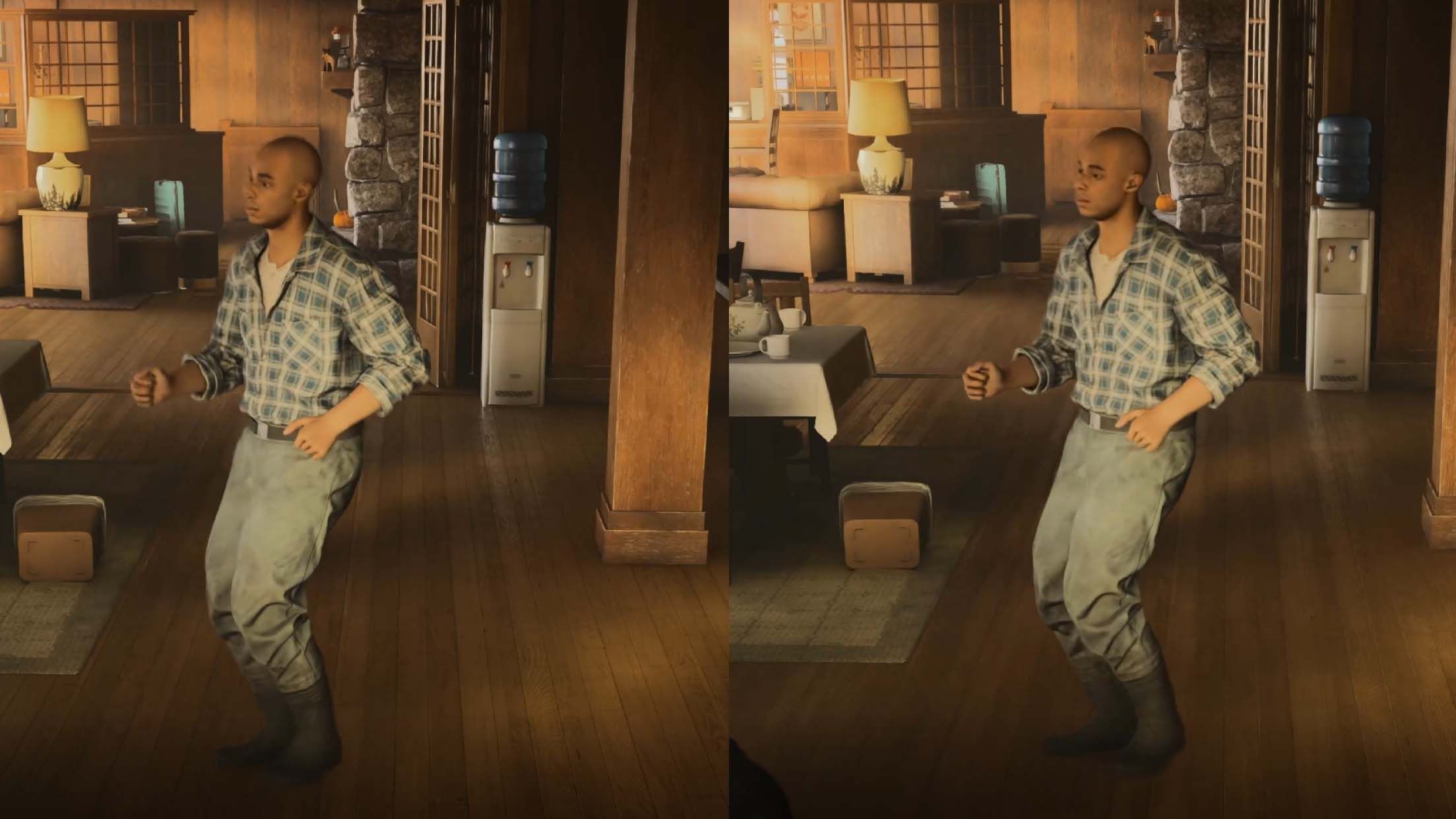
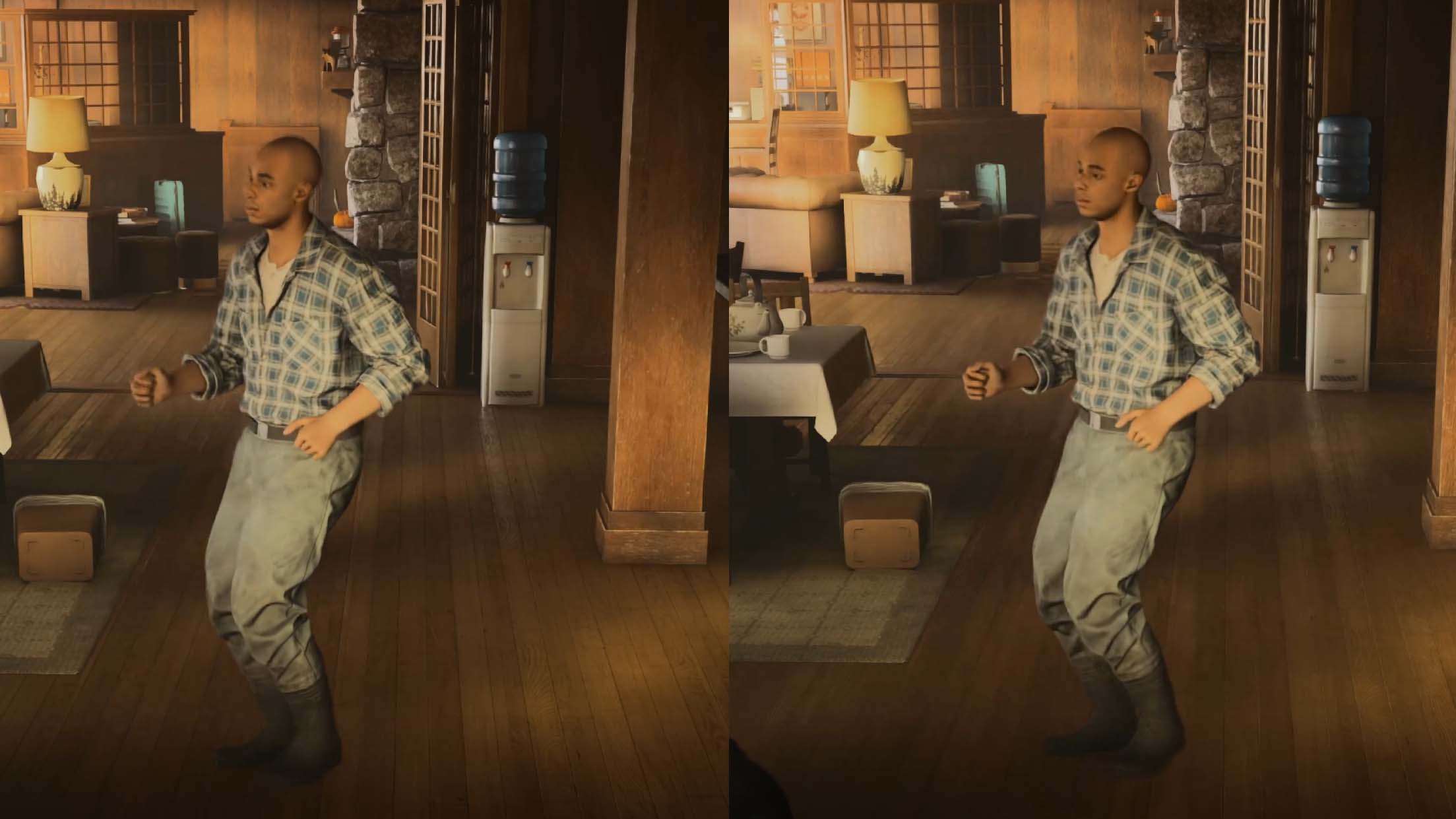
Remedy’s psychological thriller relies heavily on dreamlike atmospheres, making its native path-tracing artifacts somewhat forgivable. However, the uncanny visual trails trailing behind the dancing man in the Elderwood Palace Lodge bar were never an intentional artistic choice. DLSS 4.5 RR strips away nearly all of these ghost trails, though minor artifacting stubbornly persists around his shuffling feet. Crucially, the wooden floorboards in the background rooms exhibit significantly clearer plank representation, proving the Transformer model’s aptitude for high-frequency detail recovery.
Hardware Compatibility and System Impact
One of the most appealing aspects of Nvidia’s Ray Reconstruction technology is its RTX-agnostic architecture. It functions across all generations of GeForce RTX graphics cards, rather than being hardware-locked to the newest silicon.
However, performance scaling varies significantly across generations:
- The High-End Experience (Ada Lovelace & Blackwell): Users running RTX 40-series and RTX 50-series GPUs will find that the performance penalty of path tracing combined with DLSS 4.5 RR is easily absorbed by the sheer compute power of their hardware. Because heavy path tracing inherently demands high-end GPUs, these users get the ultimate visual package without sacrificing playability.
- Legacy Hardware Concerns (Turing & Ampere): While older RTX 20-series and RTX 30-series cards technically support Ray Reconstruction, transformer-based DLSS features weigh more heavily on older architectures. While Super Resolution is designed to claw back performance, Ray Reconstruction is inherently meant to solve high-end visual fidelity bottlenecks where frame-rate hits are expected. Older cards may struggle to maintain fluid frame rates when pushing maximum ray tracing settings alongside these advanced AI passes.
Future Outlook: The Horizon of Real-Time Graphics
The rollout of DLSS 4.5 Ray Reconstruction marks a major milestone in real-time rendering, proving that AI-driven neural models can successfully solve complex multi-frame instability issues that have plagued graphics engineers for years.
Yet, industry experts note that image fidelity across all path-traced environments is not a 100% solved problem. Complete perfection will ultimately require a tandem approach: a continuous evolution of AI modeling alongside a massive influx of raw hardware horsepower. In an era where corporate data centers jealously hoard compute resources for enterprise AI training, hoping for an immediate surplus of consumer-grade hardware horsepower is unrealistic.
Instead, software solutions like DLSS 4.5 RR are carrying the torch. By cleaning up "boiling" textures, eliminating distracting motion trails, and clawing back lost environmental details without requiring a complete engine rewrite from developers, Nvidia has provided PC gamers with a deeply valuable visual upgrade. As more titles adopt Preset F via the Nvidia App, the line between pre-rendered CGI and real-time interactive entertainment continues to blur—proving that the future of graphics isn’t just about tracing more light rays, but about teaching computers how to intelligently reconstruct the world around us.






Belum ada komentar. Jadilah yang pertama berkomentar!