

Executive Overview
The landscape of contemporary Korean television drama is perpetually searching for narratives that successfully marry emotional resonance with specialized, high-stakes environments. Enter tvN’s upcoming prestige project, “Four Hands, Two Sonatas,” a meticulously crafted series poised to redefine the musical melodrama genre. Scheduled for an eagerly anticipated premiere on August 29 at 9:10 p.m. KST, the series takes its title from a sophisticated technical term in classical piano performance: "four hands" (a quattro mani), where two pianists share a single instrument to create a unified, harmonious, yet intensely collaborative soundscape.
However, the narrative subverts the inherent harmony of its title. Instead, it plunges headfirst into the turbulent waters of adolescence, ambition, unrequited devotion, and cutthroat rivalry. The series follows the interconnected lives of two exceptionally gifted pianists—Kang Pio, portrayed by Song Kang, and Choi Jeong Yo, brought to life by Lee Jun Young—alongside violist Hong Jae In, played by Jang Gyuri. Meeting during their formative years at a prestigious arts high school, these characters embark on a sweeping narrative arc that chronicles their complex maturation from precocious, fiercely competitive teenagers into seasoned, world-class professional musicians.
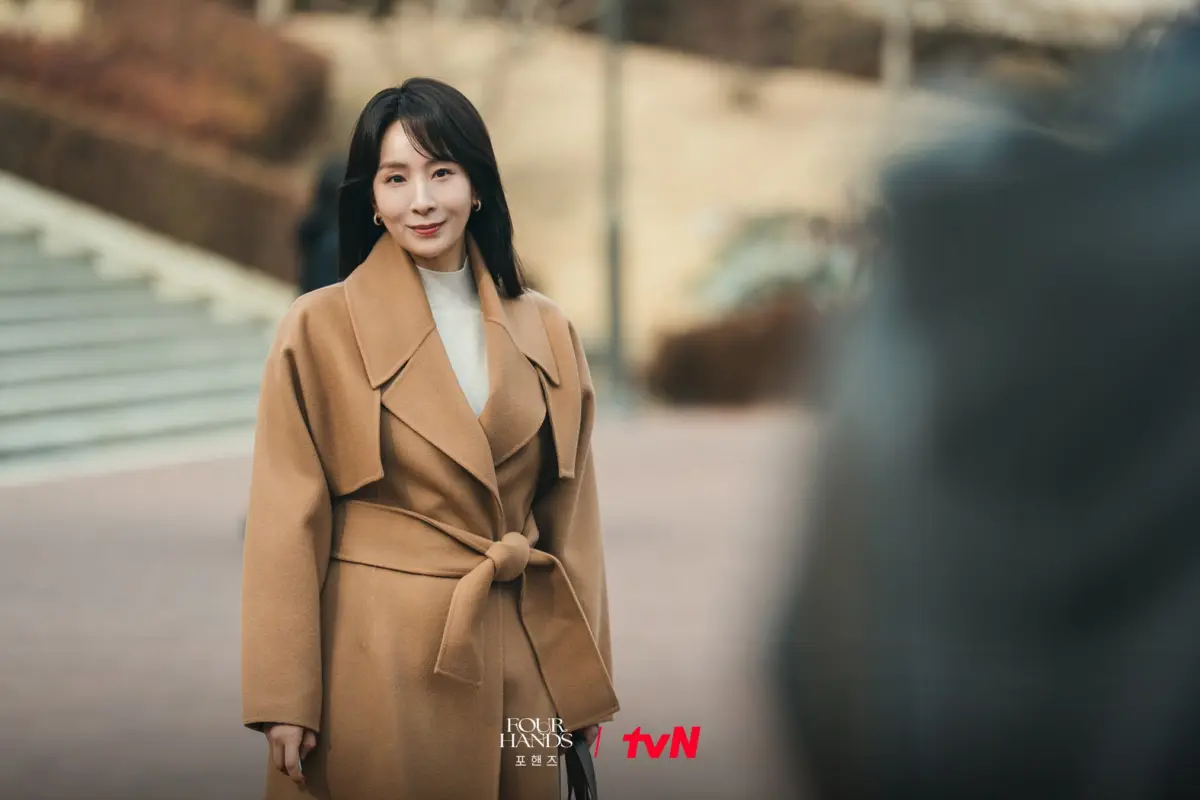
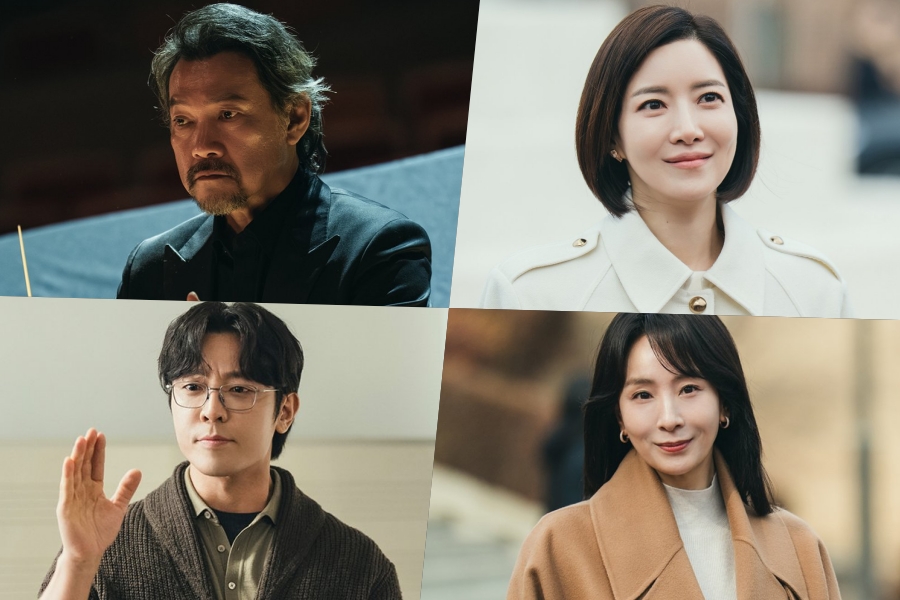
Yet, a musical prodigy is rarely forged in isolation. In a newly released structural rollout, tvN has introduced a powerhouse supporting ensemble featuring Jung Jin Young, Yoon Sea, Kim Joo Hun, and Seo Jae Hee. These seasoned veterans portray the patriarchs, matriarchs, mentors, and power brokers whose hidden agendas, generational expectations, and calculated patronages will profoundly shape—and at times threaten to fracture—the musical trajectories of the younger generation.
This analytical report provides an exhaustive examination of the creative forces, character dynamics, structural hierarchy, and industrial implications surrounding the launch of "Four Hands, Two Sonatas." Through a meticulous breakdown of each principal and supporting player, we explore how tvN is positioning this series as a cultural touchstone for the fall 2026 television season.
Detailed Chronology & Narrative Arc: From Arts Academy to International Stages
The structural spine of "Four Hands, Two Sonatas" relies on a dual-timeline narrative sensibility, bridging the intense, insulated pressure-cooker environment of elite arts education with the high-stakes, glittering realities of the international classical music circuit.
Phase I: The Crucible of Youth
The narrative commences within the hallowed, acoustic-paneled halls of a premier Korean arts high school. Here, Kang Pio and Choi Jeong Yo are thrust into an orbit of inevitable comparison. Kang Pio enters the institution bearing the crushing weight of a legendary musical lineage; every note he strikes is measured against the towering legacy of his grandfather. In stark contrast, Choi Jeong Yo emerges as a raw, fiercely independent talent, driven by an internal fire that refuses to be subdued by traditional orthodoxies.
Their initial encounters are defined by friction—a volatile mixture of mutual admiration and burning jealousy. Sharing practice rooms, competing for coveted slots in prestigious youth repertoires, and navigating the razor-thin margins of perfection, Pio and Jeong Yo realize that their styles are entirely antithetical. Pio plays with meticulous, emotionally guarded precision, while Jeong Yo attacks the keys with untamed, visceral passion.
Bridging these two ideological camps is Hong Jae In, a talented violist portrayed by Jang Gyuri. Operating within the string section rather than the ivory towers of the piano, Jae In serves as both an emotional anchor and a neutral observer. Her presence introduces complex relational dynamics, complicating the fierce rivalry between the two young men with subtle currents of friendship, unexpressed affection, and shared artistic vulnerability.
Phase II: The Ascent to Professionalism
As the series progresses, the narrative vault-slides from the protected confines of academia into the ruthless arena of the global professional circuit. The stakes escalate exponentially. Winning international competitions, securing coveted residencies with world-renowned philharmonics, and capturing the fleeting attention of elite cultural power brokers become matters of artistic survival.
The title "Four Hands, Two Sonatas" takes on a profound metaphorical weight during this phase. While the characters must occasionally learn to blend their distinct artistic identities—playing metaphorically on the same bench—the realities of the soloist’s life demand absolute dominance. Can a rivalry forged in adolescent insecurity evolve into a symbiotic partnership, or will the pursuit of absolute supremacy inevitably destroy their bond? This question forms the dramatic engine driving the series toward its climax.
The Architects of Ambition: Character Profiles and Power Dynamics
The psychological and musical worlds of Kang Pio, Choi Jeong Yo, and Hong Jae In do not exist in a vacuum. They are continuously shaped, manipulated, and tested by the older generation. tvN’s recent character reveals illuminate the intricate web of influence surrounding the trio.
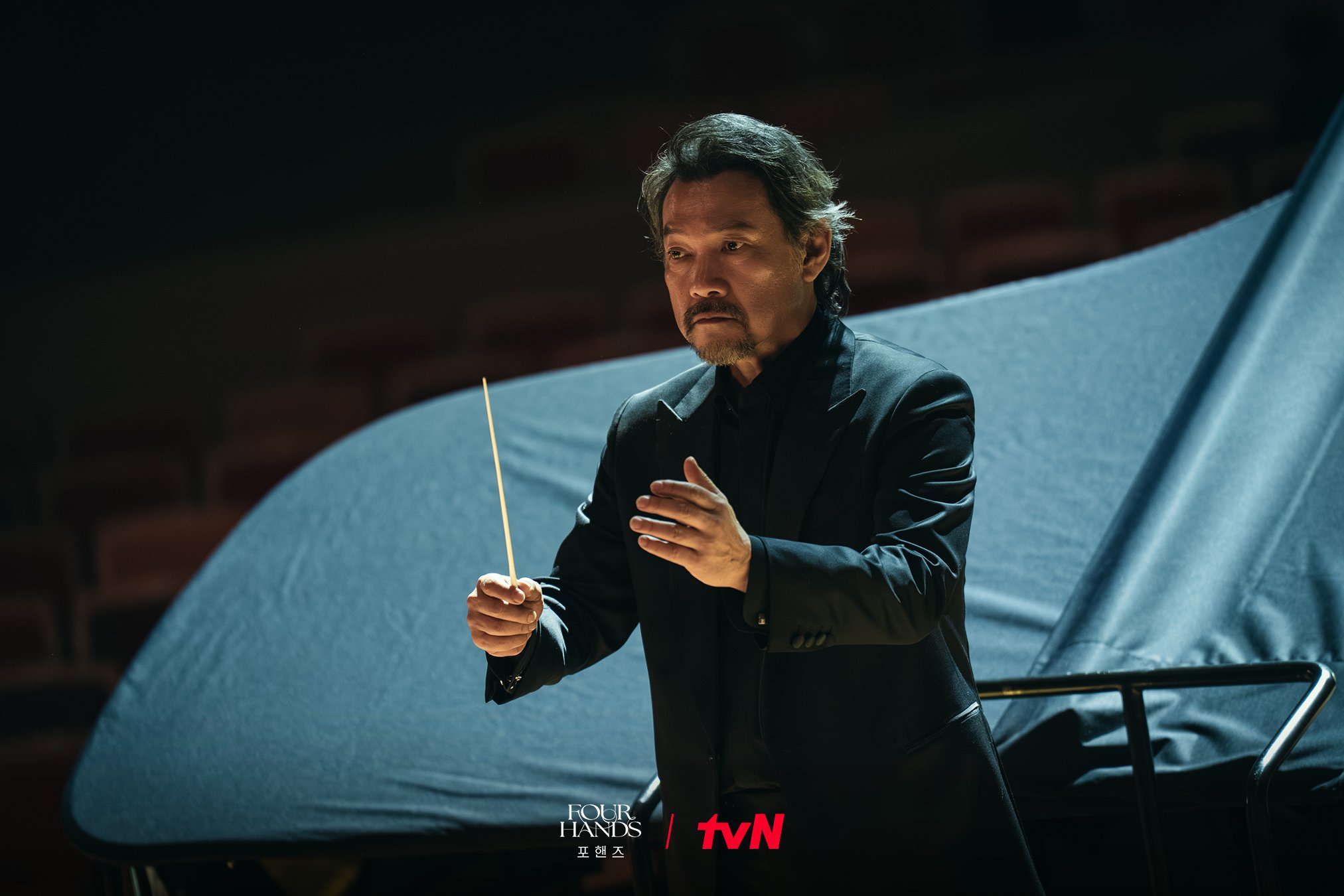
1. Kang Seung Woon (Portrayed by Jung Jin Young): The Architectural Patriarch
At the apex of the classical music establishment sits Kang Seung Woon, Kang Pio’s grandfather and a universally recognized, world-class conductor. Having spent decades at the absolute pinnacle of global classical music, Seung Woon embodies the archetype of the unyielding perfectionist.
For Seung Woon, music is an exact science where mediocrity is a mortal sin. Crucially, his uncompromising standards extend to his own bloodline. Rather than offering familial leniency, Seung Woon is notorious for subjecting his grandson to harsher critiques than any external student. This relentless withholding of validation inadvertently instills in Kang Pio a desperate, driving ambition to earn his grandfather’s approval—a psychological burden that dictates every measure of Pio’s musical career.
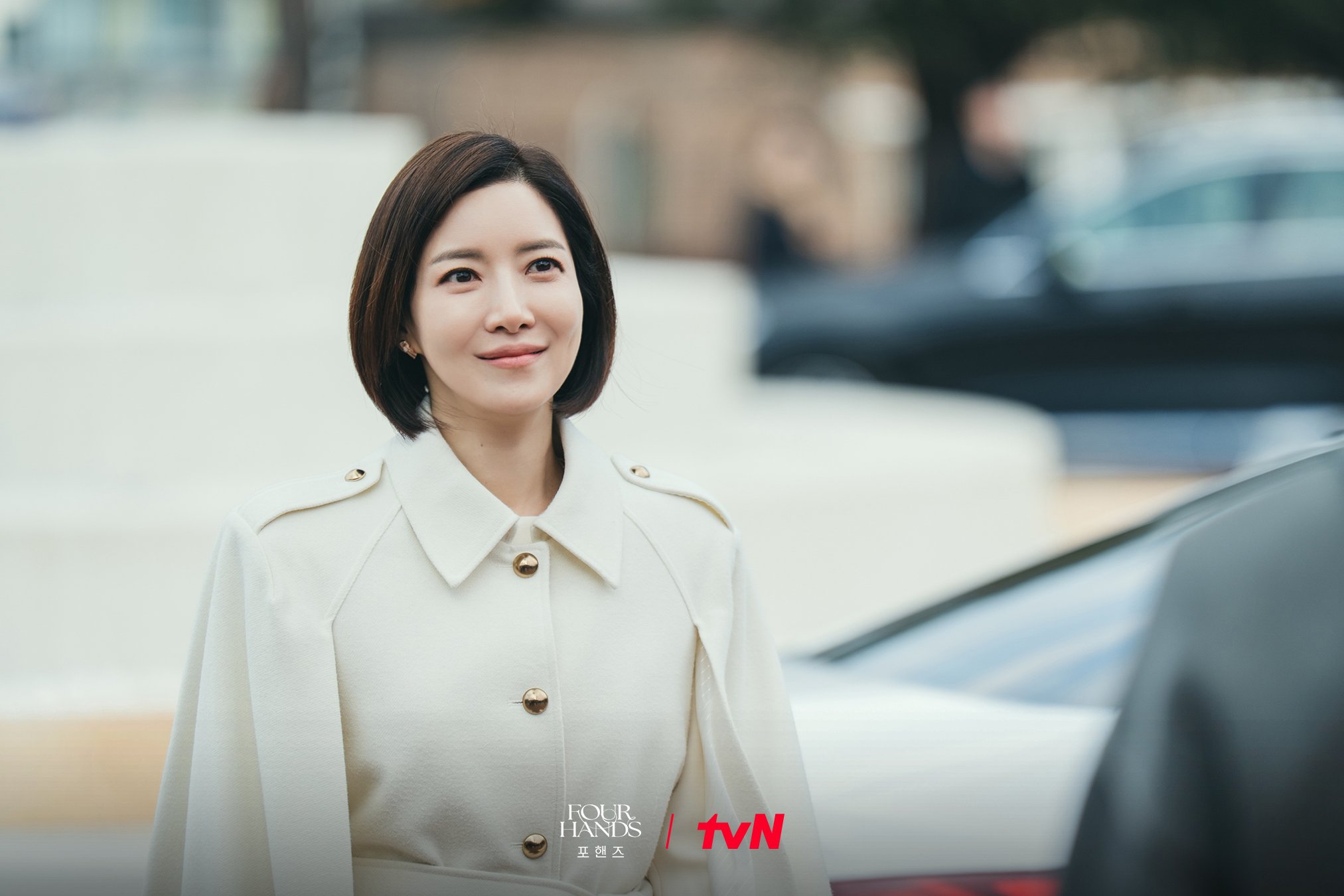
2. Kang Ji Hye (Portrayed by Yoon Sea): The Devoted and Anxious Matron
Navigating the delicate space between her legendary father and her gifted son is Kang Ji Hye, portrayed by Yoon Sea. As Kang Seung Woon’s daughter and Kang Pio’s mother, Ji Hye recognized her son’s prodigious talent at an astonishingly early age.
Her life has since become entirely subsumed by a singular mission: engineering Pio’s rise to uncontested dominance. Ji Hye’s support is unwavering, bordering on obsessive. However, the emotional equilibrium of her carefully constructed world is violently upended by the arrival of Choi Jeong Yo. As Jeong Yo emerges as a genuine threat to Pio’s supremacy, Ji Hye’s maternal pride mutates into acute anxiety. Her desperate machinations to keep her son at the top are expected to serve as a primary catalyst for the escalating conflict between the two young pianists.
3. Do Hyun Soo (Portrayed by Kim Joo Hun): The Bridge of Mentorship
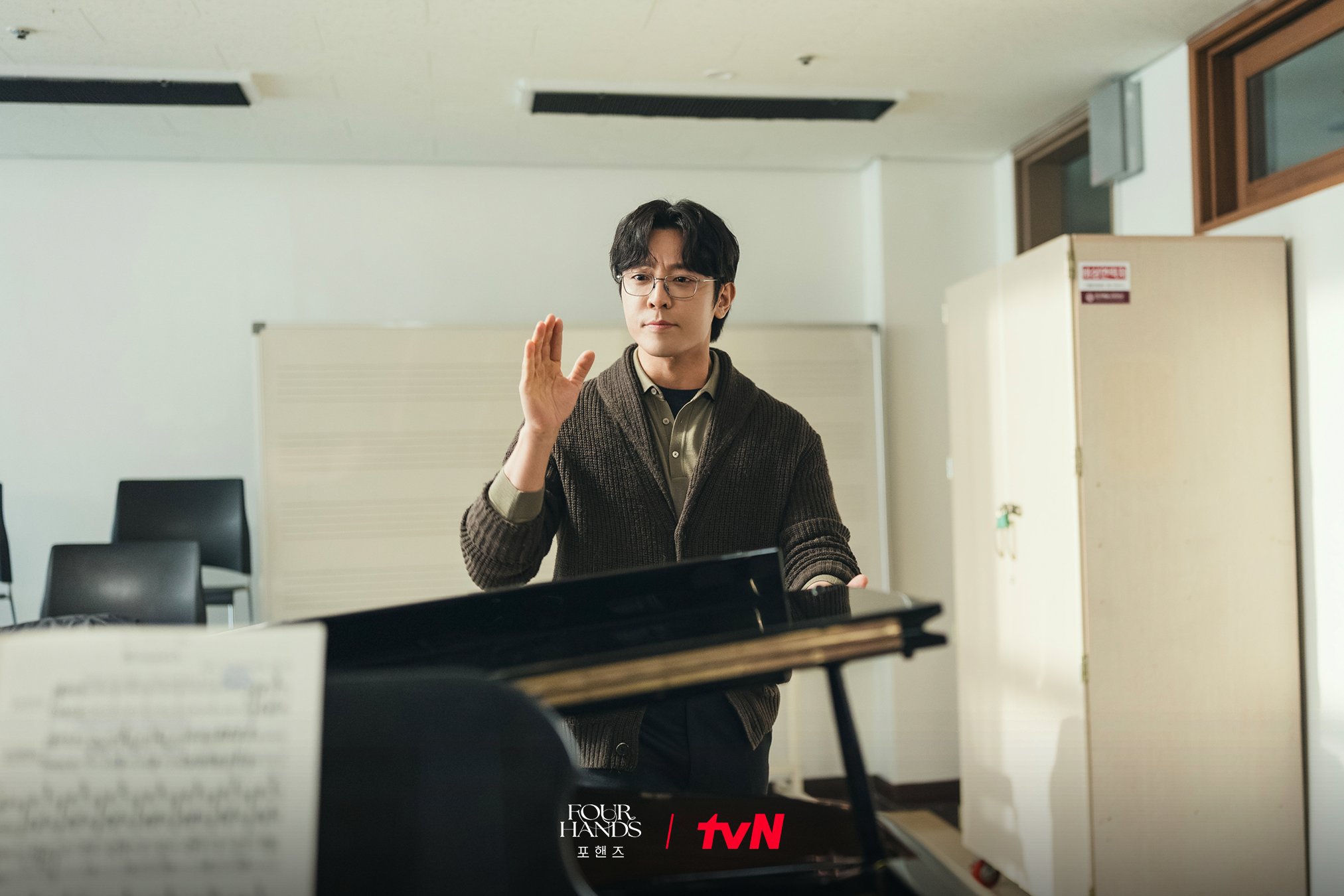
Amidst the fierce, often toxic expectations of family and prestige, pianist Do Hyun Soo—played by Kim Joo Hun—enters as a stabilizing, transformative force. A graduate of the very same elite Korean arts high school who successfully transitioned into an international career in the United States, Hyun Soo returns to take on the role of teacher to both Pio and Jeong Yo.
Hyun Soo possesses a rare pedagogical gift: the ability to manage two students whose personalities and playing styles are polar opposites. Instead of attempting to force them into a standardized mold, Hyun Soo guides Pio and Jeong Yo to dissect their unique strengths, confront their psychological weaknesses, and forge independent musical identities. His warm, empathetic mentorship amid a hyper-competitive landscape provides a vital emotional core, creating a nuanced, multi-layered teacher-student dynamic that viewers will find deeply compelling.
4. Yoon Sun Joo (Portrayed by Seo Jae Hee): The Architect of Shadowy Influence
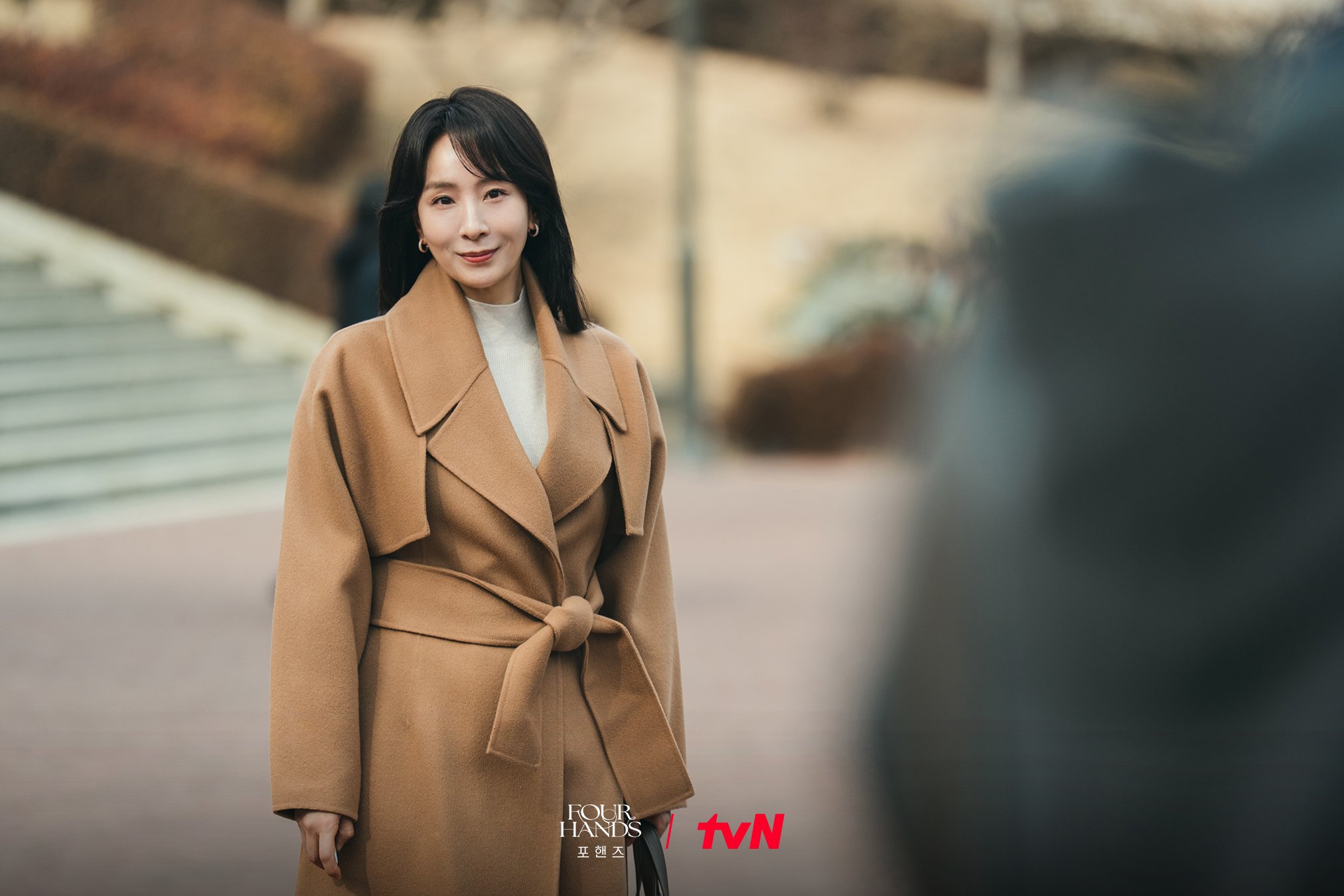
Perhaps the most intriguing and mysterious figure in the ensemble is Yoon Sun Joo, portrayed by Seo Jae Hee. Serving as Kang Ji Hye’s stepmother and Kang Seung Woon’s wife, Sun Joo is a violinist by training who wields formidable administrative and cultural power. As a director of the Korea Group Cultural Foundation and the chairwoman of the board at the Korean Arts High School, her influence stretches far beyond the concert hall and deep into the corporate and institutional roots of the arts world.
Sun Joo’s character introduces a layer of calculated psychological suspense. Recognizing Choi Jeong Yo’s raw, unpolished potential, she extends generous, seemingly benevolent patronage toward him. Yet, beneath this veneer of generosity lies a deeply calculated agenda: to uncover hidden, malleable talent and groom individuals to serve her own long-term institutional ambitions. Walking a razor-thin tightrope between genuine mentorship and manipulative exploitation, Sun Joo’s true motives remain opaque, leaving both the characters and the audience guessing how her chess pieces will alter the fates of the young musicians.
Supporting Context & Production Metrics
To fully understand the cultural weight of "Four Hands, Two Sonatas," one must examine the broader industrial context of tvN’s weekend and weekday programming strategies. Over the past several years, tvN has cultivated a reputation for producing high-budget, emotionally resonant melodramas that eschew lazy genre tropes in favor of deep occupational realism—as seen in prior hits exploring the medical, legal, and fine arts fields.
Production Scale and Musical Authenticity
Producing a series centered around professional classical pianists presents formidable logistical and technical hurdles. Unlike standard romantic dramas, where dialogue carries the primary burden of expression, "Four Hands, Two Sonatas" relies heavily on the verisimilitude of its musical sequences.
- Cast Preparation: Lead actors Song Kang and Lee Jun Young have undergone months of intensive, rigorous piano training to master hand placement, posture, and the physical intensity required to execute complex sonatas on screen.
- Acoustic Integration: The production team has reportedly partnered with top-tier classical pianists and sound designers in South Korea to ensure that the on-screen performances match the sonic grandeur expected by purists of the genre.
- Visual Direction: Cinematographer and directorial choices emphasize the stark contrast between the warm, inviting lighting of practice rooms and the cold, clinical, high-contrast spotlighting of international competition stages, mirroring the internal psychological states of the protagonists.
Demographic and International Reach
The casting of Song Kang and Lee Jun Young guarantees an exceptionally robust global footprint. Both actors command massive international fandoms cultivated through previous chart-topping Netflix and tvN releases. The decision to pair them in a narrative driven by intense interpersonal friction—reminiscent of classic literary rivalry tropes—ensures intense social media engagement, real-time fan theorizing, and high pre-premiere anticipation across Southeast Asia, North America, and Europe through platforms like Viki.
Official Statements and Promotional Insights
In promotional materials released by tvN’s publicity division, the creative team emphasized that "Four Hands, Two Sonatas" is less about the technical perfection of music and more about the human cost of striving for greatness.
"Music is ultimately an unmasked confession of the soul," a representative from tvN’s production team noted during a recent press briefing. "When two artists are forced to share the same keyboard—metaphorically or literally—every hidden insecurity, every familial scar, and every drop of ambition is laid bare. Song Kang, Lee Jun Young, and our extraordinary supporting cast have poured an immense amount of physical and emotional labor into capturing this vulnerability."
Furthermore, character teasers highlight the profound generational friction between Jung Jin Young’s imposing grandfather figure and Song Kang’s pressurized protagonist, setting up what critics are already projecting to be one of the most compelling familial power struggles in recent K-drama history.
Future Outlook and Critical Reception Prospects
As the countdown to the August 29 premiere at 9:10 p.m. KST enters its final phase, industry analysts are closely monitoring "Four Hands, Two Sonatas" as a litmus test for autumn television viewership.
Several key factors point toward a highly favorable reception:
- Genre Saturation Relief: While romantic comedies and fantasy thrillers continue to flood the market, a prestige musical melodrama with high dramatic stakes fills a distinct niche for viewers seeking mature, character-driven storytelling.
- Ensemble Balance: The inclusion of heavyweights like Kim Joo Hun, Jung Jin Young, and Seo Jae Hee ensures that the dramatic weight of the series is evenly distributed, appealing not only to younger demographics drawn by the main leads but also to mature audiences who appreciate nuanced, multi-generational power dynamics.
- Thematic Universality: At its core, the series transcends the world of classical music. Themes of parental expectation, the search for identity, overcoming imposter syndrome, and the bittersweet nature of professional rivalry are universally resonant.
In conclusion, "Four Hands, Two Sonatas" promises to be much more than a visual showcase of classical compositions. It stands as a complex, psychologically rich exploration of what it takes to find one’s own voice when the world demands you play someone else’s tune. As the curtain rises on August 29, audiences worldwide will be watching to see whose melody ultimately rings true.


Belum ada komentar. Jadilah yang pertama berkomentar!