The intersection of tactical decision-making and temporal manipulation has long served as a holy grail for game designers. For decades, developers have attempted to capture the lightning-in-a-bottle appeal of action-puzzle hybrids where time flows only when the player moves. While iconic titles like SUPERHOT famously revolutionized this concept by turning every gunfight into a high-stakes, turn-based puzzle masquerading as a first-person shooter, the genre has largely remained stagnant. It has been treated as a novel gimmick rather than a deeply extensible mechanical framework.
Enter Enter the Chronosphere, a provocative new title that seeks to shatter those boundaries. Developed by an ambitious independent studio, Enter the Chronosphere merges the relentless tension of a twin-stick roguelike with uncompromising real-time-with-pause mechanics. But this is no mere clone of its predecessors. Instead, the game introduces a sophisticated, multi-layered tactical sandbox that forces players to reevaluate everything they know about spatial awareness, bullet-hell survival, and resource management.
In this comprehensive report, we explore the mechanical innovations, design philosophies, and gameplay loops that make Enter the Chronosphere one of the most anticipated indie releases of the upcoming calendar year.
Detailed Chronology: The Evolution of Tactical Action-Puzzles
To understand the weight of Enter the Chronosphere, one must examine the lineage of tactical time-manipulation games. For years, the philosophy was simple: freeze time completely, let the player map out their inputs, and unfreeze to watch the chaos unfold. While effective, this approach often removed the visceral adrenaline rush inherent to fast-paced shooters.
When SUPERHOT arrived, it flipped the paradigm: "Time moves only when you move." Suddenly, every sidestep, bullet dodge, and melee swing became an active component of a fluid, rhythmic choreography. However, SUPERHOT was largely structured as a series of discrete, linear puzzle-combat rooms. Once the campaign concluded, replayability relied primarily on speedrunning challenges and alternative modes rather than systemic depth.
Enter the Chronosphere takes the foundational DNA of these time-shifting shooters and fuses it with the infinite replayability of modern roguelikes. The evolution can be tracked across three distinct design phases:
The Conceptual Spark: Moving away from static puzzle rooms toward dynamic, procedurally generated arenas.
Systemic Integration: Allowing time manipulation not just as a defensive shelter, but as an offensive weapon to set up complex chain reactions.
Meta-Progression and Variety: Ensuring that every run introduces novel combinations of weapons, status effects, and spatial anomalies.
Supporting Context & Metrics: Breaking Down the Mechanics
At first glance, Enter the Chronosphere presents itself as a chaotic gauntlet of projectiles and adversaries. However, beneath the surface lies a deeply mathematical engine designed to reward precision and strategic foresight.
The Core Loop
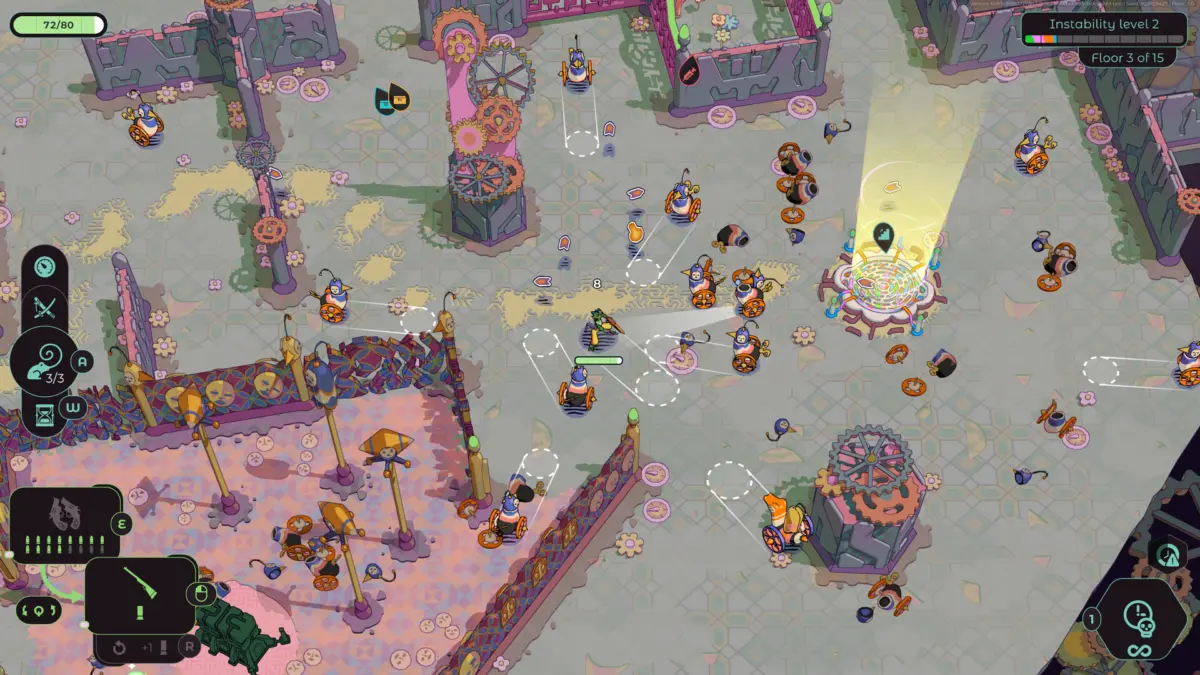
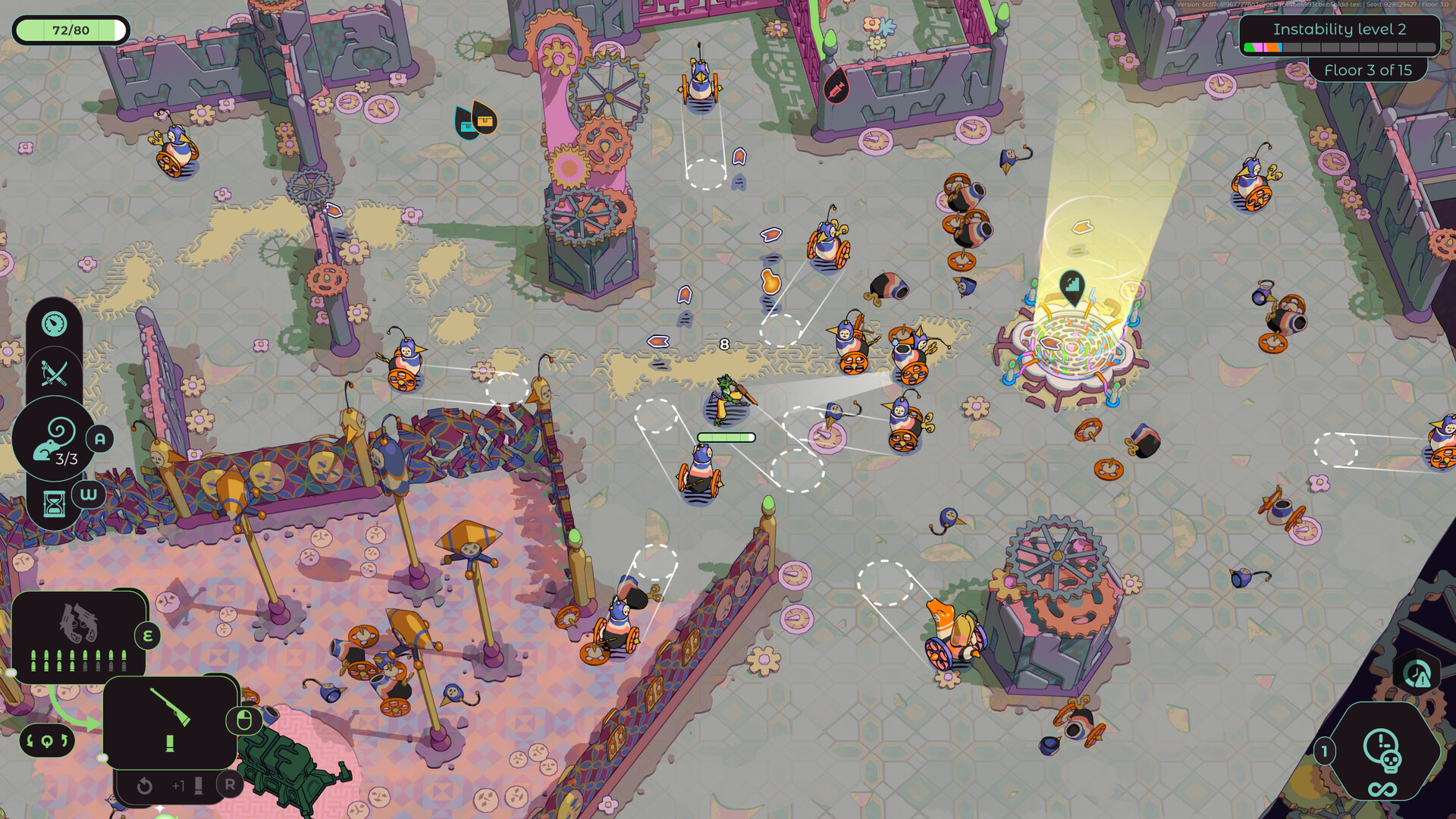
Players control a specialized operative dropped into hostile, shifting environments. Every action—walking, aiming, firing, reloading, or activating special gadgets—advances the internal clock. If the player stands entirely still, the universe grinds to a halt, allowing for microscopic analysis of enemy bullet trajectories, enemy patrol routes, and environmental hazards.
Key metrics observed in recent technical demonstrations reveal:
Bullet Time Scaling: Projectile speeds scale dynamically based on the velocity of the player’s inputs, allowing for micro-adjustments in tight corridors.
Resource Economy: Ammunition and energy are strictly finite, forcing players to scavenge on the fly while dodging incoming crossfire.
Spatial Complexity: Arenas feature destructible geometry, verticality, and dynamic hazards that alter the battlefield layout in real-time.
+-----------------------------------------------------------------+
|                       THE CHRONOSPHERE LOOP                     |
|                                                                 |
|  [ Player Movement ] ---> [ Time Advances ] ---> [ Enemy Action ]|
|          ^                                             |        |
|          |                                             v        |
|  [ Strategic Pause ] <--- [ Tactical Analysis ] <--- [ Incoming ]|
+-----------------------------------------------------------------+
Weaponry and Arsenal Diversity
The game’s arsenal spans classic ballistic firearms, experimental energy weapons, and temporal anomalies. Because time moves only when you act, wielding a slow-firing, heavy-impact rocket launcher requires an entirely different tactical mindset than dual-wielding high-rate-of-submachine guns. Players must calculate the exact frame data of their reload animations against an incoming barrage of plasma rounds, turning every skirmish into a deadly chess match played at lightning speed.
Official Statements and Developer Insights
Speaking exclusively on the developmental philosophy behind Enter the Chronosphere, the lead designers emphasized a desire to avoid the "fatigue" often associated with traditional bullet-hell games.
"We didn’t just want to make another game where you dodge thousands of bullets through sheer twitch reflexes," noted the creative director during a recent developer roundtable. "We wanted to give players the intellectual space to breathe, to look at an impossibly complex web of danger, and say, ‘I can pick this apart.’ Time is your greatest weapon, but it is also a resource you must spend wisely."
Furthermore, the team discussed the technical hurdles of synchronizing multiplayer and procedural generation with a time-halting engine. Ensuring that frame-perfect inputs remain consistent across various hardware configurations required a complete overhaul of traditional netcode and physics architectures. The result is a buttery-smooth experience that feels equally responsive whether you are executing a split-second dash or pausing for ten minutes to plan a room-clearing combo.
Future Outlook: What Lies Ahead for the Genre
As Enter the Chronosphere marches closer to its official release window, industry analysts and indie enthusiasts alike are watching closely. The title has the potential to redefine how players interact with time-space mechanics in video games, moving the conversation past simple "bullet-time" tropes into genuinely innovative strategic territory.
Key Milestones to Watch:
Upcoming Beta Phases: Closed and open beta playtests will test the scalability of the procedural generation engine and online leaderboards.
Modding Support: Developers have hinted at robust community tools, which could pave the way for custom campaigns, community-made weapons, and extreme challenge modifiers.
Platform Optimization: Ensuring seamless performance across PC and console architectures without compromising the fidelity of the time-manipulation engine.
Ultimately, Enter the Chronosphere is more than just a clever gameplay gimmick. It is a masterclass in pacing, systemic design, and player empowerment. By granting players total dominion over the flow of time, the developers have crafted an experience where every victory feels earned, every defeat serves as a lesson in tactical geometry, and the only true limit is one’s own imagination.










Belum ada komentar. Jadilah yang pertama berkomentar!