

August 28, 2026
By the Security & Civil Liberties Investigative Desk
Executive Overview
The rapid, largely unchecked expansion of automated mass surveillance across American municipalities may have officially reached a historic tipping point. For years, the proliferation of automated license plate readers (ALPRs) and high-definition optical surveillance networks was met with quiet compliance—or active municipal enthusiasm—framed by proponents as a high-tech panacea for local property crime, vehicle thefts, and violent offenses. Today, however, the cultural and political tide has dramatically shifted.
According to a landmark YouGov survey of 20,000 adults nationwide, shared exclusively with The Washington Post, public sentiment has officially inverted. A plurality of Americans now oppose the presence of automated surveillance cameras operated by companies like Flock Safety in their local communities, outpacing those who support them. Specifically, 46% of respondents registered opposition to community-wide deployment of these systems, while only 38% voiced support, with the remainder undecided.
This metric represents a stark reversal from polling conducted just one year prior, during which a clear majority of Americans expressed comfort with the technology in the name of public safety. This sudden erosion of public trust is not happening in a vacuum. It follows a wave of high-profile municipal contract cancellations, intense scrutiny from civil liberties organizations, documented instances of law enforcement overreach, and an escalating wave of direct-action vandalism targeting the cameras themselves.
As the surveillance industry struggles to salvage its public image through rushed compromise frameworks and newly minted privacy features, lawmakers, civil rights advocates, and community organizers are locked in a high-stakes battle over the future of American privacy, Fourth Amendment protections, and the permissible boundaries of corporate-backed municipal policing.
Detailed Chronology: From Rapid Expansion to Municipal Rebellions
To understand the current crisis of confidence surrounding automated license plate readers, it is necessary to examine how these networks embedded themselves into the fabric of American infrastructure, and the cascading events that triggered the current backlash.
The Rise of the Ubiquitous Lens
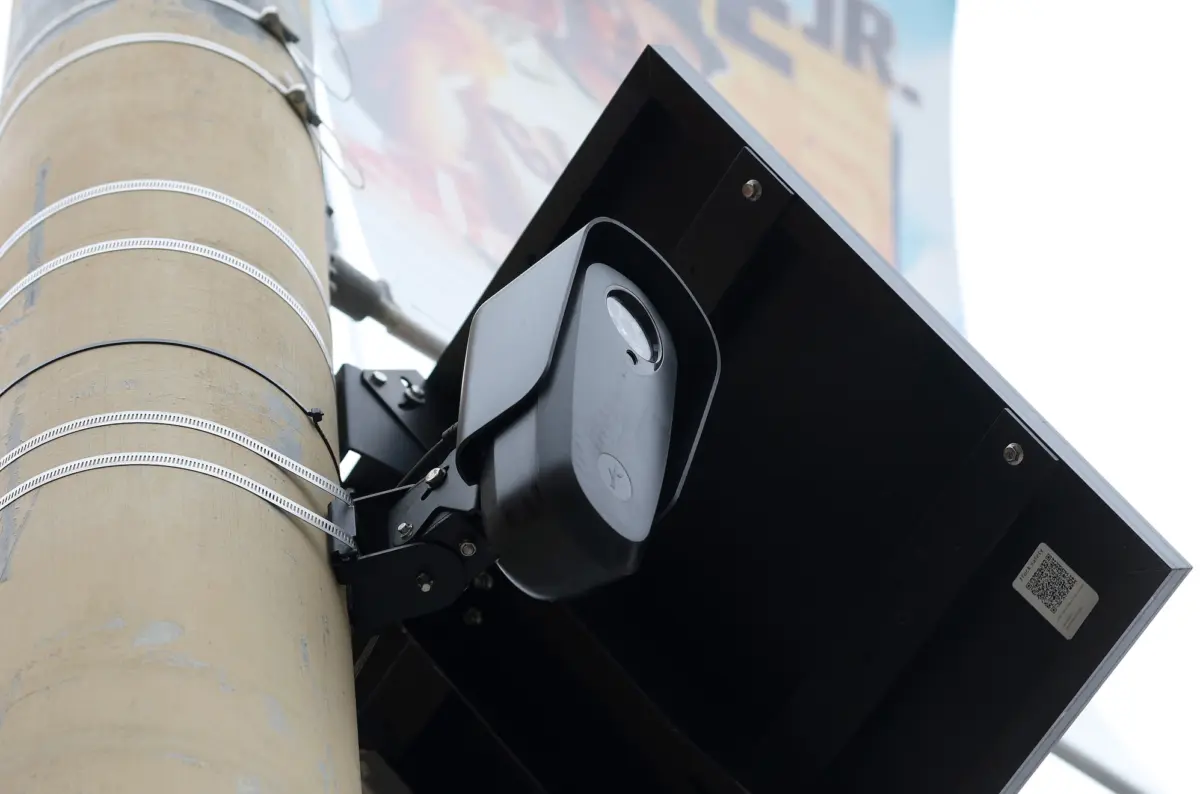
Over the past decade, private surveillance firms—most notably Flock Safety, which currently operates a massive network exceeding 120,000 specialized cameras across the United States—positioned themselves as indispensable partners to local law enforcement agencies. By marketing affordable, solar- or battery-powered cameras capable of capturing not just license plates, but vehicle makes, models, colors, bumper stickers, and directional travel paths, companies like Flock successfully integrated into thousands of neighborhoods, commercial districts, and highway corridors.
The pitch to homeowners associations (HOAs), local business districts, and municipal police departments was simple: pay a recurring subscription fee, and gain access to a continuous, algorithmically searchable database of every vehicle moving through your area. For cash-strapped police departments facing staffing shortages, the proposition of automated, round-the-clock vehicle tracking was difficult to refuse.
Cracks in the Facade: The 2026 Tipping Point
The illusion of harmless public safety enhancement began to shatter as investigative reports exposed how these vast data pools were being accessed and utilized. Critics and investigative journalists revealed instances where police departments shared automated tracking data across jurisdictional and state lines without warrants, potentially bypassing state-level restrictions on reproductive healthcare travel or immigration enforcement.
The tipping point accelerated significantly in July 2026, when the Los Angeles Police Department (LAPD)—one of the nation’s largest municipal law enforcement agencies—officially let its high-profile contract with Flock Safety expire. Citing serious, unresolved concerns regarding civil liberties, data privacy vulnerabilities, and the potential for systemic abuse, the LAPD’s decision sent shockwaves through the law enforcement and security technology sectors.
In the wake of the LAPD’s retreat, a domino effect occurred. Dozens of other U.S. cities, towns, and county boards initiated emergency reviews of their own surveillance contracts. Many voted outright to cancel agreements with Flock and competing vendors, citing a profound disconnect between promises of targeted crime-fighting and the reality of indiscriminate mass tracking of innocent citizens.

Supporting Context & Metrics: The Anatomy of Public Distrust
The YouGov survey metrics published in late August 2026 paint a granular picture of a public deeply skeptical of corporate-managed civic surveillance. The data reveals several key insights regarding contemporary American attitudes toward public safety technology:
- The Demographic and Geographic Shift: Opposition is no longer confined to traditionally progressive urban enclaves or civil libertarian strongholds. Suburban and exurban communities—historically the primary markets for residential and HOA-installed Flock cameras—are registering unprecedented levels of pushback, driven by privacy advocates and fiscal conservatives alike who question both the civic utility and the recurring financial costs of private surveillance subscriptions.
- The Safety Perception Gap: A core justification offered by surveillance vendors is that visible cameras provide psychological reassurance to residents. However, the YouGov data undermines this narrative, with a significant majority of respondents stating that the installation of these devices does not make them feel measurably safer in their daily lives. For many citizens, the cameras do not symbolize community protection; instead, they represent an intrusive, corporate-backed panopticon.
- The Rise of Direct Action: As institutional and legal avenues for challenging surveillance expansion have faced bureaucratic bottlenecks, frustration has manifested physically. Over the summer of 2026, law enforcement agencies across multiple states reported an alarming spike in direct-action vandalism. Flock cameras mounted on utility poles have been spray-painted, smashed, cut down, or systematically disabled by unknown actors protesting corporate surveillance—a clear physical manifestation of the growing cultural hostility toward the technology.
Official Statements and Industry Response
Faced with declining public approval, legislative pushback, and physical attacks on its physical infrastructure, the leadership of Flock Safety has shifted from an aggressive expansion posture to a defensive, public-relations-heavy damage control campaign.
Flock Safety’s Defense and Compromise Strategy
When reached for comment by technology publications, representatives for Flock Safety maintained that broad, aggregate support for its technology remains fundamentally intact across the country. However, the company acknowledged a critical nuance: "Support isn’t unconditional."
In response to the mounting pressure, Flock CEO Garrett Langley stepped into the public spotlight late last week to call explicitly for a "compromise" between surveillance utility and individual privacy rights. This pivot followed the rollout of a series of software updates and privacy safeguards designed to restrict how long data can be stored, limit third-party data sharing, and introduce stricter auditing protocols for law enforcement queries.
Mr. Langley argued that a balanced middle ground can be achieved where communities retain the ability to solve violent crimes and vehicle thefts without compromising civil liberties, urging critics to judge the company by its newest iteration of security governance rather than early operational models.
The Counter-Perspective: Civil Liberties Advocates Respond
Civil rights organizations, most notably the American Civil Liberties Union (ACLU), have roundly dismissed Flock’s newly implemented safeguards as cosmetic adjustments designed to preserve a fundamentally invasive business model.
In public briefings and technical analyses, ACLU representatives have argued that regardless of data retention tweaks or access audits, the core architecture of an automated, private-sector-managed mass tracking network remains an existential threat to constitutional protections. Privacy advocates contend that voluntary corporate safeguards can be easily altered, rolled back, or bypassed under pressure from law enforcement agencies, and that no amount of internal corporate policy can substitute for democratic legislative bans or robust judicial warrants.
Future Outlook: Where Does American Surveillance Go From Here?
As the autumn of 2026 approaches, the debate over automated license plate readers and corporate-backed surveillance has graduated from a localized zoning dispute into a national referendum on the intersection of technology, policing, and civil rights.
Several critical trajectories are shaping the immediate future of this industry:
- Legislative and Regulatory Interventions: State legislatures across the country are expected to introduce aggressive bills in the upcoming legislative sessions aimed at restricting or banning private-contractor-managed ALPR networks on public right-of-ways. Lawmakers are increasingly sensitive to the polling data showing that voters across political lines are unifying around privacy concerns.
- Municipal Risk Assessments: City attorneys and risk management boards are taking a harder look at municipal contracts with surveillance firms. The liability risks associated with data breaches, unauthorized police access, and constitutional challenges are beginning to outweigh the perceived crime-fighting benefits for many local governments.
- The Technological Arms Race: As traditional pole-mounted cameras face increased vandalism and legal bans, surveillance firms are likely to pivot toward less visible, software-integrated alternatives—such as leveraging existing traffic camera infrastructure or integrating with connected vehicle data. This, in turn, will likely catalyze a secondary wave of regulatory scrutiny focused on data brokers and vehicular telemetry.
Ultimately, the YouGov survey data serves as a loud wake-up call to both municipal leaders and technology vendors. The era of frictionless, unquestioned adoption of automated surveillance infrastructure in the United States is officially over. Whether companies like Flock Safety can successfully navigate this profound cultural and political backlash—or whether they will become the first major casualties of a new American privacy movement—will define the landscape of public safety and civil liberties for the remainder of the decade.








Belum ada komentar. Jadilah yang pertama berkomentar!