

By Chadley Kemp, Senior Editor
Published: August 28, 2026
Executive Overview
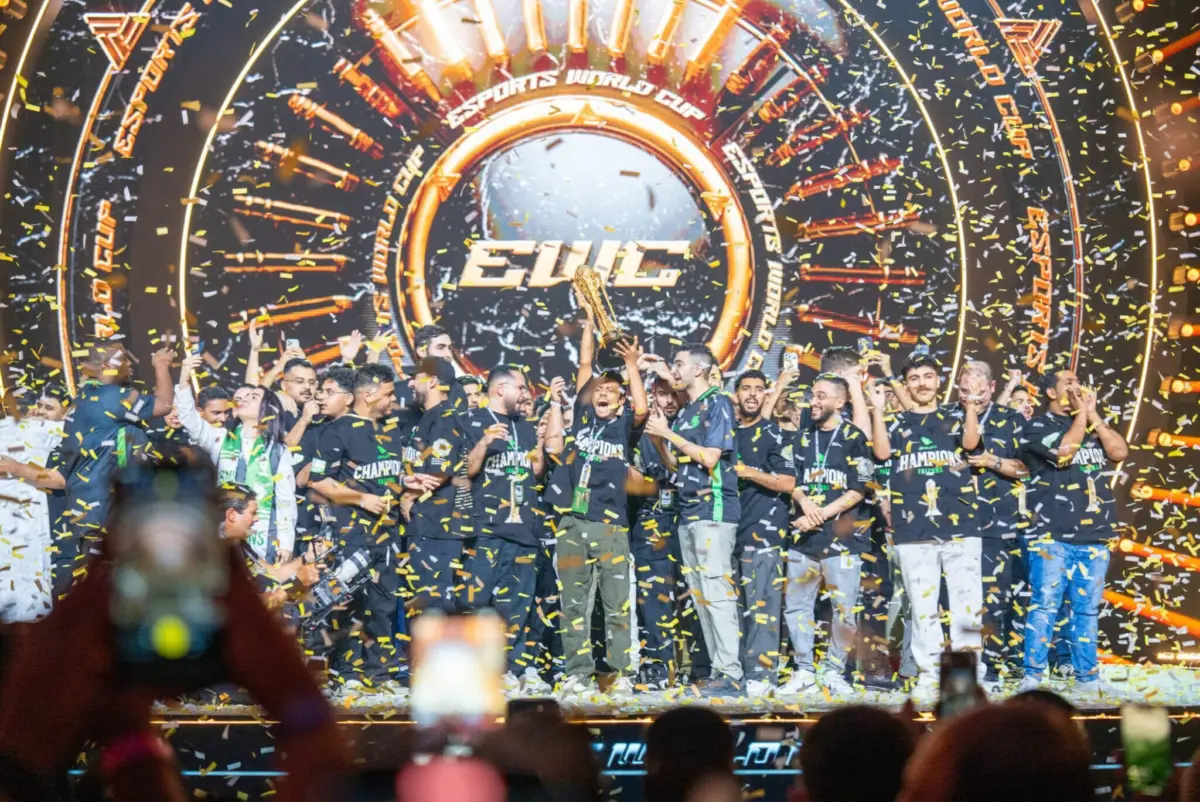
While the ultimate crowning achievement—a first-place tournament trophy—eluded the British contingent at the 2026 Esports World Cup (EWC), the final statistical post-mortem reveals a nation that came agonizingly close to international glory. Across 25 high-stakes tournaments and 24 distinct titles, 49 British competitors stepped onto the global stage, participating across 12 separate disciplines.
The raw metrics paint a portrait of a competitive powerhouse bubbling just beneath the surface of absolute victory:
- Six British players or rosters finished as tournament runners-up.
- Eight secured coveted podium placements.
- 18 locked down top-eight finishes.
Despite these impressive figures, a deeper dive into the data unmasks stark regional and genre disparities. Britain’s footprint remains heavily anchored in first-person shooters (FPS) and racing simulations, while its presence in fighting games, mobile esports, and traditional Multiplayer Online Battle Arenas (MOBAs) remains virtually non-existent.
When measured by overall depth, representation, and podium success, Call of Duty: Warzone delivered the UK’s most complete team performance. Conversely, the debut title Trackmania produced the nation’s most potent individual masterclass, and Overwatch secured the highest single-representative average placement.
This comprehensive review explores how the UK contingent fared, separating sheer player participation from true competitive performance, and evaluating where Britain stands on the global esports hierarchy.
Detailed Chronology and Title-by-Title Breakdown
Call of Duty: Black Ops 7: Maximum Representation, Mixed Returns
Entering the EWC 2026 cycle, British Call of Duty possessed arguably the deepest talent pool of any domestic scene. This depth was immediately evident in Black Ops 7, which led all tournaments with 11 British players spread across six of the 16 invited teams—accounting for a staggering 22.4% of the entire UK contingent.
Yet, participation did not translate into dominance. Beans and Nastie engineered a respectable run to the 5th–8th-place bracket under G2 Esports, matching the placement achieved by Insight with Movistar KOI. These three were the sole representatives to break into the tournament’s upper echelons. Mid-tier placements plagued the rest: Cammy, F Dot, Harry, and Mythix landed in 9th–12th, while Afro, Aspekt, DK, and Ethan capped off their campaigns in 13th–16th.
Ultimately, Black Ops 7 yielded an average British placement percentile of just 34.2%. While the sheer volume of players confirms the UK’s status as a talent factory for tactical shooters, the title highlighted the gap between fielding professional rosters and securing championship hardware.
Call of Duty: Warzone: The Crown Jewel of UK Team Play
If Black Ops 7 highlighted the perils of scattered talent, Call of Duty: Warzone demonstrated the rewards of concentrated firepower. Warzone generated four of Britain’s eight podium players, anchoring the nation’s best overall team performance of the event.
The tournament featured a glittering display from an all-British T1 roster composed of Disrrpt, Echo, and Spam, who bulldozed their way to a second-place finish. They were joined on the podium by Slappy, who secured third place under the JD Gaming banner. In total, 44.4% of the UK’s nine Warzone representatives walked away with a podium medal.
Though lower finishes by KINGAJ (9th), Lenun (12th), Fifakill (14th), IvFiree (23rd), and BubbleCT (24th) brought the average placement percentile down to a respectable 70.6%, Warzone stood unmatched. It was the only tournament at EWC 2026 to successfully combine high volume (nine players across seven entries) with elite, multi-podium conversion.
Trackmania: Precision Driving on the Global Stage
Making its much-anticipated EWC debut, Trackmania proved to be a watershed moment for British racing talent. Out of a hyper-exclusive 32-competitor field, four drivers—representing 12.5% of the total bracket—were British.
Moving away from team dynamics into pure individual execution, Trackmania produced the UK’s strongest individual showings. Robert “Epos” McKay (Team Liquid) and Thomas “Pac” Cole (Team Vitality) engaged in masterclasses of split-second precision, finishing second and third respectively. Further down the bracket, Josh1248 secured a 13th–16th finish, while Whizzy landed in the 17th–20th bracket.
Boasting an average placement percentile of 72.6%—the highest among tournaments with at least two British representatives—Trackmania cemented itself as a premier discipline for British esports excellence, playing a direct role in shaping the dramatic narrative of the final EWC weekend.
Overwatch and VALORANT: Tactical Brilliance at the Summit
In the tactical shooter and hero shooter landscapes, British players routinely proved they could run with the world’s elite, even when operating as lone wolves or within international super-teams.
- Overwatch: Daniel “FUNNYASTRO” Hathaway carried the entire UK flag single-handedly as the nation’s sole active representative. His efforts paid massive dividends, guiding Twisted Minds to a stunning second-place finish. This single-player sample size yielded a staggering 93.3% average placement percentile—the highest of any game at the festival, albeit lacking the deep statistical sample of Warzone.
- VALORANT: Georgio “keiko” Sanassy spearheaded the UK’s VALORANT charge, helping NRG reach the Grand Final before settling for second place. Benjy “benjyfishy” Fish added further prestige, pushing into the 5th–8th-place bracket with Team Heretics, while dual-national NoMan claimed a 13th–16th finish with Xi Lai Gaming.
Rainbow Six Siege X and Other Notable Contenders
Rainbow Six Siege X showcased extraordinary structural depth for the UK. Six British players competed across four different rosters. Eupor captured the imagination with a fourth-place finish for Geekay Esports, while Oscr and vDrillZ placed 5th–8th with Team Secret. CTZN, Wizard, and Yuzus rounded out the contingent in the 9th–12th tier, pushing the game’s average placement percentile to a rock-solid 66.3%.
Elsewhere, glimpses of brilliance shone through specialized titles:
- Dota 2: Dual-national Ekki fought his way to a commendable 5th–8th finish.
- Rocket League: Archie mirrored this success, securing a top-eight placement.
- Counter-Strike 2: William “mezii” Merriman anchored a top-eight run, though struggles from compatriots Gizmy and AZUWU (who dropped into the 25th–32nd bracket) dragged the title’s collective average down.
Supporting Context and Metrics
To properly contextualize these achievements, a rigorous methodological framework must be applied. Data compiled from official EWC 2026 competition pages and cross-referenced via Liquipedia indicates that "British" citizenship encompasses documented professionals from England, Scotland, Wales, Northern Ireland, and recognized dual nationals. (Note: Six roster substitutes of British descent were identified during the audit but intentionally excluded from active headline figures to preserve data integrity).
Comparative Performance Metrics at EWC 2026
| Esport Title | Active British Players | Total Entries / Teams | Key Finishes / Podiums | Average Placement Percentile |
|---|---|---|---|---|
| Call of Duty: Black Ops 7 | 11 | 6 Teams | 5th–8th (x3) | 34.2% |
| Call of Duty: Warzone | 9 | 7 Entries | 2nd (x3), 3rd (x1) | 70.6% |
| Trackmania | 4 | 4 Solo | 2nd (x1), 3rd (x1) | 72.6% |
| Rainbow Six Siege X | 6 | 4 Teams | 4th (x1), 5th–8th (x2) | 66.3% |
| VALORANT | 3 | 3 Teams | 2nd (x1), 5th–8th (x1) | 60.1% |
| Overwatch | 1 | 1 Team | 2nd (x1) | 93.3% |
| Counter-Strike 2 | 3 | 3 Teams | 5th–8th (x1) | 48.0% |
The macro trend is impossible to ignore: British esports dominance remains heavily concentrated in PC and console shooters alongside racing simulations. Conversely, the nation’s footprint was non-existent across 13 major titles, including League of Legends, Fortnite, Street Fighter 6, Tekken 8, and all Mobile Legends: Bang Bang divisions. This structural imbalance points to persistent cultural and infrastructural preferences within the UK competitive scene, favoring fast-paced tactical execution and precision motor skills over fighting game communities (FGC) or mobile ecosystems.
Official Insights and Expert Perspectives
Analyzing the broader implications of the 2026 EWC results requires evaluating how localized talent translates into long-term career sustainability. While the podium finishes and high-tier placements are a testament to individual grit, financial milestones tell a more sobering story regarding the domestic ecosystem.
As highlighted in recent financial evaluations of the UK scene, despite world-class performances on international stages, only a tiny fraction of British competitors have crossed the $1 million threshold in career prize winnings. High representation at elite multi-title events like the Esports World Cup does not automatically guarantee insulated financial stability or long-term institutional backing from domestic organizations.
Furthermore, the data underscores a vital lesson for analysts and talent scouts alike: participation volume is not a proxy for performance. While games like Black Ops 7 prove that the UK pipeline produces an abundance of professional-grade players, titles like Warzone and Trackmania prove that winning requires turning that talent pool into concentrated, elite execution.
Future Outlook: Where Does British Esports Go From Here?
As the dust settles on the 2026 Esports World Cup, the British competitive scene faces a moment of critical self-reflection. The blueprint for international success has been clearly mapped out across disciplines like Warzone and Trackmania: leverage deep grassroots competitive ladders, secure placements on internationally competitive rosters, and convert high-pressure moments into podium finishes.
Looking ahead toward the 2027 competitive circuit, several key milestones will define the growth of UK esports:
- Diversification Beyond Shooters: For the UK to evolve into a global superpower, domestic talent pipelines must expand beyond FPS titles and racing games. Cultivating stronger infrastructure within the FGC and emerging tactical genres will be paramount.
- Institutional Investment: Translating top-eight finishes into tournament victories requires robust organizational backing. Retaining elite talent within UK-centric or UK-funded franchises will prevent the continuous drain of domestic stars into foreign organizations.
- Sustained Pathways from Amateur to Pro: The success of debutants like Trackmania proves that fresh titles can yield immediate dividends if supported by passionate communities and accessible competitive pathways.
Ultimately, while the UK may have missed out on raising an EWC trophy in 2026, the performance of its 49 representatives was anything but a disappointment. It was a loud, undeniable statement that British esports talent can match wits, reflexes, and strategies with the absolute best the world has to offer—leaving the global scene on notice for what is to come.





Belum ada komentar. Jadilah yang pertama berkomentar!