

By Chadley Kemp, Senior Editor
Last Updated: August 21, 2026
Executive Overview
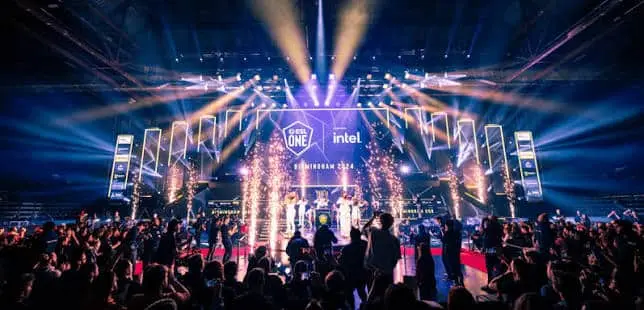
For over a decade, competitive gaming has captured the global imagination with headline-grabbing prize pools. From Dota 2’s flagship tournament, The International, routinely distributing upwards of $40 million, to Fortnite’s inaugural World Cup handing out a staggering $30 million, and the modern multi-sport spectacle of the Esports World Cup, massive fortunes are seemingly up for grabs every single summer.
Yet, when we direct our gaze closer to home, a surprising reality emerges. Despite the United Kingdom boasting a massive, thriving consumer market for video games—one that spent a record £8.76 billion in 2025 alone—very little of that astronomical prize money actually reaches British competitors at the absolute elite tier.
According to data compiled by Esports Earnings as of August 20, 2026, British players have collectively won more than $51 million in recorded tournament prize money across 9,208 tournaments. This places the UK 11th on the all-time global national leaderboard. However, dig beneath the surface of those aggregate figures, and a stark exclusivity reveals itself: out of 5,810 tracked British players, only three individuals have ever crossed the coveted $1 million threshold.
That represents a meager 0.05% of the nation’s competitive pool. Even when the financial bar is lowered to $500,000, the club expands to a mere 13 players (0.22%). This in-depth investigative report examines the structural, cultural, and title-specific factors behind Britain’s million-dollar ceiling, profiles the rare athletes who broke through it, and contextualizes the UK’s standing on the global stage.
Detailed Chronology & The Elite Trio: Britain’s Million-Dollar Earners
On paper, the Esports Earnings database ranks Counter-Strike 2 superstar William “mezii” Merriman at the top of the British all-time leaderboard with $1.45 million in career earnings. He is closely followed by Fortnite sensation Jaden “Wolfiez” Ashman at $1.37 million and Harry “Veno” Pearson at $1.01 million.
A closer forensic look at the data, however, reveals nuances that shift the historical narrative.
1. William “mezii” Merriman (Counter-Strike 2)
- Estimated Lifetime Winnings: ~$1.23M to $1.45M (adjusted for database duplicates)
- Primary Counter-Strike 2 / CS:GO
- Key Organization: Team Vitality
Mezii’s rise to prominence represents a rare tale of sustained Tier-1 success for a British Counter-Strike player. Competing at the absolute highest level under the banner of international powerhouse Team Vitality, Merriman has lifted some of the most prestigious trophies in the sport, including IEM Katowice, the Austin Major, various BLAST Premier events, and the ESL Grand Slam.
However, his raw database figure requires an asterisk. Esports Earnings historically logs multiple overlapping entries for identical circuits—such as double-counting an Intel Grand Slam Season 5 victory and its post-rebrand ESL continuation, alongside duplicated payouts from ESL Pro League Season 21. Removing these administrative duplicates places his true tournament winnings closer to $1.23 million. Regardless of the exact ledger, mezii remains an undeniable outlier in a nation historically starved of elite Counter-Strike dominance.
2. Jaden “Wolfiez” Ashman (Fortnite)
- Career Winnings: ~$1.37 million
- Primary Fortnite
Wolfiez’s path to the seven-figure club offers the ultimate case study in how a single historic weekend can permanently alter a player’s financial trajectory.
In 2019, at just 15 years old, Ashman teamed up with Dutch player Dave “Rojo” Jong to secure a stunning second-place finish in the Fortnite World Cup Duo Finals. The pair split a monumental $2.25 million prize, with Wolfiez pocketing a cool $1.13 million. That single tournament result accounts for roughly 82% of his entire career earnings. His next-largest recorded payout—$95,000 at the 2020 FNCS Invitational Grand Finals (Europe)—pales in comparison. In essence, Wolfiez became an esports millionaire in less than 48 hours.
3. Harry “Veno” Pearson (Fortnite)
- Career Winnings: ~$1.01 million
- Primary Fortnite
- Distinction: Over 52% earned before turning 18
Unlike Wolfiez’s lottery-ticket windfall, Veno’s journey to $1.01 million was forged through a relentless, multi-year competitive grind across 135 recorded tournaments. Veno accumulated $371,050 in 2022, another $223,451 in 2023, and over $250,000 annually through subsequent seasons. Most impressively, $536,150—or 52.96% of his total career prize money—was secured before he even reached adulthood.
Supporting Context & Metrics: Why Britain Lags Behind
To understand why the UK has produced only three million-dollar earners, one must examine broader national comparisons and historical game preferences.
The Global Landscape
While the UK’s $51.04 million total puts it ahead of traditional sporting nations like Australia, Poland, and Japan, it pales in comparison to smaller European nations. Consider Denmark: from a mere 2,217 tracked players, Danish competitors have pulled in $65.63 million. Sweden, with 3,398 players, sits at $59.45 million.

| Rank | Country | Total Prize Money | Tracked Players | Est. Prize Money Per Tracked Player |
|---|---|---|---|---|
| 1 | China | $333.55M | 9,412 | $35,439 |
| 2 | United States | $304.61M | 29,819 | $10,215 |
| 3 | South Korea | $157.43M | 5,993 | $26,268 |
| 4 | Russia | $101.10M | 5,933 | $17,041 |
| 5 | Brazil | $75.59M | 6,201 | $12,189 |
| 6 | Denmark | $65.63M | 2,217 | $29,602 |
| 7 | France | $63.86M | 6,767 | $9,437 |
| 8 | Sweden | $59.45M | 3,398 | $17,494 |
| 9 | Germany | $53.77M | 7,034 | $7,645 |
| 10 | Canada | $51.34M | 4,436 | $11,573 |
| 11 | United Kingdom | $51.04M | 5,810 | $8,785 |
(Note: "Prize money per tracked player" is a broad mathematical metric dividing total winnings by registered database profiles; it does not represent a standard professional salary.)
The Title Disconnect
The core issue is not a lack of gaming talent in the UK, but rather which games British players historically gravitated toward.
- Dota 2: As the most lucrative esports title in history, Dota 2 has doled out roughly $382 million globally. Yet, British players have scraped together a meager $352,274 (0.09% of the global total), ranking 43rd internationally. By comparison, Sweden has raked in $19.71 million and Denmark $15.13 million from the exact same game.
- League of Legends: British players have generated just $752,203 (0.62%) from Riot Games’ flagship MOBA, ranking 21st worldwide, whereas South Korea alone commands over $41 million (34.14%).
- Counter-Strike (CS:GO / CS2): While Denmark established a legendary, multi-generational dynasty yielding over $23 million (14.19%) in CS winnings, British professionals historically brought home roughly $1.6 million (0.98%)—with mezii serving as the sole modern exception.
Instead, the UK’s strongest prize-money titles have historically been Fortnite, Rocket League, Call of Duty: Warzone, and Rainbow Six Siege. While the UK ranks an impressive third globally in Fortnite earnings ($8.89 million), these titles simply do not distribute the same continuous, high-volume concentration of life-changing payouts that Dota 2 dynasties provided for Nordic, Eastern European, and Asian esports infrastructures.
Consequently, while Denmark boasts eight players above the $2 million mark—led by Dota 2 icon Johan “N0tail” Sundstein at $7.18 million—the UK’s highest earner sits below $1.5 million.
Official Statements & Grassroots Infrastructure
Critics often point out that the UK’s formalised grassroots esports ecosystem arrived late to the global party. Unlike South Korea or Sweden, which integrated gaming into technological and cultural strategies early on, Britain’s organized infrastructure has only recently begun to mature.
The British Esports federation launched its Student Champs programme back in 2016 specifically to "address the absence of structured amateur esports in early education." Over the past decade, this initiative has expanded to involve thousands of students nationwide. More recently, the establishment of the National Esports Performance Campus in Sunderland has provided dedicated training, high-performance facilities, and educational pathways designed to cultivate future professionals.
Speaking on the launch of key developmental partnerships, British Esports representatives have frequently emphasized the long-term vision:
"Our goal is to develop future talent and support regional hubs in becoming global epicenters for competitive gaming, bridging the gap between casual play and professional execution."
These initiatives are successfully building a wider, more resilient talent pipeline. However, analysts note that these institutional safeguards arrived well after the initial, multi-million-dollar gold rushes of the late 2010s had already peaked.
Future Outlook: Beyond Tournament Winnings
It is vital to underscore one major caveat regarding these statistics: tournament earnings do not reflect a professional player’s total career income.
Public databases like Esports Earnings track strictly reported tournament prize pools. They do not account for baseline player salaries, monthly streaming revenue, brand sponsorships, merchandising cuts, content creation revenue shares, or private organizational bonuses.
Consequently, a British professional grinding away in a franchised league (such as the League of Legends EMEA Championship or franchised VALORANT leagues) may pull in significantly more cumulative wealth over their career than a peer sitting higher on the tournament prize leaderboard.
Nevertheless, the million-dollar milestone remains the definitive gold standard for pure competitive dominance. As the UK video games industry continues to expand—supported by a robust 73,000+ domestic jobs ecosystem—the structural pipeline is stronger than ever. Whether future generations of British competitors can break through the $1 million ceiling in greater numbers will depend largely on branching out into high-yield global titles like Dota 2 and sustaining elite Tier-1 execution over multi-year careers. Until then, joining Britain’s million-dollar esports club remains an exceptionally rare and prestigious distinction.






Belum ada komentar. Jadilah yang pertama berkomentar!