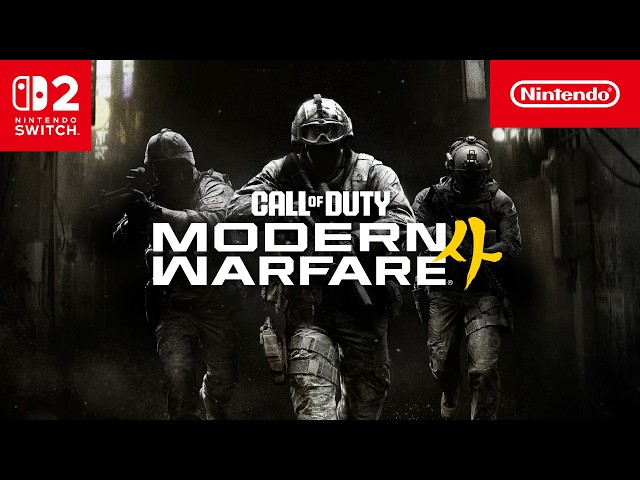
The arrival of Call of Duty: Modern Warfare 4 on Nintendo’s successor hardware represents a pivotal watershed moment for portable console gaming. Showcased prominently on the floor of Gamescom in Cologne, Germany, the title marks the franchise’s long-awaited return to a Nintendo platform under the multi-year strategic commitment brokered following Microsoft’s acquisition of Activision Blizzard. Tested across both the crowded floor of the convention center and controlled home environments via early beta builds, Modern Warfare 4 presents a complex technical profile: high-tempo, competitive gameplay paired with distinct platform-specific compromises.
While initial public sentiment surrounding the Nintendo Switch 2 port has leaned toward skepticism—fueled by viral footage highlighting visual artifacts and aggressive texture streaming limitations—the empirical hands-on reality yields a far more nuanced prospective outcome. Lead porting specialist Digital Legends and primary developer Infinity Ward have engineered an impressive baseline performance profile. Core competitive multiplayer modes successfully target a responsive 60 frames per second (fps) when docked, whereas expanded modes such as Warzone and the narrative Campaign pivot to a locked 30 fps frame rate.
Mechanically, Modern Warfare 4 intentionally pivots away from the controversial "Omnimovement" system introduced in Call of Duty: Black Ops 7, restoring a calibrated, tactical kinetic flow. Complemented by loadout innovations such as non-slot-bound "Apex Attachments" and promising fresh playlist modes like "Kill Block," the game lays a structural foundation capable of defining the standard for mobile first-person shooters. However, unresolved concerns regarding asset fidelity, analog control calibration in handheld mode, and post-launch monetization balance remain central to its ultimate trajectories.
Detailed Chronology: From the Gamescom Floor to Home Playtesting
The public debut of Modern Warfare 4 on the Switch 2 took place amidst the high-density environment of the Gamescom showroom in Cologne. Operating inside Nintendo’s dedicated hardware booth, attendees were granted randomized access to the initial multiplayer beta suite, offering standard 6v6 match types on localized servers.
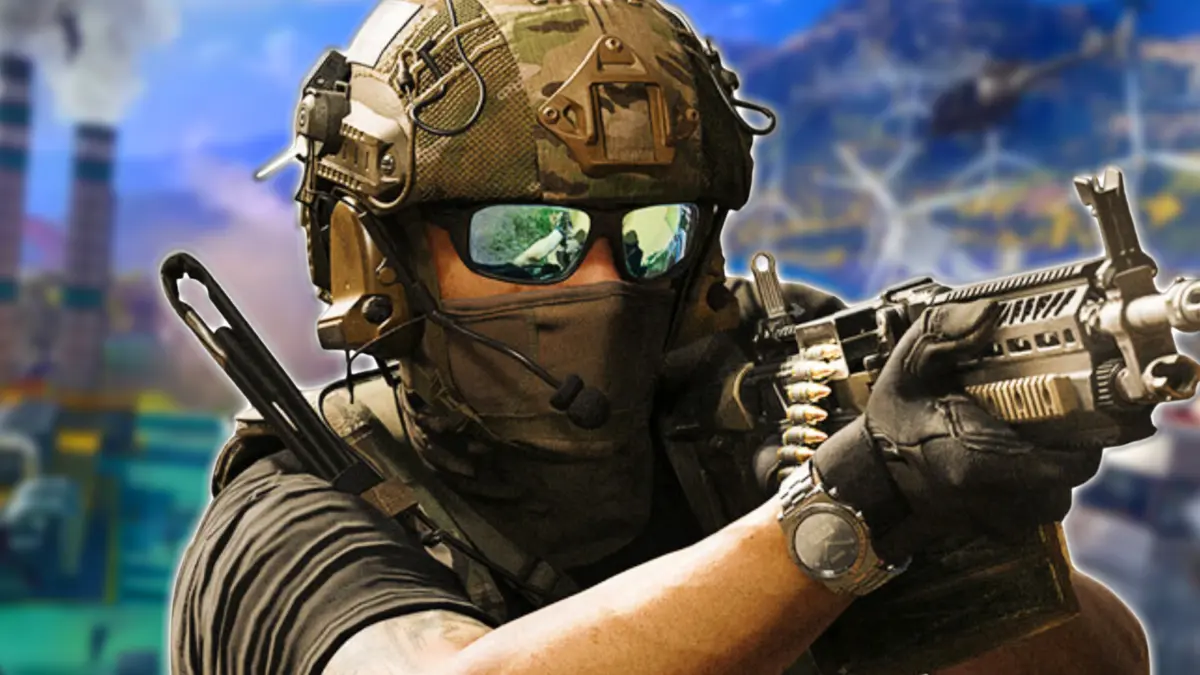
Initial play sessions conducted in a docked configuration utilizing the Nintendo Switch 2 Pro Controller immediately underscored the mechanical viability of the port. Selecting standard Team Deathmatch, the immediate feel of weapon handling, input-to-response latency, and movement speed closely mirrored standard console environments. However, pre-match staging screens instantly highlighted the visual bottlenecks facing the early code build. Operator rendering exhibited pronounced texture pop-in, with low-resolution polygon meshes visibly upgrading to higher-mip levels seconds after player spawning.
Transitional Home Testing Protocols
Following the convention floor assessment, extended home testing was conducted across identical beta branches to verify performance consistency outside the optimized exhibition environment. This secondary phase permitted a comprehensive evaluation of both docked and handheld form factors, as well as an investigation into large-scale network modes.
During home testing, the technical divergence between core multiplayer and Warzone became fully apparent. While traditional 6v6 arena matches sustained a smooth 60 fps target, transitioning to the newly introduced Zodiac Resurgence map within Warzone locked the output to 30 fps. Furthermore, untethered handheld testing revealed mechanical friction with native Joy-Con analog sticks, requiring manual adjustments to stick deadzones and acceleration curves to achieve competitive parity with dedicated desktop controllers.
Supporting Context & Metrics
Graphical Fidelity, Hardware Bottlenecks, and Performance Targets
Evaluating Modern Warfare 4 on Nintendo Switch 2 requires contextualizing the hardware’s architecture against current-generation rendering engines. Digital Legends appears to have deployed an aggressive dynamic resolution scaling (DRS) algorithm designed to prioritize frame pacing over raw pixel density.
The graphical trade-offs are most evident in asset streaming pipelines. High-frequency geometry, particularly facial maps and dynamic gear attachments on operator models, frequently fails to stream in prior to match deployment—a phenomenon responsible for early social media critiques of character assets like Captain Price. Environmentally, dynamic particle lighting and volumetric fog, particularly noticeable in Warzone’s coastal atmospheric effects, induce slight frame-pacing stutters.
Despite these fidelity concessions, the frame rate stability within core multiplayer represents a major technical achievement. In comparison to previous handheld benchmark titles such as the Switch 2’s native port of Cyberpunk 2077, Modern Warfare 4 prioritizes temporal responsiveness over volumetric density. This trade-off is critical for preserving competitive balance during cross-platform play.
Mechanical Shifts: Omnimovement Abandonment and Weapon Engineering
From a design perspective, Infinity Ward’s mechanical direction for Modern Warfare 4 strikes a clear boundary with recent sub-franchise iterations:
Removal of Omnimovement: The multidirectional sprinting and diving mechanics characteristic of Black Ops 7 have been completely removed. Instead, the game returns to a refined kinetic balance, retaining slide-to-prone cancels and directional dive maneuvers without destabilizing map flow or sightline control.
Time-to-Kill (TTK) Metrics: TTK values within the beta skew toward rapid-fire lethality. Firearm categories present distinct baseline traits:
Submachine Guns (SMGs): High mobility, though current beta tuning displays excessive damage retention across medium ranges.
Assault Rifles (M4 Platform): Features minimal horizontal recoil profiles when equipped with mid-tier stability muzzles, rendering them dominant in mid-to-long-range engagements.
Analog Input Calibration: In handheld mode, the Joy-Con analog sticks exhibit non-linear acceleration curves. Fine adjustments near the deadzone center feel overly twitchy, making precision tracking at long range difficult without extensive custom curve re-mapping in the settings menu.
Innovation in the Playlist: ‘Kill Block’ and Loadout Systems
The structural configuration of multiplayer features notable design updates, primarily centered around loadout mechanics and dynamic game modes.
The Apex Attachment System
The traditional "Pick-5" attachment methodology within the Create-a-Class architecture is augmented by the debut of Apex Attachments. Unlike standard attachments that alter quantitative stats (such as ADS speed, recoil mitigation, or bullet velocity), Apex Attachments occupy an independent structural slot. They function as mechanical conversions:
Functional Alt-Fires: Converting standard semi-automatic battle rifles into burst-fire suppression tools.
Tactical Utility Integration: Granting integrated lethal capabilities, such as dedicated throwing-knife quick-draw mounts, without sacrificing standard attachment point allocations.
While mathematically innovative, the system raises structural balance concerns for long-term meta stability. Because these modifications fundamentally alter weapon profiles without numerical tradeoffs, they represent high-risk vectors for future power creep and prospective cosmetic bundle monetization.
Mode Highlight: ‘Kill Block’
The standout addition to the beta playlist suite is Kill Block, a mode that merges the restricted loadout philosophies of 2v2 Gunfight with 10v10 objective play. In Kill Block:
Loadouts forcibly rotate at predetermined round intervals across all participants.
Maps dynamically reconfigure round-by-round, stitching together legacy map sections from classic Modern Warfare entries into procedural combat zones.
The mechanical requirement to adapt to shifting sightlines and changing weapon dynamics produces a tactical loop that minimizes static defensive play.
Official Statements & Industry Alignment
The execution of Modern Warfare 4 on Nintendo Switch 2 operates within broader corporate and technical strategies shared between Activision, Infinity Ward, and platform holder Nintendo.
"Our technical focus for the handheld ecosystem centers on zero-compromise engine responsiveness. Bringing the Call of Duty engine to Nintendo’s hardware architecture requires structural adjustments to asset streaming, but maintaining 60 frames-per-second parity in competitive modes remains our absolute baseline."
— Lead Engineering Briefing, Digital Legends Development Team
Addressing concerns regarding graphic fidelity artifacts documented during the public beta phase, studio representatives confirmed that current public builds are derived from older, segmented engineering branches:
"Beta builds are inherently optimized for network traffic stress-testing and system stability rather than final visual polish. Mip-mapping assets, operator model fidelity, and environmental lighting passes undergo continuous enhancement up to the master certification release."
— Activision Communications Statement
Industry analysts note that this integration serves as the first major test case for Microsoft’s legally binding 10-year commitment to deliver feature- and content-complete editions of Call of Duty to Nintendo platforms simultaneously with PlayStation and Xbox platforms.
Future Outlook: Portable Extraction Shooters and Platform Parity
The long-term success of Modern Warfare 4 on Nintendo Switch 2 depends heavily on post-launch technical optimizations and ecosystem support. While competitive 6v6 multiplayer establishes a viable baseline, major questions remain regarding performance in un-previewed modes—most notably the upcoming iteration of DMZ.
[Competitive Portable FPS Landscape]
  ├── Call of Duty: Modern Warfare 4 (Switch 2)
  │     ├── Strengths: Native 60 FPS Core MP, Unified Progression, Huge Installed Base
  │     └── Vulnerabilities: 30 FPS Warzone Limit, Texture Pop-in, Analog Calibration
  ├── ARC Raiders (TBA Portable/Cloud Platforms)
  │     └── Strengths: High Graphical Fidelity, Purpose-Built Extraction Mechanics
  └── Escape From Tarkov (PC Dominance / Mobile Spinoff Speculation)
        └── Strengths: Hardcore Dynamic Depth; High Barrier to Entry
As an extraction shooter, DMZ requires rendering large environments, managing high entity counts, and handling long-range ballistics calculations. If Digital Legends can maintain frame rate stability while managing memory allocation over expansive maps, the Switch 2 could become a premier platform for portable extraction-style gameplay. However, competing against emerging genre rivals like ARC Raiders and established mainstays like Escape from Tarkov leaves little margin for visual or systemic error.
Modern Warfare 4 on Nintendo Switch 2 presents a promising, technically complex step forward for mobile gaming hardware. While early beta builds show visible visual compromises—such as asset pop-in, aggressive downscaling of character models, and a 30 fps cap on large-scale modes—the core gameplay loop remains solid. Driven by responsive 60 fps combat in standard multiplayer, smart movement changes, and dynamic new modes like Kill Block, the port demonstrates clear potential. Provided the development team polishes asset streaming and fine-tunes handheld control schemes before the final retail release, Modern Warfare 4 could establish a strong foundation for the future of competitive first-person shooters on portable consoles.












Belum ada komentar. Jadilah yang pertama berkomentar!