

Executive Overview
In a strategic move to revitalize the entry-level and mid-range laptop markets, NVIDIA has introduced three new mobile graphics processing units (GPUs): the GeForce RTX 2050, alongside the MX570 and MX550. Despite bearing a nomenclature from the older 20-series family—which originally debuted nearly three years prior—the RTX 2050 introduces a surprising architectural twist by leveraging the advanced Ampere architecture rather than the legacy Turing design.
For years, budget-conscious consumers, students, and casual gamers have had to rely on aging silicon such as the GTX 1650 and MX450. These older architectures, while functional, struggle to keep pace with the escalating demands of modern software suites, productivity applications, and entry-level gaming titles. By injecting modern architectural benefits into lower-tier price points, NVIDIA aims to bridge the performance chasm between integrated graphics and high-end discrete gaming laptops.
This comprehensive report examines the specifications, architectural anomalies, productivity potential, and market implications of NVIDIA’s newest mobile GPU offerings. We will also explore how these cards fit into the broader macroeconomic and technological landscape as laptop manufacturers prepare for widespread adoption.
Detailed Chronology: The Evolution of Entry-Level Mobile Graphics
To understand the significance of NVIDIA’s latest releases, it is vital to trace the evolution of the company’s mobile hardware strategy over the past several years.
The Legacy Era: GTX 1650 and MX450 Dominance
For a prolonged period, the GeForce GTX 1650 served as the de facto baseline for budget gaming laptops. Built on the Turing architecture without dedicated Ray Tracing (RT) or Tensor cores, it provided adequate 1080p performance for eSports titles and older AAA games. Simultaneously, the GeForce MX450 ruled the ultraportable productivity space, offering a modest step up from integrated graphics (such as Intel Iris Xe or AMD Radeon Vega) for users needing localized hardware acceleration for photo editing and light multitasking.
However, as software developers increasingly integrated hardware-accelerated ray tracing, AI-driven upscaling (DLSS), and complex compute shaders into everyday applications, the limitations of these older chips became glaringly obvious. Consumers demanded modern features without being forced to purchase expensive mid-to-high-end tier hardware like the RTX 3060 or RTX 3070.
The Revival of the 20-Series Nomenclature
NVIDIA’s decision to name a new GPU the "RTX 2050" initially sparked confusion among hardware enthusiasts. Typically, a new series suffix denotes a generational leap built entirely on older foundations. Yet, NVIDIA flipped the script by retrofitting modern architectural philosophies into a nomenclature that sits awkwardly between generations. By announcing these chips ahead of major tech expos like CES, NVIDIA signaled a clear intent to dominate the affordable laptop ecosystem, targeting Spring 2022 as the commercial rollout window for partner OEMs (Original Equipment Manufacturers).
Supporting Context & Technical Metrics
A granular analysis of the hardware specifications reveals a fascinating engineering compromise. NVIDIA has carefully balanced power consumption, die size, and performance metrics to cater to thin-and-light chassis limitations.
GeForce RTX 2050: Under the Hood
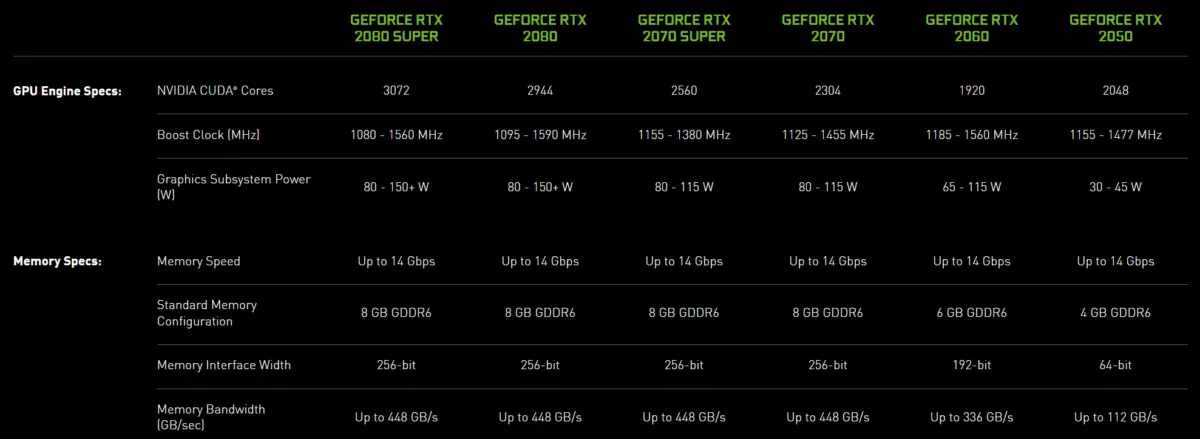
While the name suggests an older vintage, the RTX 2050 breaks tradition by adopting the Ampere architecture—the very same foundation powering the flagship RTX 30-series family. This inclusion grants the card access to features previously locked behind more expensive price tags.
- CUDA Cores: 2,048
- Video RAM (VRAM): 4GB GDDR6
- Memory Bandwidth: 112 GB/s
- Thermal Design Power (TDP): 30W – 45W
- Memory Interface Width: 64-bit
The Architectural Paradox:
A closer inspection of the specifications reveals an intriguing bottleneck. The RTX 2050 shares the exact same CUDA core count (2,048) as the higher-tier RTX 3050. However, its real-world performance is intentionally constrained by a narrow 64-bit memory interface width, compared to the wider interfaces found on true 30-series cards. This structural limitation restricts memory bandwidth, meaning that while the execution units are modern and capable, they may occasionally find themselves starved of data when handling high-resolution textures or memory-heavy computational tasks.
Despite these constraints, the RTX 2050 supports crucial modern features:
- Real-Time Ray-Tracing: Enabling developers to incorporate realistic lighting, reflections, and shadows into entry-level hardware.
- Deep Learning Super Sampling (DLSS): A vital AI-driven rendering technology that boosts frame rates while maintaining crisp image quality, compensating for raw hardware limitations.
- NVIDIA BatteryBoost: Intelligent power management designed to maximize battery life during mobile use.
Note on Omissions: Notably absent from the RTX 2050 feature list is support for NVIDIA G-Sync and VR Ready capabilities, cementing its status strictly as an entry-to-mid-range traditional display solution rather than a high-performance immersive gaming platform.
GeForce MX570 and MX550: Productivity Workhorses
Moving down the stack, the MX570 and MX550 are tailored for ultraportable productivity machines, creative workstations, and casual casual gaming rigs.
- GeForce MX570: Positioned as the fastest MX-series GPU NVIDIA has ever produced. While precise clock speeds and memory configurations were not fully disclosed at launch, NVIDIA emphasized that the chip utilizes more power-efficient CUDA cores and accelerated memory speeds. It is designed to handle moderately heavy creative workflows—such as video editing and graphic design—while remaining thermally efficient enough for slim chassis designs.
- GeForce MX550: Acting as the direct successor to the widely adopted MX450, the MX550 shifts its primary focus toward creative workloads. NVIDIA promises a noticeable performance leap, particularly in accelerated photo and video editing tasks within Adobe Creative Cloud applications. Furthermore, an increased count of CUDA cores provides enough muscle for light, casual gaming during downtime.
Official Statements and Industry Insights
NVIDIA’s official product disclosures highlight a targeted strategy: democratizing advanced rendering technologies for everyday users. Company representatives have consistently emphasized that modern computing extends far beyond hardcore gaming. With remote work, hybrid education, and content creation becoming ubiquitous global norms, the demand for affordable hardware capable of running AI-augmented software has skyrocketed.
Industry analysts have noted that the introduction of the RTX 2050, MX570, and MX550 represents a pragmatic engineering response to ongoing global semiconductor supply chain constraints. By utilizing mature node processes and clever architectural blending, NVIDIA can deliver high-volume, cost-effective silicon to laptop manufacturers who are desperate to refresh aging entry-level portfolios without pricing out everyday consumers.
OEM feedback from early partner briefings suggests strong enthusiasm. Major laptop brands—including ASUS, Lenovo, Dell, and HP—have expressed readiness to integrate these GPUs into their upcoming Spring 2022 consumer and commercial lineups. For buyers who found the jump to RTX 30-series laptops financially prohibitive, these new chips offer an appealing middle ground.
Future Outlook and Market Implications
As the tech industry moves further into 2022 and beyond, the success of the RTX 2050, MX570, and MX550 will be measured by real-world adoption rates and retail pricing.
What This Means for Consumers
- Eliminating Outdated Hardware: The eventual phasing out of ancient chips like the GTX 1650 means buyers of budget laptops will no longer be locked out of software ecosystems that rely on Ray Tracing and DLSS.
- Extended Battery Life and Thermal Efficiency: With configurable TDPs as low as 30W for the RTX 2050 and power-optimized CUDA cores in the MX-series, students and professionals can expect better thermal management and improved battery endurance in lightweight form factors.
- Accessible Content Creation: Creators operating on tight budgets will gain access to hardware-accelerated rendering pipelines, reducing export times in video editing suites and streamlining graphic design workflows.
The Competitive Landscape
Competitively, NVIDIA continues to solidify its stronghold over the discrete mobile graphics market. While AMD and Intel continue to make impressive strides with integrated graphics (such as AMD Radeon RDNA2 solutions and Intel’s upcoming discrete Arc Alchemist GPUs), NVIDIA’s entrenched software ecosystem—specifically CUDA, Studio drivers, and DLSS—remains a formidable selling point for both gamers and creative professionals.
Ultimately, NVIDIA’s latest hardware expansion proves that innovation is not solely about pushing the bleeding edge of absolute performance. By carefully cascading modern architecture down to accessible price points, NVIDIA ensures that the benefits of real-time ray tracing and AI acceleration are no longer reserved exclusively for elite enthusiasts, marking a transformative step forward for the global laptop market.









Belum ada komentar. Jadilah yang pertama berkomentar!