


Japan has long established a global reputation for architectural innovation, spatial efficiency, and a profound reverence for local craftsmanship. Yet, even within a country celebrated for its meticulous design culture, the localized adaptations of multinational brands often surprise observers. Among these, Starbucks Coffee Japan has carved out a distinct niche. Rather than relying on the uniform, cookie-cutter aesthetic that characterizes many Western outposts, Starbucks Japan has consistently championed regional integration, transforming individual cafes into architectural homages to their surroundings.
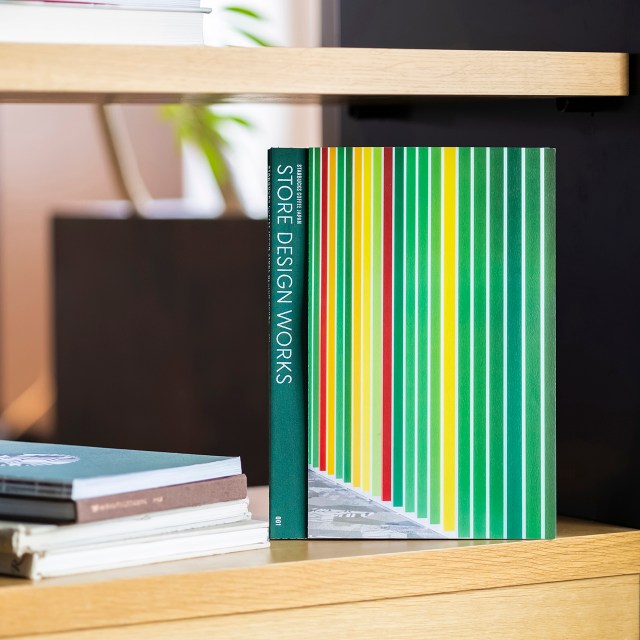
This philosophy of contextual design is now being celebrated in print. Following the critical and commercial success of its predecessor in 2025, Starbucks Japan has officially released its latest coffee table book: Starbucks Coffee Japan Store Design Works 002. This substantial, 144-page volume takes readers on a comprehensive visual and narrative journey through 18 meticulously curated stores that opened or underwent major renovations between the autumn of 2024 and the spring of 2026.
Priced at 4,800 yen (approximately $30 USD) and packaged in an elegant craft paper envelope well-suited for gifting, the publication offers an unprecedented look at how modern retail architecture can harmonize with centuries-old history, natural landscapes, and contemporary urban art scenes. While the international coffee giant boasts an expansive footprint of roughly 2,100 stores across the Japanese archipelago, Store Design Works 002 handpicks the most avant-garde, culturally resonant, and visually arresting locations to illustrate the brand’s ongoing architectural evolution.
Detailed Chronology: The Evolution of Contextual Retail Design
To understand the significance of Store Design Works 002, one must trace the trajectory of Starbucks Japan’s design philosophy. For years, the company has operated under the unwritten rule that a cafe should reflect the community it serves. The inaugural volume, Store Design Works 001, set a high benchmark by documenting 17 stores that debuted or were remodeled between 2023 and 2024. Building directly upon that foundation, the new 002 volume expands both its page count and its geographic scope, capturing a transitional period of post-pandemic urban renewal and architectural experimentation from late 2024 through mid-2026.

The chronology of locations featured in the new book highlights a diverse array of environments:
1. The Urban Art Fusion: Yanaka Gotenzaka (Tokyo)
Opening its doors in early 2026, the Cafe & Art Gallery Yanaka Gotenzaka branch represents a major milestone for the brand in Tokyo. Situated in one of the city’s most cherished traditional neighborhoods—known for retaining the retro shitamachi (low-city) atmosphere of the mid-20th century—this location bridges the gap between old-world charm and cutting-edge creativity. Rather than operating purely as a point of sale, the store functions simultaneously as an active art gallery, showcasing contemporary works by emerging local artists. The interior design utilizes warm, muted timber tones and open-concept viewing spaces, allowing patrons to contemplate modern art while sipping a seasonal brew in a historic district.
2. Deep Roots in Antiquity: Yoshinogari Historical Park (Saga Prefecture)
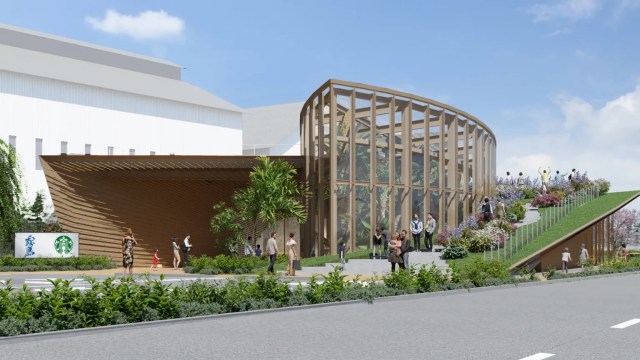
Stepping far outside the metropolis, the book highlights the Yoshinogari Historical Park store in Saga Prefecture. Nestled within a sprawling, nationally designated archaeological site encompassing an ancient settlement from the Yayoi Period (300 BC to 300 AD), the store’s architecture had to tread lightly on sacred ground. The design incorporates low-profile roofing lines, natural earth-toned materials, and glass paneling that frames sweeping views of reconstructed pit dwellings and burial mounds. It stands as a testament to how modern corporate architecture can exist in symbiosis with archaeological preservation.
3. Industrial Heritage and Brewing Craft: Miyakonojo Kirishima Greenship (Miyazaki Prefecture)
Another crown jewel featured in the volume is the Miyakonojo Kirishima Greenship store in Miyazaki. This location was brought to life through an innovative joint project with Kirishima Shuzo, a legendary local shochu distillery founded in 1916. The resulting space incorporates upcycled industrial elements from the historic brewing facility, blending traditional ceramic textures, smoked wood finishes, and localized botanicals. The design process—documented meticulously during its planning and construction phases—demonstrates an ambitious cross-industry collaboration that honors Miyazaki’s rich fermentation heritage.
4. Architectural Icons and Landmark Renovations
Beyond these regional flagships, Store Design Works 002 catalogs several high-profile urban developments and recreational hubs:
- Shibuya Tsutaya Branch: Following its dramatic, highly anticipated reopening overlooking the world-famous Shibuya Scramble Crossing, this reimagined multi-level hub is captured in all its modernized glory.
- Ginza House & Kyoto BAL: High-end retail spaces that merge luxury shopping experiences with serene interior architecture.
- Hokkaido Ballpark F Village: An innovative stadium-adjacent store that captures the fresh, open-air, nature-infused spirit of northern Japan’s premier sporting complex.
- Tokyo Skytree Town & Kyoto Maruyama Park: Iconic tourist destinations where spatial design must manage heavy foot traffic while preserving moments of individual tranquility.
- Regional Outposts in Okinawa: Stores that incorporate Okinawan architectural traditions, such as deep eaves, porous Ryukyu limestone elements, and open-air terraces designed to withstand tropical climates.
Supporting Context & Metrics: Analyzing the Physical and Cultural Footprint
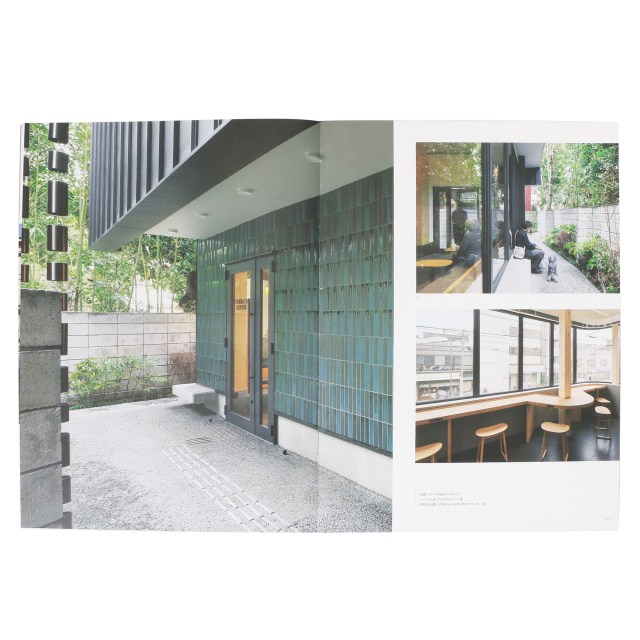
The production values of Store Design Works 002 mirror the meticulous attention to detail found in the physical stores themselves. Spanning 144 pages, the book utilizes heavy-stock photographic paper, minimalist typography, and architectural floor plans alongside high-resolution imagery.
Scale and Scope Metrics
- Total Stores Documented: 18 distinct locations (up from 17 in the 001 volume).
- Operational Window: Autumn 2024 to Spring 2026.
- National Presence: Approximately 2,100 total Starbucks stores operating across Japan’s 47 prefectures.
- Publication Price: 4,800 yen (approx. $30 USD), available via the official Starbucks Japan online store.
- Design Format: Coffee table book architecture, complete with a custom craft paper gift envelope.
The Socio-Economic Impact of "Destination Architecture"
Industry analysts point out that Starbucks Japan’s investment in bespoke store design is not merely an aesthetic vanity project; it is a sophisticated economic strategy. By transforming routine coffee consumption into cultural tourism, the company drives domestic travel. Patrons routinely plan weekend road trips specifically to visit architectural marvels like the floating lantern-style store in Kyoto or the historic townhouse (machiya) conversions in historic districts.
Store Design Works 002 monetizes this phenomenon by turning the architecture itself into a collectible artifact. For international tourists and local design enthusiasts who cannot physically visit all 2,100 locations, the book serves as a portable museum catalog, documenting how global corporate standards can successfully bend to the gravitational pull of local vernacular architecture.
Official Statements and Design Philosophy
While corporate press releases for multinational chains often rely on marketing hyperbole, the messaging surrounding the Store Design Works series emphasizes community integration, sustainability, and artistic patronage.
Representatives from Starbucks Coffee Japan have repeatedly stressed that the core mission of these specialized builds is to "honor the narratives of the neighborhoods." In commentary accompanying the release of the 002 volume, design leads noted:
"A Starbucks store should never feel like an intrusion into a community. It should feel as though it has evolved naturally from the soil, traditions, and contemporary heartbeat of its surroundings. Whether we are building within an archaeological park in Saga, collaborating with a century-old shochu brewery in Miyazaki, or establishing a contemporary art gallery in Yanaka, our goal is to create a physical bridge between the global coffee experience and local cultural identity."
Architectural critics have praised this approach, noting that it contrasts sharply with the standardized, placeless environments often found in suburban retail corridors worldwide. By partnering with local artisans, utilizing regional timber species, and incorporating traditional crafts—such as Kyoto’s kamigamo joinery or Okinawan tile-making—Starbucks Japan has positioned itself as an unexpected custodian of vernacular Japanese design.
Future Outlook: The Next Wave of Retail Architecture
The release of Store Design Works 002 raises questions about the future trajectory of retail design in a post-digital world. As consumers increasingly turn to e-commerce for physical goods, the primary value proposition of brick-and-mortar spaces has shifted toward experiential value, sensory engagement, and community gathering.
Starbucks Japan’s ongoing initiatives suggest several key trends for the coming decade:
- Hyper-Local Materiality: Future store builds are expected to push further into sustainable, circular architecture, utilizing reclaimed materials from demolished local structures—similar to the integration seen in the Miyakonojo Kirishima project.
- Cultural Hybridization: The success of the Yanaka Gotenzaka art gallery concept proves that consumers are eager for multi-functional spaces. Future locations may increasingly double as community workshops, cultural archives, or exhibition spaces for regional creators.
- Volume 003 Speculation: Given the rapid pace of urban development in Japan—particularly with ongoing mega-projects in Tokyo, Osaka, and regional tourism hubs—industry insiders anticipate that planning for a third installment (Store Design Works 003) is likely already underway, slated to capture innovations emerging from late 2026 onward.
For now, Store Design Works 002 stands as a definitive document of an era where global commerce and local heritage found a rare, harmonious equilibrium. Available now through the Starbucks Japan online store, the volume invites readers to slow down, turn the page, and appreciate the hidden stories built into the very walls of their neighborhood cafe.







Belum ada komentar. Jadilah yang pertama berkomentar!