

Executive Overview
In an era defined by accelerating climate volatility, extreme weather events have ceased to be anomalous occurrences and have instead become a harrowing reality for communities worldwide. Japan, a nation long accustomed to typhoons and seasonal downpours, is grappling with a new breed of meteorological phenomena: stationary squall lines that unleash unprecedented volumes of precipitation over localized regions in matter of hours.
The catastrophic flooding that recently struck Chiba Prefecture stands as a stark testament to this evolving threat. Torrential rains from an unmoving front overwhelmed municipal drainage systems, turning urban thoroughfares into raging rivers, trapping motorists, and submerging more than 10,000 vehicles. For vehicle owners, the aftermath was devastating; stagnant, filthy floodwaters totaled thousands of cars, rendering them mechanically worthless and dealing a heavy financial blow to working-class families and commuters alike.
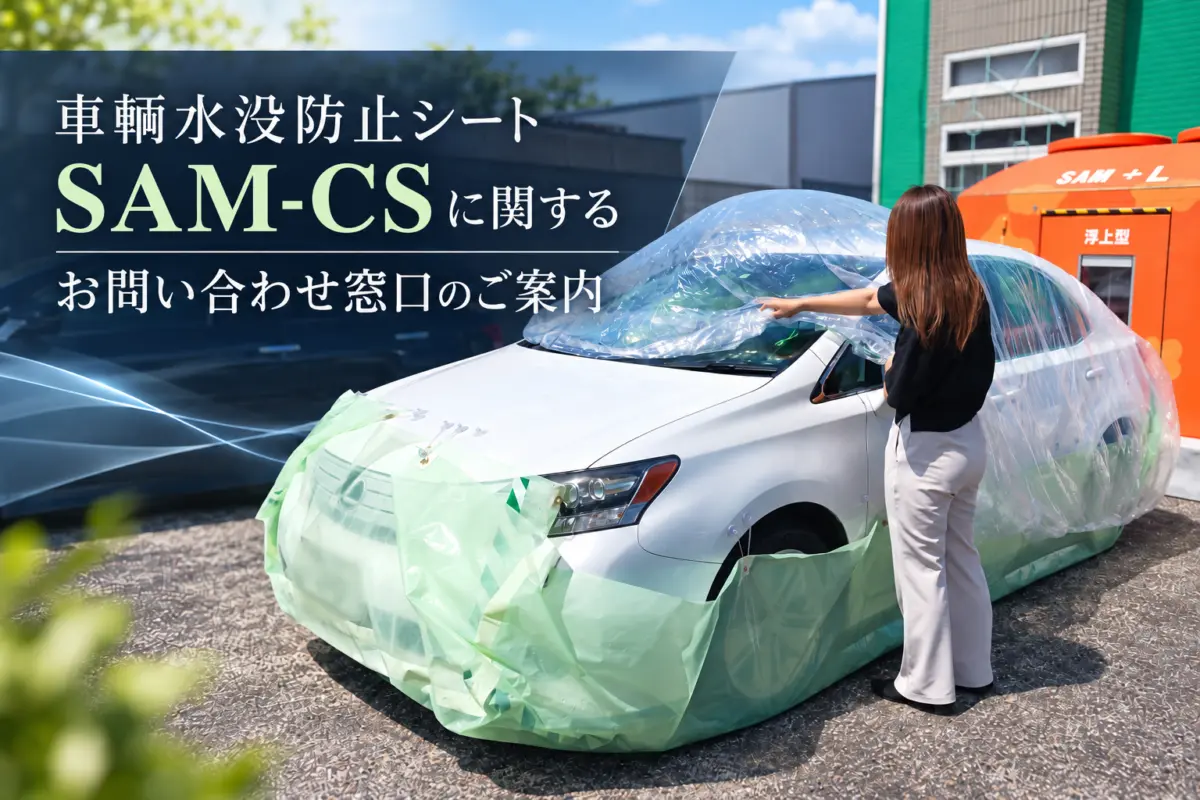
Amid this climate anxiety, an ingenious and unorthodox solution has captured the public imagination: the SAM-CS (Sam Car Sheet). Developed by Onoda Sangyo, this heavy-duty protective enclosure uses a waterproof plastic barrier to literally float vehicles above rising floodwaters, preventing water ingress and total loss. Originally struggling for traction following its debut in 2024, the product has experienced a sudden and dramatic surge in demand as drivers desperately seek innovative ways to safeguard their automobiles.
This report provides an in-depth examination of the Chiba disaster, the mechanics and reception of the SAM-CS protective system, the socio-economic implications of climate adaptation for private vehicle ownership, and the broader debate surrounding urban resilience in 21st-century Japan.
Detailed Chronology: The Chiba Disaster and the Birth of a Market
The Storm That Stalled
The meteorological anomaly that battered Chiba Prefecture began with a textbook formation of atmospheric instability. A contiguous line of squall clouds—powerful, localized storm systems typically characterized by sudden drops in pressure and heavy downpours—collided with regional wind patterns in a way that effectively stalled their trajectory. Rather than sweeping across the prefecture and dissipating over the Pacific Ocean, the storm anchored itself over the region, pumping continuous sheets of torrential rain onto already saturated ground.
Within hours, rivers breached their banks, and low-lying urban sectors became aquatic traps. Commuters found themselves stranded in gridlocked traffic as water levels rose with terrifying speed. Videos captured by frantic drivers showed vehicles being swept sideways, engines instantly stalling as water breached air intakes, and exhaust systems filling with muddy debris.
The Scale of Destruction
When the skies finally cleared, the municipal authorities and insurance agencies began assessing the grim toll. Official reports confirmed 13 fatalities, underscoring the lethal power of flash flooding in densely populated areas. Simultaneously, the automotive sector reeled from the sheer volume of property damage. Industry estimates revealed that upwards of 10,000 vehicles had sustained severe water damage.
For the modern consumer, a car is not merely a mode of transportation; it is a vital lifeline and a significant capital investment. Vehicles submerged in floodwaters face catastrophic electrical failures, ruined interiors, and structural corrosion. In many cases, insurance policies do not cover natural disaster-induced damage unless specialized riders are purchased. Consequently, thousands of Chiba residents faced sudden, uninsurable financial ruin.
The Rise of the Car Condom
It was against this backdrop of widespread panic and financial vulnerability that public interest pivoted toward pre-emptive defense mechanisms. While structural flood walls and civic drainage upgrades require massive government spending and years of construction, individual vehicle owners needed an immediate, accessible safeguard. Enter Onoda Sangyo and their product, the SAM-CS.
Originally launched in relative obscurity in 2024, the company was averaging a meager two customer inquiries per month—a reflection of a market that viewed automotive flood protection as an unnecessary luxury. However, in the wake of the Chiba catastrophe, inquiries skyrocketed by 1,500 percent, with the company receiving over 30 serious calls within a single two-week span. The stark realization that municipal infrastructure could no longer guarantee the safety of parked vehicles had thrust micro-mitigation products into the mainstream spotlight.
Supporting Context & Metrics: Anatomy of the SAM-CS System
How the Technology Works
The core philosophy behind the SAM-CS is deceptively simple, echoing the age-old maritime principle of buoyancy: if you cannot stop the water from surrounding your vehicle, you can use the water itself to keep the vehicle safe.
[ Rising Flood Waters ]
        │
        ▼
[ Bottom Sheet + Suction Cups ] ──> [ Trapped Air & Buoyancy ] ──> [ Car Floats Safely ]
        │
        ▲
[ Top Protective Sheet ] ────────> [ Prevents Water Ingress ]
        │
        ▼
[ Optional Anchoring Straps ] ───> [ Prevents Drifting / Collision ]
The system operates through a specialized multi-layered polymer enclosure designed to encase a standard mid-sized automobile:
- Deployment Phase: The driver parks their vehicle directly onto a large, durable bottom sheet laid out on the ground or parking space. This base layer is secured to the lower body of the car using high-tension suction cups and seals.
- Enclosure Phase: A secondary upper sheet is draped over the entire vehicle and seamlessly connected to the base sheet, creating an airtight, watertight cocoon that seals out rain, splashing, and rising tides.
- The Physics of Floatation: As water pools around the enclosed vehicle, the trapped air within the sealed sheets, combined with the low overall density of the wrapped automobile, allows the car to lift off the ground and float securely on the surface of the floodwater, preventing water from breaching the engine block, cabin, and electrical architecture.
- Anchoring System: Recognizing that a floating car is susceptible to drifting into utility poles, pedestrians, or neighboring property, Onoda Sangyo provides an optional—yet strongly recommended—set of heavy-duty tether straps. These anchors secure the floating vehicle to fixed points such as structural pillars, fences, or heavy ground anchors.
Financial Investment vs. Catastrophic Loss
Priced at 88,000 yen (approximately $560 USD) for a mid-sized passenger vehicle, the SAM-CS has drawn mixed reactions regarding its cost-effectiveness. Critics frequently point out that nearly $600 is a steep price to pay for what essentially amounts to specialized industrial plastic sheeting.
However, economists and insurance analysts view the price tag through a starkly different lens. Replacing a totaled modern automobile runs into the tens of thousands of dollars, accompanied by increased insurance premiums and months of administrative headaches. Viewed as an insurance policy against total vehicular loss, the 88,000-yen investment represents a fraction of the financial risk faced by suburban and urban motorists residing in flood-prone basins.
Official Statements and Public Discourse
The Manufacturer’s Perspective
Representatives from Onoda Sangyo have expressed both humility and urgency regarding the sudden spike in national attention. When the product was conceptualized in 2024, climate adaptation for private property was largely viewed as an esoteric niche. Today, company executives emphasize that extreme weather has democratized vulnerability.
"We never anticipated the sheer velocity of inquiries we received following the Chiba weather event," noted an Onoda Sangyo spokesperson in recent media briefings. "Our goal was to provide a tangible lifeline for families who live in flood zones where municipal defenses fall short. While the product requires manual effort and preparation, the peace of mind it offers is invaluable."
The Internet Backlash: Misconceptions and Humor
As news of the SAM-CS went viral across Japanese social media and news aggregators, it naturally triggered a wave of skeptical, humorous, and outright bewildered commentary. Online forums buzzed with users questioning the viability, legality, and practicality of floating cars.
Prominent criticisms and humorous hot-takes highlighted a profound gap in public understanding regarding fluid dynamics, automotive engineering, and property law:
- "Won’t it just float away?" — This was the most common concern, which prompted automotive journalists to repeatedly highlight the necessity of the aforementioned anchoring straps.
- "Looks like a pain to set up." — Critics argued that taking 10 minutes to deploy the sheets in the middle of a torrential downpour is unrealistic. Proponents countered that pre-deployment is key when weather forecasts predict imminent flash flooding.
- "What happens if it drifts away and damages someone’s house?" — A legitimate legal concern regarding liability, reinforcing why Onoda Sangyo heavily markets the anchoring kit alongside the base sheets.
- "I would just pump air into the car until there’s so much pressure the water can’t get in." — A physically impossible suggestion that amused physics enthusiasts across the web.
- "We should just fill the tires with hydrogen and make cars float that way." — A hazardous proposal recalling the Hindenburg disaster, which drew widespread mockery.
- "Once the car stops touching the ground, ownership rights transfer to whoever takes it. You could just go around collecting cars." — A whimsical misinterpretation of maritime salvage laws applied to urban roadways.
- "I’d rather spend the money on a Switch 2." — A classic prioritization debate that captured the eternal struggle between responsible adult preparedness and consumer entertainment desires.
Future Outlook: Climate Resilience and the Evolution of Personal Mobility
The viral phenomenon of the SAM-CS is more than just a quirky news story about plastic car covers; it is a symptom of a broader, uncomfortable transition taking place across the globe. As global temperatures rise and hydrological cycles intensify, humanity is entering an age where traditional civil engineering alone can no longer protect every square inch of modern infrastructure.
The Shift Toward Micro-Adaptation
Governments can build levees, dredge rivers, and upgrade storm drains, but the unpredictable nature of localized cloudbursts means that urban flash floods will remain a persistent hazard. Consequently, responsibility is increasingly shifting downward to the individual level. We are witnessing the rise of "micro-adaptation"—consumer-driven technologies designed to protect personal assets from environmental threats.
In the coming years, automotive accessory markets are expected to see an influx of flood-mitigation innovations. Beyond plastic floatation sheets, engineers are already conceptualizing amphibious chassis designs, smart-seal garage barriers, and automated rapid-deployment covers triggered by moisture sensors.
Balancing Practicality and Preparedness
While products like the SAM-CS face valid criticisms regarding deployment time and user error, they represent a critical psychological shift. They force consumers to confront the reality of climate change and take active agency in protecting their livelihoods.
As society weighs the cost of disaster-proofing against the luxury of consumer electronics—choosing between car protection and upcoming gaming hardware—the calculus of daily life is undeniably changing. In a world where squall lines stall and city streets turn into rivers, learning how to float your car may soon become as routine as checking the morning weather forecast.






Belum ada komentar. Jadilah yang pertama berkomentar!