

By Chadley Kemp | Senior Editor, Esports News
Published: August 2026
Executive Overview
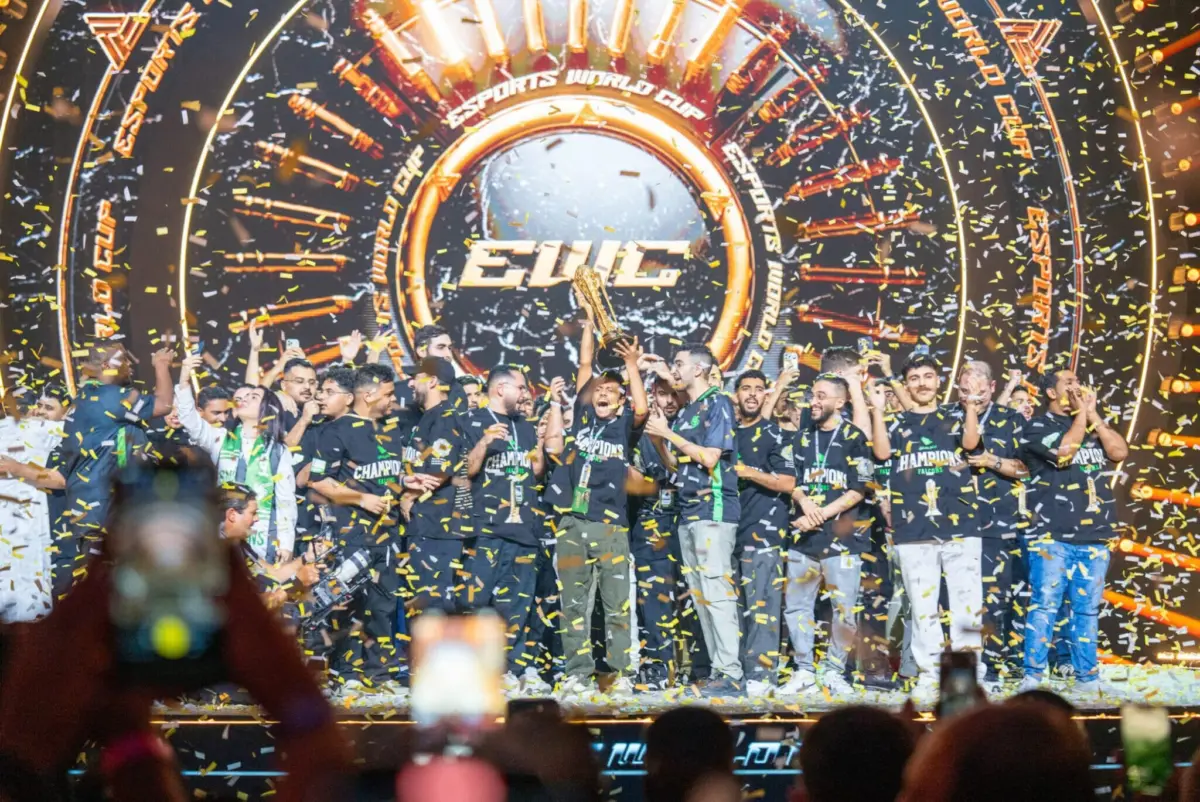
While the ultimate elusive prize—a first-place tournament trophy—may have slipped through British fingers at the 2026 Esports World Cup (EWC), a granular dive into the final statistics reveals a contingent that came agonizingly close to international supremacy. Across an expansive festival of competitive gaming comprising 25 tournaments and 24 distinct titles, 49 British players took to the global stage, competing across 12 separate disciplines.
When the dust settled on the multi-week extravaganza, six UK representatives had fought their way to runner-up finishes, eight secured coveted podium spots, and an impressive 18 managed top-eight placements. On paper and in practice, British players proved they can run with the absolute best in the world. But how well did Britain truly perform in the grand calculus of international esports?
A detailed analytical breakdown reveals a distinct trend: while individual brilliance shone brightest in titles like Trackmania, and sheer competitive depth anchored mainstays like Call of Duty, it was Call of Duty: Warzone that ultimately delivered Britain’s most well-rounded and successful collective campaign. Conversely, traditional powerhouses like Call of Duty: Black Ops 7 brought massive player representation without translating those numbers into podium hardware.
This deep-dive investigation utilizes official EWC 2026 competition data, cross-referenced with rosters from Liquipedia, to evaluate the triumphs, the heartbreaks, and the systemic realities defining British esports representation on the world stage.
Detailed Chronology & Breakdown of EWC 2026
To understand how the 49-strong British contingent fared across the massive expanse of the EWC calendar, we must break down the tournament by participation density, podium conversions, and statistical distribution.
1. Player Representation: Where Did the UK Compete?
British participation at EWC 2026 was not spread evenly across the 25 events. In fact, UK players were entirely absent from 13 tournaments, including Tier-1 staples such as League of Legends, Fortnite, Street Fighter 6, Tekken 8, and both divisions of Mobile Legends: Bang Bang.
Instead, the UK footprint was concentrated overwhelmingly within first-person shooters (FPS) and racing titles:
- Call of Duty: Black Ops 7: Led the charge with 11 British players spread across six of the tournament’s 16 teams, accounting for a staggering 22.4% of the entire British EWC contingent.
- Call of Duty: Warzone: Featured 9 players across seven separate competitive entries (18.4% of the UK pool).
- Apex Legends & Rainbow Six Siege X: Tied for third, each fielding 6 British players (12.2% each).
- Trackmania: Brought forward 4 players (8.2%) making their high-profile EWC debut.
- VALORANT & Counter-Strike 2: Each fielded 3 British players, representing 6.1% of the UK contingent apiece.
This heavy skew toward tactical shooters and fast-paced battle royales mirrors historical trends in British esports, where infrastructure, community grassroots, and institutional backing have long favored PC and console shooters over fighting games or mobile titles.
2. The Podium Contenders: Silver and Bronze Triumphs
While tournament victories eluded the nation, British players successfully cracked the top three in multiple high-stakes disciplines, accumulating six runner-up medals and a total of eight podium finishes.
Call of Duty: Warzone
Warzone proved to be the crown jewel of British team performance. Four of Britain’s eight podium players hailed from this single title.
- Disrrpt, Echo, and Spam formed an all-British T1 roster that fought its way to a brilliant second-place finish.
- Slappy secured third place playing alongside JD Gaming.
With four of its nine active representatives (44.4%) landing on the podium, Warzone offered an unmatched density of success, even if lower placements by other UK competitors (such as KINGAJ in 9th, Lenun in 12th, and Fifakill in 14th) slightly reduced the title’s overall average placement percentile to 70.6%.
Trackmania
When shifting the focus from collective team dynamics to solo individual brilliance, Trackmania stands peerless. Making its debut at the EWC, the racing game became a defining highlight of the final weekend.
- Robert “Epos” McKay (Team Liquid) drove brilliantly to secure second place.
- Thomas “Pac” Cole (Team Vitality) captured third place.
With two out of four British competitors reaching the podium, Trackmania boasted an exceptional average placement percentile of 72.6%—the highest return among tournaments with at least two British representatives.
Overwatch & VALORANT
- Daniel “FUNNYASTRO” Hathaway carried the flag as the sole active British player in Overwatch, securing a remarkable second-place finish with Twisted Minds. This single-player sample size drove the title’s average placement percentile to a phenomenal 93.3%.
- Georgio “keiko” Sanassy helped guide NRG all the way to the VALORANT Grand Final, ultimately finishing as a runner-up, while Benjy “benjyfishy” Fish reached the 5th–8th bracket with Team Heretics.
Supporting Context & Metrics
The Paradox of Participation: Black Ops 7 and Rainbow Six
A critical lesson from EWC 2026 is that high representation does not inherently equate to high performance. This is best illustrated by comparing Britain’s two largest player pools: Black Ops 7 and Rainbow Six Siege X.
Despite fielding 11 players across six different teams in Black Ops 7, the UK contingent failed to secure a single podium finish. While Beans, Nastie (G2 Esports), and Insight (Movistar KOI) respectable cracked the top eight (5th–8th), the rest of the British cohort scattered through the 9th–16th placements. This resulted in an average British placement percentile of just 34.2% for Black Ops 7.
However, analysts caution against labeling British Call of Duty as "weak." Having 11 players scattered across more than a third of the tournament’s elite teams demonstrates extraordinary depth and domestic demand, even if the bracket draws and playoff performances fell short of gold.
Conversely, Rainbow Six Siege X demonstrated efficient, consistent depth without ever capturing a title. Six British players across four teams delivered three top-eight finishes—highlighted by Eupor’s fourth-place run with Geekay Esports and Oscr/vDrillZ reaching the top eight with Team Secret—yielding a rock-solid average placement percentile of 66.3%.
Official Statements and Analytical Methodology
To maintain absolute journalistic integrity, the data compiled within this analysis is drawn directly from transparent evaluation parameters:
- Data Sourcing: Final placements and official rosters were extracted directly from the EWC 2026 Official Competition Pages, with player nationalities rigorously cross-checked against Liquipedia.
- Definition of "British": The classification includes documented players from the United Kingdom, England, Scotland, Wales, and Northern Ireland, alongside verified dual nationals. Six identified British substitutes were deliberately excluded from headline numerical calculations to maintain accuracy regarding active starters.
- Team Dynamics: In team-based events, each active player inherently inherits their respective team’s final placement band, with tied brackets preserved rather than artificially parsed.
Editor’s Note: While exhaustive efforts were taken to verify every athlete’s documentation via public records, international esports rosters—particularly concerning dual nationalities—can occasionally feature undocumented nuances. Minor reporting discrepancies remain a possibility inherent to global cross-border sports tracking.
Future Outlook: Where Does British Esports Go From Here?
The 2026 Esports World Cup serves as both a celebration of enduring British talent and a sobering reminder of structural ceilings within the UK scene.
On one hand, the numbers prove that British competitors remain elite tier-one threats in high-velocity shooters and racing sims. Warzone proved to be a powerhouse for team coordination, while Trackmania highlighted exceptional individual racecraft on the world stage.
On the other hand, the stark absence of British representation in MOBAs (League of Legends), fighting games (Street Fighter, Tekken), and mobile ecosystems points toward an ongoing geographical and institutional imbalance. Grassroots funding, localized training facilities, and corporate sponsorship pipelines in the UK continue to favor PC/console FPS titles, leaving vast sectors of the global esports economy largely untapped by British talent.
Furthermore, as noted in broader financial analysis regarding Britain’s esports millionaires, reaching the podium at prestigious global events like the EWC does not automatically translate into long-term financial security for the vast majority of players. Only a microscopic fraction of the UK’s competitive roster has crossed the seven-figure career earnings threshold.
As the international esports calendar rolls toward future iterations of the World Cup, the blueprint is clear. British esports possesses the raw mechanical skill, the tactical acumen, and the sheer competitive grit to conquer any lobby. What remains to be built is the institutional scaffolding required to turn those agonizingly close runner-up finishes into definitive, undisputed championship gold.





Belum ada komentar. Jadilah yang pertama berkomentar!