

Executive Overview
In an era where convenience store innovations constantly push the boundaries of culinary imagination, a remarkable collaboration has captured the attention of food enthusiasts across Japan. Family Mart, one of the nation’s premier convenience store chains, is currently commemorating its landmark 45th anniversary. To mark this corporate milestone, the retail giant has orchestrated a high-profile collaborative campaign, partnering with some of the country’s most iconic snack and food brands to launch a series of limited-edition crossover items.
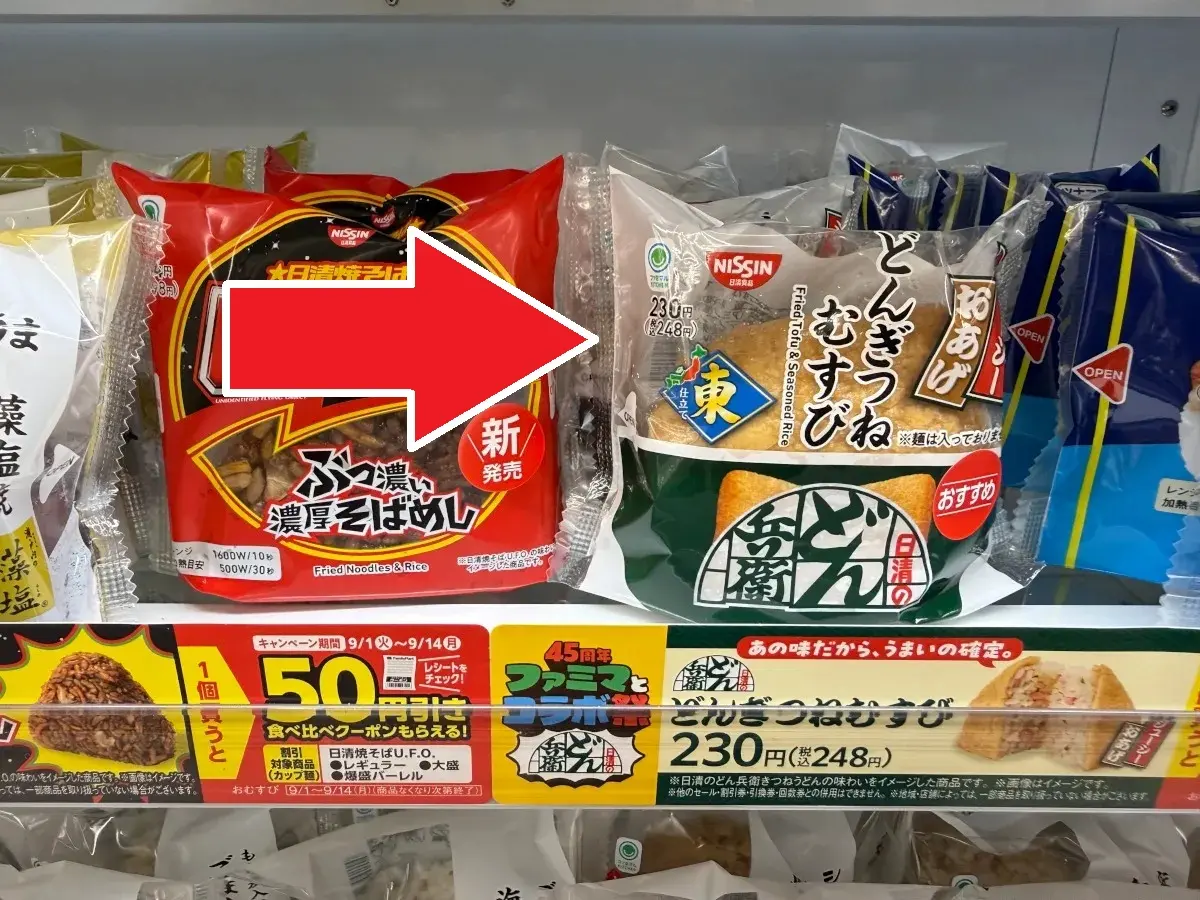
Among the standout offerings of this commemorative lineup is a product that brilliantly bridges two staples of Japanese comfort food: the instant noodle heavyweight Nissin and the ubiquitous Japanese onigiri (rice ball). Enter the Dongitsune Musubi—a noodle-flavored rice ball that encapsulates the beloved flavor profile of Nissin’s legendary Donbei instant kitsune udon.
While it might easily be mistaken for traditional inarizushi at first glance, a closer inspection reveals a sophisticated culinary engineering project. The rice is not seasoned with standard sushi vinegar, but rather infused with the authentic dashi soup stock that defines Donbei’s savory broth. Furthermore, it incorporates sweet, juicy fried tofu (aburaage) and diced kamaboko (fish cake) to recreate the complete sensory experience of eating a bowl of instant udon in a single, portable bite.
![New Japanese convenience store rice balls taste like instant noodles [Taste test]](https://soranews24.com/wp-content/uploads/sites/3/2026/09/0_c8e809.jpg?w=1200&h=630&crop=1)
Available for a limited time at a price point of 248 yen (approximately $1.60 USD), this innovative product goes a step further by respecting regional taste preferences. Mirroring Nissin’s famous geographical divide, Family Mart is stocking distinct eastern and western regional variants, ensuring that loyalists of both flavor profiles receive an authentic culinary homage. This report provides a comprehensive examination of the product’s design, regional nuances, corporate context, and the broader implications of Japan’s thriving convenience store gastronomy.
Detailed Chronology: The Making of a Crossover Phenomenon
The journey of the Dongitsune Musubi from concept to convenience store shelf is a testament to the fast-paced, highly competitive nature of Japan’s konbini (convenience store) industry. Understanding how this unique product came to be requires tracing the timeline of Family Mart’s 45th-anniversary celebrations and the strategic partnerships that power them.
Phase 1: Conceptualization and Brand Synergy
As Family Mart approached its 45th anniversary, corporate strategists faced the challenge of developing a promotional campaign that would resonate deeply with domestic consumers while generating viral excitement. In Japan, convenience stores are not merely places to pick up quick essentials; they are cultural hubs of culinary experimentation. Seasonal items, celebrity endorsements, and brand collaborations drive foot traffic and define consumer loyalty.
![New Japanese convenience store rice balls taste like instant noodles [Taste test]](https://soranews24.com/wp-content/uploads/sites/3/2026/09/2_83be85.jpg?w=640)
Nissin Foods, a titan in the global instant noodle market, emerged as an ideal partner. Donbei, introduced decades ago, has achieved legendary status in Japanese pop culture, aided by memorable marketing campaigns featuring the iconic "Dongitsune" (fox spirit) character—a motif that continues to charm consumers. Merging the equity of the Donbei brand with Family Mart’s mastery of the onigiri category offered a synergistic opportunity that few competitors could match.
Phase 2: Product Development and Culinary Refinement
Developing a rice ball that accurately captures the essence of a hot bowl of soup-based udon presented significant technical hurdles. The product development team had to avoid the pitfalls of traditional inarizushi, which relies heavily on a sharp, vinegared rice base. Instead, the culinary team experimented with infusing the rice directly with Nissin’s proprietary dashi stock.
Texture was another critical battleground. To prevent the fried tofu from becoming soggy when wrapped around pre-packaged, refrigerated rice, developers engineered a specialized preparation method that keeps the aburaage exceptionally juicy yet structurally sound. Finally, rather than using the traditional circular slices of kamaboko found atop a standard bowl of Donbei, the team opted for diced cubes of fish cake distributed evenly throughout the rice, creating a dynamic textural contrast with every bite.
![New Japanese convenience store rice balls taste like instant noodles [Taste test]](https://soranews24.com/wp-content/uploads/sites/3/2026/09/3_de84a9.jpg?w=640)
Phase 3: Regional Customization and Rollout
Recognizing that Japanese consumers possess fierce loyalty to their local flavor profiles, Family Mart and Nissin made the crucial decision to honor the well-documented east-west divide inherent to the Donbei brand. Production lines were adjusted to manufacture distinct versions for eastern and western markets, ensuring that local expectations for saltiness, dashi intensity, and soy sauce balance were meticulously met.
The product officially hit Family Mart shelves in September, supported by extensive point-of-sale displays and digital marketing campaigns. Early adopters quickly took to social media platforms like X (formerly Twitter) and Facebook, sharing reviews and comparing the regional variations, thus propelling the Dongitsune Musubi into the upper echelons of viral food trends.
Supporting Context & Metrics: Deconstructing the Dongitsune Musubi
To fully appreciate the appeal of the Dongitsune Musubi, one must examine its individual components and the cultural landscape it inhabits.
![New Japanese convenience store rice balls taste like instant noodles [Taste test]](https://soranews24.com/wp-content/uploads/sites/3/2026/09/4_e56eca.jpg?w=640)
The Anatomy of the Rice Ball
- The Fried Tofu (Aburaage): Serving as the external wrap or primary structural element, the fried tofu is simmered in a sweet, savory broth that mirrors the iconic topping of a kitsune udon. It provides an initial burst of juiciness that satisfies the palate without overwhelming the senses.
- The Dashi-Infused Rice: Unlike standard convenience store rice balls flavored with salt (shio-musubi) or seasoned with vinegar, this rice absorbs the umami-rich essence of Nissin’s Donbei broth. Every grain carries notes of bonito and kelp-based extraction, making the rice itself the star of the show.
- The Kamaboko Integration: Diced Japanese fish cake adds a chewy, springy textural break from the softness of the rice and tofu, faithfully reproducing the visual and gustatory hallmarks of the original instant noodle bowl.
+-----------------------------------------------------------------+
|                   DONGITSUNE MUSUBI PROFILE                     |
+----------------------+------------------------------------------+
| Retailer             | Family Mart (Japan)                      |
| Partner Brand        | Nissin Foods (Donbei Udon)               |
| Price                | 248 yen (~$1.60 USD)                     |
| Availability         | Limited-time anniversary release         |
| Key Ingredients      | Dashi-seasoned rice, juicy aburaage,     |
|                      | diced kamaboko (fish cake)               |
| Regional Variants    | East Japan (bold dashi) & West Japan     |
|                      | (subtle dashi)                           |
+----------------------+------------------------------------------+
The East-West Donbei Phenomenon
A fascinating nuance of the Japanese instant noodle market—and one that Family Mart brilliantly capitalized on for this release—is the geographical flavor split of Nissin Donbei.
- East Japan Variant: Catering to palates centered around Tokyo and the eastern prefectures, this version features a bolder, darker, and more assertive dashi stock seasoned heavily with dark soy sauce (koikuchi shoyu).
- West Japan Variant: Catering to the Kansai region (including Osaka and Kyoto), this version utilizes a lighter, more transparent broth flavored with light soy sauce (usukuchi shoyu) and an increased emphasis on clear, delicate bonito and kelp extraction.
By ensuring that the Dongitsune Musubi adheres to this exact geographical dichotomy, Family Mart transformed a simple convenience store snack into an object of regional pride and culinary curiosity, prompting travelers across Japan to sample both versions to compare the flavor profiles.
Official Statements and Industry Perspectives
While corporate press releases from Family Mart have focused primarily on celebrating their 45-year legacy of customer service and culinary innovation, food industry analysts have been quick to praise the strategic brilliance of the campaign.
![New Japanese convenience store rice balls taste like instant noodles [Taste test]](https://soranews24.com/wp-content/uploads/sites/3/2026/09/5_02b3ef.jpg?w=640)
Industry commentators note that convenience store collaborations in Japan have evolved past simple co-branding exercises. Consumers no longer accept mere novelty; they demand authenticity and a genuine nod to the source material. By ensuring that the dashi flavoring matches the exact chemical and sensory profile of the original instant noodles, Nissin and Family Mart have elevated the convenience store onigiri into an artisan-adjacent experience.
Furthermore, culinary critics have highlighted how the Dongitsune Musubi taps into the concept of natsukashisa—a sense of nostalgia and comforting familiarity. Donbei is a comfort food deeply embedded in the childhood and late-night study sessions of millions of Japanese citizens. Translating that warmth into a cold, grab-and-go rice ball provides an emotional connection that standard product launches often fail to achieve.
Future Outlook: The Evolution of Convenience Store Gastronomy
The runaway success of the Dongitsune Musubi sheds light on the trajectory of Japan’s convenience store sector. As operational costs rise and consumer palates become increasingly sophisticated, konbini chains must rely on high-impact, limited-time collaborations to maintain consumer engagement and drive margins.
![New Japanese convenience store rice balls taste like instant noodles [Taste test]](https://soranews24.com/wp-content/uploads/sites/3/2026/09/7_fd2990.jpg?w=640)
What Lies Ahead for Konbini Crossovers?
- Hyper-Regionalization: Following the success of the dual-recipe Donbei rice ball, future collaborations are expected to lean even further into regional preferences, recognizing that a unified national release often misses the subtle culinary boundaries that define Japanese food culture.
- Cross-Category Fusion: The blurring lines between snack foods, instant noodles, and traditional rice dishes open up vast possibilities for future product development. Consumers may soon see chip-flavored onigiri, beverage-inspired desserts, or sweet-and-savory hybrid snacks that defy traditional category definitions.
- The Collector Mentality: Limited-edition releases tied to major corporate anniversaries create a sense of urgency and collector FOMO (fear of missing out). Social media amplification ensures that products like the Dongitsune Musubi achieve viral status within hours of hitting the shelves, shortening product lifecycles while maximizing short-term revenue spikes.
For now, the Dongitsune Musubi remains available on Family Mart shelves for a strictly limited time. Priced affordably at 248 yen, it invites both nostalgic noodle connoisseurs and curious tourists to experience a masterclass in modern convenience store innovation—proving once again that in Japan’s culinary landscape, innovation knows no bounds.







Belum ada komentar. Jadilah yang pertama berkomentar!