

Executive Overview
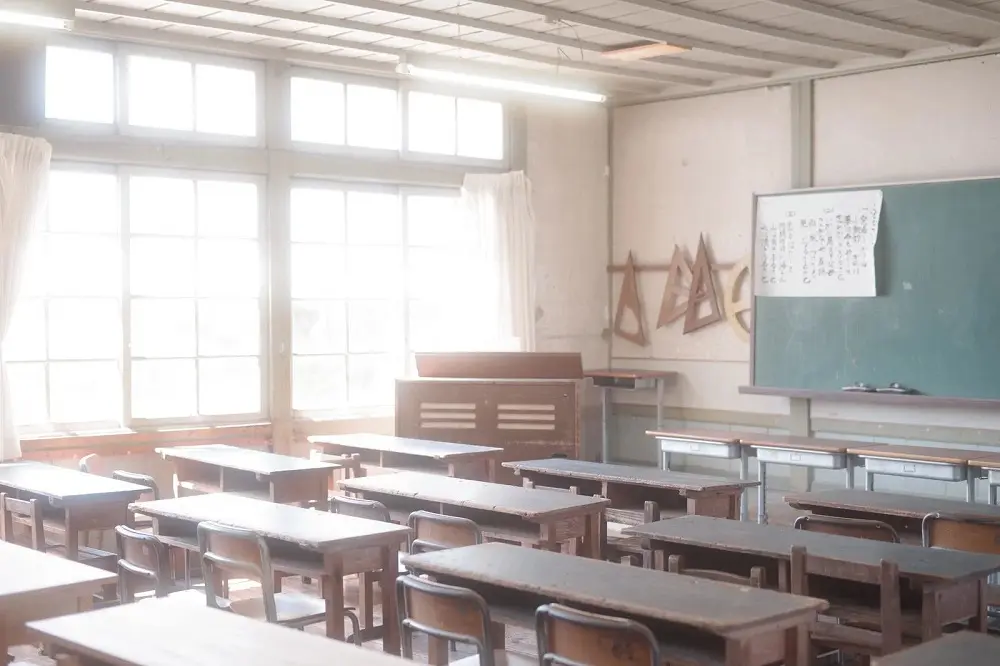
In a sweeping educational overhaul that challenges decades of Japanese tradition, the city of Kobe has permanently dismantled traditional extracurricular activities—known locally as bukatsu—across 82 public middle schools. Effective September 1, these institutions have completely dissolved their school-run sports teams, marching bands, art clubs, and theatrical troupes.
This drastic measure is not the result of temporary facility damage or acute staffing shortages, but rather a deliberate structural pivot driven by two compounding crises: chronic educator overwork and declining student enrollments. For generations, bukatsu has served as a cornerstone of Japanese adolescence, teaching discipline, teamwork, and social cohesion. However, the immense burden placed on teachers forced to act as after-hours coaches, paired with shrinking class sizes that render individual school clubs unviable, forced the Kobe Board of Education to seek an alternative.
That alternative is Kobekatsu. By partnering with over 1,000 community sports teams, private clubs, specialized workshops, and local universities, the municipal government has outsourced and massively expanded the extracurricular landscape. Supported by monthly student stipends and equipment subsidies, Kobekatsu replaces insular school teams with a diverse, community-integrated network of programs. Far from being a downgrade, this systemic shift presents an unprecedented opportunity to modernize youth development, relieve exhausted educators, and offer students a richer, more flexible array of extracurricular choices than ever before.
Detailed Chronology: The Road to the Kobekatsu Revolution
To understand the magnitude of Kobe’s recent policy shift, one must examine the deep historical roots of bukatsu and the gradual accumulation of pressures that made the traditional model unsustainable.
The Sacred Cow of Japanese Education
Historically, extracurricular activities have occupied a quasi-sacred space in Japanese secondary education. While academic rigor remains the primary objective during standard school hours, bukatsu is viewed as the crucible where character is forged. Through rigorous daily practices, weekend games, and communal cleaning of club rooms, students are expected to learn responsibility, perseverance (ganbarimasu), and deep interpersonal bonding.
In many middle schools, participation is compulsory. Even in districts without strict mandates, students who choose not to join a club—colloquially and somewhat pejoratively referred to as members of the "going straight home club"—represent a tiny, stigmatized minority. School sports tournaments and prefectural music competitions are treated as major civic events, with entire student bodies mobilizing to cheer for their institutional representatives.
The Breaking Point: Teacher Burnout and Demographic Decline
Cracks in the traditional bukatsu framework began to widen significantly over the past decade, driven by two unstoppable societal forces:
- The Educator Overwork Crisis: Japanese public school teachers have long endured notoriously long hours, but the burden of supervising weekend practices, managing tournament logistics, and coaching sports outside their areas of expertise proved exceptionally grueling. As societal attitudes toward corporate and public-sector overwork shifted in recent years, mounting pressure fell on local governments to protect teachers from burnout and preserve their primary focus: classroom instruction.
- The Demographic Cliff: Japan’s falling birthrates have devastated rural and urban school populations alike. Middle schools that once boasted three parallel baseball teams or full brass bands found themselves struggling to recruit even the bare minimum number of students required to field a team. Consequently, numerous schools had already suspended individual clubs indefinitely due to a lack of critical mass.
September 1: A New Paradigm
Recognizing that patching the system was no longer viable, the Kobe Board of Education initiated a bold structural separation. On September 1, public middle schools officially stepped away from managing extracurricular activities. Simultaneously, the city launched the Kobekatsu program, bridging the gap between formal education and local civil society. Rather than forcing schools to prop up failing, understaffed clubs, the municipality shifted the responsibility to a vast network of external providers, effectively decentralizing youth enrichment across the entire city.
Supporting Context & Metrics: The Scale of the Transition
The ambition of the Kobekatsu program is reflected in the sheer volume of its infrastructure and financial backing. Transitioning an entire municipal school system away from internal clubs requires massive logistical support, meticulous planning, and robust funding mechanisms.
The Partner Network
Under the new initiative, the Kobe Board of Education has successfully onboarded 1,051 local community partners. This expansive roster includes:
- Community sports leagues and amateur athletic clubs
- Independent art studios, cultural workshops, and music academies
- Technology hubs, coding bootcamps, and STEM-focused enrichment groups
- Regional universities providing mentorship and specialized facilities
This staggering breadth of options shatters the limitations previously imposed by a school’s physical size or budget. While a typical middle school might have been limited to a basketball team, a track squad, and a tea ceremony club, Kobekatsu participants can tap into specialized disciplines ranging from digital design and robotics to niche athletics and martial arts.
Financial Support and Subsidies
Recognizing that shifting from free (or nominally priced) school clubs to private or community-run programs could introduce financial barriers for families, the municipal government engineered a comprehensive subsidy package:

- Monthly Stipends: Participating students receive a direct monthly stipend ranging between 1,500 and 3,000 yen (approx. $9.50 to $19 USD). This financial aid is designed to offset participation fees, which average roughly 3,200 yen per month across the partner network.
- Equipment Procurement Funds: A dedicated municipal fund has been established to assist families with the high upfront costs of specialized gear, such as sports equipment, safety padding, and musical instruments.
Official Statements and Institutional Perspective
Municipal leaders and educational administrators have framed the transition not as a loss of tradition, but as an essential evolution to protect both teachers and students.
In statements released by the Kobe Board of Education, officials emphasized that the primary duty of public school teachers must remain focused on curriculum delivery and pedagogical excellence. Forcing educators—many of whom have no athletic background—to spend their weekends refereeing matches or managing club budgets is no longer tenable in a modern workforce that values work-life balance.
Furthermore, educational sociologists point out that the rigid institutional loyalty demanded by traditional bukatsu could sometimes become toxic. In a traditional school club, a student is entirely at the mercy of the assigned faculty advisor or coach. If a coach possesses an abrasive personality, relies on corporal punishment (a historical issue the Japanese Ministry of Education has actively worked to eradicate), or shows blatant favoritism, the student has no recourse. They either endure a miserable season or quit the activity entirely, potentially abandoning a budding passion.
By decentralizing activities into the community, the Kobe Board of Education hopes to introduce a healthy free-market dynamic into youth enrichment. If a child finds a particular community baseball coach overly harsh, they are no longer trapped; they can simply transition to one of the many other partner organizations offering the same sport under a different leadership culture.
Future Outlook: Challenges and Potential Upsides
While the Kobekatsu program represents a progressive leap forward, it also introduces new socio-cultural challenges that Kobe’s educators, parents, and students must navigate.
The Loss of School Identity
The most frequently cited concern regarding the abolition of school-run clubs is the potential erosion of school spirit. Under the old system, winning a regional tournament brought collective glory to the institution, uniting students, teachers, and alumni under a shared banner.
In the Kobekatsu era, students may still play baseball or join a marching band, but they do so as members of independent community clubs rather than representatives of "Kobe Municipal Middle School X." Educational observers note that this could weaken the immediate sense of belonging and institutional pride that traditional clubs fostered.
Overcoming the Neighborhood Boundary
Conversely, Kobekatsu offers a profound sociological upside: demographic integration.
Public middle school enrollment in Japan is strictly tethered to residential zoning. Children attend the school closest to their home, meaning their social circles are often limited to neighbors within their immediate district. Because Kobekatsu partner programs are open to participants regardless of their residential address, the program acts as a massive social mixer. Students will train, compete, and create alongside peers from entirely different neighborhoods and socioeconomic backgrounds. This cross-pollination is expected to foster greater open-mindedness and help teenagers develop into more well-rounded, adaptable individuals.
A Blueprint for National Reform?
As Japan continues to grapple with demographic contraction and intensifying scrutiny over public sector labor conditions, Kobe’s bold experiment is being watched closely by municipalities across the nation. If Kobekatsu successfully proves that community-outsourced extracurriculars can match—or even exceed—the developmental benefits of traditional school clubs without crushing teachers under administrative and coaching debt, Kobe may well serve as the architectural blueprint for the future of Japanese secondary education.
While bidding farewell to the traditional school club culture carries a tinge of nostalgia, the dawn of Kobekatsu suggests that the future of youth development in Japan might be brighter, fairer, and infinitely more diverse than its past.







Belum ada komentar. Jadilah yang pertama berkomentar!