

Executive Overview
In an era defined by hyper-targeted marketing campaigns, instantaneous digital leaks, and algorithmic over-exposure, the Telluride Film Festival achieved the impossible: it executed one of the best-kept secrets in modern cinematic history. On a crisp Sunday evening, an unsuspecting audience of 650 festivalgoers filed into a local theater under strict security protocols. Ushers locked all mobile devices in secure pouches, rendering communication with the outside world impossible. Attendees possessed no advance knowledge of the screening. They were given only three cryptic parameters: the feature had a sprawling runtime of nearly three hours, it had never been screened publicly anywhere in the world, and its principal creators were sitting quietly among them in the dark.
When the house lights finally went down and the opening frames flickered across the screen, the mystery dissolved into astonishment. The secret project was revealed to be a monumental, unprecedented documentary titled You Can See Everything, co-directed by master of psychological subversion Nathan Fielder and documentarian Lance Oppenheim. The subject? None other than disgraced Theranos founder Elizabeth Holmes and her husband, Billy Evans.
The film reportedly chronicles the frantic, surreal 34-day countdown leading up to May 2023, when Holmes finally reported to a federal prison camp to begin serving an 11-year sentence for multi-million-dollar investor fraud. Adding layers of avant-garde audacity characteristic of Fielder’s body of work, reports indicate that Fielder embedded himself deeply within the subjects’ orbit—even living in the couple’s guest house during the production window. Furthermore, the project features narrative detours involving a major A-list actress who becomes integrated into the fabric of the documentary itself.
With A24 stepping in to distribute the film globally this October, You Can See Everything is poised to instantly dominate cultural discourse, upending traditional true-crime paradigms and offering an uncomfortably intimate, boundary-pushing look at one of the defining corporate swindles of the 21st century.
Detailed Chronology: From Silicon Valley Apex to Federal Custody
To fully grasp the cultural and psychological weight of You Can See Everything, one must trace the dizzying trajectory of Elizabeth Holmes—a narrative arc that transitioned from messianic tech visionary to convicted federal inmate.
The Rise and Fall of Theranos
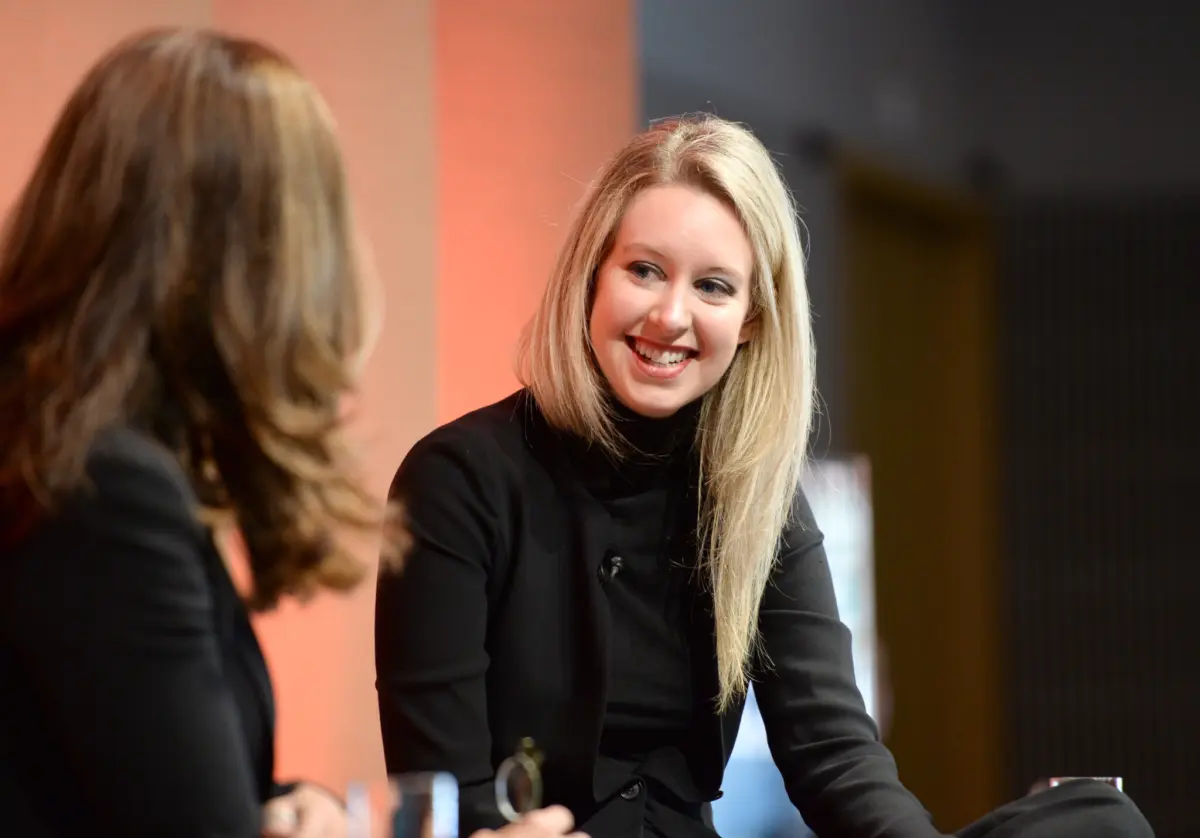
Founded in 2003 when Holmes dropped out of Stanford University at just 19 years old, Theranos promised to revolutionize health care. Holmes cultivated an aesthetic strikingly reminiscent of Steve Jobs—signature black turtlenecks, a manufactured deep baritone voice, and an intense, unblinking stare. She pitched a proprietary technology called the "Edison" machine, which purportedly required only a few drops of blood via a finger-prick to run hundreds of complex medical tests.
At its peak, Silicon Valley venture capitalists, seasoned board members (including former cabinet secretaries George Shultz and Henry Kissinger), and major media outlets treated Holmes as a generational genius. Theranos achieved a private valuation of $9 billion, making Holmes a billionaire on paper.
The house of cards collapsed in October 2015 following a landmark investigative series by Wall Street Journal reporter John Carreyrou. The reporting exposed that the Edison machines did not work, that Theranos was secretly running standard commercial blood analyzers purchased from third-party manufacturers, and that the company had systematically misled patients, regulators, and investors.
Legal Battles and Conviction
Following the company’s dissolution, federal prosecutors indicted Holmes and former Theranos Chief Operating Officer Ramesh "Sunny" Balwani on multiple counts of wire fraud and conspiracy to commit fraud.
Following a high-profile trial that captured global attention, a federal jury convicted Holmes on four counts of defrauding investors in January 2022. In November 2022, U.S. District Judge Edward Davila sentenced Holmes to 11 years and three months in federal prison, followed by three years of supervised release.
Holmes managed to delay the inevitable through a series of legal motions and appeals. However, her legal defense has steadily lost momentum over the years. In February of last year, her formal appeals seeking to overturn the conviction and shorten her sentence were officially rejected by the Ninth Circuit Court of Appeals. Facing diminishing legal avenues, Holmes shifted tactics, pivoting away from the courtroom and toward the executive branch. Her legal team filed a clemency petition asking President Trump to commute her sentence. Public records indicate that this petition remains officially listed as pending, leaving her federal case under ongoing review.
The 34-Day Window: Capturing the Endgame
It is precisely against this backdrop of legal desperation and impending incarceration that Fielder and Oppenheim’s documentary takes place. You Can See Everything zeroes in on the final 34 days before Holmes reported to Federal Prison Camp (FPC) Bryan in Texas in May 2023.
Living in close proximity to Holmes and her husband, Billy Evans, Fielder appears to have applied his signature brand of excruciating, hyper-detailed observational sociology to a real-world tragedy. The access granted to the filmmakers is described by early industry insiders as staggering, unsettling, and entirely unprecedented for someone facing federal confinement.
Supporting Context & Metrics: The Scale of the Phenomenon
The unveiling of You Can See Everything at Telluride is more than just a surprise drop; it is a convergence of some of the most influential forces in contemporary entertainment and modern media culture.
The Creative Forces: Fielder Meets Oppenheim
The pairing of Nathan Fielder and Lance Oppenheim represents a fascinating cross-pollination of documentary styles.
- Nathan Fielder rose to prominence through Comedy Central’s Nathan for You and subsequently pushed the boundaries of nonfiction television with HBO’s critically acclaimed The Rehearsal and The Curse. Fielder is known for constructing elaborate, deadpan sociological experiments that blur the lines between reality and artifice, often placing ordinary people in absurd, psychologically demanding environments.
- Lance Oppenheim, a younger visionary documentarian celebrated for HBO’s Some Kind of Heaven and the docuseries The Jinx: Part Two, brings a cinematic, hyper-stylized eye to institutional portraits and eccentric subcultures.
Combining Fielder’s knack for structural manipulation with Oppenheim’s knack for immersive human portraiture promises a documentary that refuses to adhere to standard, talking-head journalism.
Financial and Distribution Footprint
A24, the studio behind the film, has scheduled a theatrical release for October. Known for taking calculated risks on boundary-pushing auteur-driven projects, A24’s acquisition and handling of You Can See Everything signal that the studio expects the film to be a major awards-season contender.
Below is an overview of key operational metrics surrounding the project:
| Metric Category | Detail |
|---|---|
| Festival Debut | Surprise screening at Telluride Film Festival (Sunday night) |
| Audience Capacity | 650-seat theater (phones locked in secure pouches) |
| Runtime | Nearly 3 hours |
| Co-Directors | Nathan Fielder and Lance Oppenheim |
| Primary Subjects | Elizabeth Holmes and Billy Evans |
| Timeframe Captured | The 34 days preceding Holmes’s May 2023 prison surrender |
| Theatrical Release | October (Distributed by A24) |
| Current Legal Status | 11-year prison sentence ongoing; clemency petition pending review |
Official Statements and Industry Reactions
Because You Can See Everything was developed under deep secrecy, official statements from the filmmakers, subjects, and studio executives have been tightly managed. However, the ripple effects of the Telluride ambush have sent shockwaves through the entertainment industry.
Industry publication The Hollywood Reporter noted that the screening was successfully executed as "one of the best-kept secrets in years," highlighting the logistical discipline required to transport a three-hour unannounced feature into an active film festival without a single leak escaping to social media.
Festival attendees interviewed after the credits rolled described an atmosphere of collective disbelief. Several critics noted that the inclusion of an A-list actress who actively participates in the narrative structure elevates the film past standard documentary conventions, pushing it into a hybrid realm of metafiction and direct-cinema observation.
Legal analysts have also begun weighing in on the implications of the project. While Holmes is currently serving her sentence at FPC Bryan, legal experts point out that granting deep-access documentary filmmakers entry into one’s private life during a period of intense legal vulnerability is a high-stakes gamble. Whether the film portrays Holmes with empathetic nuance or subjects her to Fielder’s signature brand of unflinching, uncomfortable psychological exposure remains the central question driving industry curiosity.
Future Outlook: Cultural Impact and the October Release
As the dust settles on Telluride, the spotlight now shifts to A24’s upcoming theatrical rollout in October. Several key developments will shape the film’s trajectory in the coming months:
- The Publicity Campaign: Given the secrecy surrounding the production—particularly how Fielder managed to secure a residence in the couple’s guest house—public relations teams face the unique challenge of marketing a film that relies heavily on audience shock value while generating widespread mainstream curiosity.
- The Clemency Question: With Elizabeth Holmes’s formal clemency petition still listed as pending under the Department of Justice’s Office of the Pardon Attorney, the release of a major, high-profile cinematic examination of her final days of freedom could exert unexpected pressure on the public and political discourse surrounding her case.
- The Evolution of Nonfiction Cinema: By bending the rules of traditional journalism and introducing elements of performance art and narrative subversion into a major true-crime story, You Can See Everything may redefine how contemporary documentaries approach historical subjects.
When You Can See Everything arrives in theaters this October, audiences will finally step past the locked doors and restricted devices of that Telluride theater. They will be forced to confront a portrait of ambition, delusion, and accountability unlike anything previously captured on film.







Belum ada komentar. Jadilah yang pertama berkomentar!