

By Russell Brandom
Published September 18, 2026
Executive Overview
Artificial intelligence has entered a deeply paradoxical phase. While foundational large language models (LLMs) continue to saturate public discourse with commercial use cases, enterprise integrations, and monetization debates, an entirely different subterranean race is quietly reshaping the technological horizon: the development of AI world models.
At their core, world models are designed to automate spatial intelligence—giving machines the ability to understand, predict, and interact with physical and simulated environments. Spearheaded by elite research organizations like Yann LeCun’s AMI Labs and Fei-Fei Li’s World Labs, this frontier of AI commands staggering amounts of venture capital and industry buzz. Yet, when evaluated through a traditional commercial lens, these entities rank remarkably low on the "trying-to-make-money scale."
Beneath the veneer of scientific prestige lies a pervasive, calculated secrecy. From top-tier executives to downstream data suppliers, the ecosystem surrounding world models operates in a state of intentional obscurity. Why are the brilliant minds defining the next era of spatial computing so reluctant to reveal their commercial destinations? The answer points to a high-stakes strategic game of survival—what science fiction enthusiasts might recognize as a classic "Dark Forest" scenario, where revealing your position to the cosmos invites immediate and aggressive competition.
Detailed Chronology: The Rise of Spatial Intelligence and the Veil of Secrecy
To understand the current cloak-and-dagger culture of the world model ecosystem, one must trace the convergence of spatial intelligence research and the rapid influx of capital that defined the mid-2020s AI landscape.
Phase 1: The Shift from Words to Worlds
For years, the generative AI boom was dominated by text- and token-based models. These systems excelled at linguistic synthesis, programming, and general pattern matching across unstructured text. However, a fundamental limitation soon became apparent: text-based models lacked grounded physical intuition. They could describe gravity, but they could not natively navigate a room, predict the physical consequences of a robotic arm knocking over a glass, or render a persistent, interactive 3D physics engine from a simple text prompt.
By the mid-2020s, pioneers like Fei-Fei Li began championing "spatial intelligence"—the bridging gap that would allow AI systems to move from mere linguistic comprehension to a true, predictive understanding of three-dimensional space. This realization birthed World Labs and, subsequently, Yann LeCun’s AMI Labs, shifting the research frontier toward world models.
Phase 2: The Influx of Capital and the Absence of Commercial Pressure
As research papers on spatial intelligence gained traction, institutional investors rushed to back the foundational teams. Multi-million—and eventually multi-billion—dollar funding rounds materialized with unprecedented speed.
Because these startups were flush with capital from day one, they enjoyed a luxury unknown to earlier generations of software startups: they did not need to immediately monetize. While SaaS companies and consumer-facing app developers faced intense pressure to show immediate ARR (Annual Recurring Revenue), world model labs operated under a different mandate. Their objective was pure, fundamental research and infrastructural scaling. Consequently, commercial roadmaps were pushed deep into the background.
Phase 3: The Panel at the All In Conference
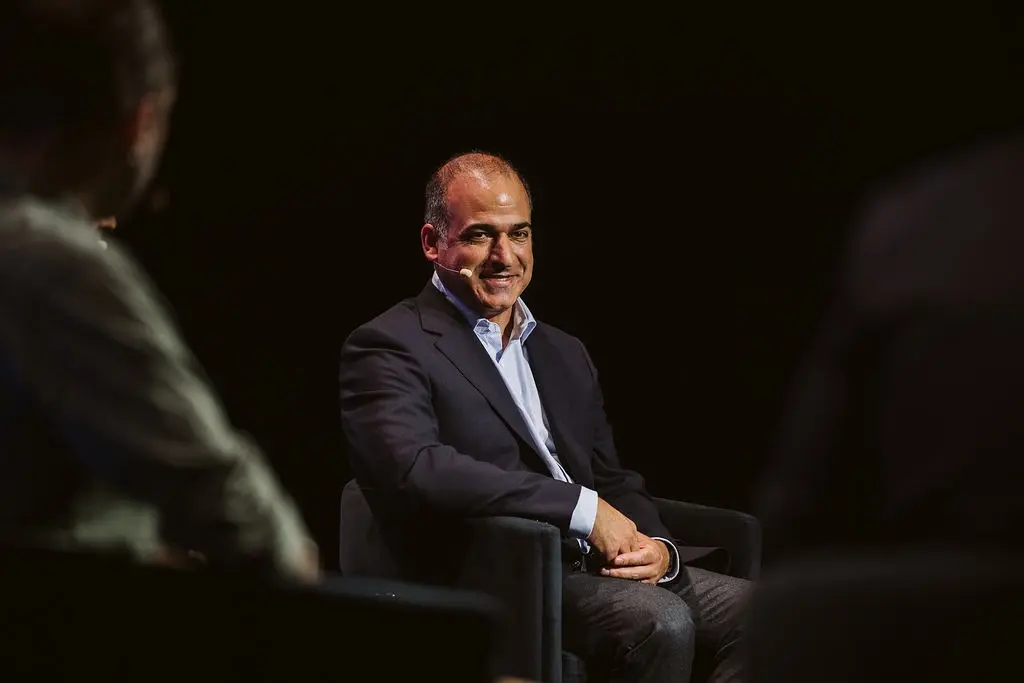
The tension between immense hype and profound secrecy came to a head at the All In conference (unrelated to the popular podcast), where industry leaders gathered to dissect the trajectory of artificial intelligence. Moderating a panel on world models, I attempted to peel back the layers of mystery surrounding these multi-million-dollar ventures.
The closest thing to an authoritative voice on the panel was Michael Rabbat, co-founder of AMI Labs and the company’s VP of World Models. When pressed on the specifics of what AMI Labs was actively developing, Rabbat maintained a polite but firm defense. "We’ll talk about it when we’re ready to talk about it," he stated. Later clarifying via email, he added: "We’re still in a research and building phase, so we’re not talking publicly about any product plans or timeline."
Given that AMI Labs was less than a year old at the time, keeping cards close to the chest is a defensible strategy. However, Rabbat’s caginess was not an isolated anomaly; it was symptomatic of an entire industry-wide embargo on specifics.
Supporting Context & Metrics: The Anatomy of a Versatile Technology
The mystery shrouding world models is compounded by their terrifyingly broad utility. Unlike a single-purpose enterprise software tool, a true world model is an infrastructural primitive—a foundational engine that can power dozens of distinct, lucrative verticals.
The Multi-Vertical Dilemma
Consider the sheer breadth of applications enabled by spatial intelligence:
- Autonomous Driving: Building predictive, navigable maps of the physical world to help vehicles weave through dense urban traffic (similar to advanced iterations of Waymo’s stack).
- Robotics: Guiding humanoid robots through complex, unstructured physical environments—from warehouse fulfillment to delicate household chores.
- Interactive Media & Gaming: Transforming raw video footage or text prompts into fully explorable, real-time 3D environments with authentic physics.
- Biomedicine and Manufacturing: Assisting in spatial molecular modeling, surgical planning, and automated factory floor orchestration.
Proof of this versatility can be seen in AMI Labs’ early maneuvers, which have already touched upon manufacturing, biomedicine, robotics, and medical AI software through strategic partnerships like its collaboration with Nabia.
The Downstream Blind Spot
This extreme versatility creates a ripple effect of uncertainty that extends far beyond the lab doors. On the sidelines of the All In conference, I spoke with Alex de Vigan, CEO of Physicl, a specialized data supplier feeding the burgeoning world model ecosystem.
De Vigan acknowledged that Physicl’s datasets have undoubtedly been instrumental in training the very models currently under development. Yet, he remains completely in the dark regarding the final destination of his own product.
"I wish they would tell us more," de Vigan told me. "We could build more useful data if we knew what they were working on."
When suppliers are kept in the dark, it highlights an unprecedented level of compartmentalization within the AI supply chain. The labs are buying training data blindly, ensuring that no single vendor can piece together the grand strategic puzzle.
Official Statements and Industry Insights
To fully grasp why these companies are choosing silence over marketing, one must analyze the strategic calculus governing elite AI labs.
The most advanced product currently visible in the space is World Labs’ Marble, a platform whose demos showcase everything from straightforward media creation to explorable video game environments and complex CGI effects. While robotics use cases are frequently hinted at, Marble often feels less like a packaged commercial utility and more like an elaborate proof-of-concept designed to flex raw technical capability.
The Threat of Premature Exposure
Why not shout these capabilities from the rooftops? According to industry insiders and strategic analysts, announcing a concrete commercial vector too early is tantamount to ringing a dinner bell for global competitors.
If a premier lab like AMI Labs were to publicly announce tomorrow that they had successfully engineered a breakthrough humanoid robotics platform—an "OpenClaw"—or a next-generation cinematic rendering engine, the shockwaves would be immediate.
- Immediate Competitive Pivot: Established neolabs, well-funded stealth startups, and incumbent giants like OpenAI and Anthropic would instantly pivot resources to target that exact vertical.
- The Double-Edged Sword of Venture Capital: In the current economic climate, easy fundraising is a double-edged sword. The same macroeconomic environment that allows a startup to fund its own R&D under the radar also allows its future competitors to secure massive war chests.
- Targeted Disruption: By remaining ambiguous, a lab forces potential rivals to guess where the puck is going. Competitors cannot easily allocate engineering teams to counter a product that hasn’t been defined.
Future Outlook: Navigating the Dark Forest
The silence enveloping the world model industry is more than just standard corporate paranoia; it is a rational adaptation to an hyper-competitive, hyper-capitalized technological race.
As Cixin Liu famously popularized in his masterwork of science fiction, the Dark Forest hypothesis posits that the universe is filled with civilizations that must remain hidden because the moment one reveals its location, it risks annihilation by more aggressive or preemptive forces.
In the modern AI landscape, the "Dark Forest" is the commercial market. With billions of dollars in dry powder sitting in venture capital accounts, every stealth lab is a hunter, and every announced product line is a flare sent into the night sky.
For now, companies like AMI Labs and World Labs will continue to build in the shadows. They will refine their spatial intelligence engines, test their models against multi-industry verticals, and keep their suppliers guessing. But this quiet phase cannot last forever. Eventually, the physics of commercialization will demand real-world deployment, and the forest will light up with the fire of open competition. Until that day arrives, the most powerful AI models on Earth will remain safely hidden in the dark.








Belum ada komentar. Jadilah yang pertama berkomentar!