

Executive Overview
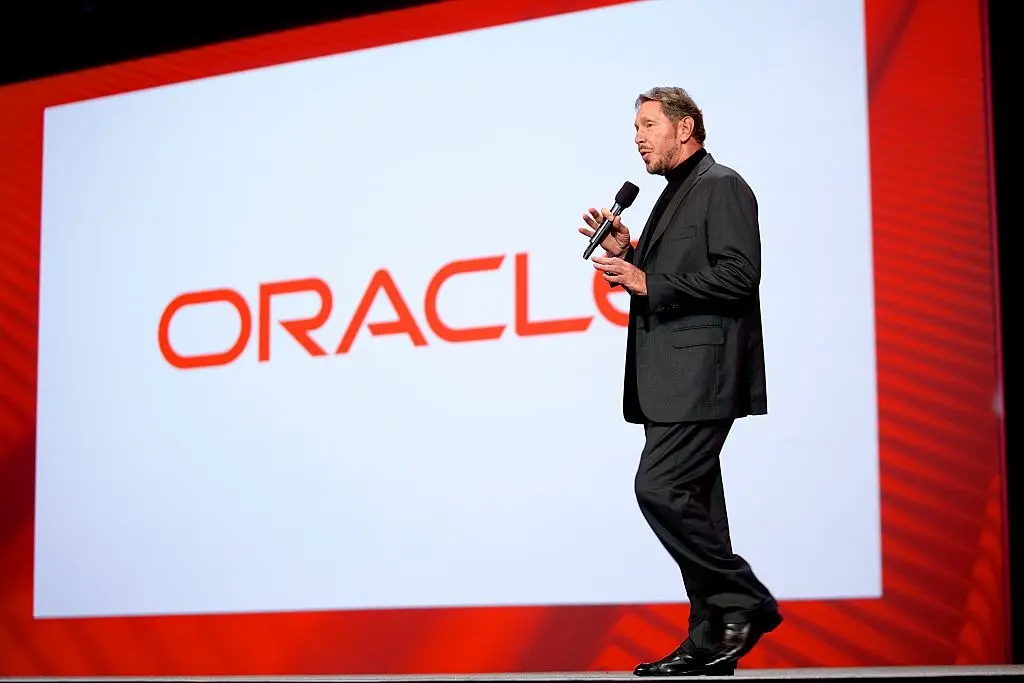
In a sudden and unexpected pivot that has reverberated across Wall Street and the enterprise technology sector, Oracle co-founder, Chief Technology Officer, and executive chairman Larry Ellison has officially canceled a massive, previously disclosed plan to liquidate 50 million shares of Oracle stock. The transaction, which would have netted the billionaire roughly $7.5 billion based on prevailing market valuations, was abruptly halted over the weekend, according to an official corporate announcement released by the database giant on Saturday.
The reversal marks a dramatic about-face for one of technology’s most enduring titans. Initially outlined in regulatory filings submitted to the U.S. Securities and Exchange Commission (SEC), the planned stock sale had drawn intense scrutiny from institutional investors, market analysts, and financial journalists alike. While corporate executives routinely divest portions of their equity holdings for estate planning, portfolio diversification, or personal liquidity, a divestment of this sheer magnitude—totaling billions of dollars—inevitably commands market attention.
Yet, as Oracle confirmed in its weekend statement, not a single share was ultimately unloaded under the now-defunct trading plan. More notably, the company explicitly underscored Ellison’s long-term commitment to the firm by noting that the executive chairman currently harbors no alternative plans to shed any portion of his substantial equity stake in the foreseeable future.
The cancellation occurs against a backdrop of sweeping transformation, aggressive capital expenditure, and high-stakes geopolitical maneuvers at Oracle. Over the past year, the company has aggressively repositioned itself as an indispensable backbone for the artificial intelligence revolution, pouring billions of dollars into state-of-the-art cloud data centers to capture surging enterprise demand. Concurrently, Oracle has stepped onto the global geopolitical stage, embedding itself as a crucial security and operational partner for TikTok’s restructured U.S. business operations.
Beyond his day-to-day stewardship of Oracle, Ellison has remained a dominant force in global capital allocation. His immense personal wealth has recently been deployed to back his son David Ellison’s ambitious media ventures, most notably supporting a high-stakes, multi-billion-dollar acquisition bid for entertainment stalwart Warner Bros.—a transaction that has since ignited fierce legal battles and regulatory scrutiny.
This in-depth investigative report examines the multifaceted context surrounding Larry Ellison’s canceled stock sale. By exploring Oracle’s financial performance, its heavy capital investments in artificial intelligence infrastructure, its strategic entanglements with TikTok, and Ellison’s sprawling external business interests, this article provides an authoritative analysis of the forces shaping one of the tech world’s most influential leaders.
Detailed Chronology
To fully understand the weight of Larry Ellison’s recent reversal, one must trace the timeline of events that led up to Saturday’s announcement. The saga highlights the delicate interplay between insider trading plans, market sentiment, and corporate communications in the modern era of public equity markets.
The Genesis of the Trading Plan
Under standard regulatory frameworks established by the SEC, corporate insiders such as founders, executives, and directors frequently utilize pre-arranged trading plans—commonly known as Rule 10b5-1 plans—to buy or sell company stock. These mechanisms are designed to protect insiders from allegations of insider trading by establishing a predetermined schedule for executing trades when the insider is not in possession of material, non-public information.
While Oracle’s initial disclosures regarding Ellison’s intent to offload 50 million shares sent ripples through the financial community, such plans are often viewed by sophisticated investors as routine wealth management tools. However, the sheer size of the proposed liquidation—representing roughly $7.5 billion in equity—distinguished Ellison’s filing from standard executive stock sales.
Market Reactions and Speculation
The initial disclosure of the multi-billion-dollar sell plan coincided with a challenging period for Oracle’s stock price. Having faced macroeconomic headwinds, sector-wide rotations, and concerns over escalating capital expenditures, Oracle’s equity value had experienced a notable contraction. Since the beginning of the year, Oracle shares have retreated by approximately 22%, putting pressure on management to reassure investors regarding the company’s long-term growth trajectory and cash-flow generation capabilities.
When news of the planned liquidation circulated, market commentators and short-term traders weighed the potential psychological impact of an insider selling billions of dollars worth of stock during a downward trend. While insiders sell stock for myriad personal reasons—including philanthropic commitments, tax liabilities, or backing external business ventures—large-scale divestments can occasionally amplify bearish sentiment among retail and institutional investors alike.
The Sudden Cancellation
On Saturday, Oracle abruptly altered the narrative. In a brief but definitive corporate announcement, the company pulled the plug on the entire operation.
"No Oracle stock was sold under that plan, and he has no other plans to sell any of his Oracle stock," the company stated.
Crucially, Oracle’s communications offered no specific rationale for the sudden cancellation. The deliberate omission of a stated reason has predictably fueled speculation across financial circles. Did Ellison alter his plans due to shifting market dynamics? Was the decision influenced by internal board discussions regarding shareholder optics? Or did a reassessment of his personal liquidity needs in relation to his sprawling external investments—such as his son David’s media empire—render the stock sale unnecessary?
While concrete answers remain locked within Oracle’s executive suites, the immediate takeaway is clear: Ellison has chosen to maintain his entire equity position intact, signaling an unyielding vote of confidence in the enterprise software giant he co-founded more than four decades ago.
Supporting Context & Metrics
To appreciate the financial gravity of Larry Ellison’s decision, one must examine the broader operational and macroeconomic landscape in which Oracle currently operates. The company is navigating a complex transition, marked by aggressive capital deployment in artificial intelligence, strategic infrastructure investments, and high-profile corporate partnerships.
Financial Performance and Market Realities
Oracle’s stock price performance over the past year reflects the dichotomous nature of the current technology landscape. On one hand, legacy enterprise software providers face stringent valuation pressures as investors demand immediate, tangible returns on artificial intelligence investments. On the other hand, Oracle has successfully repositioned itself as a premier destination for cloud-based AI workloads, challenging traditional heavyweights like Amazon Web Services (AWS), Microsoft Azure, and Google Cloud.
Despite these strategic victories, Oracle stock has faced downward pressure, sliding roughly 22% since the beginning of the year. This contraction has tested the patience of certain market segments, particularly as the company’s capital expenditure profile has expanded dramatically.
The Infrastructure Boom: Betting Big on AI Data Centers
The primary driver behind Oracle’s surging capital expenditures is the explosive global demand for artificial intelligence infrastructure. Building and scaling the advanced data centers required to train and run massive frontier AI models demands staggering amounts of capital.
Over recent quarters, Oracle has been spending heavily on data centers, expanding its cloud footprint at an unprecedented pace. The company has secured major contracts with leading artificial intelligence labs and enterprise clients, positioning Oracle Cloud Infrastructure (OCI) as a high-performance alternative known for its specialized networking and raw computing power.
However, Wall Street traditionally views aggressive capital expenditure cycles with a mixture of excitement and caution. While data center expansion is essential for capturing long-term market share in the booming AI economy, it places immediate demands on corporate liquidity and free cash flow. In this context, Ellison’s decision to halt his $7.5 billion stock sale takes on added significance; by keeping his shares locked in, the executive chairman avoids any superficial misalignment between his personal financial actions and the company’s capital-intensive growth strategy.
Geopolitical Entanglements: The TikTok U.S. Partnership
Beyond the realm of enterprise software and artificial intelligence, Oracle has increasingly found itself at the nexus of geopolitics and big tech. Among the company’s most consequential strategic maneuvers in recent years is its role as a major owner and security partner for TikTok’s U.S. operations.
Amid ongoing regulatory scrutiny, national security debates, and legislative battles concerning the popular short-form video platform’s foreign ownership, Oracle was tapped to oversee and audit TikTok’s U.S. data streams, ensuring user privacy and regulatory compliance. This arrangement not only integrated Oracle deeply into one of the world’s most culturally significant consumer tech ecosystems but also solidified the company’s reputation as a trusted institutional partner capable of navigating complex regulatory minefields.
The Ellison Dynasty: Backing Warner Bros. and Media Acquisitions
While Larry Ellison’s professional identity remains inextricably linked to Oracle, his immense personal wealth has increasingly flown into external entrepreneurial endeavors—most notably supporting the media ambitions of his son, David Ellison.
David Ellison, founder of production company Skydance Media, has been orchestrating a high-stakes campaign to acquire entertainment giant Warner Bros. Larry Ellison has utilized his immense personal fortune to back this massive media play, providing crucial financial backing estimated in the tens of billions of dollars to secure the transaction.
However, the path of media consolidation is rarely smooth. The proposed acquisition of Warner Bros. has faced intense regulatory scrutiny, antitrust inquiries, and fierce legal battles. Recent court filings and settlement discussions—such as those involving state regulators in California—highlight the contentious nature of the deal.
Given the immense capital requirements associated with backing a multi-billion-dollar media empire acquisition, financial analysts initially speculated that Larry Ellison’s planned Oracle stock sale might have been designed to generate liquid capital for these external family ventures. The sudden cancellation of the sale suggests either that alternative financing mechanisms have been secured for the Warner Bros. buyout or that Ellison has opted to preserve his Oracle equity rather than liquefying his foundational asset to fund his son’s media ambitions.
Official Statements and Corporate Communication
In the wake of Saturday’s announcement, corporate governance experts and market analysts have scrutinized the phrasing and tone of Oracle’s official communications. Publicly traded companies are bound by strict disclosure rules, but when executive leadership makes sudden reversals regarding multi-billion-dollar insider transactions, the manner in which the news is communicated can dictate market perception.
Oracle’s official statement was notably concise:
"No Oracle stock was sold under that plan, and he has no other plans to sell any of his Oracle stock."
By explicitly stating that no stock was sold and reinforcing that no future sales are currently planned, Oracle’s leadership sought to extinguish any lingering market panic or conspiracy theories regarding the executive chairman’s confidence in the firm.
In corporate governance circles, insider selling is frequently parsed for hidden meanings. When an executive sells stock, bears often interpret it as a sign that the insider believes the stock has peaked. Conversely, when a planned sale is abruptly canceled—especially one involving 50 million shares—it is frequently interpreted by bulls as an opportunistic signal that the insider views the current share price as undervalued or wishes to retain maximum upside exposure to upcoming corporate catalysts.
By remaining silent on the reasons behind the cancellation, Oracle has left room for interpretation, yet the declarative nature of the statement leaves little ambiguity regarding Ellison’s immediate stance: his financial fortunes remain directly and fully tied to Oracle’s success.
Future Outlook
As Oracle moves past this brief chapter of market speculation, the company faces a critical juncture in its storied corporate history. The coming quarters will test management’s ability to execute on multiple aggressive fronts simultaneously.
1. Monetizing the AI Infrastructure Bet
The most pressing mandate for Oracle is proving to Wall Street that its heavy capital expenditures on AI data centers will yield robust, sustainable returns. As enterprise customers accelerate their migration to cloud-native AI architectures, Oracle Cloud Infrastructure must continue to capture market share from established cloud goliaths. Management will be judged on its ability to convert data center capacity into accelerating top-line revenue growth and expanding operating margins.
2. Navigating Regulatory and Operational Complexities
Oracle’s involvement with TikTok’s U.S. operations will continue to require deft navigation of geopolitical currents. As regulatory frameworks surrounding data sovereignty, privacy, and international technology transfers evolve, Oracle’s role as a trusted security partner will remain both a lucrative revenue stream and a complex operational responsibility.
3. Resolution of Media Entanglements
On the personal investment front, the ongoing legal and regulatory battles surrounding the Warner Bros. acquisition backed by Larry Ellison will continue to capture headlines. Whether David Ellison’s media ambitions successfully reshape the Hollywood landscape—and whether Larry Ellison’s personal capital reserves are ultimately called upon to finalize the transaction—will remain a major subplot for followers of the billionaire family’s financial empire.
4. Shareholder Value and Stock Performance
With Larry Ellison’s 50 million shares safely locked back into his permanent holdings, the immediate overhang of a massive insider liquidation has been lifted. For long-term investors, the cancellation of the sale serves as a powerful psychological anchor. It reaffirms that Oracle’s visionary co-founder—who has steered the company through decades of technological paradigm shifts, from client-server computing to enterprise cloud applications, and now to generative artificial intelligence—remains fully invested in the journey ahead.
As Oracle prepares for its upcoming earnings disclosures and strategic updates, the market will be watching closely to see whether the company can turn its aggressive infrastructure bets into a decisive competitive advantage, vindicating Ellison’s unwavering commitment to his life’s work.







Belum ada komentar. Jadilah yang pertama berkomentar!