

Executive Overview
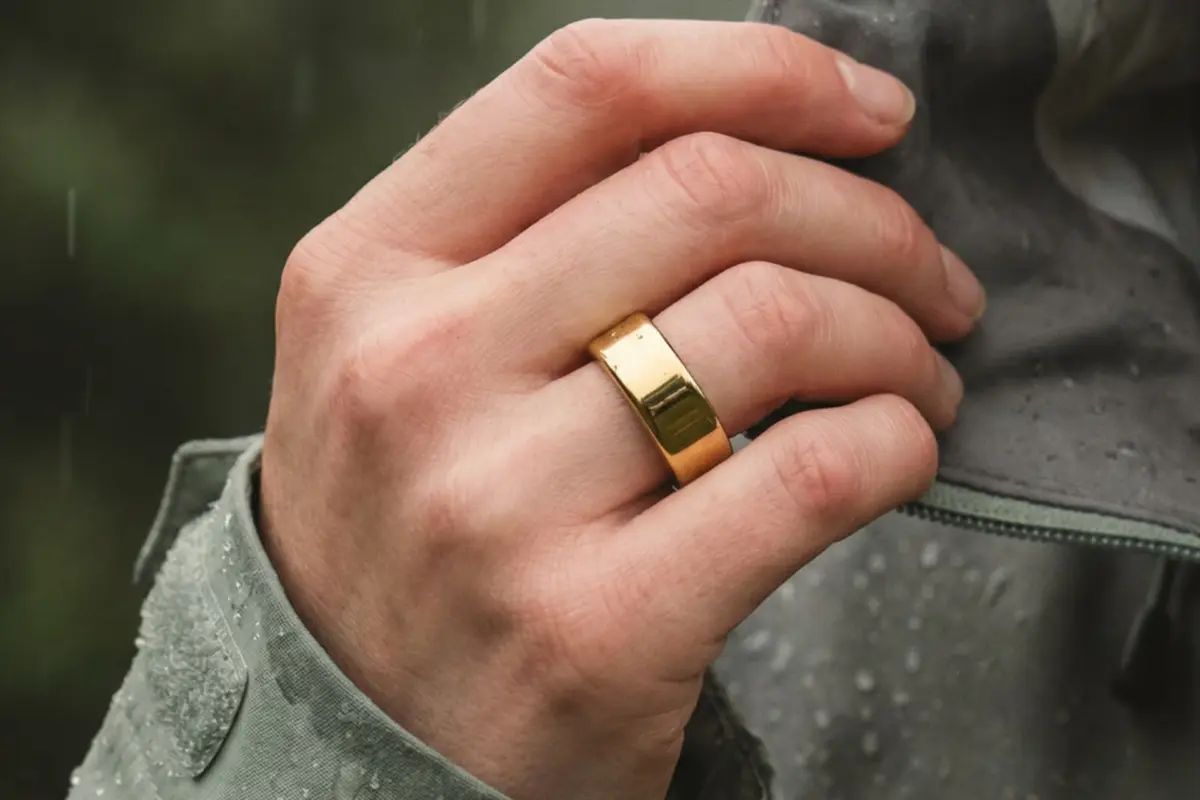
The high-stakes battle for dominance in the burgeoning wearable technology sector has escalated dramatically. Smart-ring pioneer Oura has initiated a fresh federal lawsuit against its Indian rival, Ultrahuman, seeking to block the U.S. sales of the Bengaluru-based startup’s flagship Ring Pro. Filed in a federal court in Texas, this aggressive legal maneuver comes just months after Ultrahuman engineered a redesign of its product to successfully bypass a previous U.S. import ban.
Oura’s latest legal offensive is far from an isolated incident. It represents the spearhead of a broader, highly protective intellectual property strategy deployed by the Finnish-rooted health-tech giant to fend off global competition. Alongside Ultrahuman, Oura has locked horns with major consumer electronics heavyweights and emerging startups alike, including Samsung, RingConn, Circular, and Zepp Health.
This renewed litigation unfolds against a backdrop of sweeping industry dynamics. The global smart-ring market is experiencing exponential growth, projected by market intelligence firm IDC to surge past millions of shipments annually as consumers increasingly embrace discrete, continuous health-monitoring wearables. Yet, this expansion is mirrored by corporate volatility: Oura recently shelved a massive $2.2 billion initial public offering (IPO) due to macroeconomic and market uncertainty, while Ultrahuman secured a robust $70 million funding round backed by heavyweights like Qualcomm Ventures to fuel its ambitious hardware and artificial intelligence ambitions.
As legal teams prepare for what promises to be a protracted court battle, the outcome of this dispute could profoundly reshape the competitive landscape, setting pivotal legal precedents for hardware design, sensor integration, and patent enforcement in the consumer tech space.
Detailed Chronology: Escalation of the Oura vs. Ultrahuman Feud
The Genesis of Conflict (2023–2024)
The animosity between Oura and Ultrahuman dates back to 2023, when Oura first filed suit against the Indian startup. At the time, Ultrahuman was rapidly gaining international traction and making significant inroads into the lucrative U.S. market on the back of its popular Ring Air device. Oura claimed that the Ring Air unlawfully incorporated proprietary technology and design elements that infringed upon its foundational smart-ring patents.
Escalating the pressure, Oura brought a separate, highly consequential enforcement action before the U.S. International Trade Commission (ITC) in 2024. The strategy yielded immediate fruit for the incumbent: in August of that year, the ITC issued a definitive patent infringement ruling that culminated in a formal import ban on the Ultrahuman Ring Air, effectively slamming the door on the startup’s primary U.S. revenue channel.
The Redesign and Brief Respite (Early 2026)
Refusing to cede the American market, Ultrahuman went back to the drawing board. In February 2026, the startup unveiled the Ring Pro, a heavily redesigned smart ring engineered to circumvent Oura’s litigated patents. Following a rigorous evaluation, U.S. Customs and Border Protection issued a favorable ruling in March 2026, certifying that the Ring Pro complied with trade regulations and clearing the path for Ultrahuman’s triumphant return to the U.S. market.
The October 2026 Legal Counter-Offensive
Ultrahuman’s reprieve, however, proved short-lived. In a tactical legal strike filed on a Thursday in federal court in Texas, Oura launched its new attack. This time, the plaintiff bypassed the patents previously evaluated by customs, asserting an entirely new legal arsenal.
Crucially, one of the central patents cited in the new complaint—designated as patent number 12,769,363—was issued to Oura by the U.S. Patent and Trademark Office (USPTO) on October 20, a mere two days before the lawsuit was officially lodged. This patent specifically protects advanced internal hardware configurations, including curved batteries, customized circuit boards, miniature sensors, and magnetic alignment structures within a compact ring chassis. Alongside this, Oura asserted design patent D804,471.
Furthermore, Oura expanded its target list by naming SVTronics, a Texas-based electronics manufacturing firm located in Plano, as a co-defendant. The complaint alleges that SVTronics manufactures the Ring Pro locally under the direct control and supervision of Ultrahuman, meaning both entities are culpable for the unauthorized domestic manufacturing, importation, and distribution of the infringing device.
Supporting Context & Metrics: A Maturing Ecosystem
Market Projections and Industry Tailwinds
The aggressive legal posturing between Oura and Ultrahuman cannot be viewed in a vacuum; it is the direct byproduct of a rapidly maturing, high-stakes consumer market. According to recent data from International Data Corporation (IDC), global shipments for smart rings are projected to expand by 12.8% to reach 4.9 million units, with cumulative volumes expected to scale toward 6.3 million units by 2030.
Once considered a niche product category favored primarily by biohackers and fitness enthusiasts, smart rings have evolved into mainstream wellness accessories. Their appeal lies in their form factor: unlike smartwatches, which can be bulky and obtrusive, smart rings offer seamless, 24/7 biometric tracking—monitoring sleep architecture, heart rate variability, skin temperature, and activity levels—without screen-induced distractions.
Corporate Milestones: Funding, Valuations, and IPOs
Both market combatants have recently navigated high-profile corporate milestones that underscore their financial stamina and growth ambitions:
- Ultrahuman’s Strategic Infusion: In September, Ultrahuman closed a massive $70 million funding round. The financing featured participation from prominent strategic investors, including Qualcomm Ventures and Labcorp, pushing the startup’s valuation to approximately $365 million. Ultrahuman has openly stated its ambition to transcend standard health tracking, partnering with Qualcomm to develop next-generation smart rings capable of running complex software, executing edge-computing tasks, and eventually interfacing with advanced AI and gaming applications.
- Oura’s Strategic Pivots: Conversely, Oura faced headwinds on the public market front. The company recently shelved its anticipated $2.2 billion initial public offering (IPO), explicitly citing pervasive macroeconomic volatility and market uncertainty. Despite pausing its public market debut, Oura remains heavily capitalized and aggressively innovative, rolling out new software capabilities—such as advanced cardiovascular health metrics designed to evaluate how intense workouts impact long-term heart resilience.
Oura’s Broader Litigious Strategy
Ultrahuman is far from the sole target of Oura’s legal department. The company has methodically pursued intellectual property enforcement across the entire wearables landscape, filing infringement suits against industry giants like Samsung (over the Galaxy Ring) and specialized competitors like RingConn, Circular, and Zepp Health.
Interestingly, these legal battles have yielded divergent outcomes. While some competitors have chosen protracted courtroom warfare, others have capitulated to market realities. Both RingConn and Circular, for instance, ultimately elected to settle their disputes by entering into multi-year patent licensing agreements, agreeing to pay recurring royalties to Oura in order to secure legal clearance to distribute their products within the United States.
Official Statements and Legal Perspectives
The battle lines between the two corporations are sharply defined, with executives from both sides offering uncompromising perspectives on the litigation.
Oura’s Stance
In an official statement provided to technology media, an Oura spokesperson underscored a pattern of alleged intellectual property appropriation:
"Ultrahuman has a history of copying Oura’s innovations, as demonstrated by the 2025 ITC ruling against the company. Ultrahuman introduced a redesigned ring but failed to address continued infringement of Oura’s patents, seeking instead to capitalize on our innovation and the market leadership we have built."
Oura’s legal filing argues that while U.S. Customs and Border Protection cleared the Ring Pro regarding the specific patent tied to the previous Ring Air dispute, that administrative ruling did not evaluate or grant immunity concerning the fresh batch of patents now invoked—specifically D804,471 and the newly minted 12,769,363 patent. Consequently, Oura maintains it had no alternative but to initiate fresh judicial proceedings to defend its hard-won market advantage.
Ultrahuman’s Response
Reacting swiftly to the new lawsuit, Ultrahuman Co-founder and CEO Mohit Kumar projected absolute confidence, framing Oura’s timing as an aggressive, defensive reaction to rising market competition:
"Oura has now chosen to assert different patents, including one that issued just two days before this lawsuit was filed. We will address these claims through the appropriate legal process and will defend our position vigorously. There is no court order affecting Ring Pro, and it remains available to customers in the U.S."
Kumar’s comments highlight a crucial operational reality: because the court has not issued an emergency temporary restraining order or preliminary injunction, the Ring Pro remains fully legal to buy, import, and ship within the United States while the litigation grinds through the federal court system.
Future Outlook: What Lies Ahead for the Smart-Ring Wars
As the legal proceedings in Texas commence, the implications of this case extend far beyond the balance sheets of Oura and Ultrahuman. Several critical trajectories will dictate how this feud—and the broader smart-ring industry—evolves over the coming years:
- The Precedent of Hardware Patents: The inclusion of patent
12,769,363, which specifically covers miniature internal hardware architectures (such as curved batteries and tightly packed sensor arrays), establishes a fascinating legal frontier. If Oura successfully defends and enforces this patent, it could fundamentally constrain how rival hardware engineers design compact wearables, forcing costly structural redesigns across the entire industry. - The Impact on Supply Chain Partners: By dragging Texas-based manufacturer SVTronics into the lawsuit, Oura has signaled that its legal strategy will target not only brand-name innovators but also the domestic contract manufacturers that bring their hardware to life. This could make contract manufacturing significantly more complex and legally hazardous for foreign startups seeking U.S. operational footprints.
- Market Consolidation vs. Innovation: As dominant incumbents like Oura utilize aggressive legal frameworks to protect their turf, smaller players must weigh the capital-intensive nature of patent litigation against the necessity of independent innovation. While companies like RingConn and Circular chose the royalty-licensing route, Ultrahuman’s defiant posture suggests that well-funded startups backed by institutional giants like Qualcomm are increasingly willing to absorb legal combat to preserve their market share and technological independence.
For consumers, the immediate impact remains negligible: the Ring Pro is fully accessible on shelves and online storefronts. However, for the engineering teams shaping the future of discrete wearable computing, every millimeter of circuit board placement and battery curvature must now be calculated not just for ergonomic efficiency, but against the looming shadow of federal patent law.









Belum ada komentar. Jadilah yang pertama berkomentar!