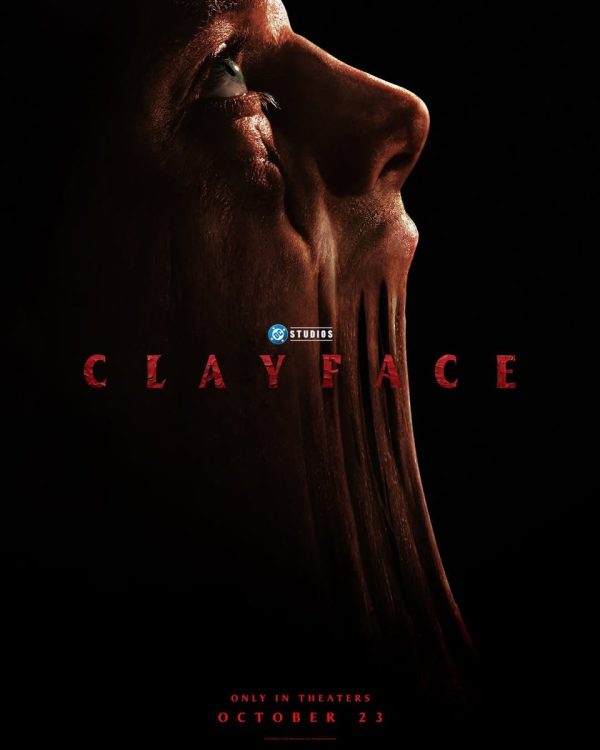
In the ever-expanding and increasingly volatile landscape of comic book adaptations, the 2026 feature film Clayface was pitched as a bold departure from traditional superhero conventions. Directed by James Watkins and featuring a screenplay developed in part by notable genre architect Mike Flanagan, the film promised to inject raw, visceral body-horror into the mythos of Gotham City. Rather than focusing on caped crusaders or world-ending cosmic threats, Clayface aimed to chart the tragic, grotesque downfall of Matt Hagen—a rising Hollywood talent whose pursuit of validation curdles into monstrous vengeance.
However, despite possessing a distinct aesthetic identity that sets it apart from contemporary cinematic universe entries, the final product stumbles significantly under the weight of its own narrative ambiguities and tonal miscalculations. Starring Tom Rhys Harries as the ill-fated protagonist alongside Naomi Ackie and Eddie Marsan, Clayface struggles to reconcile its aspirations as a psychological thriller with the tired tropes of revenge-driven melodramas.
Rather than delivering a profound exploration of identity, disfigurement, and the hollow nature of celebrity, the film ultimately devolves into a sluggish, conceptually muddled exercise in frustration. This exhaustive review examines the production’s structural flaws, narrative incoherencies, and the broader implications of its failure within the current DC cinematic strategy.
Detailed Chronology: The Fall and Transformation of Matt Hagen
The narrative engine of Clayface initiates within the high-stakes, hyper-competitive acting ecosystem of a fictionalized Gotham City elite. The protagonist, Matt Hagen (Tom Rhys Harries), has recently secured an Academy Award nomination—a milestone that establishes his status as a celebrated talent, though the film curiously refuses to ground this prestige in any tangible evidence of his craft.
The Catalyst of Tragedy
Hagen’s trajectory shifts catastrophically during a night out at an exclusive Gotham club. Prodded by an associate to bypass the standard queue and weaponize his burgeoning celebrity status, Hagen encounters a woman whose casual entanglement sets off a chain reaction of violence. Unknown to Hagen, the woman is tied to a ruthless local mob boss surrounded by crooked city officials.
When the situation violently unravels, Hagen is ambushed by the mob boss and his henchmen. In an act of calculated cruelty, his face is severely mutilated with blades, effectively terminating his career overnight. To compound this trauma, the syndicate orchestrates a public relations counter-offensive. The mob-connected woman publicly alleges that she was drugged, framing Hagen for horrific crimes she herself fabricated. This plot point introduces a jarring thematic undercurrent: the film positions its protagonist not as a fallen anti-hero forged by classical noir despair, but as a direct victim of fabricated allegations. The screenwriting fails to supply the nuance required to navigate such charged thematic territory, leaving Hagen’s initial victimization feeling both unearned and tonally tone-deaf.
Desperate to salvage his identity and physical form, a vengeful Hagen seeks out Dr. Caitlyn Corr (Naomi Ackie), an unconventional scientist operating on the fringes of legitimate academia. Corr is depicted as struggling for institutional funding, making her vulnerable to ethical compromises. Though initially resistant to utilizing a living human test subject, Corr ultimately relents.
Through the application of advanced nanotechnology, Corr successfully reconstructs Hagen’s ruined facial structure. The procedure, however, comes with a severe body-horror caveat: the nanotech-infused skin remains highly unstable. Moments of overwhelming stress, spikes in adrenaline, or intense anger cause the synthetic flesh to slip from his bones like melting sludge.
This premise immediately establishes a series of logic gaps that undermine the tension. If emotional volatility causes Hagen’s face to literally liquefy, basic daily functions—such as navigating Gotham City traffic or enduring a minor public disagreement—should logically trigger catastrophic physiological failures. Yet, the film treats these mechanics with frustrating inconsistency, utilizing them only when convenient for narrative progression.
Descent into Monstrocity
Armed with his reconstructed face and a burning desire for retribution against the figures who ruined his life, Hagen begins hunting down his betrayers. Simultaneously, he finds himself drawn romantically to Dr. Corr, who is engaged to Gotham Police Department officer John Borelli (Max Minghella). Borelli soon finds himself tasked with investigating a string of mysterious disappearances and violent deaths among Gotham’s elite—unaware that the man courting his fiancée is the very entity leaving these mutilated corpses in his wake.
As Hagen discovers that the nanotechnology grants him a secondary, terrifying ability—the power to morph his physical form and seamlessly mimic the identities of those he encounters or envies—the narrative squanders its potential for biting satirical commentary. Rather than exploring the performative nature of Hollywood, the emptiness of reinvention, or the psychological toll of mask-wearing, Hagen deteriorates into a whiny, rejected romantic. His arc frequently borders on unearned self-pity, framing his inability to accept rejection through an unappealing, almost incel-adjacent lens that clashes violently with his pre-disfigurement status as a pampered celebrity.
Supporting Context & Metrics
To fully understand how Clayface arrived at its current critical reception, one must evaluate the creative lineage and structural metrics surrounding its production.
+-------------------------------------------------------------------------+
                    PRODUCTION METRICS & CREATIVE TEAM
+-----------------------+-------------------------------------------------+
| Metric / Role         | Details                                         |
+-----------------------+-------------------------------------------------+
| Director              | James Watkins                                   |
| Screenplay            | Developed with Mike Flanagan                    |
| Lead Cast             | Tom Rhys Harries, Naomi Ackie, Max Minghella,   |
|                       | Eddie Marsan, Rob Brydon                        |
| Genre Classification  | Body-Horror / Psychological Crime Thriller      |
| Runtime               | Approx. 90 minutes                              |
| Critical Consensus    | Panned for pacing, mild horror, & plot logic    |
+-----------------------+-------------------------------------------------+
The Creative Paradox: Watkins and Flanagan
The pairing of director James Watkins with writer Mike Flanagan initially generated cautious optimism among genre enthusiasts. Flanagan’s pedigree in psychological horror—spanning television and cinematic adaptations—suggested a project that would prioritize internal trauma and atmospheric dread. However, Watkins’ directorial history presented a contradictory track record. Known for The Woman in Black and a critically divisive remake of Speak No Evil, Watkins’ stylistic tendencies often lean toward conservative, safe genre execution rather than daring subversion.
In Clayface, this tension manifests as a pervasive timidity. Despite being marketed as a boundary-pushing body-horror entry within the DC catalog, the film actively pulls its punches. Surgical interventions and transformative sequences are routinely shot with a strange coyness, cutting away precisely when the audience anticipates visceral, graphic impact. The result is a film that wears the costume of an extreme horror project while maintaining the sanitized narrative constraints of a standard studio thriller.
The Supporting Ensemble
While Tom Rhys Harries struggles to anchor the film as the brooding, increasingly petulant Matt Hagen, the supporting cast fares with mixed results. Naomi Ackie emerges as the sole bright spot, injecting genuine emotional gravity and ethical conflict into Dr. Caitlyn Corr. Her performance effectively highlights the tragedy of a scientist compromising her principles for the sake of progress, only to become trapped in a waking nightmare.
Conversely, veterans like Eddie Marsan and Max Minghella are largely underutilized. Marsan’s mob connections feel perfunctory, serving as a vague narrative catalyst rather than a genuine looming threat, while Minghella’s investigator role functions primarily as a human stopwatch ticking down toward an inevitable, uninspired confrontation.
Official Statements & Industry Reaction
The tonal disconnect between Warner Bros./DC’s marketing campaign and the actual thematic execution of Clayface has sparked widespread discussion across the industry regarding the studio’s ongoing strategy for character-driven spin-offs.
Industry analysts note that Clayface was intended to prove that the DC cinematic apparatus could successfully decentralize its storytelling, pivoting away from traditional caped crusaders to examine the tragic psychological underpinnings of minor villains. However, early audience screenings and critical roundtables have highlighted a growing fatigue with grim-dark character studies that fail to earn their cynicism.
In a recent industry roundtable discussing the film’s trajectory, entertainment insiders noted:
"When studios attempt to ground fantastical comic book elements in hyper-realistic, gritty contemporary trauma, they run the risk of alienating both genre purists and casual moviegoers. If the metaphor collapses under basic logical scrutiny, the entire narrative edifice crumbles with it."
Furthermore, the decision to hinge the protagonist’s descent into villainy on a disputed legal and social conflict has drawn sharp criticism from cultural commentators. Rather than challenging the audience with a complex portrait of corruption, the narrative simplifies institutional malice and interpersonal betrayal into a flat revenge fantasy, denying both the character and the viewer any meaningful catharsis.
Future Outlook: Implications for the DC Universe
The critical misfire of Clayface raises urgent questions concerning the trajectory of DC’s non-traditional cinematic ventures. As studio executives continue to experiment with standalone villain studies and genre-specific experiments, the commercial and critical reception of projects like Clayface serves as a cautionary tale.
Key Takeaways for Future Productions:
The Logic of Transformation: Physical mutations and sci-fi/fantasy elements (such as nanotech skin instability) must adhere to an internal logic that sustains tension rather than inviting immediate logistical questioning from the audience.
Thematic Responsibility: Utilizing sensitive contemporary social themes as casual narrative set-dressing without sharp, deliberate critique alienates audiences and flattens character motivations into unconvincing melodrama.
Commitment to Genre: If a film is marketed as body-horror, the production must commit fully to its visual and visceral promises rather than pulling back into safe, PG-13-adjacent restraint.
Narrative Earned-ness: Twist endings and psychological revelations cannot rescue a project if the preceding 90 minutes have failed to build authentic dramatic momentum.
Ultimately, Clayface concludes with a bizarre, out-of-left-field mind-bender that feels completely unearned given the sluggish, meandering nature of the preceding runtime. As DC attempts to solidify a cohesive and compelling cinematic universe, each misstep like Clayface causes the prospect of a genuinely robust, daring franchise to fade a little faster. One is left wondering whether the fictional, Academy Award-nominated films starring Matt Hagen within Gotham’s elite circles were any better than the movie itself. Statistically, they almost certainly had to be.













Belum ada komentar. Jadilah yang pertama berkomentar!