

Executive Overview
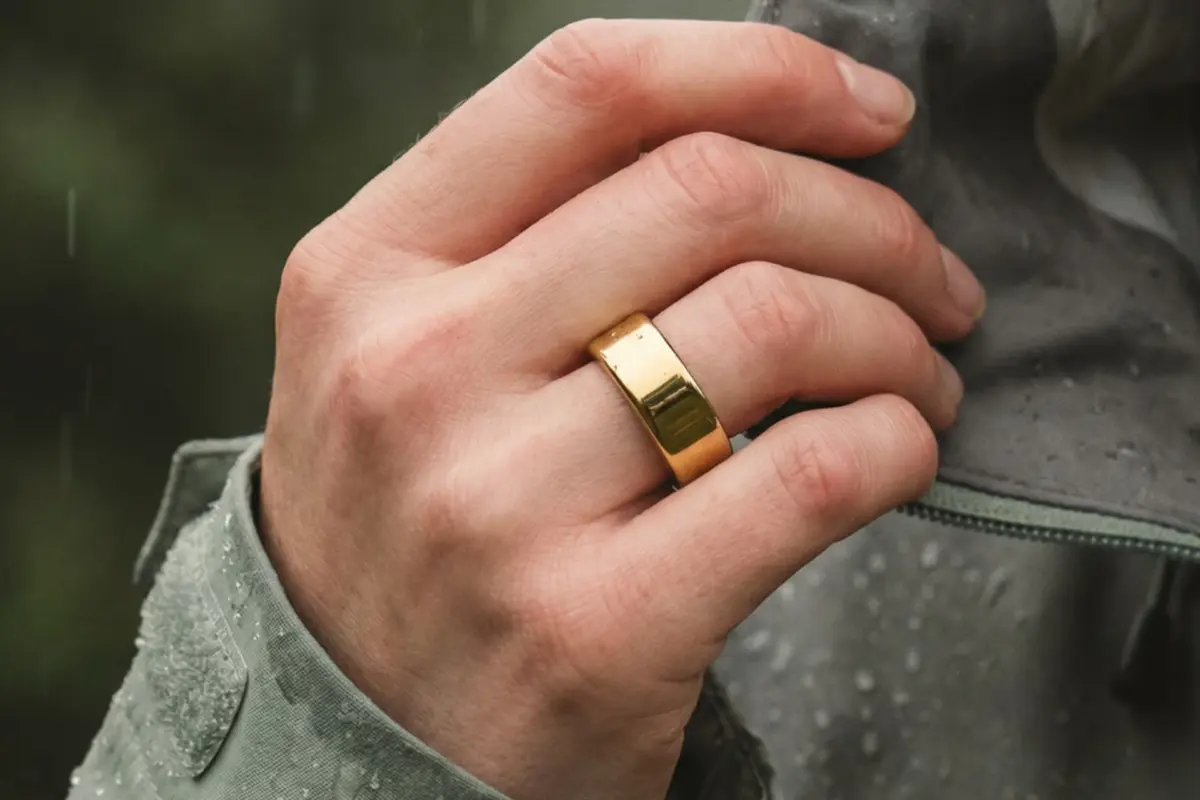
The burgeoning global market for wearable health technology has reached a critical inflection point, underscored by escalating legal hostilities between industry pioneer Oura and its fastest-growing international competitors. In the latest chapter of an ongoing intellectual property war, Finnish smart-ring titan Oura has filed a sweeping new federal patent infringement lawsuit against Indian rival Ultrahuman. The legal action, lodged in a Texas federal court, seeks to completely block U.S. sales of Ultrahuman’s flagship Ring Pro just months after a sweeping product redesign allowed the Bengaluru-based startup to re-enter the lucrative American market.
This aggressive litigation highlights the cutthroat nature of the smart ring sector, where design nuances, internal miniaturization, and biometric sensors represent billions of dollars in potential market dominance. Oura’s latest legal salvo is not an isolated incident; rather, it forms part of a calculated, multi-front campaign by the company to safeguard its intellectual property against a wave of well-funded challengers, including tech conglomerates like Samsung and agile direct-to-consumer startups like RingConn, Circular, and Zepp Health.
For Ultrahuman, the stakes could hardly be higher. Coming on the heels of a $70 million funding round backed by heavyweights such as Qualcomm Ventures and Labcorp—valuing the company at approximately $365 million—the startup is fighting for its foothold in the world’s most critical consumer tech market. As both companies navigate turbulent financial landscapes, highlighted by Oura shelving its anticipated $2.2 billion initial public offering (IPO) due to market uncertainty, the courtroom battle in Texas threatens to reshape the competitive architecture of the wearable device ecosystem for the remainder of the decade.
Detailed Chronology of the Dispute
The legal animosity between Oura and Ultrahuman is deeply rooted in years of escalating commercial rivalry, escalating from marketplace competition into high-stakes federal and international tribunal litigation.
The Origins of Conflict: 2023–2024
The hostility formally erupted in 2023, when Oura first initiated legal action against Ultrahuman. At the time, Ultrahuman was rapidly expanding its footprint in Western markets on the back of its original smart ring, the Ring Air. The device had captured the attention of consumers and tech reviewers alike, offering a compelling alternative to Oura’s dominant ecosystem. Viewing the Ring Air as an unauthorized appropriation of its proprietary hardware architecture and design language, Oura moved quickly to halt its momentum through the U.S. court system.
Rather than relying solely on traditional federal courts, Oura escalated the dispute in 2024 by filing a complaint with the U.S. International Trade Commission (ITC). This strategic move proved devastating for Ultrahuman. In August of that year, the ITC ruled in Oura’s favor, issuing a formal import ban that effectively choked off the startup’s ability to ship the Ring Air into the United States, dealing a severe blow to its international expansion plans.
The Redesign and Temporary Respite: Early 2026
Refusing to cede the U.S. market, Ultrahuman engineering teams went back to the drawing board. In February 2026, the company officially unveiled the Ring Pro—a ground-up hardware redesign intended to engineer around Oura’s existing patent portfolio.
The strategy initially bore fruit. In March 2026, U.S. Customs and Border Protection issued a favorable ruling regarding the Ring Pro, concluding that the redesigned device complied with regulatory hurdles and circumvented the specific ITC import ban tied to the older Ring Air. This regulatory clearance paved the way for Ultrahuman to aggressively ramp up its U.S. distribution efforts, reclaiming its presence among American consumers just as Oura sought to tighten its grip on the category.
The October 2026 Escalation in Texas
Oura’s response to Ultrahuman’s market comeback was swift and uncompromising. On Thursday, October 22, 2026, Oura filed a fresh federal complaint in a Texas district court, directly targeting the newly minted Ring Pro.
Crucially, this new lawsuit introduces entirely new legal vectors. Oura is no longer relying exclusively on the legacy patents adjudicated during the ITC proceedings. Instead, the company has asserted two distinct patents: design patent D804,471 and utility patent 12,769,363. Demonstrating the tactical precision of Oura’s legal strategy, patent ‘363 was issued by the U.S. Patent and Trademark Office (USPTO) on October 20, 2026—a mere two days before the lawsuit was officially filed.
Furthermore, Oura expanded the scope of the litigation by naming Plano, Texas-based electronics manufacturer SVTronics as a co-defendant. According to the court filings, SVTronics manufactures the Ring Pro locally under Ultrahuman’s direct supervision and control. By targeting the domestic contract manufacturer alongside the brand itself, Oura is attempting to choke off the Ring Pro’s supply chain at its manufacturing source within the United States.
Supporting Context, Patents, and Market Dynamics
To fully understand the gravity of this legal showdown, one must examine the precise nature of the intellectual property at stake, as well as the broader financial and operational pressures facing both combatants.
Anatomy of the Disputed Patents
Smart ring engineering represents an extraordinary miniaturization challenge. Packing microprocessors, Bluetooth radios, medical-grade photoplethysmography (PPG) sensors, skin temperature thermistors, and power sources into a waterproof ring measuring only a few millimeters thick requires radical design innovations.
Oura’s newly asserted utility patent (12,769,363) specifically targets this complex internal geometry. It covers proprietary methodologies for integrating curved, high-density batteries, flexible printed circuit boards, internal antenna arrays, and sensor layouts within a continuous, seamless titanium or ceramic outer shell. Meanwhile, design patent D804,471 protects the distinct aesthetic contours, interior ergonomics, and outward form factor that have become synonymous with the modern smart ring genre.
A Broader Strategy Against Competitors
Ultrahuman is far from the only company caught in Oura’s legal crosshairs. Oura has established a pattern of aggressive litigation across the wearable tech landscape, filing infringement suits against virtually every major competitor attempting to enter the smart ring space, including:
- Samsung: Targeted following the high-profile rollout of the Galaxy Ring.
- RingConn: Subject to extensive legal pressure before eventually settling out of court.
- Circular: Fought through the courts before reaching a definitive resolution.
- Zepp Health and Nexxbase: Both forced to defend their hardware designs against Oura’s intellectual property claims.
For several of these entities, litigation has served as an expensive precursor to licensing. For example, both RingConn and Circular ultimately entered into multi-year patent licensing agreements with Oura, agreeing to pay undisclosed recurring royalties to maintain their lawful presence in the U.S. market. Oura’s ongoing lawsuit against Ultrahuman suggests the company is currently demanding a similar capitulation—or, failing that, a total exclusion of the Ring Pro from American retail channels.
Market Growth and Commercial Stakes
Despite the courtroom turbulence, the overarching smart ring market is experiencing explosive, secular growth. According to data from market intelligence firm IDC, global shipments of smart rings are projected to surge by 12.8% year-over-year, reaching an estimated 4.9 million units. Long-term forecasts are even more bullish, with total shipments anticipated to break the 6.3 million unit threshold by 2030.
This rapid expansion explains why the legal battles are so cutthroat. While Oura has historically commanded a dominant market share and considerable brand equity, aggressive venture-backed startups like Ultrahuman threaten to erode its margins and capture tech-savvy demographics looking for alternative software ecosystems and subscription-free pricing models.
Official Statements and Industry Reactions
As the litigation unfolds in Texas, leadership from both camps has spoken out, highlighting the starkly contrasting narratives driving the dispute.
Oura’s Stance: Protecting Innovation
In an official statement provided to technology publication TechCrunch, an Oura spokesperson minced no words regarding Ultrahuman’s commercial conduct:
"Ultrahuman has a history of copying Oura’s innovations, as demonstrated by the 2025 ITC ruling against the company. Ultrahuman introduced a redesigned ring but failed to address continued infringement of Oura’s patents, seeking instead to capitalize on our innovation and the market leadership we have built."
Oura’s legal filing further underscores that the Customs and Border Protection clearance granted in March applied strictly to the narrow confines of the older ITC dispute, leaving the newly issued patents untouched. From Oura’s perspective, filing the October lawsuit was an unavoidable defensive measure required to protect its multi-year R&D investments.
Ultrahuman’s Response: Defiant and Operational
Reacting to the newly filed complaint, Ultrahuman Co-founder and CEO Mohit Kumar struck a defiant tone, expressing absolute confidence in the legal integrity of the Ring Pro and assuring consumers that business operations would proceed without interruption.
"Oura has now chosen to assert different patents, including one that issued just two days before this lawsuit was filed," Kumar told TechCrunch. "We will address these claims through the appropriate legal process and will defend our position vigorously. There is no court order affecting Ring Pro, and it remains available to customers in the U.S."
Kumar’s remarks emphasize a critical operational reality: until a federal judge issues a preliminary injunction or temporary restraining order, the Ring Pro remains fully legal to manufacture, import, and sell across the United States. Ultrahuman’s legal defense team is expected to challenge the validity and enforceability of Oura’s freshly minted ‘363 patent, potentially arguing issues of patent misuse or obviousness under prior art.
Future Outlook: The Next Frontier for Smart Rings
Beyond the immediate courtroom battle in Texas, both companies are steering through pivotal strategic transitions that will define their corporate trajectories for the foreseeable future.
Oura’s Strategic Pivot
The lawsuit comes at a sensitive financial juncture for Oura. Just weeks prior to launching the litigation, the company made headlines by abruptly shelving its highly anticipated $2.2 billion initial public offering (IPO), explicitly citing macroeconomic uncertainty in the public markets. To sustain its private valuation and appease investors, Oura has had to double down on product innovation and ecosystem lock-in.
The company has aggressively expanded its software capabilities, rolling out advanced biometric metrics designed to quantify how daily workouts specifically impact cardiovascular recovery and long-term health. By aggressively policing its intellectual property through lawsuits and licensing deals, Oura aims to protect its core hardware revenues while these software-driven recurring subscription models mature.
Ultrahuman’s Evolution: Beyond Health Tracking
For Ultrahuman, the legal pressure from Oura runs parallel to an aggressive expansion strategy fueled by fresh capital. In September, the startup closed a massive $70 million funding round backed by prominent strategic investors, including Qualcomm Ventures and healthcare giant Labcorp, bringing the company’s total valuation to approximately $365 million.
Crucially, Ultrahuman is leveraging this capital to partner directly with Qualcomm on next-generation wearable hardware architectures. The objective is nothing less than transforming smart rings from passive biometric trackers into active mini-computers capable of running complex software directly on the device. Looking ahead, Ultrahuman plans to expand far beyond traditional sleep and fitness metrics, pushing into advanced artificial intelligence interactions, contextual computing, and even gaming applications.
Conclusion
The collision between Oura and Ultrahuman is emblematic of a broader maturation phase within the consumer health tech industry. As smart rings transition from niche novelty gadgets into mainstream health necessities, intellectual property has become the ultimate weapon for market control.
Whether Oura can successfully leverage its sprawling patent portfolio to halt the momentum of its rivals—or whether agile startups like Ultrahuman can successfully engineer around these legal roadblocks—will set a profound precedent for innovation and competition in the wearable tech space for years to come. For now, the legal battle lines are drawn in Texas, and consumers can expect the courtroom drama to intensify as both titans vie for supremacy on the global stage.







Belum ada komentar. Jadilah yang pertama berkomentar!