

Executive Overview
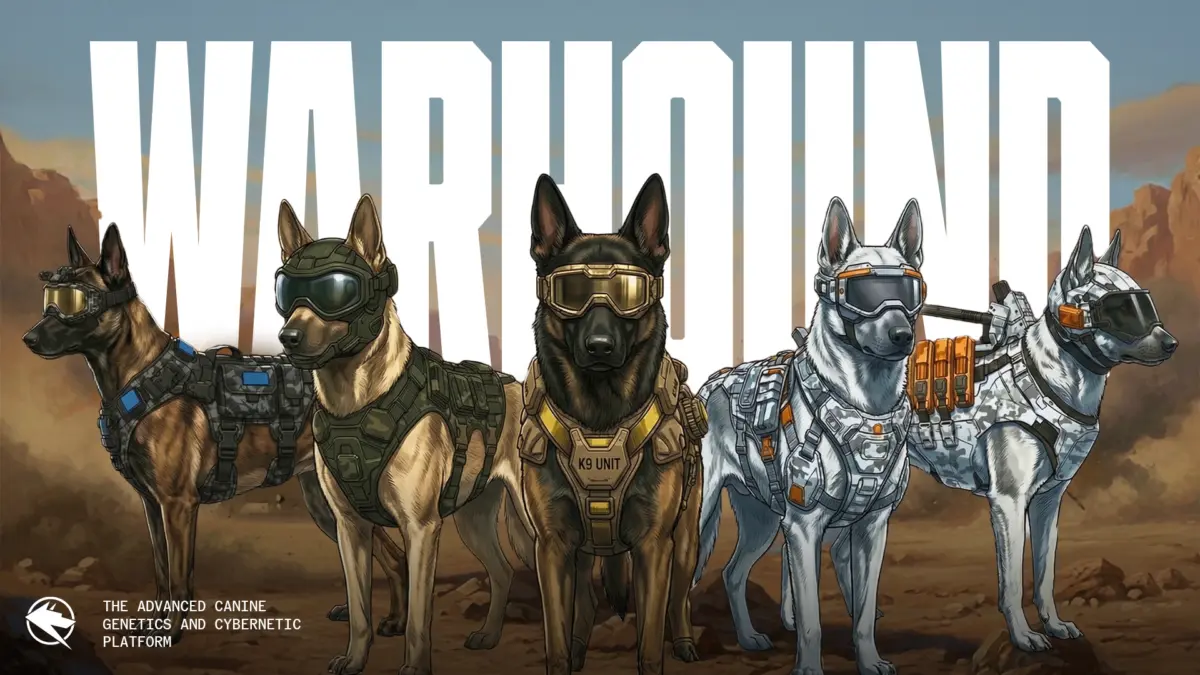
In a convergence of cutting-edge biotechnology and defense engineering, a high-profile venture backed by some of the most influential names in tech and national security has officially emerged from stealth. Named Warhound, the newly unveiled defense-tech startup aims to revolutionize military, law enforcement, and emergency response operations by genetically engineering the next generation of working dogs.
The company steps into the public arena armed with an impressive $200 million funding round, catapulting its valuation to a staggering $1.2 billion. The financing syndicate behind Warhound reads like a roster of elite tech and defense investors, featuring prominent venture capital heavyweights including Sequoia Capital, 8VC, and In-Q-Tel—the independent strategic venture capital firm that invests in cutting-edge technologies to keep the U.S. intelligence community equipped with the latest innovations.
Warhound is the brainchild of Ben Lamm, co-founder and CEO of the prominent de-extinction and genetic engineering firm Colossal Biosciences, and Palmer Luckey, founder of defense tech pioneer Anduril Industries and creator of Oculus VR. While Luckey acts as a strategic partner without direct equity ownership, Colossal Biosciences is deeply integrated into the venture, providing foundational genetic-editing and cloning technologies under a licensing framework.
The startup’s core mission is twofold: to solve a critical national security vulnerability regarding the dwindling supply and deteriorating health of operational military dogs, and to fundamentally upgrade the physical capabilities, health longevity, and technological integration of these four-legged operators. By combining Colossal’s sophisticated gene-editing pipelines with Anduril’s tactical hardware and software ecosystem—such as data-connected ballistic vests and augmented-reality situational awareness tools—Warhound aims to engineer animals that are faster, healthier, stronger, and fundamentally safer for both handlers and missions in high-stakes environments.
Detailed Chronology: From Conference Chat to a Billion-Dollar Venture
The Genesis: A Chance Encounter
The story of Warhound dates back roughly a year, catalyzed by a casual conversation at a technology conference between Ben Lamm and Palmer Luckey. Luckey, deeply entrenched in the defense technology landscape through Anduril, brought to light a persistent operational blind spot: the strained ecosystem of military working dogs. Despite massive investments in unmanned aerial vehicles, autonomous ground drones, and advanced artificial intelligence, the U.S. military and law enforcement agencies remain profoundly dependent on biological working dogs for tasks that are structurally too dangerous for human operators and excessively complex for mechanical systems—such as explosive device detection, complex tracking, and structural clearing operations.
Lamm and Luckey maintained a dialogue following the conference. Lamm, whose team at Colossal Biosciences was already mapping out complex mammalian genomes for de-extinction projects like the woolly mammoth and the dodo bird, began investigating the structural deficiencies of contemporary military working dogs.
Uncovering the Biological Bottleneck
Through intensive research, Lamm identified profound vulnerabilities in how military working dogs are sourced, bred, and utilized. Historically, the United States has relied heavily on international suppliers—predominantly from Europe—for its elite working dog stock. However, more than 80% of working dogs utilized by the U.S. military are imported, and less than half of those imported animals ultimately prove fit for active service.
Beyond supply chain dependencies and high attrition rates during training, working dog breeds suffer from compressed genetic diversity due to centuries of selective breeding focused primarily on superficial traits or narrow working behaviors. Consequently, elite breeds like the German Shepherd and the Belgian Malinois are plagued by severe hereditary health complications. High rates of early-onset cancer, debilitating hip dysplasia, progressive muscle atrophy, poor baseline eyesight, and compromised cardiovascular stamina routinely wash dogs out of training programs prematurely, wasting millions of dollars and leaving tactical units short of operational assets.
Deploying the Biotech Blueprint
Recognizing that these physiological limitations could be systematically corrected using modern genomic tools, Lamm mobilized Colossal’s assets. The team harvested cell lines from top-performing working dog breeds—principally Belgian Malinois and German Shepherds—and integrated them into Colossal’s proprietary biobank.
Utilizing advanced gene-editing protocols, the company’s scientists began designing a genetic blueprint to edit out disease-susceptibility genes while simultaneously amplifying traits beneficial to tactical performance. This includes optimizing genes associated with metabolic efficiency, speed, muscular agility, and acute olfactory sensory perception for bomb detection and tracking.
Cloning, Incubation, and Production
To bring these genetically optimized animals to life, Warhound has established a strategic manufacturing partnership with Viagen, a cloning subsidiary of Colossal Biosciences. Viagen brings a high-success-rate cloning infrastructure to the table—technology that Colossal currently deploys in its parallel conservation efforts to safeguard endangered species from extinction.
According to company timelines, the very first batch of cloned, genetically edited dogs is scheduled for incubation and is expected to be born early next year. Warhound anticipates that these animals will complete their training regimens and officially enter active operational service within the next two years.
Supporting Context & Metrics: The Geopolitics and Biology of Working Dogs
The Fragility of the Working Dog Supply Chain
To fully understand the strategic importance of Warhound, one must examine the geopolitical and logistical realities of America’s defense apparatus. Modern military working dogs (MWDs) and police working dogs (PWDs) are irreplaceable assets. In urban combat, counter-terrorism, and tactical raids, canine units routinely accomplish tasks that defy technological duplication. They clear rooms, detect hidden improvised explosive devices (IEDs), track high-value targets across difficult terrain, and secure perimeters.
However, the pipeline supplying these animals is dangerously fragile. The heavy reliance on European breeding kennels creates a strategic dependency on foreign entities for critical national security infrastructure. When foreign breeding stock suffers from quality declines, or when international supply chains face disruption, the operational readiness of domestic law enforcement and military branches is immediately compromised.
Furthermore, the high washout rate—where more than 50% of imported dogs fail to meet the rigorous physical and psychological demands of deployment—represents a massive logistical inefficiency. Training an elite tactical dog requires thousands of hours and substantial financial investment. When an animal fails due to preventable genetic illnesses like hip dysplasia or optical degeneration, the sunk cost impacts unit readiness.
The Technological Integration: "On the Dog, Not In the Dog"
Warhound’s engineering philosophy makes a clear operational distinction between biological enhancement and technological augmentation.
- Biological Enhancements (Inside the Genome): Handled via Colossal’s gene-editing platform, these edits focus strictly on baseline physiological resilience—eradicating hereditary disease markers, strengthening skeletal and muscular integrity, enhancing cardiopulmonary endurance, and sharpening sensory organs.
- Technological Augmentation (Outside the Genome): Handled via integration with Anduril Industries, these additions focus on hardware and software systems designed to protect the animal and enhance tactical coordination.
Anduril is developing specialized, lightweight, bulletproof tactical vests and advanced optical goggles equipped with micro-sensors. These systems stream real-time environmental and biometric data back to human handlers, providing unprecedented situational awareness. Handlers can monitor the dog’s heart rate, stress levels, body temperature, and exact physical positioning on digital battlefield maps.
As Lamm emphasized during interviews, the integration is designed to keep the animals safer: "The idea is, if we make the dog safer, make it healthier, make it perform better, it’s going to perform better in the line of duty… These enhancements operate on top of the dog, not in the dog." By protecting the canine asset more effectively, the technology inherently shields the human handlers who work alongside them in high-threat zones.
Official Statements and Ethical Frameworks
Leadership Perspectives
The unveiling of Warhound has naturally sparked intense discussions across both the biotechnology and defense sectors. Investors and founders alike view the startup as a bridge between two rapidly accelerating domains: synthetic biology and autonomous defense systems.
"The idea is to build a new standard of working dog—one engineered not just for survival, but for absolute operational excellence in the most demanding environments on Earth," indicated materials released by the company during its stealth emergence.
Lamm clarified the corporate governance structure to address questions regarding the involvement of prominent figures: while Palmer Luckey serves as an active strategic partner who helped conceptualize the venture, Luckey holds no direct equity stake in Warhound. Instead, Colossal Biosciences maintains an equity position supported by a formal intellectual property licensing agreement.
Navigating Regulation and Public Safety
The creation and deployment of genetically modified mammals for tactical and law enforcement use naturally raise critical questions regarding bioethics, civilian safety, and regulatory compliance.
Addressing concerns over the release of enhanced animals into operational environments, Lamm noted that Warhound’s genetically engineered dogs will undergo the exact same rigorous training, handling, and oversight protocols applied to traditional military working dogs. Ultimate custody and management will rest entirely with the purchasing agencies.
To ensure ethical accountability throughout the lifecycle of these animals, Warhound has established a formal advisory partnership with the American Humane Society. The organization will help certify Warhound’s specialized training programs to ensure animal welfare standards are strictly maintained.
Furthermore, Warhound has integrated end-of-life and retirement planning into its operational model. The startup hopes that when these enhanced dogs reach the end of their service lives, they will seamlessly transition into the American Humane Society’s Military Working Dog Reunification Program—an established initiative dedicated to housing, rehabilitating, and placing retired military canines into loving civilian homes.
Future Outlook: Commercialization and Market Integration
As Warhound transitions from stealth development to active production, its leadership is laying the groundwork for commercial distribution. While definitive pricing structures for the engineered dogs have not yet been finalized, the company has mapped out its target market.
Target Clientele
Warhound’s primary customer base will consist of institutional and government entities, including:
- The U.S. Department of Defense (DoD) and various branches of the armed forces.
- Federal, state, and local law enforcement agencies and tactical response teams.
- Specialized emergency response units and urban search-and-rescue organizations.
Lamm confirmed that the company has already engaged in extensive briefings with numerous government and military stakeholders to demonstrate the technological validity and operational necessity of the platform.
Regulatory and Ethical Horizons Ahead
The emergence of Warhound marks a profound philosophical and practical shift in how humanity interacts with domestic and working species. By crossing the threshold from traditional selective breeding into precise genetic engineering for defense applications, Warhound is pioneering an entirely new asset class within the defense-tech sector.
As the first generation of cloned, gene-edited canines approaches birth next year, all eyes will be on the startup. If successful, Warhound could permanently redefine the capabilities of tactical working animals, mitigating foreign supply chain dependencies, slashing operational washout rates, and ultimately saving the lives of both human operators and their canine counterparts on the modern battlefield.








Belum ada komentar. Jadilah yang pertama berkomentar!