

Executive Overview
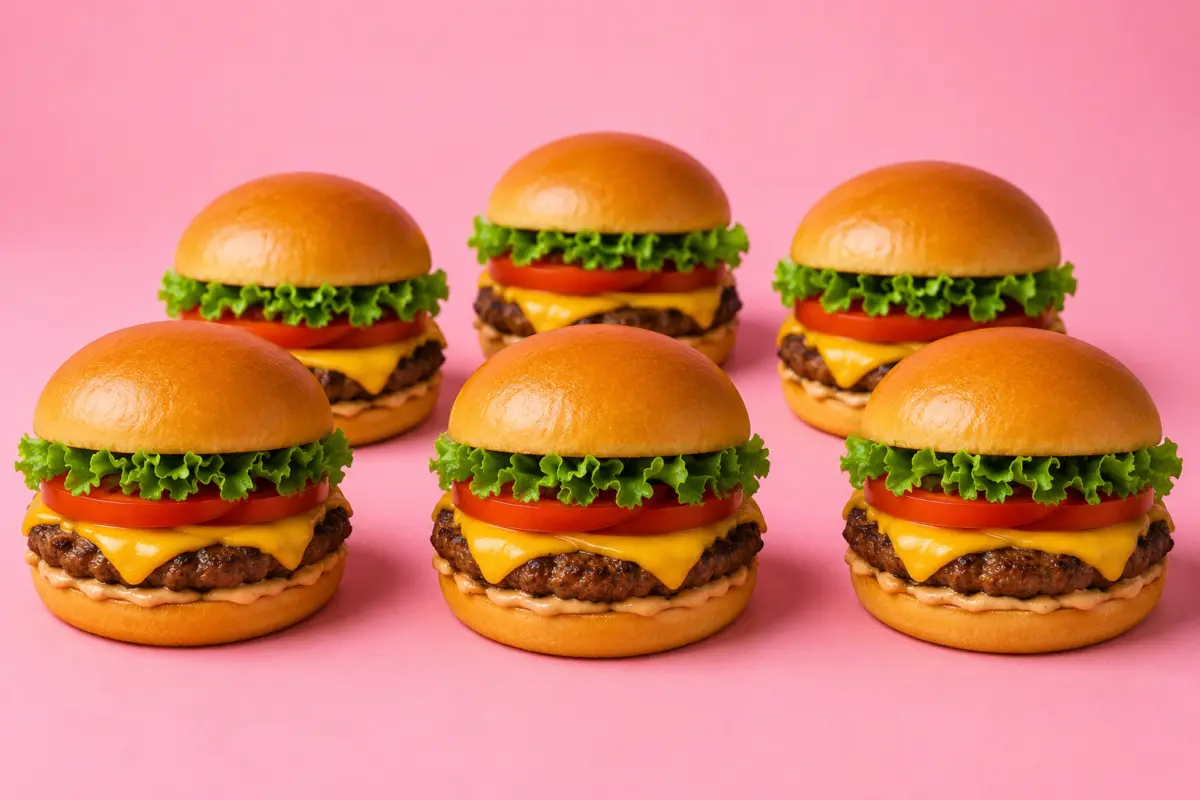
Walk into a modern café, open a digital or physical menu, and you may experience a subtle, creeping sense of cognitive dissonance. You gaze upon a variety of bagel sandwiches, but each illustration looks eerily flawless, precisely symmetrical, and unnervingly smooth. It triggers an immediate, visceral sensation that something is fundamentally wrong. You might briefly wonder if you are losing your mind or turning paranoid, but the reality is far more mundane—and significantly more pervasive: generative AI menus have officially infiltrated the global restaurant industry.
Powered by machine learning models trained on a narrow, hyper-optimized aesthetic of "pleasingness," these menus feel inherently wrong even when diners cannot immediately articulate why. From avant-garde burritos with cheese so impossibly bubbly and melty they resemble abstract art to surrealist seafood nightmares where shrimp appear genetically modified to consume their own tails, artificial intelligence is reshaping how we look at our food.
This phenomenon is not merely an aesthetic annoyance or a quirky internet joke. It is the symptom of a profound technological shift. As generative models feed on increasingly homogeneous internet data—and in some cases, loop back to consume their own synthetic outputs—they flatten the vibrant, chaotic textures of the real world into smooth, sterile caricatures. Beyond the dinner table, this trend points to a larger, more alarming erosion of truth. If artificial intelligence can so easily rewrite the visual rules of a simple cheeseburger, it signals a world where seeing is no longer believing, rattling the foundational assumptions of our legal, social, and cultural institutions.
Detailed Chronology: The Rise of Synthetic Cuisine
The invasion of generative AI into commercial food service did not happen overnight; it is the culmination of years of rapid technological scaling, shifting industry economics, and the ubiquitous push toward automated content creation.
Phase 1: The Stock Photo Baseline (Pre-2023)
For decades, restaurants relied on professional food stylists, elaborate photo shoots, and traditional stock libraries to build their menus. A classic fast-food commercial or chain restaurant menu featured burgers meticulously assembled by prop designers, with each sesame seed placed by tweezers to maximize appetite appeal. While these images were idealized, they were rooted in physical reality. They featured real textures, minor imperfections, and the chaotic unpredictability of organic matter.
Phase 2: The Generative Boom and the "Chili’s 2015" Archive (2023–2024)
As text-to-image generators like Midjourney, DALL-E, and Stable Diffusion matured, small- and medium-sized businesses began looking for cost-cutting measures. Why pay hundreds of dollars for a commercial photography shoot when an AI chatbot could spin up an entire menu’s worth of graphics in seconds?
However, these models were trained on massive, generalized scrapes of the internet. As industry experts note, much of the visual data informing fast-food imagery traces back to commercial catalogs, promotional campaigns, and generic restaurant templates from eras past—essentially building their foundational understanding of dining from digital archives resembling mid-2010s casual dining chains.
Phase 3: The Iterative Loop and Model Degradation (2025–Present)
As restaurants increasingly adopted AI-generated assets, a new operational loop emerged. Business owners began using generative tools to continuously tweak their menus—updating prices, swapping item descriptions, and modifying ingredients through dozens of iterative prompts.
Social media platforms like X (formerly Twitter) quickly became repositories for documenting this degradation. Users began posting viral experiments showing what happens when an AI-generated menu is edited a hundred times over. With each successive tweak, the food items lost more of their structural integrity, becoming progressively rounder, smoother, and more synthetic. What started as an innovative shortcut devolved into a parade of digital slop, alienating consumers and sparking a fierce, highly vocal cultural backlash.
Supporting Context & Metrics: Convergence, Collapse, and the Psychology of Disgust
To understand why AI-generated food looks so hauntingly artificial, one must examine the mechanics of large language models (LLMs) and diffusion models.
The Mechanics of "Convergence"
AI image and text generators rely on pattern recognition across incomprehensibly vast datasets. When a user prompts a model to design a burger joint menu, the system references existing mainstream templates—McDonald’s, Wendy’s, Burger King—which already share a homogenized, corporate aesthetic.
When the AI generates an output based on this standardized corpus, it reinforces that specific style. If those AI-generated menus are then published online and subsequently scraped by future AI training cycles, the models enter a loop. While computer scientists frequently warn against "model collapse"—a catastrophic degradation where an AI model feeds so heavily on its own synthetic output that it effectively breaks down—food menus are experiencing a slightly different, though related, phenomenon known as convergence.
As Alex Lisle, Chief Technology Officer at Reality Defender, explains, convergence acts as a slow erosion of quality. The AI shaves off the rough edges, neutralizing unique textures and local character in favor of a homogenized, risk-averse average.

The Psychology of the "Uncanny Valley"
Our deep-seated aversion to AI-generated food is not just a matter of culinary snobbery; it is rooted in evolutionary psychology.
Research conducted by food and media psychologists—including studies published by researchers at the University of Duisburg-Essen in Germany—has demonstrated that AI-generated food images trigger a textbook "uncanny valley" effect. When an image of food looks almost real, but possesses subtle geometric impossibilities or unnatural sheens, it elicits significantly more disgust, unease, and visceral rejection than an image that is obviously cartoonish or fake.
Lee Rainie, Director of the Imagining the Digital Future Center at Elon University, points out that commercial AI optimization prioritizes "pleasingness" and the avoidance of offensive content. In doing so, the technology inevitably sanitizes the visual landscape.
"The optimization of the data sets is for pleasingness, or you know, not being offensive, and so there’s a way that turns into homogenization," Rainie notes. "What AI is known to do both in images and language is to shave off the edges."
This smoothing effect creates an alien landscape of consumption. Ice cream scoops achieve mathematically impossible spheres; shrimp limbs merge into recursive loops; cheese melts with a synthetic perfection that defies the laws of dairy physics. To the human brain, which has spent millennia evaluating the safety of organic matter through visual cues, these images scream danger.
Official Statements and Expert Perspectives
The intersection of artificial intelligence, commercial marketing, and human perception has drawn alarm bells from cybersecurity experts, sociologists, and tech analysts alike.
-
Alex Lisle (CTO, Reality Defender): Comparing the aesthetic failures of AI image generators to alien life forms attempting human culinary arts, Lisle emphasizes the danger of treating synthetic media as a harmless novelty. Addressing the broader implications of fake media, he notes: "Seeing and hearing has always been believing, to the point where even our court systems are entirely tuned to the idea that the gold standard in evidence is taped confessions and videotaped evidence. That’s no longer the case. The world has fundamentally shifted, for good or for ill." Furthermore, drawing a parallel to systemic data corruption, Lisle describes model degradation not as a sudden collapse, but as a creeping contagion: "Model collapse is almost like a mad cow disease… when you feed the outputs from one model back into itself, eventually the inbreeding becomes too much, and the whole thing collapses."
-
Lee Rainie (Director, Imagining the Digital Future Center, Elon University): Rainie highlights the intuitive, almost instinctual way humans reject synthetic artifacts. Speaking on the consumer backlash against restaurant automation, he observes: "People have an almost unexplainable sense about when they’re looking at something that’s AI-generated, compared with something that was real in the first place. There’s just a sensibility that people sometimes find hard to articulate, but they kind of know it when they see it and I think that’s one of the reasons why some of the early stories about the backlash is so pronounced."
Future Outlook: Beyond the Dinner Table
While the immediate battleground for generative AI aesthetics may be found on tacky local diner menus and fast-food promotional flyers, the implications extend far beyond the hospitality sector.
If restaurants ultimately decide that the consumer revulsion and uncanny valley backlash outweigh the cost-saving benefits of AI-generated imagery, we may see a pendulum swing back toward human-crafted, authentic marketing. Companies specializing in content verification and AI detection—such as Reality Defender—will likely see increased demand not just from newsrooms and legal teams, but from everyday businesses seeking to prove the authenticity of their physical products.
However, the deeper cultural wound remains unhealed. As our digital environments become increasingly flooded with synthetic "slop," society faces a crisis of epistemology. When the foundational datasets of our technology are poisoned by recursive loops of machine-made artifice, distinguishing between what is real and what is algorithmically manufactured becomes an exhausting daily labor.
For now, the next time you sit down at a restaurant and stare at a burger whose buns look a little too symmetrical and whose cheese defies the laws of physics, take comfort in knowing you aren’t losing your mind. You are simply bearing witness to the brave new world of synthetic reality—one Lovecraftian food horror at a time.




Belum ada komentar. Jadilah yang pertama berkomentar!