

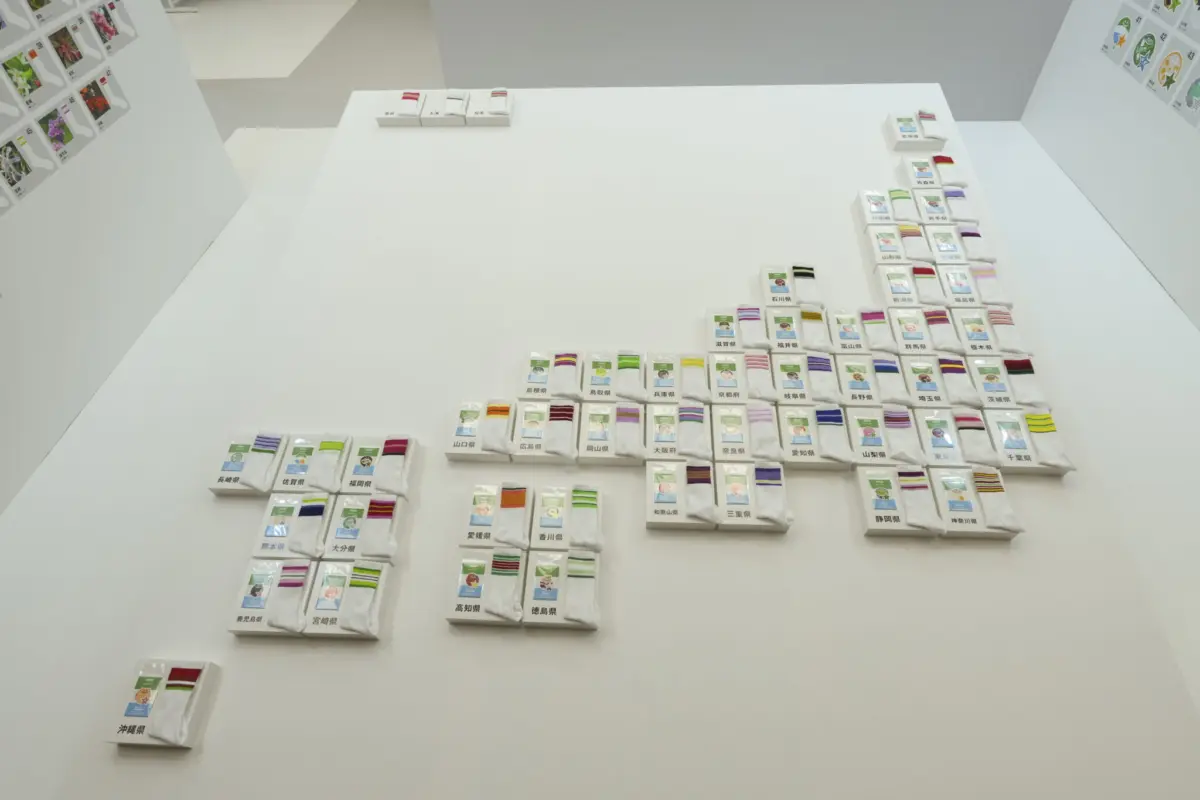
In a retail landscape where convenience store chains are locked in a relentless battle for consumer loyalty through seasonal bento boxes, premium fried chicken, and limited-edition pastries, Japan’s retail giant FamilyMart has executed an unprecedented cultural maneuver. The corporation has launched a nationwide, hyper-localized merchandising campaign that bridges modern streetwear fashion with traditional regional identity: a collection of 47 exclusive socks and matching stickers representing each of Japan’s prefectures.
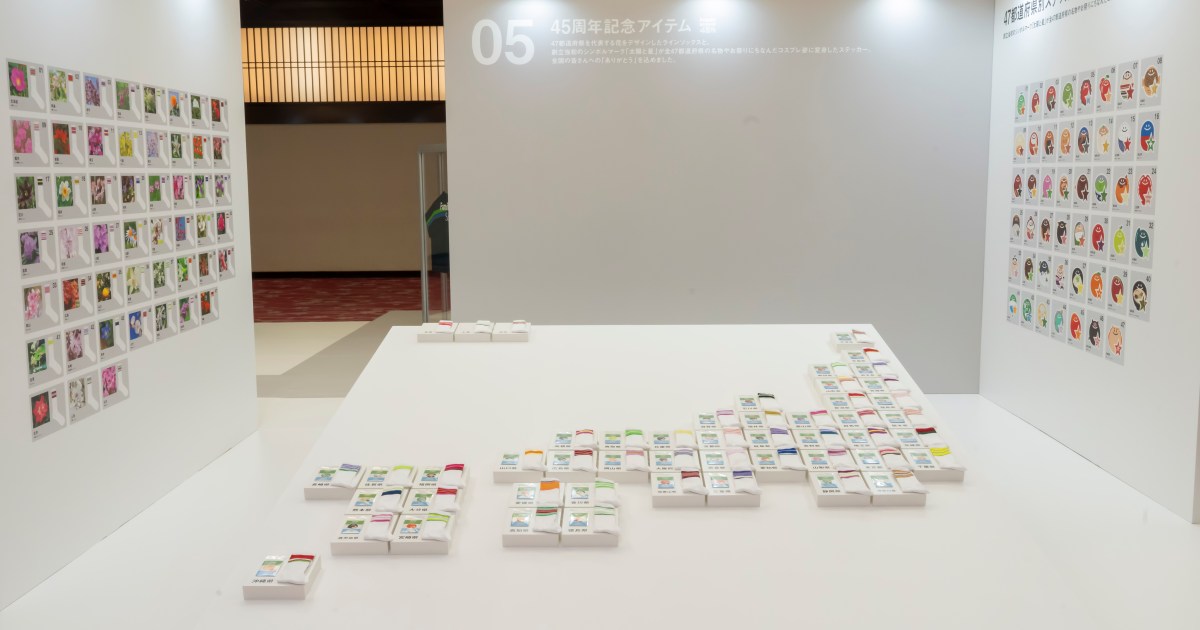
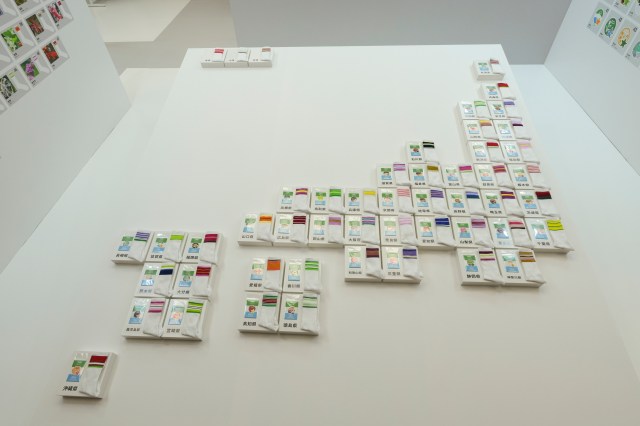
This campaign elevates the humble convenience store token into an elite category of regional streetwear and highly coveted travel memorabilia. By tethering its iconic, retro-striped "Line Socks" design to the distinct biological flora and cultural cornerstones of every single prefecture from Hokkaido to Okinawa, FamilyMart has turned every domestic pit stop into an exclusive treasure hunt. Because each item is strictly restricted to retail branches within its corresponding prefecture, collectors and travelers cannot simply pick up a complete set at a central Tokyo hub; they must physically traverse the Japanese archipelago to amass the collection.
This initiative arrives at a pivotal moment for domestic and international tourism in Japan. As regional revitalization efforts search for innovative ways to direct foot traffic away from congested metropolitan centers like Tokyo and Kyoto toward lesser-known rural prefectures, a pair of convenience store socks has unexpectedly emerged as an ingenious tourism driver. This report provides a comprehensive examination of the FamilyMart 47-Prefecture collection, detailing its design architecture, geographic breakdown, cultural symbolism, and the broader economic implications for Japan’s regional retail and travel sectors.
Detailed Chronology: From Concept to National Retail Phenomenon
The genesis of the 47-prefecture campaign builds upon the runaway success of FamilyMart’s branded apparel line, which transformed utilitarian retail employee branding and basic comfort wear into urban fashion statements. Over the preceding years, the brand’s signature turquoise, white, and blue striped socks transcended their functional origins, becoming a staple of youthful Japanese streetwear and a favorite, affordable souvenir for foreign tourists navigating the nation’s transit hubs.
Recognizing the cultural equity of their apparel line, corporate merchandise strategists conceptualized a project that would scale this popularity across the entire nation while honoring Japan’s deeply ingrained sense of local pride (kyodou-ai). The planning phase required meticulous curation to ensure that all 47 prefectures received a distinct visual representation that avoided redundancy. Designers analyzed municipal symbols, official prefectural flowers (todofuken no hana), and iconic local commodities to establish a visual language for the new socks and accompanying stickers.
The rollout was coordinated as a simultaneous, synchronized national drop. Unlike conventional product rollouts that rely on central distribution warehouses supplying all stores evenly, the logistics framework for this campaign demanded strict regional inventory firewalling. Supply chains were adjusted so that Aomori-themed apple-blossom socks were delivered exclusively to Aomori outlets, while Okinawan coral-tree designs remained bound to the southernmost islands.
When the collection officially hit shelves, it immediately triggered a wave of digital engagement across social media platforms like X (formerly Twitter) and Instagram. Urban explorers and travel influencers began documenting their journeys across prefectural borders, posting images of their footwear against local landmarks. By turning regional geography into a wearable checklist, FamilyMart effectively gamified Japanese domestic travel, capturing the imagination of both meticulous collectors and spontaneous weekend road-trippers.
Supporting Context & Metrics: Decoding the Prefectural Design Matrix
To fully appreciate the scope of the FamilyMart collection, one must examine the intricate thematic framework underpinning the designs. The merchandise is divided into two parallel collections: the Line Socks, whose color palettes mimic the hues of official prefectural flowers, and the regional stickers, which spotlight hyper-local delicacies, folklore, and cultural artifacts.
The Floral Footwear: Northern and Central Honshu
The textile design process reinterpreted the classic FamilyMart stripe configuration through botanical studies.
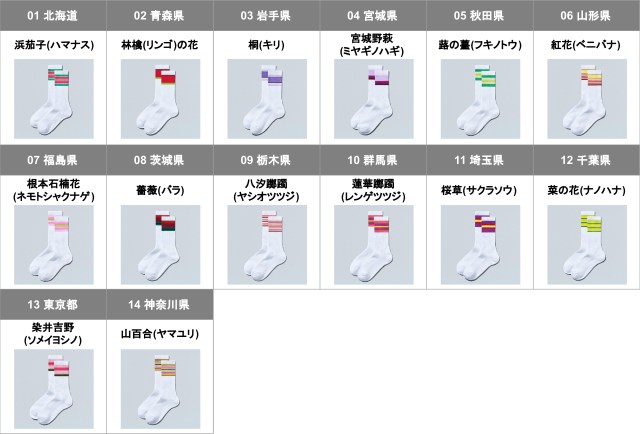
- In the northernmost expanse of Hokkaido, the socks incorporate the delicate pinks and greens of the Japanese Rose, setting a rugged yet pastoral tone.
- Moving down into the Tōhoku region, Aomori honors its agricultural legacy with Apple Blossom hues, while Iwate utilizes the deep, regal tones of the Paulownia flower.
- Akita opts for the earthy, soothing shades of the Butterbur Sprout, and Yamagata channels the fiery brilliance of Safflower.
As the collection sweeps southward through the Greater Tokyo Area and central Japan, the botanical references shift to capture urban and suburban landscapes.
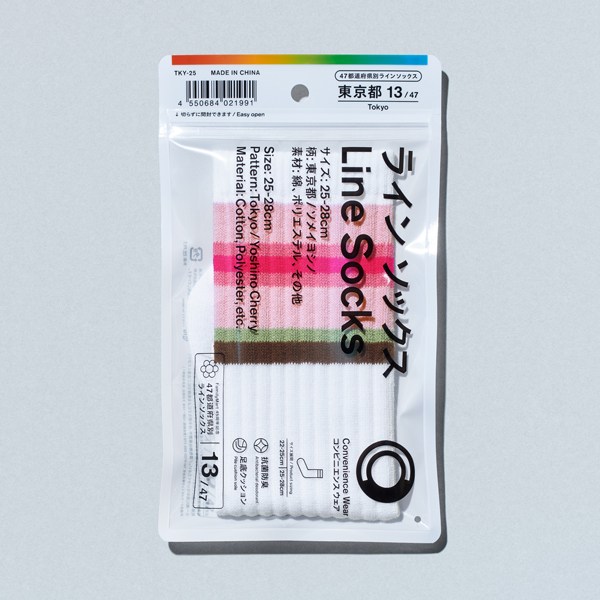
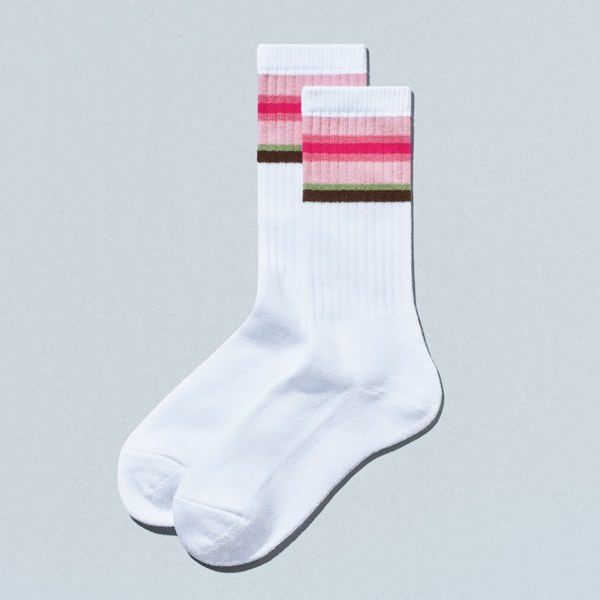
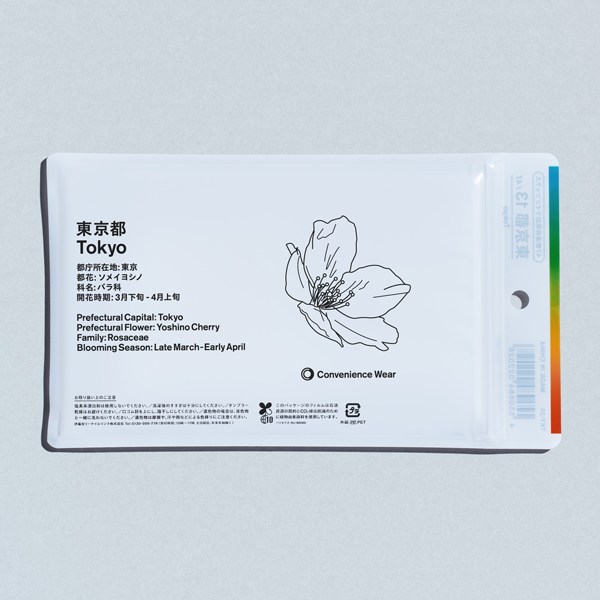
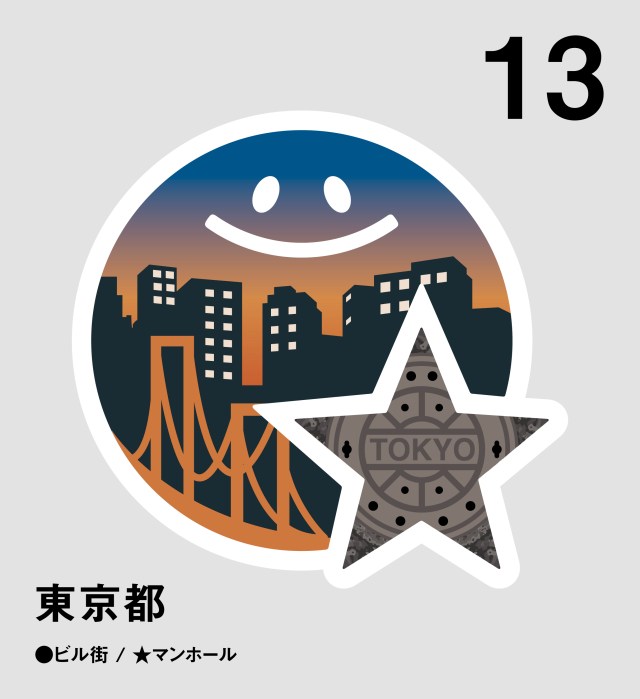
- Tokyo’s iteration stands out as a masterclass in regional branding: it deploys layered shades of pink, green, and rich brown to replicate the Somei Yoshino cherry blossom—the cultivar that defines the Japanese spring narrative.
- Conversely, neighboring Kanagawa highlights the majestic Goldband Lily.
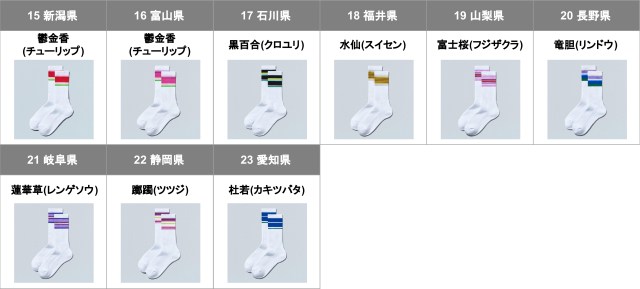
- Further inland, prefectures like Niigata and Toyama share a botanical nod to the Tulip, reflecting their status as premier bulb-cultivation hubs, though distinct color-blocking keeps each prefecture’s sock uniquely identifiable.
- Nagano utilizes the vibrant purple of the Japanese Gentian, mirroring the alpine flora of the Japanese Alps.
Western Japan, Shikoku, and Kyushu: Blossoms of the South
In Western Japan, the historical weight of cultural capitals like Kyoto and Osaka influences the textile choices.
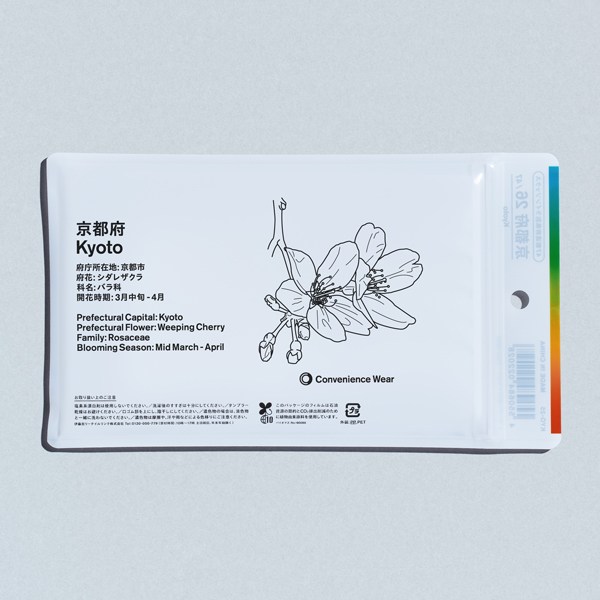
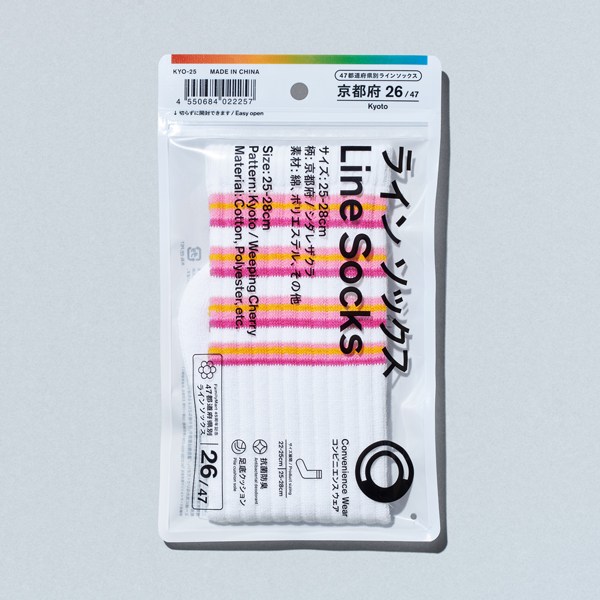
- Kyoto differentiates itself from Tokyo by selecting the Weeping Cherry (Shidarezakura), resulting in a softer, more cascading gradient of pink stripes that evokes the historic alleyways of Gion.
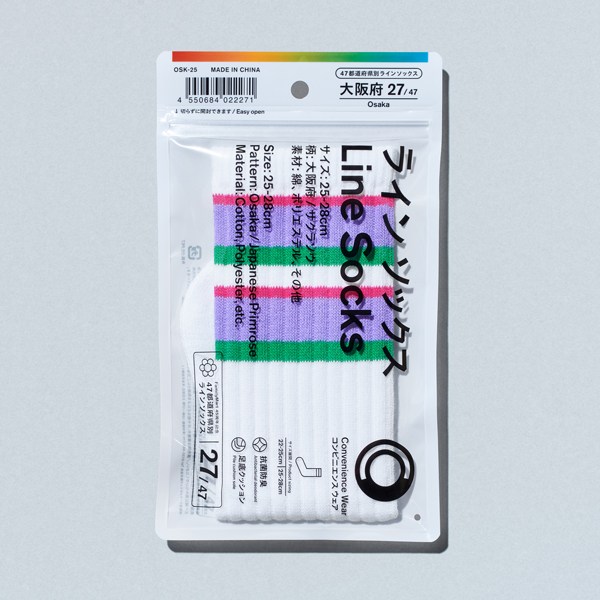
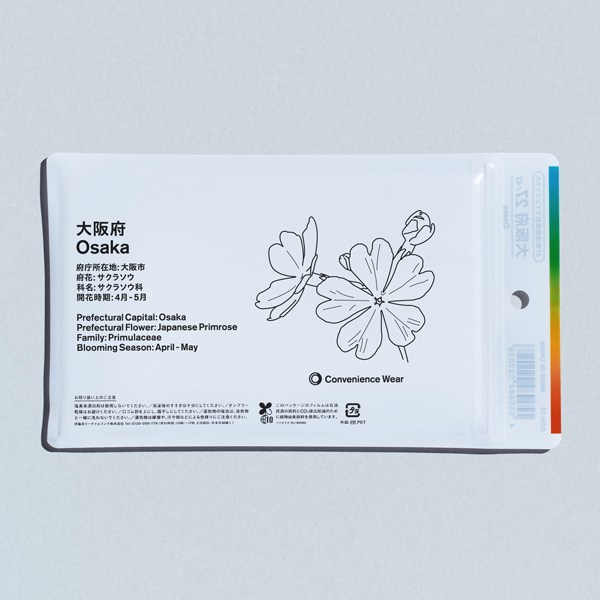
- Osaka contrasts this with the bold purple hues of the Japanese Primrose.
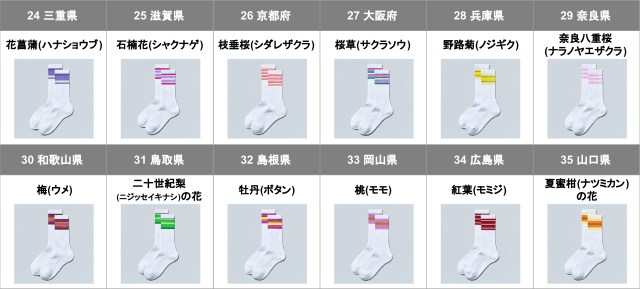
- Further west, Hiroshima honors its arboreal identity with the Japanese Maple (Momiji), while Yamaguchi selects the bright, citrus-tinted Summer Orange Blossom.
In the southern island chains of Shikoku, Kyushu, and Okinawa, the flora adopts a decidedly subtropical character.
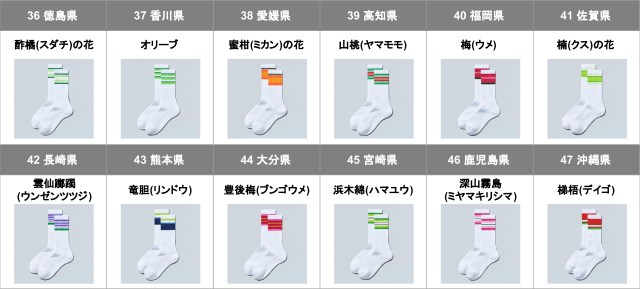
- Kagawa references the Olive Blossom, nodding to its Mediterranean-style groves on Shodoshima.
- Miyazaki showcases the striking Grand Crinum Lily, and Okinawa brings the collection to a vibrant close with the bold, fiery reds of the Coral Tree (Erythrina variegata), a plant deeply embedded in the island’s coastal ecosystem.
The Sticker Series: Folklore, Food, and Artifacts
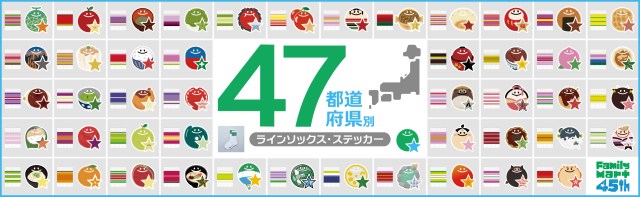
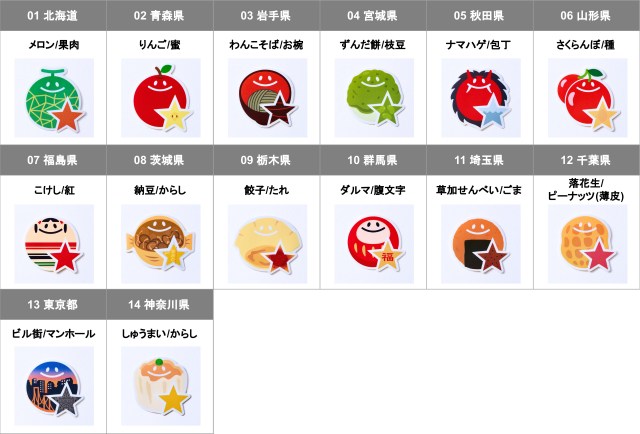
Complementing the socks are the collectible stickers, which serve as mini-encyclopedias of regional trivia. Each sticker features a central artistic rendering of a local specialty accompanied by a secondary design element—often shaped like a star—that encodes deeper cultural lore.
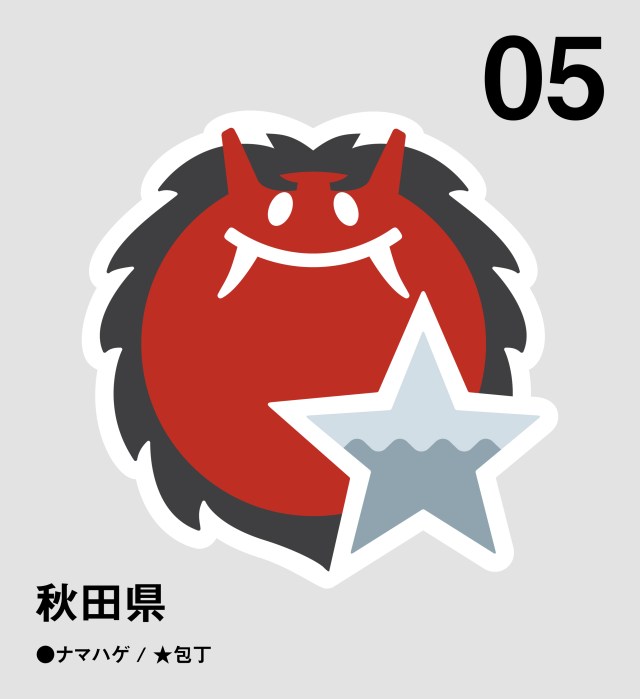
- Akita’s Namahage and the Oga Peninsula: The Akita sticker features the terrifying visage of a Namahage demon, referencing the UNESCO-recognized New Year ritual from the Oga Peninsula where villagers dress as folkloric spirits to admonish lazy behavior and bless households. The accompanying star symbol represents the sacred wooden blade carried by the demons during their ceremonial rounds.
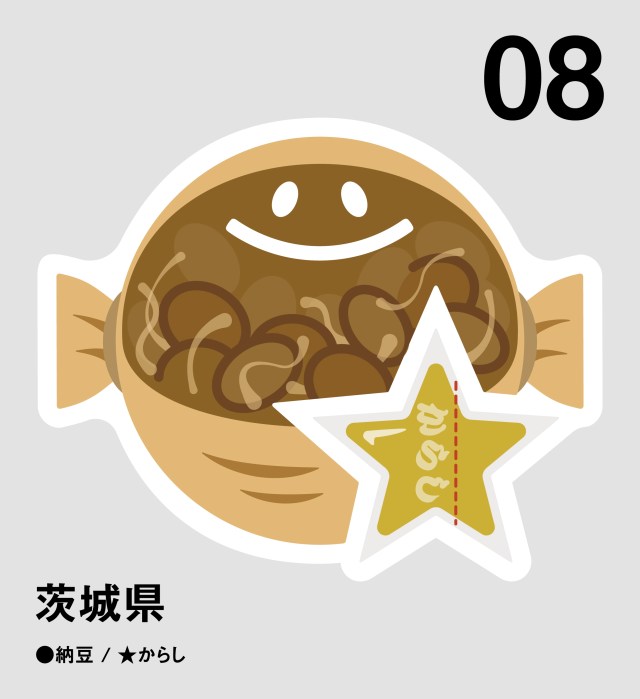
- Ibaraki’s Divisive Delicacy: Ibaraki’s sticker tackles natto (fermented soybeans), a food item famous for dividing culinary opinions among foreign visitors. The sticker design features a traditional straw-wrapped bundle of beans alongside a star-shaped packet of Japanese yellow mustard (karashi), acknowledging the classic condiment pairing that accompanies every breakfast bowl.
- Toyama’s Pharmaceutical Heritage: One of the more obscure cultural nods appears in the Toyama sticker. Eschewing simple food items, the design highlights the prefecture’s centuries-old tradition of pharmaceutical manufacturing, which dates back to 1690. Toyama earned its historic reputation as Japan’s medicine capital through itinerant peddlers who distributed stomach powders across the nation using an early system of payment on trust (kigusuri-haito).
- Kyoto’s Apprentice Geisha: Capturing the aesthetic soul of the ancient capital, Kyoto’s sticker portrays a Maiko (apprentice geisha) with meticulous detail. The star symbol is modeled after a sanjufuda—the narrow votive paper slips that Maiko and geisha traditionally paste on temple gates and merchant doors as calling cards to signal their artistic proficiency.
- Okinawa’s Guardian Lions: Rounding out the southern border, the Okinawan sticker depicts a Shisa lion-dog. Sculpted in pairs atop traditional red-tiled roofs throughout the islands, these mythological guardians ward off evil spirits, anchoring the convenience store merchandise in centuries of Ryukyuan folklore.
Official Statements: Retail Strategy and Cultural Preservation
While convenience store conglomerates rarely break down product development timelines in exhaustive public disclosures, corporate communications surrounding the 47-prefecture release emphasize a strategic shift toward experiential retail. Industry analysts point out that FamilyMart’s leadership views physical storefronts not merely as transaction points for daily necessities, but as cultural touchpoints capable of fostering emotional resonance with consumers.
In corporate briefings accompanying the launch, retail development representatives highlighted the importance of localized engagement. "Japan is a country of micro-cultures," noted a senior retail strategist close to the campaign. "A consumer in Fukuoka does not experience the same cultural ecosystem as someone in Sendai or Sapporo. By respecting these hyper-local nuances rather than pushing a homogenized national product, we validate our customers’ regional pride. The restriction of goods to local prefectures is an intentional design choice; it honors the journey required to acquire them and supports the broader ecosystem of domestic exploration."
Furthermore, cultural heritage foundations have quietly praised the inclusion of UNESCO-recognized traditions like the Namahage ritual and intangible folk arts on mass-market retail items. By packaging these elements into accessible, low-cost formats like stickers and socks, FamilyMart has inadvertently created an educational pipeline, introducing younger generations and international visitors to regional folklore that might otherwise remain siloed in municipal museums.
Future Outlook: The Intersection of Convenience Culture and Regional Tourism
The debut of the 47-prefecture sock and sticker collection establishes a formidable benchmark for convenience store marketing in East Asia. As retail markets grow increasingly digitized, physical brick-and-mortar stores must offer experiential value that cannot be replicated via online e-commerce platforms. FamilyMart’s strategy demonstrates that geographic exclusivity and tactile nostalgia are powerful antidotes to digital fatigue.
Looking ahead, industry experts anticipate that competitors such as Lawson and 7-Eleven Japan will observe consumer response to this campaign closely. Should the momentum sustain itself through upcoming travel seasons, the model of hyper-localized, prefecture-exclusive merchandise is likely to expand into other product categories—ranging from stationery and packaged confectioneries to seasonal beverage lines.
For the international traveler, the campaign reframes the itinerary planning process. A convenience store visit is no longer a last resort for a quick breakfast on the way to a bullet train; it has transformed into a mandatory cultural expedition. As collectors chase down missing pieces of the 47-prefecture puzzle across mountains, valleys, and coastal towns, FamilyMart has secured its place not just as a purveyor of convenience, but as an unlikely cartographer of modern Japanese cultural identity.







Belum ada komentar. Jadilah yang pertama berkomentar!