

Executive Overview
In a milestone development that underscores a seismic geographic shift within the venture capital landscape, storied Silicon Valley institution Khosla Ventures is breaking with decades of tradition. For the entirety of its 13-year history, partner Keith Rabois and his cohorts have operated firmly within the gravitational pull of Menlo Park, California, anchored securely to the legendary turf of Sand Hill Road. However, that era is coming to a close.
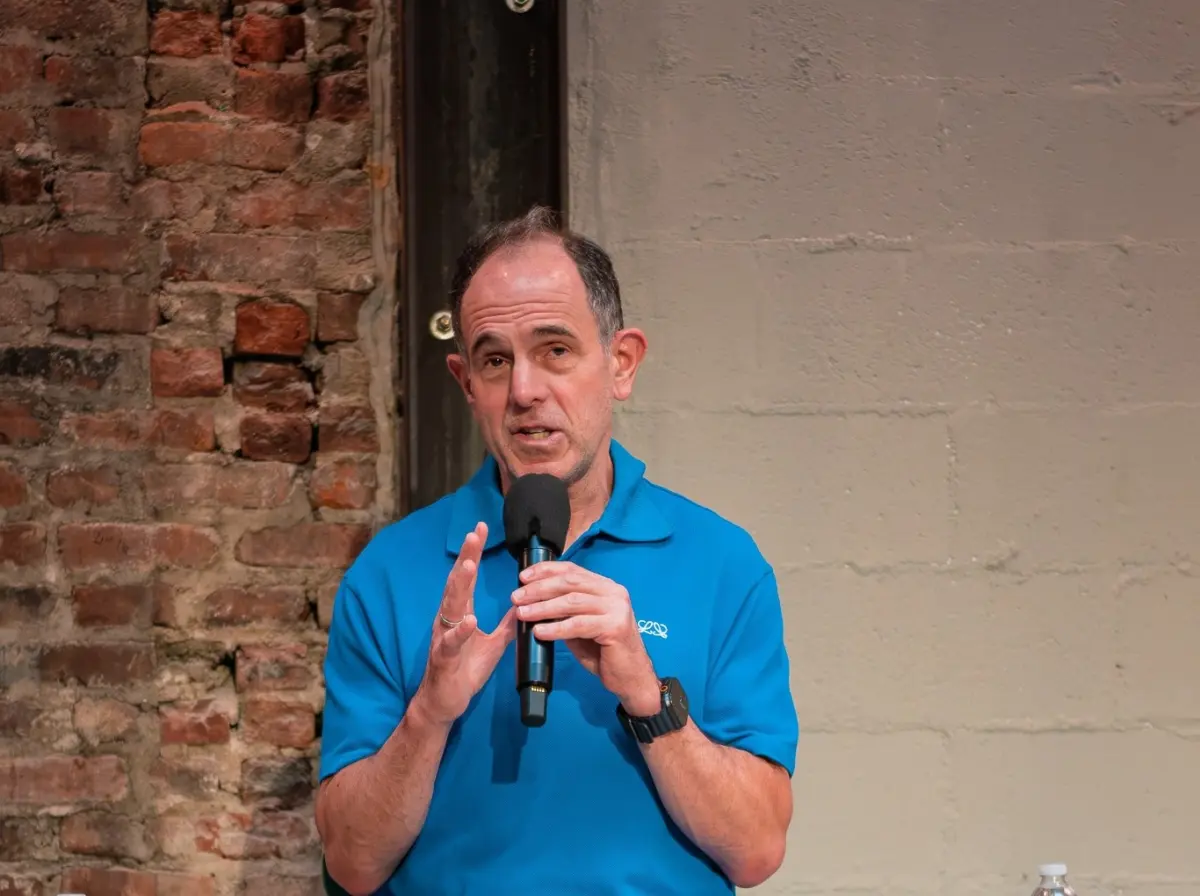
Speaking before an intimate crowd at TechCrunch’s StrictlyVC event in New York’s West Village, Rabois officially confirmed that Khosla Ventures is expanding its footprint across the country, establishing its first-ever permanent office outside of Northern California. Situated on 14th Street in Manhattan, the new outpost is slated to open its doors this fall, marking a decisive tactical evolution for a firm that famously lacks even a San Francisco address.
Beyond merely offering a physical workspace for a handful of East Coast-based investors—including Rabois, who recently relocated to the region—the Manhattan office features a unique, high-impact architectural concept: an “executive briefing center.” Designed to act as a hyper-efficient bridge between emerging technology startups and legacy enterprises, this hub will host groups of portfolio companies four days a week to pitch and secure pilots with Fortune 500 decision-makers.
This westward-to-eastward migration does not occur in a vacuum. It arrives hot on the heels of a landmark commercial real estate report from CBRE, which revealed that New York has narrowly surpassed the San Francisco Bay Area in total tech talent headcount for the first time in the 13 years the data has been tracked. While cultural skepticism regarding New York’s long-term dominance over Silicon Valley persists among industry veterans, Khosla’s strategic pivot signals an acknowledgment of a broader truth: the axis of American technology and capital is rapidly decentralizing.
Detailed Chronology & Event Breakdown
The announcement materialized on a Thursday evening in New York’s West Village, during a high-profile panel at TechCrunch’s StrictlyVC gathering. Rabois, a veteran venture capitalist renowned for his candid industry perspectives and foundational operational roles at PayPal, LinkedIn, and Square, addressed the room with his trademark pragmatism.
When discussing the physical timeline of the firm’s upcoming Manhattan headquarters, Rabois offered a characteristic dose of skepticism drawn from past real estate endeavors. “It’s actually allegedly being built out now,” he remarked wryly to the audience, noting that past construction delays temper his expectations. “We’ll see. This fall opening date is very vague in my mind.”
Despite the flexible timeline, the structural weight of the decision is absolute. Khosla Ventures has long epitomized the quintessential Silicon Valley venture model—deeply localized, intensely network-driven, and historically rooted in the suburban tech hubs of the San Francisco Peninsula. To bypass San Francisco entirely in favor of Manhattan represents a profound departure from form.
“We don’t even have an SF office, so this is a very big step for us,” Rabois emphasized during the session.
The catalyst for this geographic diversification is twofold: a shift in the personal lives of its key partners and an increasing demand for physical infrastructure that accelerates enterprise sales cycles for early-stage portfolio companies. Rabois himself relocated to the East Coast months prior to the announcement, moving to establish closer proximity to his family. This personal realignment coincided with an institutional realization that venture capital firms can no longer passively wait for founders to fly west; sometimes, the capital must meet the market where it increasingly transacts.
Supporting Context & Metrics: The Talent Equation
The decision to plant a flag in New York immediately raises a fundamental structural question regarding talent density. For decades, the San Francisco Bay Area has held a virtual monopoly on the specialized human capital required to scale hyper-growth technology companies. When pressed on whether New York can match that historical density, Rabois offered a nuanced assessment that dissected the local labor market by seniority.
The Junior Talent Advantage: Fresh Out of School
At the entry level, Rabois was unequivocally optimistic. Pointing to fintech darling Ramp—a company he has repeatedly backed and championed—as a prime empirical example, he highlighted the extraordinary caliber of young professional talent emerging from New York’s academic institutions and surrounding ecosystems.
“Individual contributor level, right out of school, absolutely,” Rabois said. “We’ve been tapping into right-out-of-school graduates and been able to create a critical density of talent from the intern class [onward] that is extraordinary.”
This influx of young, hungry technical and operational talent has turned Manhattan and its surrounding boroughs into a breeding ground for high-velocity software engineering and financial engineering talent, fueled in part by graduates from elite regional universities like NYU, Columbia, Cornell, and Princeton.
The Senior Engineering Bottleneck
Conversely, the equation shifts drastically when evaluating senior technical leadership. According to Rabois, recruiting veteran, architect-level engineering talent locally presents a distinct operational hurdle.
“Senior engineers, architect-level — no, I think that’s a challenge,” he admitted. However, he quickly contextualized this friction within the reality of modern software architecture, suggesting that technological leverage has fundamentally shifted the math. “Fortunately, maybe in the modern age, you need less of these people per company than you have historically.”
The Executive Commute and Lifestyle Pain Point
The most acute talent bottleneck, however, lies in recruiting proven C-suite executives—individuals capable of stepping into roles such as Chief Financial Officer or Senior Vice President of Sales. Rabois pinned this challenge not on a lack of raw intellectual capital in the New York metropolitan area, but rather on the punishing realities of regional geography, suburban commuting infrastructure, and family lifestyle dynamics.
Drawing from his own upbringing in a New York commuter suburb connected by a 32-minute express train, Rabois noted that most seasoned executives live far deeper into the commuter belt—often multiple concentric circles away from the urban core. For a company attempting to enforce a rigorous, in-office corporate culture, requiring senior leaders to endure a grueling daily commute into Manhattan becomes an unsustainable friction point.
“If you have an in-office culture, most of the more senior people that live and reside in the New York area live outside the city, and the commute in and out of the city for an office environment can be very painful,” Rabois explained. “When you need to recruit proven executive talent, and you really believe in an in-office culture, [that has] been very challenging.”
To circumvent this, companies like Ramp have deliberately restructured their human capital strategies. Rather than engaging in fierce, high-stakes bidding wars for seasoned executives who may balk at mandatory in-office attendance policies, these firms focus on internal cultivation.
“We don’t hire senior people. We just build from the bottom up, ground up. It’s been a very conscious strategy, very intentionally, for the last three years,” Rabois noted. While this organic growth model yields immense organizational alignment, he conceded its limitations: “That can work. But if you need a CFO, a SVP of sales, someone who’s got a lot of gravitas and experience, it’s really hard to have them in the office five days a week, because unless they’re very independently wealthy, they really can’t afford to raise a family right in the middle of the city.”
Official Statements & The Executive Briefing Center Model
What differentiates Khosla’s new Manhattan office from a standard satellite outpost is its primary operational function. While it will accommodate a localized team of investors, its defining asset is the newly minted “executive briefing center.”
This dedicated space is engineered to solve one of the most stubborn friction points for early-stage enterprise software and deep-tech startups: securing high-level commercial validation and initial customer contracts. Under the proposed operational model, Khosla will regularly fly in batches of 10 to 12 portfolio companies per week to interface directly with invited executives, procurement officers, and innovation leads from Fortune 500 corporations.
By functioning as a high-frequency matchmaking engine, the office bypasses traditional, protracted enterprise sales cycles.
“The portfolio companies love this,” Rabois told the StrictlyVC audience. “They get pilots and customers, and so it’s going to be a very vibrant office because of that.”
This strategy weaponizes geography. By establishing a physical footprint on 14th Street—within striking distance of major financial institutions, media conglomerates, healthcare networks, and enterprise headquarters—Khosla transforms its venture capital office from a passive desk space into an active commercial accelerator. It is a direct acknowledgment that while Silicon Valley excels at writing code and inventing foundational platforms, New York remains the undisputed global capital for enterprise buyers, traditional commerce, and institutional finance.
Future Outlook: A Shift in the Venture Capital Paradigm
Khosla Ventures’ calculated leap into Manhattan places the firm inside an elite, though gradually expanding, fraternity of major West Coast venture capital institutions that maintain a physical presence on the East Coast. Historically, heavyweights like Sequoia Capital and Andreessen Horowitz have maintained localized New York partners, yet these presences have traditionally functioned as light-touch outposts relative to their sprawling Menlo Park headquarters. Khosla’s dedicated, infrastructure-heavy executive briefing model signals a much more aggressive posture.
This strategic alignment arrives concurrently with a broader macroeconomic narrative concerning geographic supremacy. A widely discussed report published by commercial real estate services firm CBRE dropped a startling statistical milestone: for the first time in the 13 years the firm has tracked regional talent metrics, New York narrowly surpassed the San Francisco Bay Area in total tech talent headcount.
This historic convergence was propelled largely by traditional Wall Street financial institutions and enterprise corporations hiring aggressively for artificial intelligence, machine learning, and data engineering talent, even as several prominent Bay Area technology employers underwent cyclical headcount contractions.
Yet, despite empirical data and high-profile institutional moves, the psychological resistance remains palpable. Among traditionalists and legacy Bay Area operators, the notion that New York could permanently unseat Silicon Valley as the sovereign capital of technological innovation is met with persistent skepticism. During the StrictlyVC event, audible murmurs rippled through the room when the CBRE study was referenced, with one seasoned attendee bluntly summarizing the prevailing sentiment: “I heard about that study. I don’t buy it.”
Whether New York ultimately usurps the Bay Area crown in aggregate technological output remains an open question for the decades ahead. However, the decision by a titan like Khosla Ventures to anchor itself in Manhattan proves that the binary choice between coasts is dissolving. The future of venture capital is increasingly distributed, hybrid, and deeply tactical—where capital follows not just great ideas, but the physical crossroads where technology meets enterprise scale.






Belum ada komentar. Jadilah yang pertama berkomentar!