For international travelers and domestic explorers alike, the southern Japanese island of Kyushu presents a mesmerizing tapestry of contrasting landscapes, deeply rooted traditions, and world-class gastronomy. However, the logistical challenge of traversing multiple prefectures without the convenience of a rental car often deters first-time visitors.
Addressing this barrier to entry, a newly optimized 3-night, 4-day rail itinerary offers an efficient, seamless alternative. By strategically deploying Japan’s high-speed Shinkansen network and comfortable limited express trains, travelers can bypass the complexities of highway driving and car rentals entirely. This curated route links three of Kyushu’s most dynamic urban and resort centers:
Fukuoka, the region’s vibrant culinary gateway;
Nagasaki, a port city shaped by centuries of international trade and European-Asian cultural exchange; and
Beppu, Japan’s premier hot spring capital.
Designed specifically for transit-reliant travelers, this itinerary capitalizes on pedestrian-friendly urban planning, English-multilingual rail infrastructure, and centrally located accommodations. The result is a balanced, high-yield journey that proves the transit time itself can be just as rewarding as the destination.
Detailed Chronology: Day-by-Day Itinerary
Day 1: Gateway to Kyushu – Hakata Sightseeing and Culinary Mastery
Your journey begins in Fukuoka City, easily accessed via a rapid five-minute subway connection from Fukuoka Airport straight to the transit nexus of JR Hakata Station. To maximize your time upon arrival, travelers are encouraged to utilize coin lockers or hotel luggage storage services near the station, liberating themselves from heavy suitcases from the moment they step off the train.
Morning & Afternoon Exploration on Foot
Kushida Shrine: Affectionately known by locals as "Okushida-san," this venerable Shinto shrine serves as the spiritual heart of Hakata and the spiritual home of the thunderous Hakata Gion Yamakasa festival. It offers an immediate immersion into Fukuoka’s traditional culture.
Kawabata-dori Shopping Street: Located just a short walk away, this classic arcade is lined with multigenerational storefronts and local vendors, offering a window into the everyday lives of Fukuoka residents.
Canal City Hakata: For those seeking a blend of retail therapy and modern architecture, this multi-purpose complex features a dynamic canal flowing through its center, complete with daily fountain shows, dining, and shopping.
The Evening Culinary Scene
While Fukuoka is internationally celebrated for its rich tonkotsu (pork bone) ramen, the local culinary ecosystem runs much deeper:
Sesame Mackerel (Gomasaba): Fresh, locally caught mackerel served raw and drenched in a savory, nutty soy-based sesame sauce.
Hakata Udon: Distinguished by its characteristically soft, comforting noodles paired with a translucent, umami-rich dashi broth—a beloved local staple for breakfast or lunch.
Mentaiko (Spicy Cod Roe): A regional delicacy available at specialty shops, served in gourmet set meals (teishoku) or integrated into local dishes.
Yatai (Street Food Stalls): As night falls, the banks of the Naka River and the streets of Tenjin come alive with iconic open-air food stalls, where visitors can rub shoulders with locals over piping-hot bowls of ramen and charcoal-grilled yakitori.
Recommended Accommodation: THE BLOSSOM HAKATA Premier
Positioned a mere seven-minute walk from the Hakata Exit of JR Hakata Station, THE BLOSSOM HAKATA Premier places guests within comfortable walking distance of Kushida Shrine and Canal City Hakata. The hotel blends contemporary interior design with subtle nods to traditional Hakata craftsmanship, featuring a spacious public bath that allows travelers to wash away the fatigue of arrival day before setting off for Nagasaki the following morning.
Day 2: Nagasaki – A Port City Steeped in Global History
Departing Hakata Station, travelers board a limited express train to Takeo-Onsen Station, where they seamlessly transfer to the Nishikyushu Shinkansen "Kamome." Characterized by its warm, wood-toned interior design and ergonomic seating, the Kamome whisps passengers into Nagasaki in roughly one hour and thirty minutes.
Historical Urban Exploration via Tramway
Nagasaki’s distinct character stems from its history as Japan’s primary window to the outside world during centuries of national isolation. Navigating the city is remarkably straightforward using its vintage and modern streetcar network.
Glover Garden: Perched on a hillside overlooking Nagasaki Port, this open-air museum preserves historic Western-style mansions built for foreign merchants in the 19th century, offering panoramic views of the harbor.
Oura Church: Designated as a National Treasure, this wooden Gothic-style church is the oldest standing Christian building in Japan, built in 1864 to honor the Twenty-Six Martyrs of Japan.
Dejima: Once a fan-shaped artificial island constructed in 1636, Dejima served as the sole Dutch trading post during the Edo period. Today, restored buildings and warehouses offer a deep dive into early international diplomacy and trade.
Higashiyama Area: Characterized by steep, cobblestone alleyways flanked by historic churches and Western-style residences, this neighborhood is best explored on foot.
Nagasaki’s Unique Fusion Gastronomy
Champon and Sara Udon: Hearty, nutrient-dense noodle dishes born from Chinese culinary influences, featuring a rich pork-and-seafood broth laden with cabbage, bean sprouts, and squid (Champon) or crispy fried noodles (Sara Udon).
Lemon Steak: Thinly sliced beef sizzling on a hot iron plate, finished table-side with a zesty, refreshing soy-and-lemon sauce.
Castella: A sponge cake introduced by Portuguese merchants in the 16th century. Evolved over centuries, Nagasaki Castella boasts a moist, velvety crumb and delicate sweetness, making it the region’s quintessential souvenir.
Recommended Accommodation: JR KYUSHU HOTEL Nagasaki
Conveniently situated just a three-minute walk from the east exit of JR Nagasaki Station and adjacent to Amu Plaza Nagasaki, this hotel serves as an ideal launchpad for both urban exploration and the subsequent journey to Beppu.
Day 3: The Scenic Railway Crossing to Beppu
The third day features the longest transit segment of the itinerary: a rail journey from Nagasaki back through Hakata and onward to Beppu Station. Utilizing the Kamome Shinkansen, limited express connections, and the Limited Express "Sonic," the total transit time spans approximately 4.5 to 5 hours.
The Journey as the Destination
Far from being a chore, this cross-island rail transit is a core highlight of the itinerary.
Ekiben Culture: Hakata Station boasts one of the most diverse selections of ekiben (station bento boxes) in Japan, allowing travelers to sample seasonal ingredients from across Kyushu while onboard.
Coastal Panoramas: As the Limited Express "Sonic" tracks the coastline of Kitakyushu and loops past Kitsuki and Hiji stations, passengers are treated to sweeping, unobstructed vistas of Beppu Bay. On clear days, the cobalt expanse of the Seto Inland Sea framed against rugged mountain ranges delivers the quintessential Kyushu railway experience.
Evening Arrival: Strolling the Hot Spring Town
Upon stepping out onto the platform at Beppu Station, visitors are immediately greeted by plumes of white steam venting from grates and rooftops across the cityscape. The early evening atmosphere, as streetlamps ignite and steam mixes with twilight, establishes an authentic, nostalgic hot spring ambiance.
Located within walking distance of Beppu Station, Oita Beppu Onsen Hanabeppu operates on an all-inclusive model, allowing guests to unwind immediately upon arrival without fretting over incidental costs. Featuring traditional bamboo-and-camellia aesthetics and restorative hot spring baths, it provides the ultimate sanctuary to soothe travel fatigue ahead of the final day’s explorations.
Day 4: Beppu – Geothermal Wonders and Steam-Driven Cuisine
The final day is dedicated entirely to Beppu’s legendary geothermal heritage and regional culinary traditions.
Iconic Sightseeing Landmarks
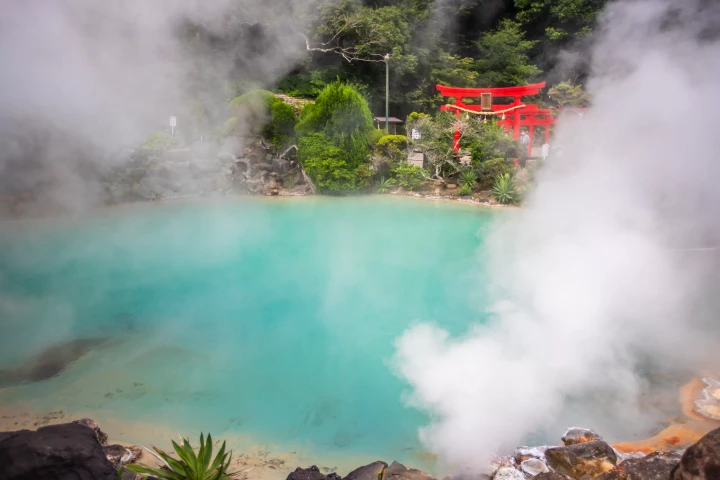
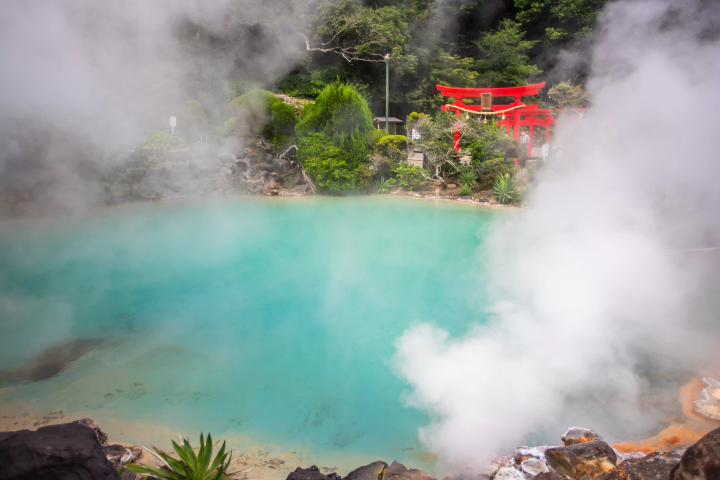
The Hells of Beppu (Jigoku Meguri): A collection of eight spectacular, non-bathing geothermal springs visited for their dramatic visual displays. Highlights include Umi Jigoku (Sea Hell), a striking cobalt-blue boiling pond, and Chinoike Jigoku (Blood Pond Hell), characterized by its rust-red thermal waters.
Takegawara Onsen: Established in the Meiji era, this historic public bathhouse features a magnificent temple-style wooden facade. Beyond its communal baths, it is famous for its traditional sand baths (Suna-yu), where attendants bury bathers in natural, geothermally heated sand.
Steam Observation Deck (Yubana Observatory): A vantage point offering a sweeping panoramic view of the entire city blanketed in rising white vapor, providing a definitive photographic record of Beppu’s unique topography.
Culinary Grand Finale
Hell-Steamed Cuisine (Jigoku Mushi): An ancient Beppu cooking method utilizing natural 100-degree volcanic steam. Vegetables, seafood, and eggs are placed in wooden steaming baskets over thermal vents, locking in pure, unadulterated flavors.
Toriten (Chicken Tempura): Invented in Beppu, this dish features bite-sized chicken marinated in garlic and soy sauce, lightly battered, and deep-fried to a crisp, tender finish.
Dango Soup: A rustic Oita comfort food consisting of flat, hand-kneaded wheat noodles simmered with root vegetables and mushrooms in a rich miso or soy broth.
Supporting Context & Metrics: Route Logistics at a Glance
For independent travelers concerned about timing, the integration of high-speed rail eliminates the guesswork of cross-country transit:
Route Section
Primary Mode of Transportation
Estimated Travel Time
Fukuoka Airport ➔ Hakata Station
Municipal Subway
~5 minutes
Hakata Station ➔ Nagasaki Station
Limited Express + West Kyushu Shinkansen (Kamome)
~1 hour 30 minutes
Nagasaki City Center
City Tram / Walking
Variable
Nagasaki Station ➔ Beppu Station
Limited Express (Sonic connections)
~4 hours 30 minutes to 5 hours
Beppu City Center
Local Bus / Walking
Variable
Official Statements & Expert Insights
Tourism authorities across Fukuoka, Nagasaki, and Oita prefectures have increasingly prioritized car-free infrastructure to accommodate international tourists.
"The modern traveler is placing a higher value on sustainable, stress-free mobility," notes a representative from the Kyushu Tourism Organization. "By linking our major urban hubs—Fukuoka’s commerce, Nagasaki’s heritage, and Beppu’s wellness culture—directly via high-speed rail, we are removing the friction of car rentals, parking scarcity, and highway tolls. Travelers are discovering that the train window in Kyushu frames a living landscape that driving simply does not allow you to absorb."
Furthermore, rail operators have significantly expanded multilingual signage, digital reservation systems, and station-side baggage handling services, ensuring that even first-time visitors unfamiliar with Japanese railway systems can navigate the network with confidence.
Future Outlook
As Japan’s tourism sector continues to set record-breaking visitor numbers, regional dispersion away from mega-cities like Tokyo and Kyoto remains a core national objective. Kyushu’s rail-centric corridors position the island as a model for sustainable, high-efficiency tourism.
Future infrastructure enhancements, including ongoing upgrades to regional limited express fleets and expanded digital ticketing integrations, promise to make cross-prefectural journeys even more frictionless. For travelers seeking a meticulously balanced vacation encompassing dense urban culinary scenes, profound historical architecture, and world-class thermal relaxation—all without the burden of an automobile—this 3-night, 4-day rail itinerary stands as the definitive blueprint for exploring modern Kyushu.













Belum ada komentar. Jadilah yang pertama berkomentar!