


Executive Overview
In the rapidly expanding landscape of independent and mainstream video games, the definition of what constitutes a "cozy game" continues to evolve. Traditionally pigeonholed as low-stakes farming simulators, quiet puzzle solvers, or gentle visual novels, the cozy genre is undergoing a renaissance driven by a single, powerful mechanic: unbridled vertical exploration.
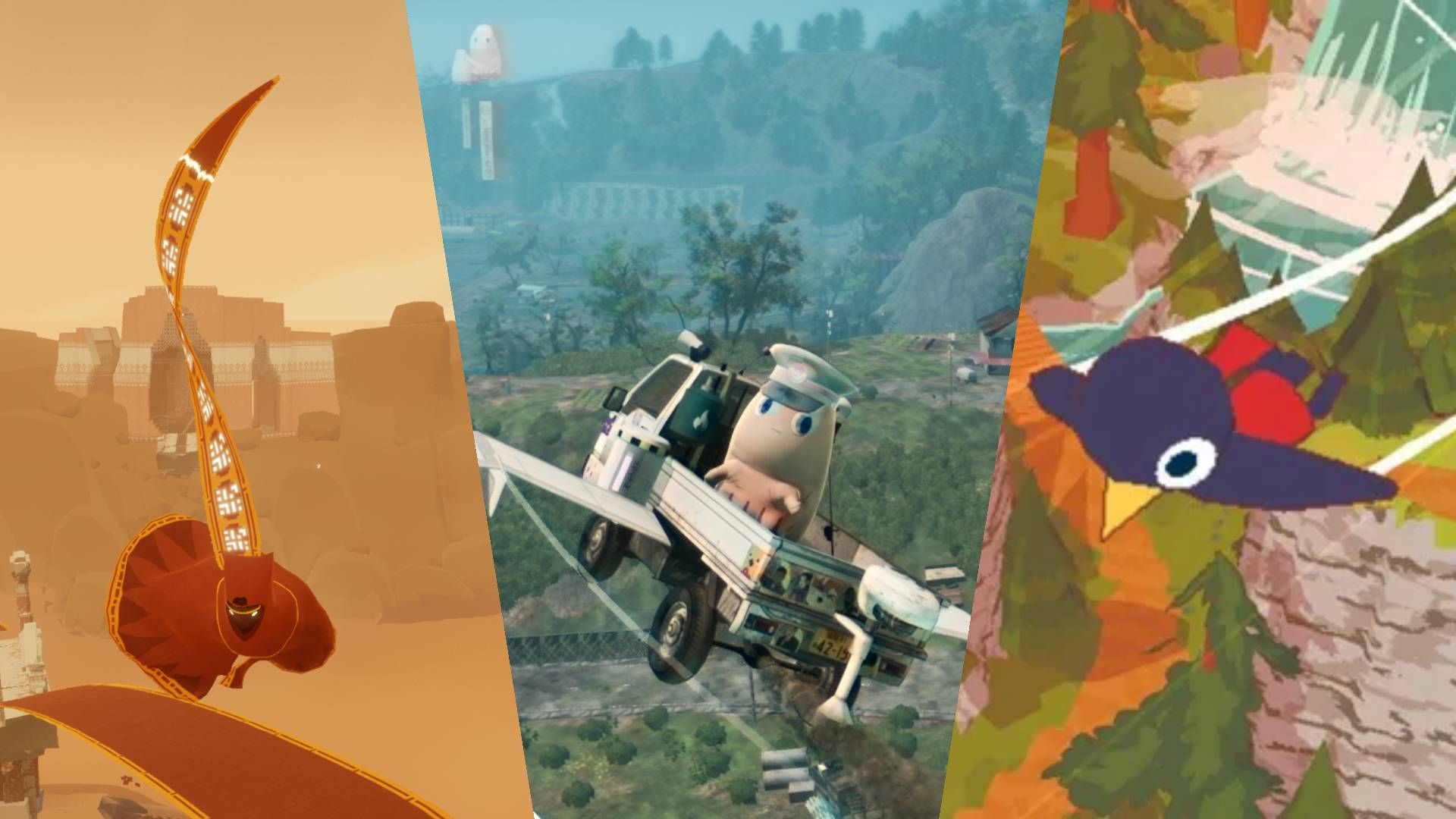
While freedom has always been a foundational pillar of cozy gaming—whether through open-ended crafting or the absence of punishing time limits—recent titles are proving that true autonomy means taking to the skies. Spearheaded by titles like Kaizen Game Works’ Promise Mascot Agency and Adamgryu’s critical darling A Short Hike, developers are realizing that flight provides the ultimate expression of player agency.
This article explores the rising trend of flight mechanics within the cozy gaming ecosystem, examining how soaring above open-world maps shifts the psychological experience of play, why verticality enhances the feeling of relaxation, and how top-tier developers are redefining the boundaries of low-stress digital spaces.
Detailed Chronology: The Evolution of Freedom in Cozy Spaces
To understand how modern cozy games arrived at vehicular flight and high-altitude exploration, one must trace the historical trajectory of open-world mechanics over the past decade.
The Post-Breath of the Wild Paradigm Shift
The modern obsession with aerial traversal in open-world environments largely traces its roots back to 2017 with the release of Nintendo’s The Legend of Zelda: Breath of the Wild. While that title was an action-adventure epic rather than a cozy game, its implementation of the paraglider revolutionized how players interacted with verticality. For the first time in a generation of open-world design, mountains ceased to be impassable barriers and instead became invitations.
Cozy game developers took careful note. Players no longer wanted to be funneled down narrow, predetermined pathways. They wanted panoramic views, emergent routing, and the intoxicating thrill of leaping from high places with absolute faith in their ability to stay airborne.
The Shift from Gliding to True Flight
While gliders offered a taste of freedom, they came with an inherent limitation: gravity always wins, and altitude is a strictly finite resource. The evolution truly accelerated when indie developers began introducing true powered flight and momentum-based soaring into low-stress environments.
- 2019 (A Short Hike): Adam Robinson-Hoyt introduced players to Hawk Peak Provincial Park. Though technically a gliding mechanic governed by golden feathers, the sheer joy of catching thermal updrafts and scaling the island’s peak set a new gold standard for comforting, exploratory verticality.
- The Intervening Years: A wave of minimalist exploration games followed, experimenting with bird flight, floating islands, and magic carpets. The industry recognized that removing the anxiety of failure while retaining the exhilaration of speed struck a profound psychological chord with players seeking refuge from high-stress daily lives.
- The Current Era (Promise Mascot Agency): Pushing the envelope further, Kaizen Game Works integrated vehicular flight into an open-world narrative experience. By outfitting a humble kei truck with rocket thrusters and deployable wings, the game turned vehicular navigation into a physics-sandbox playground, transforming routine map traversal into an act of pure, unadulterated joy.
Supporting Context & Metrics: The Psychology of Cozy Verticality
Why do players gravitate toward flight mechanics in games devoid of combat or competitive pressure? According to game designers and player psychology experts, the intersection of comfort and aerial freedom activates specific psychological reward loops.
The Appeal of Autonomy
In psychological terms, self-determination theory posits that human beings require three core elements for intrinsic motivation: autonomy, competence, and relatedness. Traditional video games often restrict autonomy through linear storytelling or rigid rule sets. Cozy games subvert this by granting immense autonomy over time and space.
When a game introduces flight, that spatial autonomy multiplies exponentially. Players are no longer bound by two-dimensional navigation, invisible walls, or procedural terrain constraints. They become the ultimate arbiters of their own journey.
The Metrics of Relaxation and Exploration
Industry insights into player behavior within the cozy gaming sector highlight several key trends:
- Retention Rates: Open-world indie games featuring fluid movement systems (such as grappling hooks, gliders, or flight) boast significantly higher long-term player retention compared to static point-and-click or grid-based titles.
- Session Length: Players report longer, more immersive play sessions in games where traversal itself is considered an enjoyable gameplay loop rather than a chore between quests.
- Community Engagement: User-generated content—such as photo mode captures, stunt videos, and map-sharing—skyrockets in titles that allow players to view game worlds from a bird’s-eye perspective. The aesthetic appreciation of meticulously crafted digital environments is intrinsically tied to the camera angles enabled by flight.
Official Statements & Developer Insights
The design philosophy behind integrating high-altitude mechanics into relaxed environments is rarely accidental. Creators intentionally weaponize joy and momentum to elevate their narrative and exploratory goals.

Reflecting on the design choices behind Promise Mascot Agency, developers have frequently emphasized the importance of momentum and playful physics. The philosophy centers on turning frustration into fun: rather than punishing a player for crashing a vehicle into a mountain, the addition of chaotic flight capabilities transforms a traffic accident into a launchpad for aerial acrobatics.
Similarly, Adam Robinson-Hoyt noted during the development of A Short Hike that the game’s core mechanics were designed around the feeling of a peaceful afternoon getaway. The mechanics of climbing and soaring were deliberately kept forgiving to ensure that the player never felt stressed, transforming what could have been a grueling platforming challenge into a meditative ascent.
Industry commentators and critics have echoed these sentiments, noting that the modern cozy genre is no longer just about farming and interior decoration; it is about reclaiming a sense of wonder that heavier, AAA titles often sacrifice in pursuit of realism and gritty combat loops.
Future Outlook: Where Are Cozy Flight Mechanics Headed?
As the boundary lines between indie innovation and mainstream development continue to blur, the future of flight mechanics in low-stress gaming looks remarkably bright.

Emerging Trends in Independent Development
- Vehicular Aviation Hybrids: As seen with Promise Mascot Agency’s winged kei trucks, developers are increasingly experimenting with unorthodox flying machines. Expect more unconventional transport—bicycles with propellers, magical boats, and sentient domestic objects—taking to the skies in upcoming cozy releases.
- Procedural and Generative Exploration: Future cozy titles are beginning to leverage procedural generation not for survival resource harvesting, but for endless atmospheric exploration, allowing players to pilot aircraft across infinite, comforting procedurally generated archipelagos.
- Cooperative Aerial Experiences: While early cozy flight was a strictly solo endeavor, upcoming titles are exploring multiplayer ecosystems where friends can soar together in formation, share updrafts, and build aerial homesteads in the clouds.
Conclusion: The Sky is Never the Limit
The evolution of the cozy game genre proves that relaxation does not require stagnation. By blending the comforting, low-stakes atmospheres players crave with the exhilarating, uninhibited freedom of flight, developers have unlocked a powerful new dimension in game design.
Whether you are launching a beat-up delivery truck off a Japanese mountain switchback or catching a gentle thermal draft over a lofi forest island, soaring through digital skies reminds us why we fell in love with video games in the first place: the ability to transcend the ground beneath our feet and explore worlds without limits.









Belum ada komentar. Jadilah yang pertama berkomentar!