

Executive Overview
The video game industry has long experimented with asymmetric cooperative multiplayer, mechanics that force players to rely on fragmented information and broken lines of communication to achieve a shared objective. Titles like Keep Talking and Nobody Explodes and Team 3 have carved out a lucrative niche by turning couch co-op sessions into exercises in high-stakes panic. Enter Bombanana, developed by TARK, a new title that pushes the boundaries of sensory deprivation and chaotic teamwork.
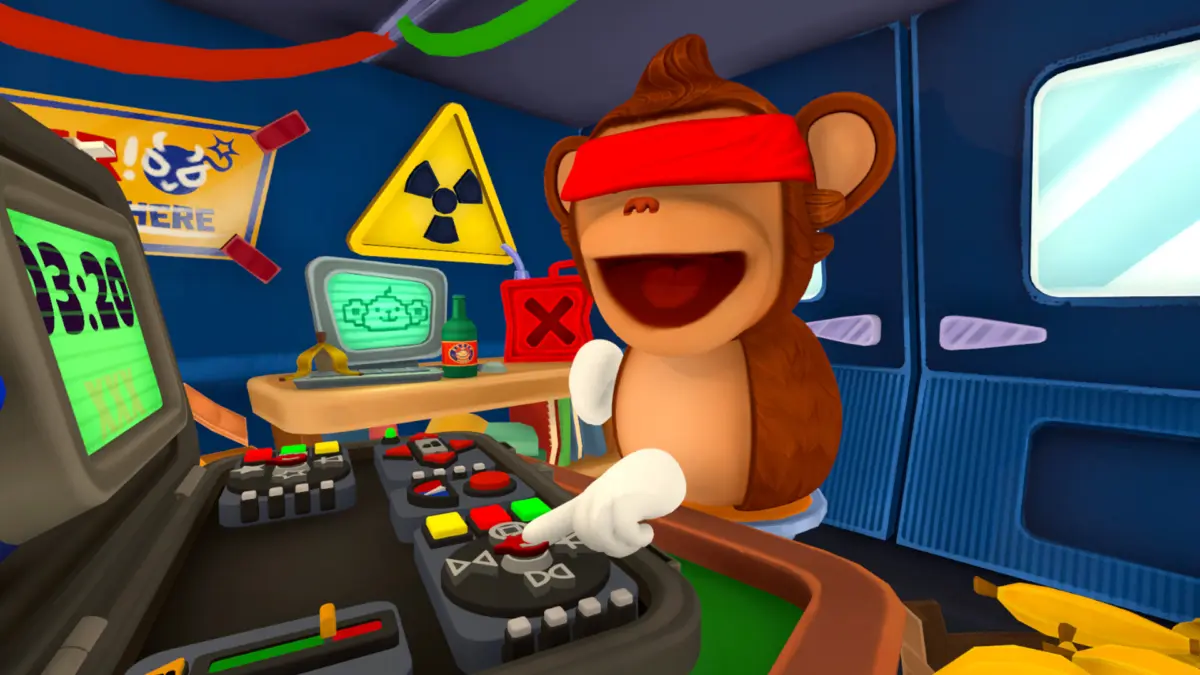
In Bombanana, players assume the roles of primates tasked with an impossible mission: defusing a ticking time bomb while operating under severe sensory restrictions. Reminiscent of the ancient Confucian proverb of the three wise monkeys—see no evil, hear no evil, speak no evil—the game literalizes this philosophy by stripping players of essential sensory inputs. One player cannot see the device, another cannot hear verbal instructions, and a third is struck mute, forced to interpret manuals through alternative, agonizingly slow methods.
What ensues is not a smooth, tactical operation worthy of an elite bomb squad, but a hilarious, high-stress comedy of errors. Players quickly find themselves resorting to throwing digital bananas at one another, staring blankly at virtual ceilings, and waiting for inevitable, explosive doom. Yet, beneath the slapstick humor lies a genuinely clever puzzle structure that escalates in complexity, introducing intricate internal mechanics, time-sensitive gauges, and compounding distractions. Bombanana captures the essence of what makes chaotic co-op games unforgettable: the sweet spot where frustration, laughter, and frantic strategy collide.
Detailed Chronology: A Descent Into Primate Panic
The experience of playing Bombanana for the first time is rarely characterized by immediate synergy. Instead, it is a gradual, stumbling descent into an improvised communication network.
Phase 1: The Initial Shock and Total Breakdown
Upon loading into the game’s opening level, my squad of friends and I were immediately overwhelmed. Assigned roles at random, I found myself cast as the monkey who could neither see the bomb nor visualize its internal circuitry—yet, absurdly, I was the one holding the physical tools required to manipulate it.
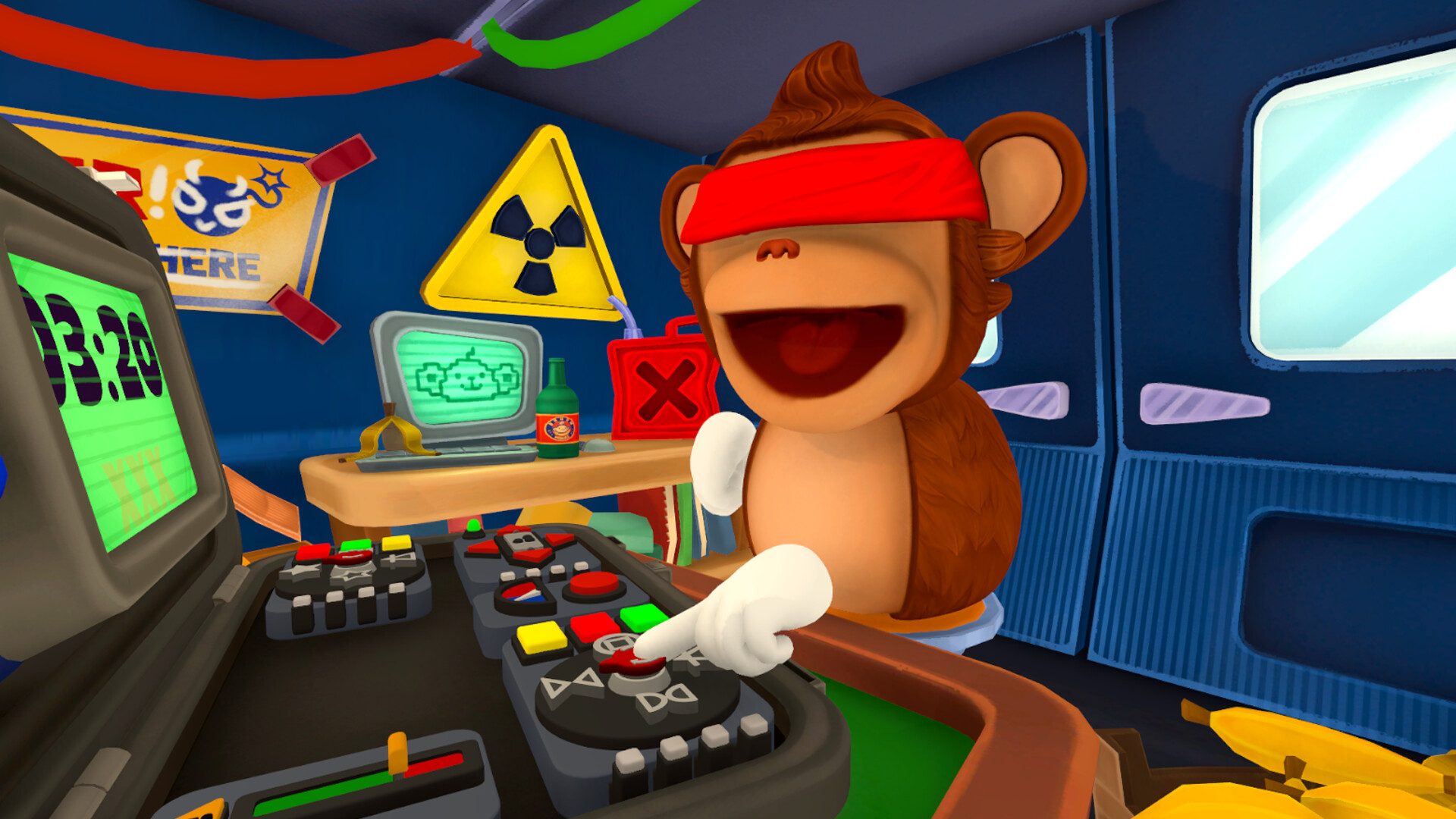
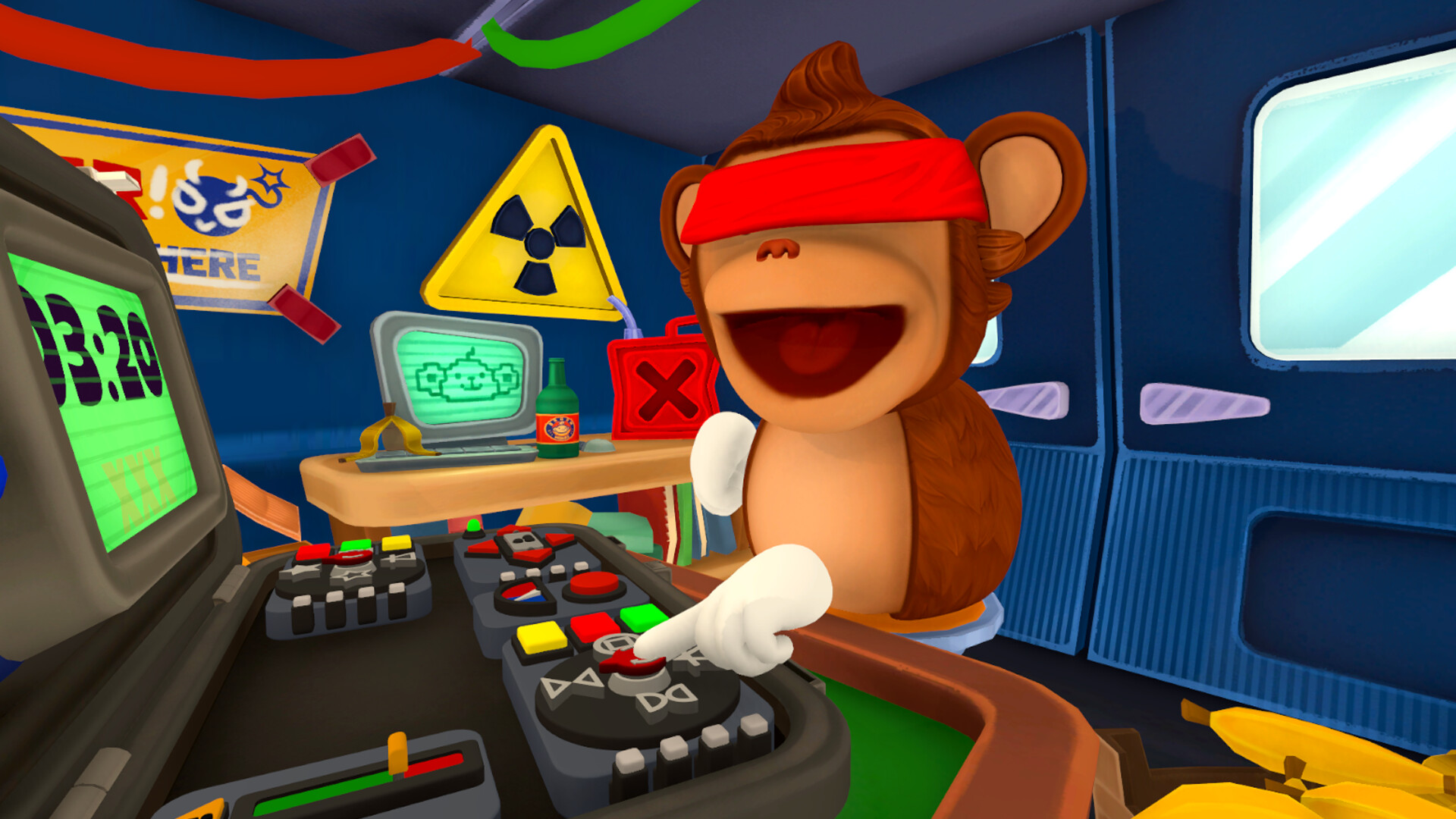
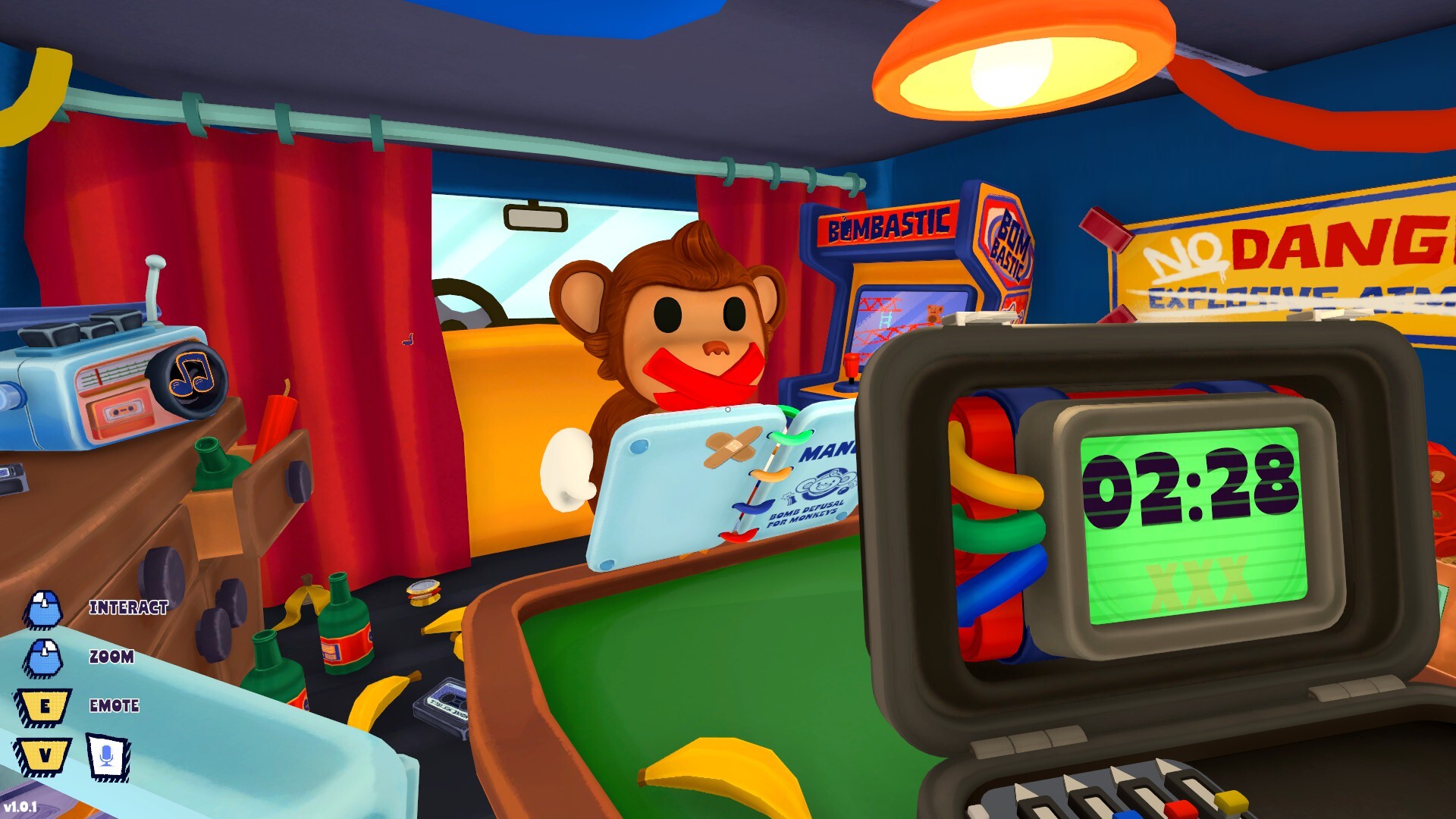
The division of labor instantly shattered any illusions of competence. The player holding the instruction manual was rendered entirely mute, unable to speak a single word of guidance. Meanwhile, the middle monkey—who possessed visual access to the bomb’s interior mechanics—was deaf to our frantic questions, cut off from any auditory feedback loop. Left in complete darkness regarding the state of the machinery, and cursed with an intensely low threshold for high-pressure situations, I sat staring at a blank interface.
With zero comprehension of what was happening, communication dissolved entirely within the first two minutes. Abandoning all hope of a successful defusal, our squad embraced the absurdity of the situation. We began hurling virtual bananas at one another across the digital room, adopting a posture of resigned nihilism as we waited for the timer to run out. The inevitable explosion wiped us clean off the map, offering a merciful end to our collective confusion and granting us the chance to regroup.
Phase 2: Establishing a Primitive Strategy
Defeat, however, served as the catalyst for coordination. Recognizing that brute-force ignorance would yield nothing but charred primate fur, our team huddled to hash out a crude, tactical workflow.
The division of sensory handicaps required a rigid pipeline of information. We devised a relay system:
- The Visual Observer (Middle Monkey): Armed with eyesight but stripped of hearing, this player examined the intricate internal anatomy of the device. They were tasked with cataloging every visible component, translating complex visual cues into descriptive phrases.
- The Mute Manual Holder: Armed with the instruction booklets, this player had to rapidly cross-reference the observer’s frantic descriptions against dense technical pages, searching for the correct protocol without the luxury of speech.
- The Blind Operative: Stationed at the controls with zero visual awareness, I had to execute the mechanical inputs based entirely on secondhand instructions filtered down the chain.
The process was agonizingly slow. The middle monkey would home in on specific components—such as a cluster of four differently colored toggle switches—and pose hyper-specific questions: "The first switch is red; should it be flicked up or down?"
Because our communication channels were fractured, the middle monkey then had to wait for the mute manual-holder to either physically nod (staring intently at the ceiling or floor to convey a binary "yes" or "no" through avatar movement) or visually signal the answer. Once parsed, the middle monkey verbalized the final directive to me, the blind operator, who blindly flipped the switch and prayed for the best.
Phase 3: The Escalation of Chaos
As rudimentary as our strategy was, it worked—at least during the introductory levels, where puzzles were forgiving and timers were generous. But Bombanana is designed to punish complacency.
Progressing deeper into the campaign introduces exponential layers of difficulty. Subsequent stages layer on additional logic puzzles, environmental distractions, and most notoriously, a finicky mechanical gauge. This pressure-sensitive meter steadily creeps upward throughout the duration of the match. If the team takes too long deliberating, arguing, or failing to relay instructions accurately, the gauge redlines, triggering an immediate, catastrophic detonation.
Inevitably, my cognitive processing stuttered under this compounding pressure. During a particularly heated late-game run, after trading my blindfold for the instruction manual, my brain entirely short-circuited. Overwhelmed by the ticking gauge and the shouted commands of my teammates, I froze, leading the squad straight into yet another fiery demise. Yet, even in failure, the game’s magnetic pull remained undeniable.
Supporting Context & Metrics: The Anatomy of Asymmetric Co-Op
To understand why Bombanana resonates so strongly within the current indie gaming landscape, it helps to examine the lineage of asymmetric communication games and the psychological triggers they exploit.
The Evolution of "Communication Breakdown" Games
For decades, cooperative multiplayer meant working together with equal access to information—sharing a screen, viewing the same minimap, or talking freely over a crystal-clear Discord channel. The paradigm shifted dramatically with the 2015 release of Steel Crate Games’ Keep Talking and Nobody Explodes, which forced one player to look at a VR bomb while everyone else frantically leafed through a PDF manual.
Bombanana and its spiritual predecessor, Team 3 (developed by Braincrack Games and published by Arcane Wonders), take this formula a step further by directly crippling the players’ physical senses rather than merely overwhelming them with data.
| Game Title | Core Mechanic | Sensory Restriction Applied | Primary Source of Friction |
|---|---|---|---|
| Keep Talking and Nobody Explodes | VR Bomb Defusal | Manual holders can’t see the bomb; Defuser can’t see the manual | Information overload & interpretation speed |
| Team 3 | Physical Block Building | Based on the Three Wise Monkeys (See, Hear, Speak no evil) | Non-verbal coordination & physical placement |
| Bombanana | Primate Bomb Disposal | Asymmetric distribution of sight, sound, and speech | Multi-tiered relay lag & escalating panic gauges |
Psychological Impact and Replayability Metrics
According to casual playtest metrics observed during community demo phases, Bombanana achieves a unique emotional arc across a standard one-hour play session:
- First 10 Minutes: Confusion, disorientation, and high rates of immediate failure (average survival time: 42 seconds).
- Minutes 11–30: Formation of crude communication lexicons, shorthand gestures, and marginal progress through early levels (success rate increases to 35%).
- Minutes 31–60: Peak flow state or total social collapse, characterized by manic laughter, frantic shouting matches, and repeated near-misses against the pressure gauge.
This volatile emotional loop is precisely what hooks co-op enthusiasts. By removing standard UI crutches and forcing players to rely on deeply flawed, anthropomorphized avatars, TARK has engineered an experience where failure is rarely frustrating—it is inherently funny.
Official Statements and Developer Vision
While Bombanana is still finding its footing in the broader indie market, developer TARK has emphasized that the core philosophy of the game centers around the warmth and hilarity of shared human error.
In early developmental notes, the design team highlighted their fascination with social deduction and communication barriers:
"We didn’t want to build a game about mechanical skill or lightning-fast twitch reflexes," notes a representative from the TARK development team. "We wanted to build a mirror that reflects how poorly humans communicate under stress. By turning players into monkeys and stripping away their basic senses, we remove ego from the equation. When you explode, you can’t blame your controller layout or a lag spike; you have to laugh at the fact that your deaf teammate misinterpreted a ceiling stare as a green light to cut the blue wire."
The studio has also noted that future updates will explore additional environmental modifiers, new primate modifiers, and potentially customizable cosmetic accessories to help players distinguish their sensory-deprived avatars amidst the chaos.
Future Outlook: Can Bombanana Sustain the Hype?
As Bombanana prepares for broader public releases and community expansions, its long-term viability will depend heavily on community engagement and content variety.
Party games of this nature live and die by their ability to generate memorable, clip-worthy moments for content creators on platforms like Twitch and TikTok. The visual comedy of a digital monkey throwing a banana at a comrade seconds before a fiery blast is tailor-made for viral marketing. However, developers must balance this slapstick appeal with enough mechanical depth to keep players returning once the initial novelty of sensory deprivation wears off.
If TARK can successfully introduce new puzzle modules, unpredictable variable modifiers, and seamless matchmaking for random groups (though the game undoubtedly shines brightest among close friends on voice comms), Bombanana could easily cement itself as a staple of the modern party-gaming canon.
Final Verdict
For players seeking a cooperative experience that tests patience, communication, and friendship in equal measure, Bombanana is a triumph of controlled chaos. It forces you to embrace your inner primate, accept that disaster is right around the corner, and find joy in the smoking ruins of a failed defusal. Even if your team ends every round slightly singed and utterly bewildered, it stands out as one of the most uniquely entertaining co-op experiments of the year.






Belum ada komentar. Jadilah yang pertama berkomentar!