


Executive Overview
The global artificial intelligence gold rush has birthed a peculiar and unprecedented paradox: companies are spending billions of dollars to acquire state-of-the-art computing infrastructure faster than the physical power grid can supply the electricity to turn it on. Nowhere is this stark reality more visible than at Amazon Web Services (AWS), the dominant cloud computing provider, where mountains of advanced Nvidia hardware sit in warehouses and unfinished data centers, effectively collecting dust.
While everyday consumers struggle to find flagship consumer hardware like Nvidia’s RTX 5090 GPU—which has seen retail availability plummet and scalpers listing cards for up to $9,000 on secondary marketplaces—enterprise giants are vacuuming up enterprise-grade silicon on an industrial scale. Yet, this aggressive acquisition strategy has introduced massive financial and logistical friction. AWS took delivery of a staggering $5 billion worth of Nvidia GB300 racks in August alone, supplemented by an estimated $3 billion in hardware deliveries each month since.
Despite this massive influx of advanced compute power, AWS faces a severe energy shortfall. The data centers destined to house these racks simply do not have the power capacity required to run them. The resulting bottlenecks have driven AWS’s free cash flow sharply negative—dropping from a robust $53 billion in the second quarter of 2024 to just $7.6 billion by Q2 2026. Internal company communications reveal both lighthearted disbelief among executives and a stark financial reality: the physical infrastructure of the modern power grid is failing to keep pace with the hyper-accelerated ambitions of the AI revolution.
Detailed Chronology: The Escalation of the Infrastructure Crunch
To understand how cloud computing titans landed in a position where billions of dollars in hardware cannot be powered, it is necessary to examine the rapid escalation of the AI arms race over the past several years.
The Spark: The Post-2023 AI Pivot
When generative AI tools captured the global imagination, tech conglomerates immediately recognized that foundational model training and inference would require unprecedented computational horsepower. Nvidia, positioned uniquely as the near-monopolistic supplier of high-end AI accelerators, became the most critical vendor in the technology sector.
As demand skyrocketed, Nvidia faced a severe supply-chain triage. To maximize margins and secure its dominance in the data center market, manufacturing resources were heavily pivoted away from consumer-grade hardware. This strategic shift directly starved the retail market of components, driving prices for cards like the RTX 5090 to astronomical heights.
The Enterprise Influx (Mid-2025 to Mid-2026)
For enterprise cloud providers like AWS, securing allocation of next-generation hardware became an existential priority. By mid-2026, the velocity of hardware deliveries reached historic highs. According to internal documents reviewed by Business Insider, AWS received approximately $5 billion in Nvidia GB300 racks during the single month of August. This delivery pace did not slow; the cloud provider subsequently accepted roughly $3 billion worth of advanced hardware each month.
Traditionally, the procurement lifecycle in cloud computing follows a structured sequence: hardware is ordered, delivered directly to a completed data center, installed, plugged into the power grid, and integrated into the cloud network. Only upon successful deployment and operational readiness would final billing milestones typically trigger.
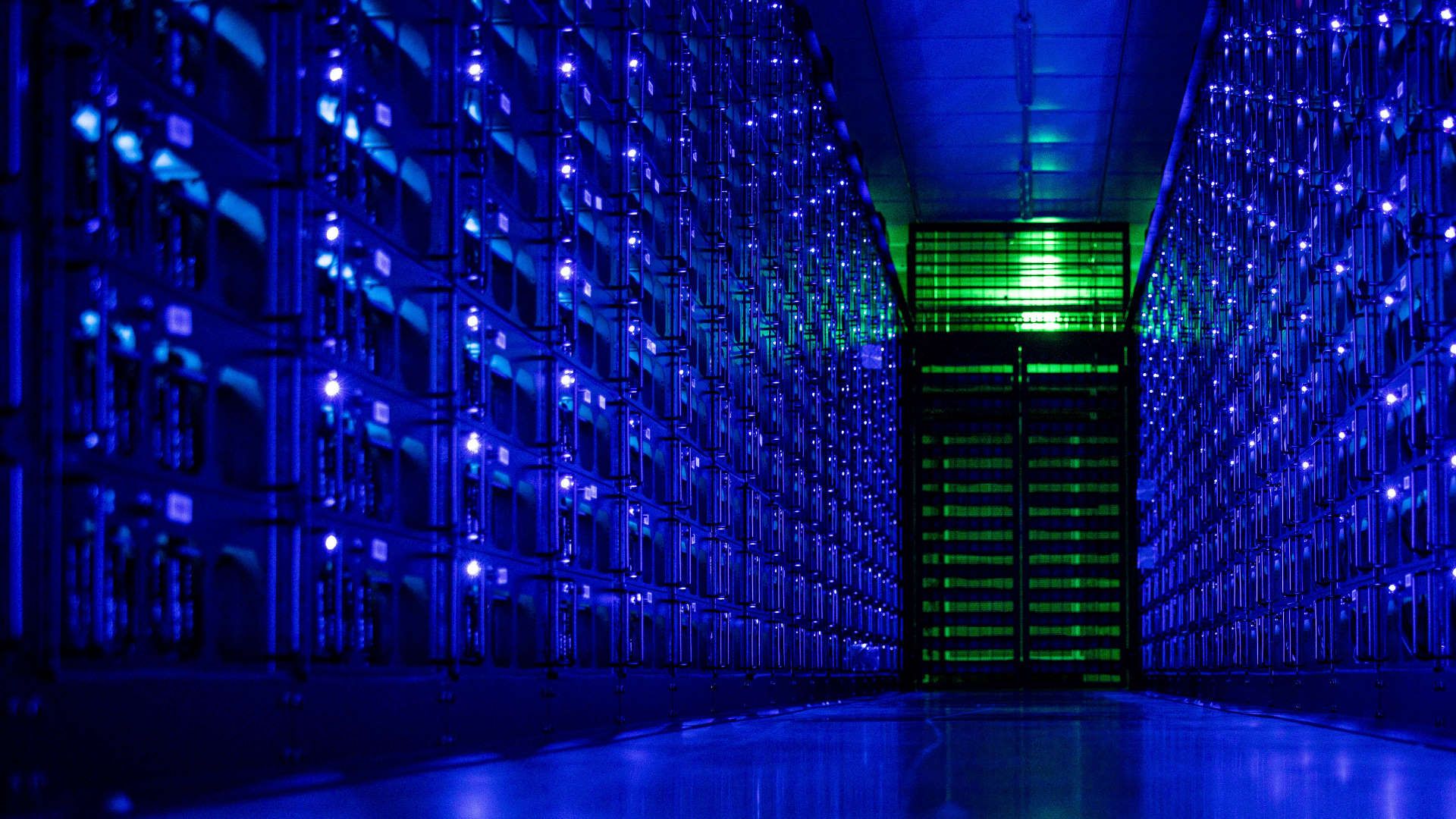
However, because AWS’s aggressive procurement schedule vastly outstripped the construction and energization timelines of its data center facilities, a new operational procedure had to be invented. Amazon implemented the "Early Rack Receipt" process. Under this framework, AWS takes legal possession and financial responsibility for the Nvidia racks long before they have a physical home with adequate electricity.
The Financial Strain
This premature transfer of liability has wreaked havoc on short-term balance sheets. Because these multi-billion-dollar shipments of Nvidia GB300 systems cannot be powered on, they fail to generate revenue. They represent capital tied up in dormant silicon.
The financial toll became undeniable during a leaked internal staff meeting in late 2026. AWS Chief Financial Officer John Felton bluntly addressed the infrastructure team, highlighting the unprecedented strain on corporate liquidity. In a moment that balanced gallows humor with corporate reality, Felton congratulated Prasad Kalyanaraman, the executive leading AWS’s AI infrastructure, quipping: "You’ve taken us free cash flow negative as a company."
Supporting Context & Metrics: The Scale of the Crisis
The friction between corporate AI spending and real-world grid limitations is defined by staggering financial metrics and staggering physical constraints.
The Free Cash Flow Freefall
The financial metrics tell a dramatic story of capital expenditure outpacing operational intake:
- Q2 2024: AWS reported a healthy free cash flow of $53 billion.
- Q2 2026: Free cash flow plunged to $7.6 billion, eventually dipping into negative territory by the autumn of 2026 due to the sheer volume of prepaid, unpowered hardware.
Despite these liquidity pressures, the broader cloud business remains exceptionally robust. AWS reported a 37% year-over-year revenue growth by the end of July 2026, marking its fastest growth rate in 18 quarters and pushing total quarterly revenue to $42.2 billion. This booming top-line revenue is precisely what emboldens leadership to continue spending aggressively, treating short-term cash flow contractions as growing pains in a generational transition.
The Consumer Fallout
While enterprise cloud giants grapple with grid capacity, the downstream effects on everyday consumers and PC enthusiasts remain severe. The reallocation of semiconductor manufacturing capacity toward lucrative enterprise AI accelerators has squeezed consumer GPU supply lines.
Flagship gaming cards, such as Nvidia’s RTX 5090, are chronically unavailable through authorized, reputable retailers. Desperate buyers turning to online marketplaces like Newegg are routinely confronted by third-party resellers exploiting the scarcity, with asking prices soaring as high as $9,000. For the PC gaming community, the data center boom has translated directly into an era of prohibitive hardware pricing and pervasive stock shortages.
Official Statements & Industry Perspectives
Amazon’s executive leadership has maintained a remarkably bullish stance on their long-term AI strategy, framing current logistical and energy hurdles as temporary inconveniences on the path to market dominance.
Amazon CEO Andy Jassy addressed shareholders and investors directly, characterizing the artificial intelligence boom as "a once-in-a-lifetime opportunity." Demonstrating absolute confidence in future returns, Amazon has committed to a staggering $200 billion infrastructure buildout plan dedicated to expanding its data center footprint and securing AI hardware.
During a subsequent quarterly earnings call, Jassy doubled down on this thesis, telling analysts that management possesses a "clear line of sight to strong financial returns" on these monumental capital investments.
Industry analysts, however, urge caution. While the demand for cloud-based AI inference and model training is undeniably real, the physical realities of electrical engineering cannot be bypassed by executive mandate. Upgrading local electrical grids, securing green energy power purchase agreements (PPAs), and constructing the necessary high-voltage substations typically require years of regulatory approval and construction—timelines that clash violently with the fast-paced upgrade cycles of the semiconductor industry.
Future Outlook: Bridging the Energy Gap
As the technology sector looks toward the remainder of the decade, the primary battleground for AI supremacy is shifting away from pure silicon design and toward energy infrastructure.
The Power Grid Challenge
The immediate future depends on how quickly utility companies and cloud providers can bridge the power gap. Data centers utilizing racks of Nvidia GB300 chips demand massive, continuous supplies of electricity—often equivalent to the power consumption of small towns. To solve this, major tech companies are increasingly exploring alternative energy strategies, including:
- Direct investments in nuclear energy (both small modular reactors and direct power purchase agreements with existing nuclear plants).
- Microgrid developments powered by localized renewable sources combined with advanced battery energy storage systems (BESS).
- Accelerated grid-interconnection queues through partnerships with regional transmission organizations.
What Lies Ahead for AWS and Consumers
For AWS, the coming quarters will test whether their multi-billion-dollar inventory can be energized quickly enough to justify the massive capital outlay that pushed free cash flow into the red. If energy projects catch up to hardware deliveries, the sleeping data centers will roar to life, unleashing immense computational revenue.
For everyday consumers, relief remains a distant prospect. As long as enterprise customers like Amazon, Microsoft, Google, and Meta continue to funnel hundreds of billions of dollars into AI infrastructure, manufacturing lines will prioritize data center accelerators over consumer gaming cards. The fallout from the AI boom will continue to reverberate across the entire hardware ecosystem, proving that the digital revolution is ultimately anchored by very physical limitations.









Belum ada komentar. Jadilah yang pertama berkomentar!