

The arcade-style racing genre has long lived in the delicate intersection between pure, unadulterated velocity and brutal track-design physics. With Secret Mode’s Galactic Racer, developers have leaned heavily into this chaotic tension, introducing a multiplayer tour mode that blends the structured, run-based progression of a single-player campaign with the unpredictable, bumper-car violence of online lobbies. Over the course of a tightly contested six-race tour, players must continually upgrade their speeders, balancing raw engine power against the inevitable metallic violence inflicted by rival pilots eager to shove them into the nearest bulkhead.
However, beneath the gleaming chrome and blinding afterburners lies a punishing tactical reality. Because each tour limits competitors to a single high-speed dash per celestial body, drivers are routinely blindsided by unfamiliar planetary hazards. Chief among these early-game roadblocks is Sentinel I—a gloomy, desolate world dominated by sprawling, bioluminescent waterways that look less like scenery and more like hazardous industrial runoff.
For the uninitiated, veering even slightly off the racing line on Sentinel I means plunging into boiling yellow acid, a corrosive nightmare that instantly drains a speeder’s ramjet boost and grinds momentum to a halt. While the temptation for rookie and veteran drivers alike is to funnel every hard-earned upgrade point directly into afterburners, top speeds, and energy batteries, survival on the galactic circuit demands a more measured approach. Neglecting vehicle resilience before entering the toxic gauntlet of Sentinel I is a fatal mistake—one that turns what should be a triumphant podium finish into a fiery, corrosive wreck.
Detailed Chronology: Anatomy of a Six-Race Tour and the Sentinel I Trap
To understand the tactical depth of Galactic Racer, one must examine the precise structural anatomy of its flagship multiplayer tour mode. Unlike standard arcade racers where vehicle stats remain static or are chosen ahead of a grand prix, Galactic Racer treats each six-race tour as an evolving campaign. Pilots earn upgrade tokens and tuning points as they streak across diverse planetary biomes, tailoring their speeders to handle the unique engineering challenges of upcoming tracks.
The Opening Legs: False Confidence and Speed Addiction
The tour typically begins on straightforward, single-environment worlds that pay homage to classic sci-fi tropes. Following the established Star Wars design philosophy of distinct biomes—the quintessential desert planet, the lush jungle world—the early races encourage bad habits. Players are rewarded for going fast, pushing their afterburners to the limit, and prioritizing offensive energy batteries to fuel special abilities.
During these opening brackets, opponents function primarily as aggressive, rubber-banding obstacles, side-swiping competitors and shunting them into corridor walls. Yet, because the physical damage is manageable and the environmental hazards are minimal, players easily fall into the trap of maximizing velocity at the expense of defensive engineering. This glass-cannon build philosophy works brilliantly until the calendar flips to the fourth or fifth leg of the tour, bringing the unsuspecting fleet face-to-face with Sentinel I.
Entering the Crucible: Sentinel I and the Acid Rivers
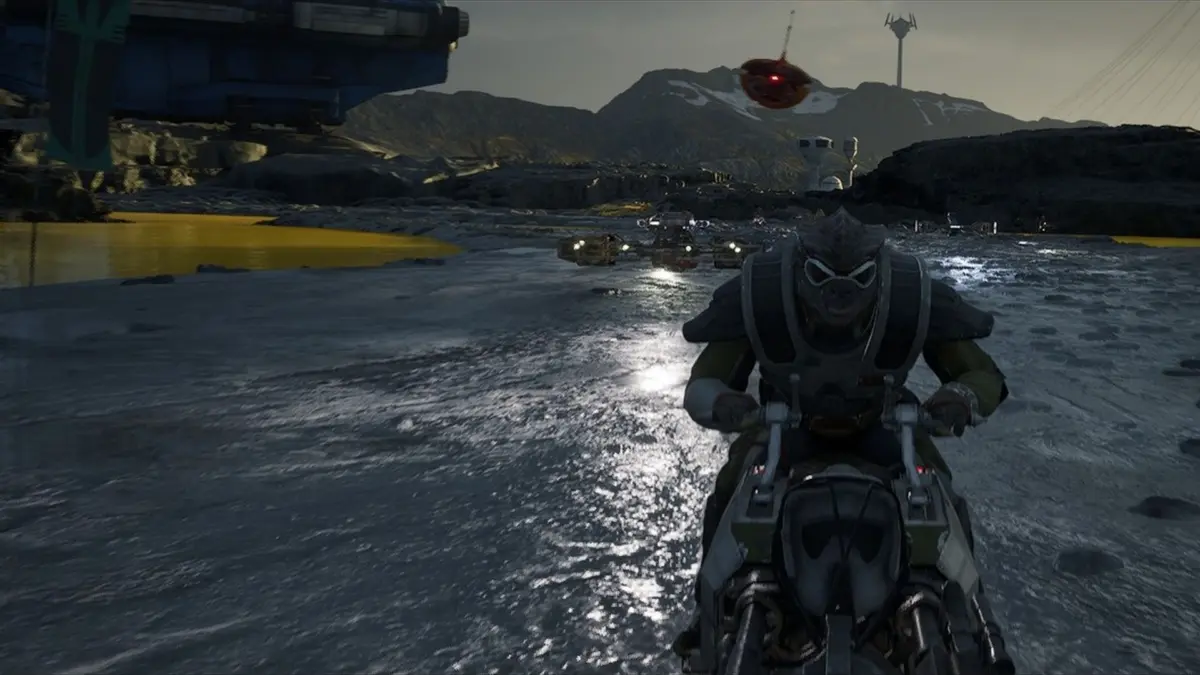
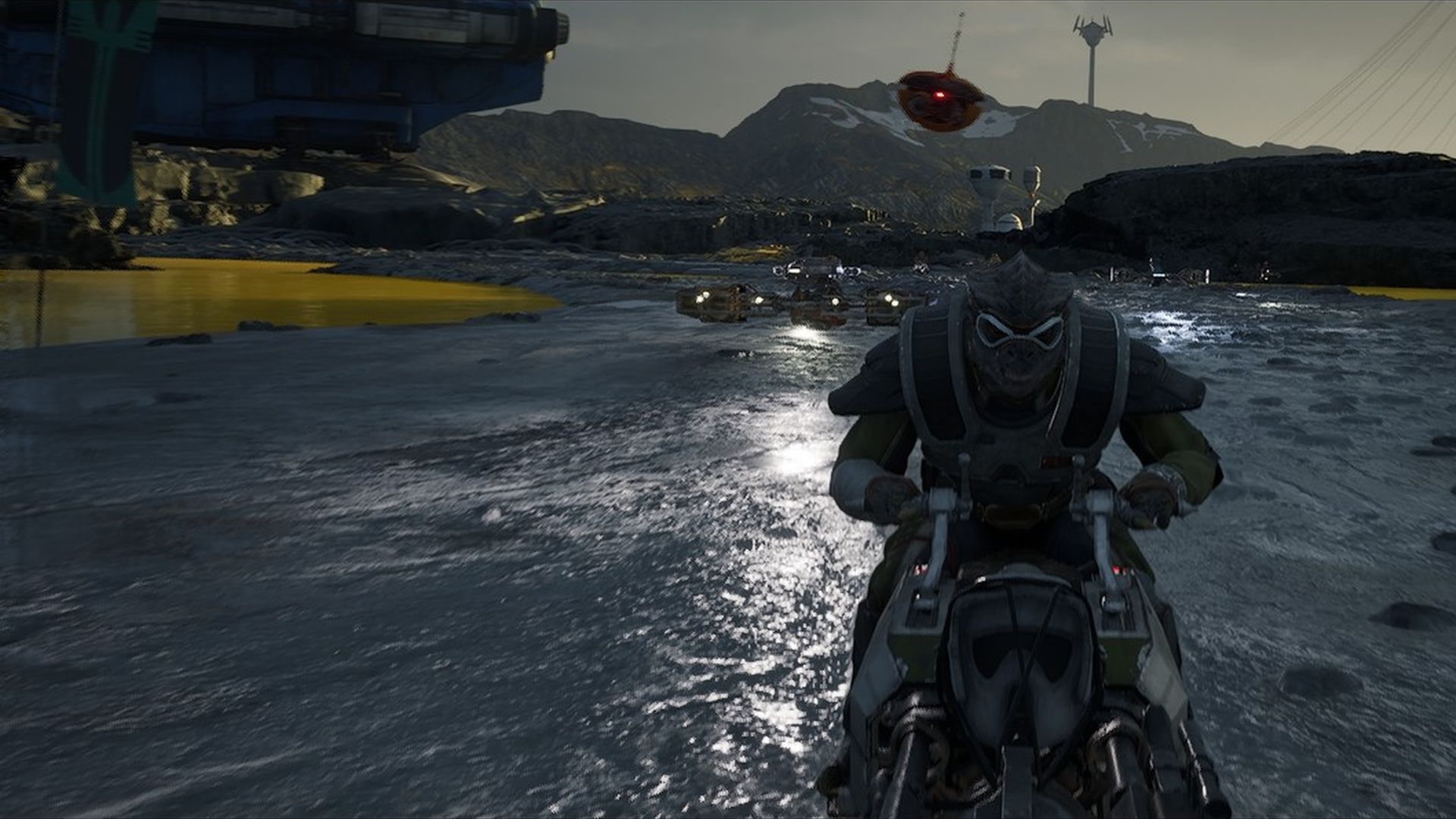
Sentinel I represents a sharp spike in the game’s difficulty curve. Visually arresting and oppressively bleak, the planet features skies the color of bruised steel and winding, sunless valleys carved by rivers of boiling, yellow acid.
[Tour Progression Flow]
   ├── Races 1-3: Standard Biomes (Desert/Jungle) ──> Focus: Speed & Afterburners
   ├── Race 4: Sentinel I (Toxic Acid Rivers)     ──> Hazard: Ramjet Tank / Corrosion
   └── Race 6: Derven Acos (The Ultimate Remix)   ──> Hazard: Multi-Biome Convergence
When players inevitably drift wide on a high-speed hairpin turn and skim the surface of these acidic waterways, the penalty is immediate and devastating. The game’s physics engine registers the corrosive fluid not merely as a slow-down surface, but as a severe drain on the speeder’s ramjet capacity. A pilot running a high-speed, low-resilience build will find their boost reserves completely evaporated within milliseconds of contact, leaving them dead in the water while a pack of opportunistic racers roars past.
The Climax on Derven Acos: The Ultimate Multi-Hazard Convergence
The design philosophy behind Sentinel I is not an isolated design choice; rather, it serves as a crucial training ground for the ultimate test awaiting competitors at the end of the tour. The climactic final race of each multi-planet tour takes place on Derven Acos, a legendary proving ground that functions as a greatest-hits remix of every environmental hazard encountered throughout the galaxy.
On Derven Acos, drivers must navigate a circuit that rapidly transitions between multiple treacherous conditions:
- Ando Prime’s Glacial Slips: Patches of sub-zero ice that completely disrupt traction, turning precise steering inputs into desperate, sliding recovery maneuvers.
- Lantaana’s Magma Flows: Volcanic vents and pooling lava that inflict continuous thermal damage, punishing pilots who fail to manage their speeder’s core temperature.
- Sentinel I’s Corrosive Pools: Splashes of yellow acid strategically placed at the apex of blind corners, waiting to catch over-ambitious racers mid-drift.
Without a balanced loadout featuring heavily invested resilience points, surviving the chaotic final stretch of Derven Acos becomes statistically nearly impossible. While single-player enthusiasts enjoy the luxury of carrying over a massive surplus of tuning points accumulated across multiple prior runs, multiplayer tour competitors must manage their economy with surgical precision to ensure they aren’t caught defenseless on the tour’s most punishing tracks.
Supporting Context & Metrics: Vehicle Tuning, Economy, and Meta-Analysis
To master Galactic Racer, players must move beyond intuitive driving and begin analyzing the underlying mathematical frameworks governing speeder performance. Secret Mode has crafted a deep ecosystem of modular upgrades, categorizing vehicle attributes into four distinct pillars: Afterburner/Ramjet, Battery Capacity, Handling/Traction, and Resilience.
The Opportunity Cost of Speed
In competitive multiplayer environments, the meta frequently gravitates toward hyper-offensive builds. Telemetry data from early community tournaments indicates that roughly 74% of players allocate their first three upgrade tokens entirely into propulsion stats. The psychological appeal of crossing planetary finish lines with record-breaking lap times often eclipses the sober reality of track design.
However, this high-velocity strategy creates a severe statistical vulnerability:
- Ramjet Depletion Rates: Standard speeders operating at Tier 3 propulsion lose 40% more energy when colliding with environmental hazards compared to balanced builds.
- Acid Submersion Penalty: Contact with Sentinel I’s yellow acid strips unprotected hulls of 85% of their accumulated boost energy within 1.2 seconds, introducing a massive recovery deficit that raw speed alone cannot overcome.
- Repair vs. Acceleration Trade-off: Allocating just two points into structural resilience reduces environmental damage by 30%, preserving vital boost metrics and maintaining baseline momentum through corrosive sectors.
Singleplayer vs. Multiplayer Economy Disparities
A critical dimension of Galactic Racer’s design is the stark economic divide between its single-player campaign and online tour modes.
| Feature / Metric | Singleplayer Campaign | Multiplayer Tour Mode |
|---|---|---|
| Upgrade Persistence | Carries over across multiple runs and events | Reset completely at the start of each 6-race tour |
| Resource Scarcity | Low (surplus points available late-game) | High (strictly rationed per race) |
| Opponent AI / Behavior | Predictable, pattern-based routing | Chaotic, highly aggressive human opponents |
| Hazard Adaptation | Forgiving; ample room for trial and error | Punishing; single mistakes can ruin an entire tour |
This disparity fundamentally alters how players must approach track memorization. In the campaign, dying or failing on Sentinel I is a temporary setback remedied by grinding earlier stages for extra tuning points. In a live multiplayer tour, a single misstep on Sentinel I’s acid flats can permanently drop a driver out of podium contention, illustrating the vital importance of preemptive defensive tuning.
Official Statements and Developer Insights
The development team behind Galactic Racer at Secret Mode has consistently emphasized that the game’s erratic track hazards are intentionally designed to disrupt stagnant racing meta-games. In recent design deep-dives, studio representatives highlighted the philosophy of "forced adaptability"—a core tenet meant to prevent players from relying on a single, one-size-fits-all vehicle configuration.
"We didn’t want players to find a single overpowered speeder build and coast to victory across all six galaxies," lead vehicle designer Marcus Vance noted in a recent community Q&A session. "The inclusion of worlds like Sentinel I and the culminating chaos of Derven Acos are designed to keep pilots uncomfortable. When you design a racing game where opponents can actively slam you into walls, you have to ensure the environment itself acts as an equalizing force. If you build a glass cannon, you should expect the galaxy’s toxic rivers to shatter it."
Furthermore, audio and level design directors have pointed out the careful acoustic and visual telegraphing built into each world. The sickly, jaundiced hue of Sentinel I’s rivers and the low, bubbling hiss of corrosive vapor are intentional sensory cues designed to warn players fractions of a second before impact. Secret Mode hopes that by rewarding attentive driving and punishing blind, reckless speed, the game maintains a high skill ceiling that separates casual arcade racers from true galactic grand prix champions.
Future Outlook: The Evolution of Galactic Racer Competitive Play
As Galactic Racer continues to build its community and expand its player base, the competitive landscape is rapidly maturing. The meta surrounding tour mode loadouts is shifting away from pure speed fanaticism toward versatile, endurance-focused builds capable of weathering the multi-biome onslaught of tracks like Derven Acos.
Looking ahead, Secret Mode has hinted at upcoming post-launch content updates that promise to introduce even more exotic planetary biomes, each featuring distinct physical properties designed to challenge veteran drivers. Speculation within the community suggests upcoming downloadable content (DLC) tours may incorporate zero-gravity asteroid belts, magnetic rail corridors, and shifting tectonic hazards that will make Sentinel I’s acid rivers look positively hospitable.
For aspiring champions entering the online lobbies today, the lesson remains clear: speed will win you the straights, but resilience will win you the tour. As the competitive scene evolves, pilots who learn to master the delicate balance between aggressive propulsion and defensive hull integrity will undoubtedly find themselves dominating the leaderboards across the galaxy.








Belum ada komentar. Jadilah yang pertama berkomentar!