

Executive Overview
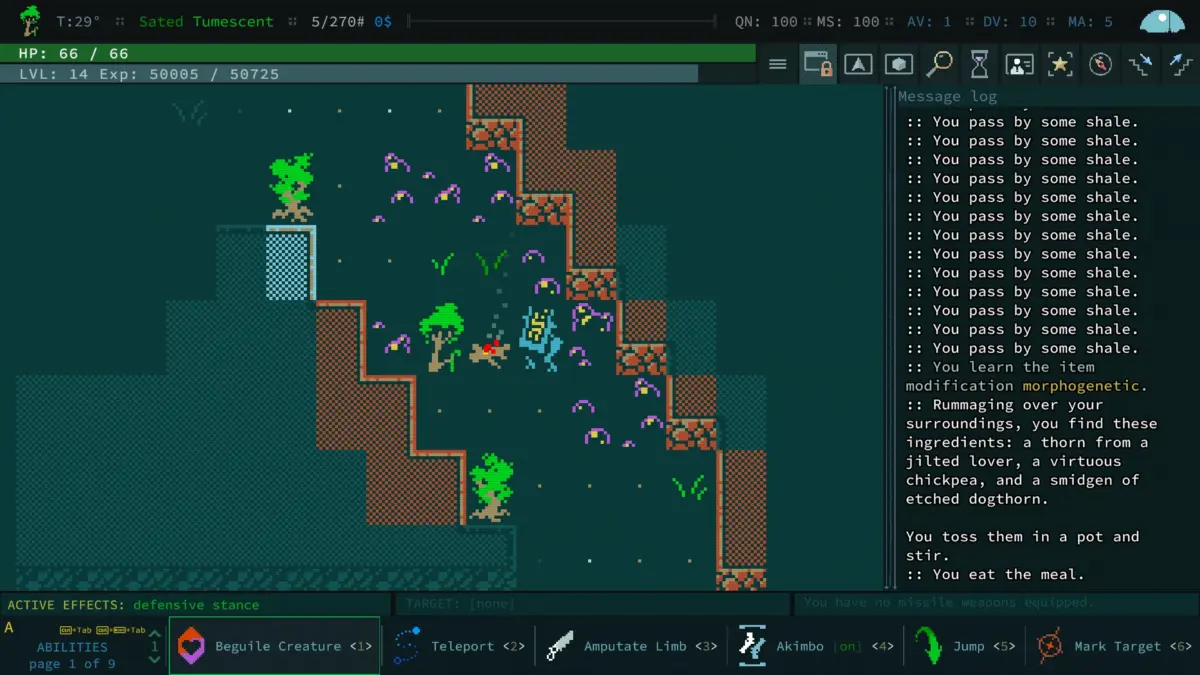
For a game that has already achieved legendary status among roguelike aficionados—earning critical acclaim as one of the definitive emergent experiences of the decade—pushing the boundaries of weirdness sounds like an impossible design challenge. Caves of Qud, developed by Freehold Games and published by Kitfox Games, is a masterclass in deep-future, science-fantasy simulation. It operates on a staggering scale of internal logic, allowing players to inhabit characters ranging from ordinary human outcasts to psionic, four-armed mutants wielding blood-drinking firearms that fire vacuum pulses capable of consuming life itself.
Yet, the developers are refusing to rest on their laurels. Kitfox Games has officially announced Diaspora, an ambitious upcoming expansion for Caves of Qud that pushes the game’s already unfathomable systemic depth even further. Set to enter early access on December 9, Diaspora introduces a radical paradigm shift to character generation and world-simulation: most notably, the ability to play as a sapient tree.
Rather than merely adding surface-level content, Diaspora aims to weave new layers of systemic complexity into the marsh-moated ruins of Qud. By turning the game’s famous mutation mechanics on their head—allowing players to begin as flora and mutate into human-like forms—the expansion promises to redefine how players interact with Qud’s deeply simulated ecology. Backed by an anticipated one-year early access roadmap that includes roaming mega-caravans, subterranean villages, multi-step questlines, and delightful new horrors like fresh fungal infections, Diaspora is poised to inject a vibrant, riotous pulse of life into an already decaying world.
Detailed Chronology: The Evolution of Qud and the Path to Diaspora
To understand the magnitude of Diaspora, one must first examine the historical trajectory of Caves of Qud. Freehold Games spent over a decade crafting the title in development purgatory and early access before its official 1.0 release. Throughout this arduous journey, the game earned a reputation for uncompromising fidelity to classic roguelike traditions, combined with a profoundly unique aesthetic that blends archaic mysticism with high-tech post-apocalyptic ruin.
The timeline leading up to the announcement of Diaspora reflects a carefully orchestrated strategy of community engagement, systemic refinement, and thematic expansion:
- The Early Access Era (2015–2024): For nearly a decade, Caves of Qud was a darling of the traditional roguelike community, renowned for its ASCII-optional visuals, staggering modding support, and a simulation engine that tracked everything from the emotional states of wandering NPCs to the specific body parts of mutated fauna.
- The 1.0 Milestone and Critical Acclamation (Late 2024): The game graduated from early access to a celebrated 1.0 launch, rapidly sweeping accolades—including being crowned the best roguelike of 2024 by major publications like PC Gamer. The full release solidified Qud as a landmark title in procedural storytelling, where no two playthroughs ever remotely mirrored one another.
- The Announcement of Diaspora (Late 2024): Capitalizing on the momentum of its 1.0 success, publisher Kitfox Games dropped the teaser trailer for Diaspora, revealing a thematic focus on the influx of chaotic life, culture, and alien biology invading Qud’s ancient ruins.
- The Early Access Roadmap (December 9, 2024, and Onward): Setting a precedent familiar to the game’s development history, Diaspora will first debut in Steam Early Access. Freehold Games has estimated that the expansion will remain in this developmental crucible for approximately one year, allowing the community to stress-test its myriad new systems, factions, and character origins.
Supporting Context & Metrics: Unpacking the Madness of Qud’s Simulation
What makes Caves of Qud uniquely difficult to expand is the sheer density of its existing simulation. To appreciate what Diaspora brings to the table, one must analyze the baseline metrics of Qud’s systemic architecture and the specific innovations introduced in this DLC.
The Inversion of Mutation
In the base game of Caves of Qud, character creation is a playground of genetic tailoring. Players choose a genotype—such as True Kin or Mutant—and spend mutation points to acquire weird physical and mental traits. A human character could start their journey as a relatively standard biped and gradually accumulate mutations over time, eventually sprouting wings, extra limbs, or psychic capabilities.
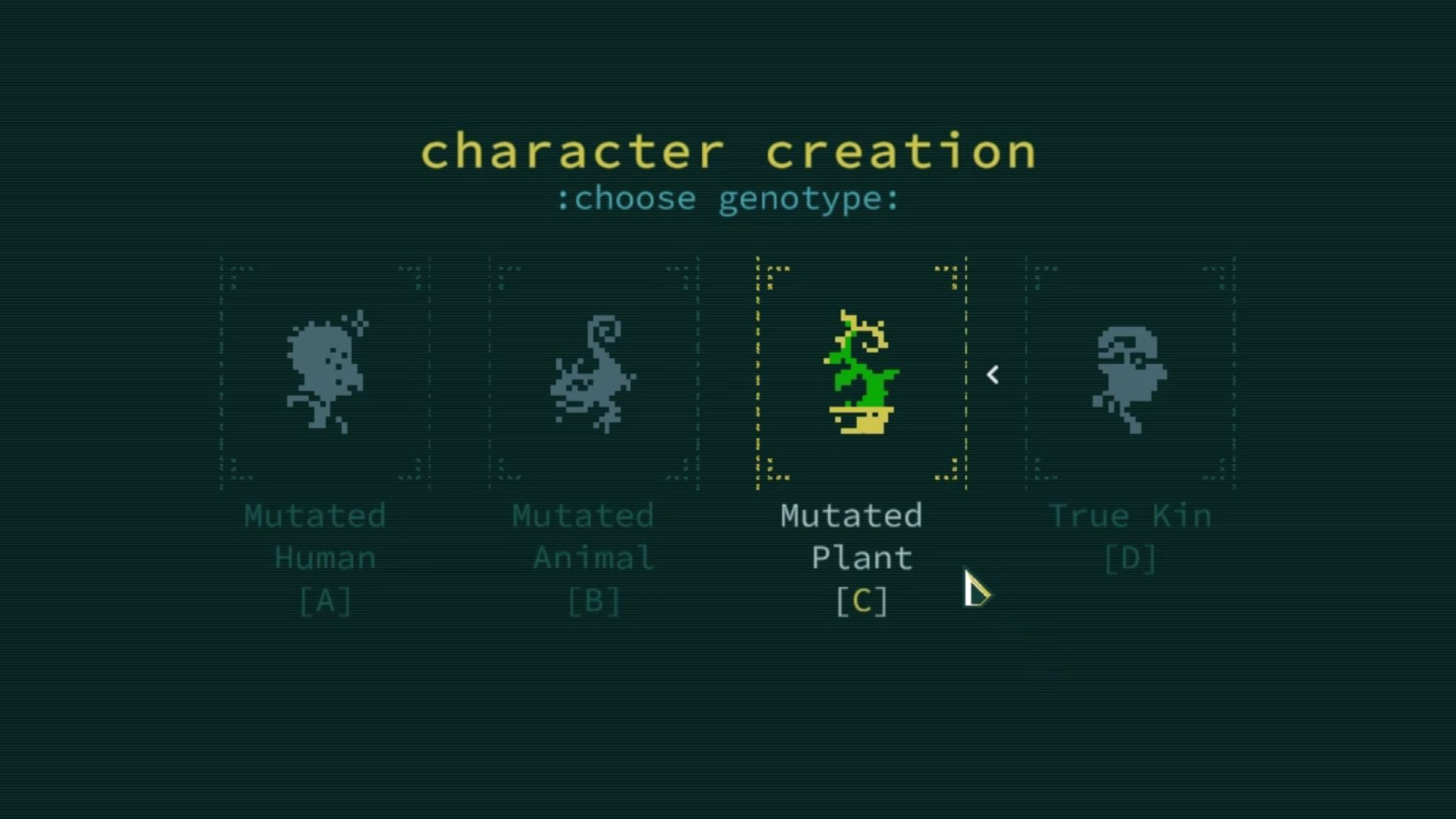
Diaspora introduces a brilliant symmetrical inversion to this system: the Mutated Animal and Mutated Plant stocks.
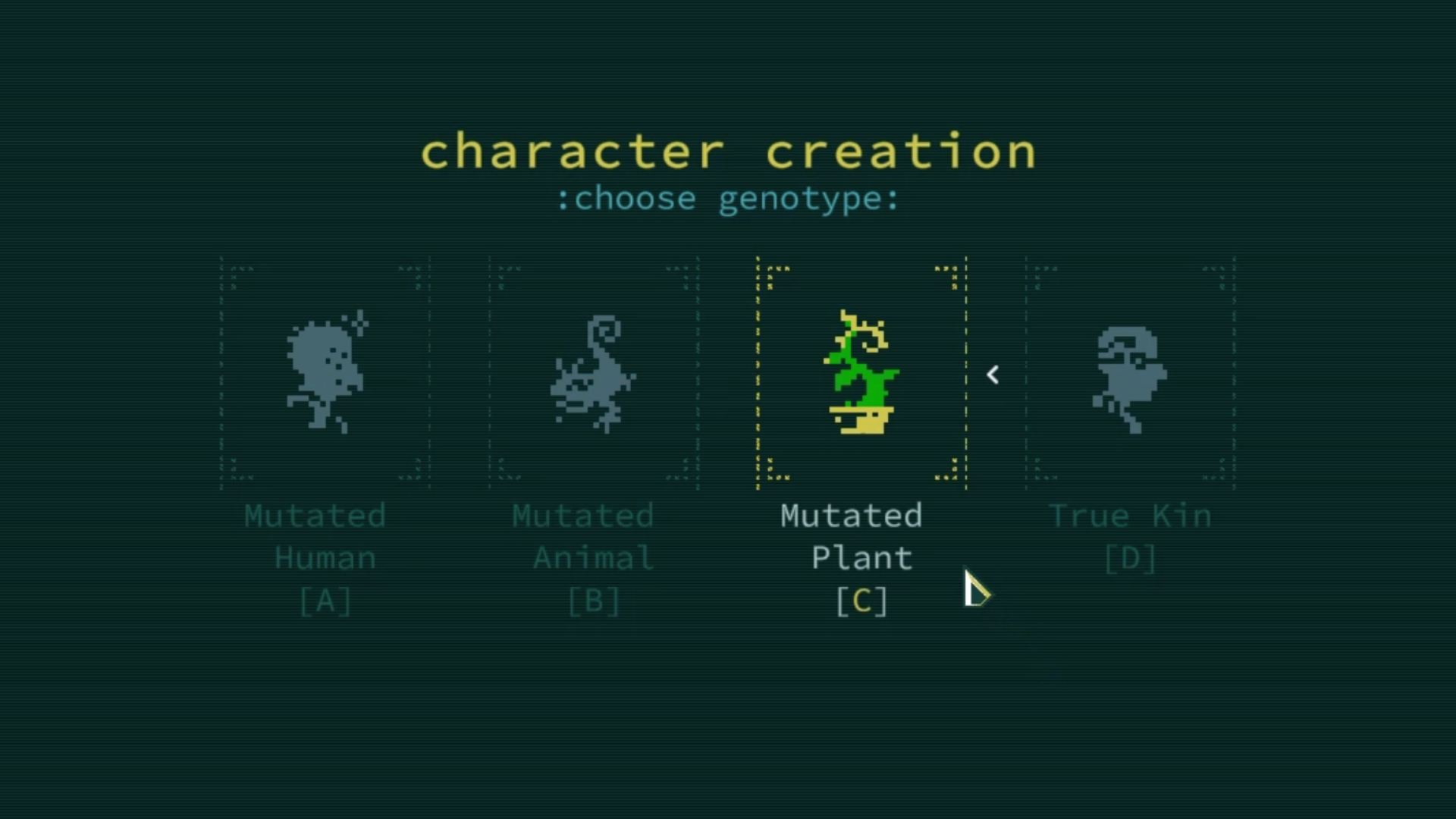
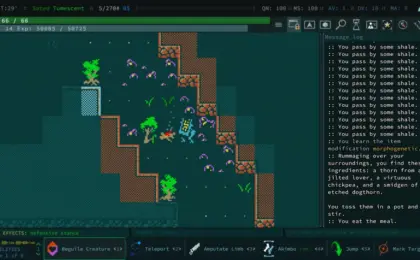
- Playing as Flora: For the first time, players can step into the roots of a sapient tree.
- Reverse-Engineering Evolution: Instead of a human mutating into a plant form, Diaspora allows a tree to potentially mutate into a humanoid shape—or into an increasingly bizarre, hybridized botanical entity featuring avian wings, scorpion tails, or other chimeric appendages.
Expanding the Ecological Web
Beyond player character origins, Diaspora populates Qud’s vast wilderness with new creatures, artifacts, and societal structures. The game’s nomadic camelfolk trade caravans are receiving a significant mechanical overhaul. Most notably, players will finally be able to mount and ride their iconic saltback tortoise steeds—a feature heavily requested by the community.
The Roadmap of Future Horrors
The early access rollout is merely the opening salvo. Over the projected one-year development cycle, Freehold Games has outlined a dense pipeline of updates:
- New Factions and Underground Villages: Deepening the geopolitical and subterranean tapestry of Qud.
- Multi-Step Questlines: Providing structured narrative arcs centered around the themes of the expansion.
- Seasonal Mega-Caravans: Roaming economic entities that will dynamically alter regional trade and danger levels.
- New Fungal Infections: A cornerstone of Caves of Qud’s body-horror aesthetic. In Qud, fungal infections are rarely simple status ailments; they are dynamic, often symbiotic parasites. The addition of new fungal conditions follows in the glorious footsteps of anomalies like "mumble mouth"—a sentient skin infection composed of tiny mouths that occasionally harmonize into speech to reveal deep-lore secrets about the game world.
Official Statements and Developer Vision
Publisher Kitfox Games and the developers at Freehold Games have framed Diaspora not merely as a content pack, but as a thematic exploration of life bursting forth in places it has no business surviving.
According to official briefings from Kitfox, Diaspora "includes several new feature arcs centered around the influx of riotous life and culture into marsh-moated ruins of Qud." This philosophy of "riotous life" underscores the entire design ethos of the expansion. Qud is a world defined by deep time, ancient civilizations, and rusted remnants of hyper-advanced technology. By introducing the uncontainable, wild forces of heavily mutated flora and fauna taking center stage, the developers are shifting the ecological balance of the world.
Furthermore, the decision to launch Diaspora in early access reflects Freehold Games’ long-standing philosophy of co-development with their fiercely dedicated community. By opening the floodgates for player feedback on complex new systems—such as mountable saltback tortoises, intricate multi-faction underground networks, and the balancing act of playing a mobile, sentient tree—the team ensures that the expansion will match the legendary depth and stability of the 1.0 release.
Future Outlook: Why Diaspora Matters for the Roguelike Genre
As the gaming industry increasingly trends toward homogenized, risk-averse live-service loops, Caves of Qud and its upcoming Diaspora expansion stand as a triumphant monument to uncompromising, auteur-driven game design.
The introduction of playable plant and animal stocks is more than just a quirky marketing hook; it represents a profound mechanical achievement in procedural RPGs. Allowing a player to experience the world from the perspective of a stationary or slowly creeping organism—one that interacts with the environment through photosynthesis, root networks, and radical genetic divergence—demonstrates a level of imagination rarely seen in modern software development.
When Diaspora launches into Steam Early Access on December 9, it will once again disrupt the Caves of Qud community, forcing veterans and newcomers alike to rethink every survival strategy they thought they had mastered. Whether you find yourself commanding a caravan of saltback tortoises across the salt dunes, negotiating with underground factions as a newly evolved arboreal mutant, or hosting a philosophical skin fungus that sings secrets into your ear, Diaspora promises to cement Caves of Qud’s status as an eternal masterpiece of emergent storytelling. The future of the post-apocalypse has never looked so wildly, beautifully overgrown.





Belum ada komentar. Jadilah yang pertama berkomentar!