

Executive Overview
Over the past decade, the 4X strategy genre has experienced a renaissance, punctuated by steady, evolutionary leaps from developers who dare to push tactical boundaries. Few studios hold as revered a place in this space as Amplitude Studios. Known for their distinct visual styling, deeply asymmetrical factions, and seamless blend of science and fantasy, the French developer’s Endless series has long served as a gold standard for grand strategy enthusiasts.
Now, with Endless Legend 2—published by Hooded Horse and slated for its 1.0 release on September 17, 2026—Amplitude has returned to the universe that put them on the map. Priced at $50 / £45 and verified for the Steam Deck, the game is a magnificent testament to why the studio remains deeply beloved by strategy fans.
This sequel arrives twelve years after the groundbreaking original Endless Legend, a title that acted as a much-needed shot in the arm for a genre that had grown stale. While many innovations introduced by Amplitude and its sibling series, Endless Space, have since become industry standards, Endless Legend 2 proves that the well of creativity has not run dry. It delivers trademark artistic brilliance and deep mechanical design in a modernized, highly polished package. Saiadha, the dying planet at the heart of this new chapter, offers a fresh, dynamic theater for conquest, diplomacy, and exploration.
Detailed Chronology & Gameplay Mechanics: Surviving Saiadha
To understand the rhythm of Endless Legend 2, one must understand Saiadha itself. Much like Auriga, the doomed world of the first game, Saiadha is a planet on the brink of collapse—though this time, the crisis is born of ancient hubris. The Endless, a precursor race, sealed away a catastrophic entity deep beneath the crust when they terraformed the planet from scorching desert dunes into a realm of storm-wracked seas and isolated islands. Now, that ancient secret is clawing its way back to the surface, causing the world’s oceans to drain slowly into the planet’s core.
This environmental decay manifests as a cyclical clock that fundamentally alters how players interact with traditional 4X tropes. Every few dozen turns, a brutal monsoon blankets the globe in violent tempests, introducing terrifying threats like the marauding Doomwraiths. When the storms clear, the game enters a phase known as Tidefall.
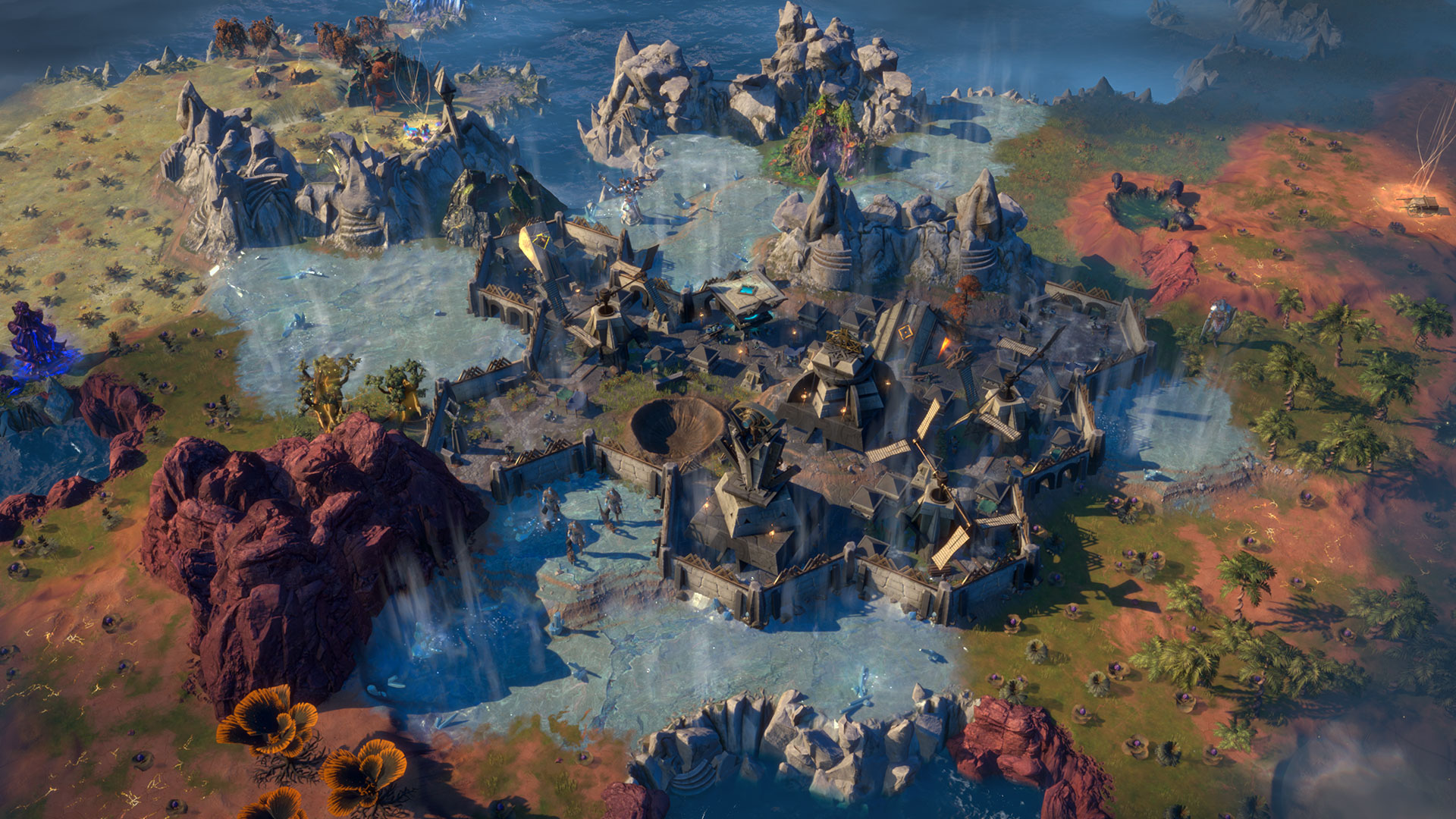
During Tidefall, the shoreline recedes, unveiling sunken landscapes, forgotten ruins, and ancient technologies ripe for colonization. This mechanic serves as a brilliant structural subversion of the typical 4X pacing. In most grand strategy titles, the late-game phase frequently devolves into a stagnant, tedious grind as sprawling empires lock horns across unchanging borders. Endless Legend 2 evades this pitfall entirely. Every Tidefall shifts geographic layouts, bridges previously isolated territories, and thrusts players right back into the most exhilarating phase of the genre: the frantic, competitive scramble for new resources and frontiers. A city that was once safely tucked away in the interior can suddenly find itself sitting on a rich, contested coastline.
Factional Asymmetry: Breaking the Rules
True to the DNA of the Endless universe, the factions are the shining crown jewel of the experience. Amplitude continues its tradition of crafting deeply asymmetrical groups that fundamentally break or ignore core game mechanics:
- The Sandshapers: Living mineral constructs who are entirely incapable of farming. Instead, they must scrape together rare resources and actively terraform the world back into a desert biome to gather the minerals required to sustain and grow their population.
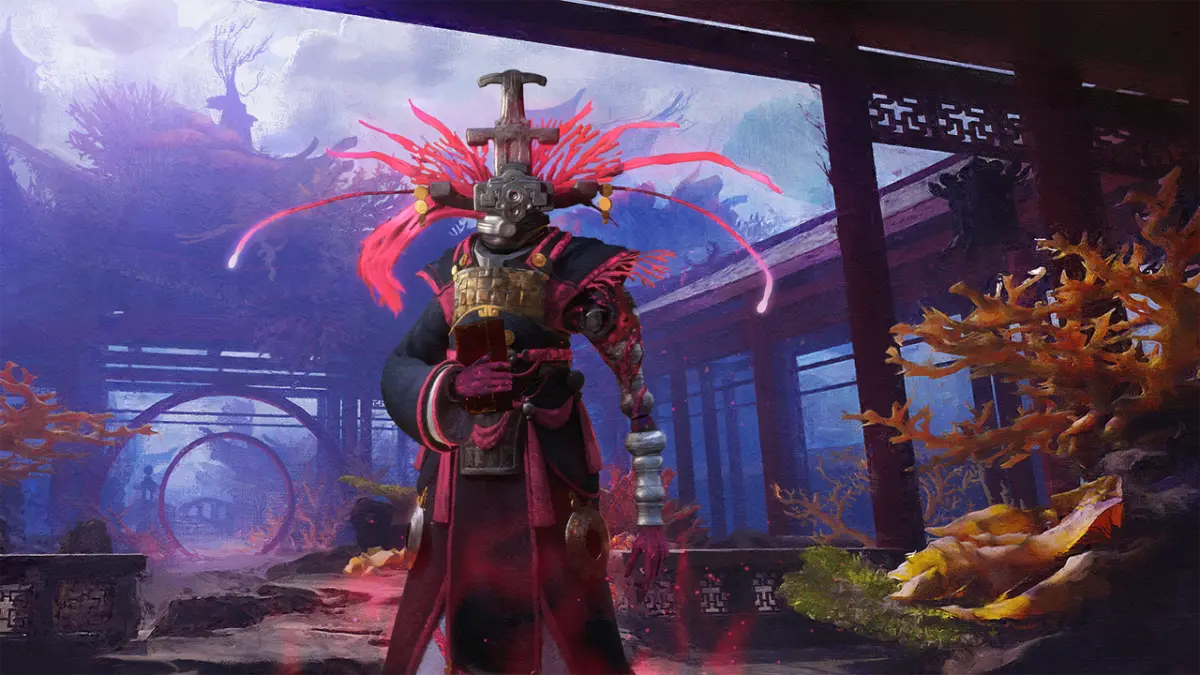
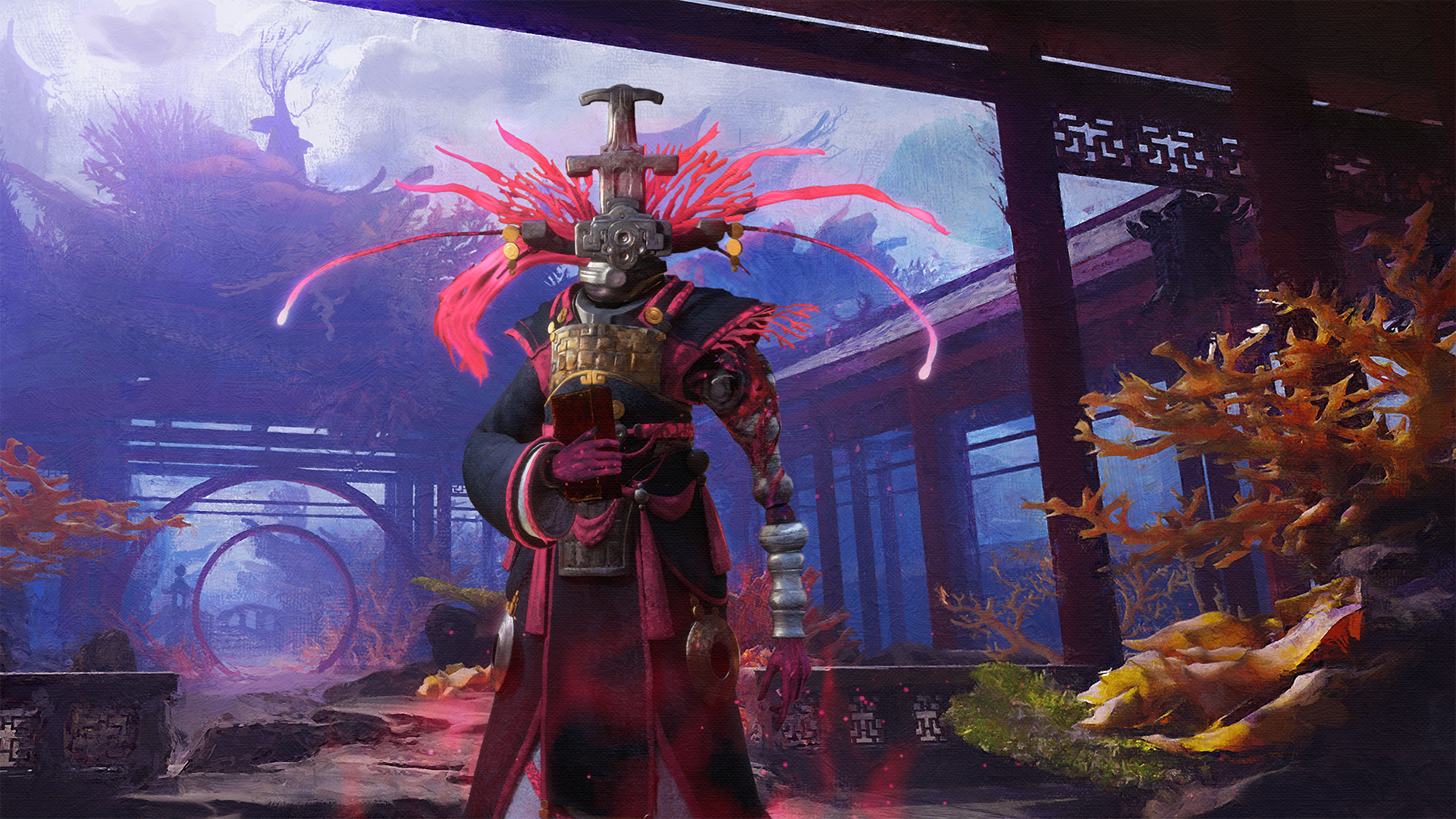
- The Aspects: A symbiotic union of living corals and advanced robotics that can leverage their massive influence reserves to force peace or trade agreements on rival factions.
- The Children of Sheredyn: A defensive-minded faction that favors fortified citadels over sprawling public infrastructure. (A rogue variant exists that inverts this style into an aggressive expansionist legion).
- The Necrophage: Returning as a singular, insatiable hive-city, they possess a permanent casus belli against all other factions simply because they are perpetually starving, operating as a terrifying enslaving swarm of cyborgs.
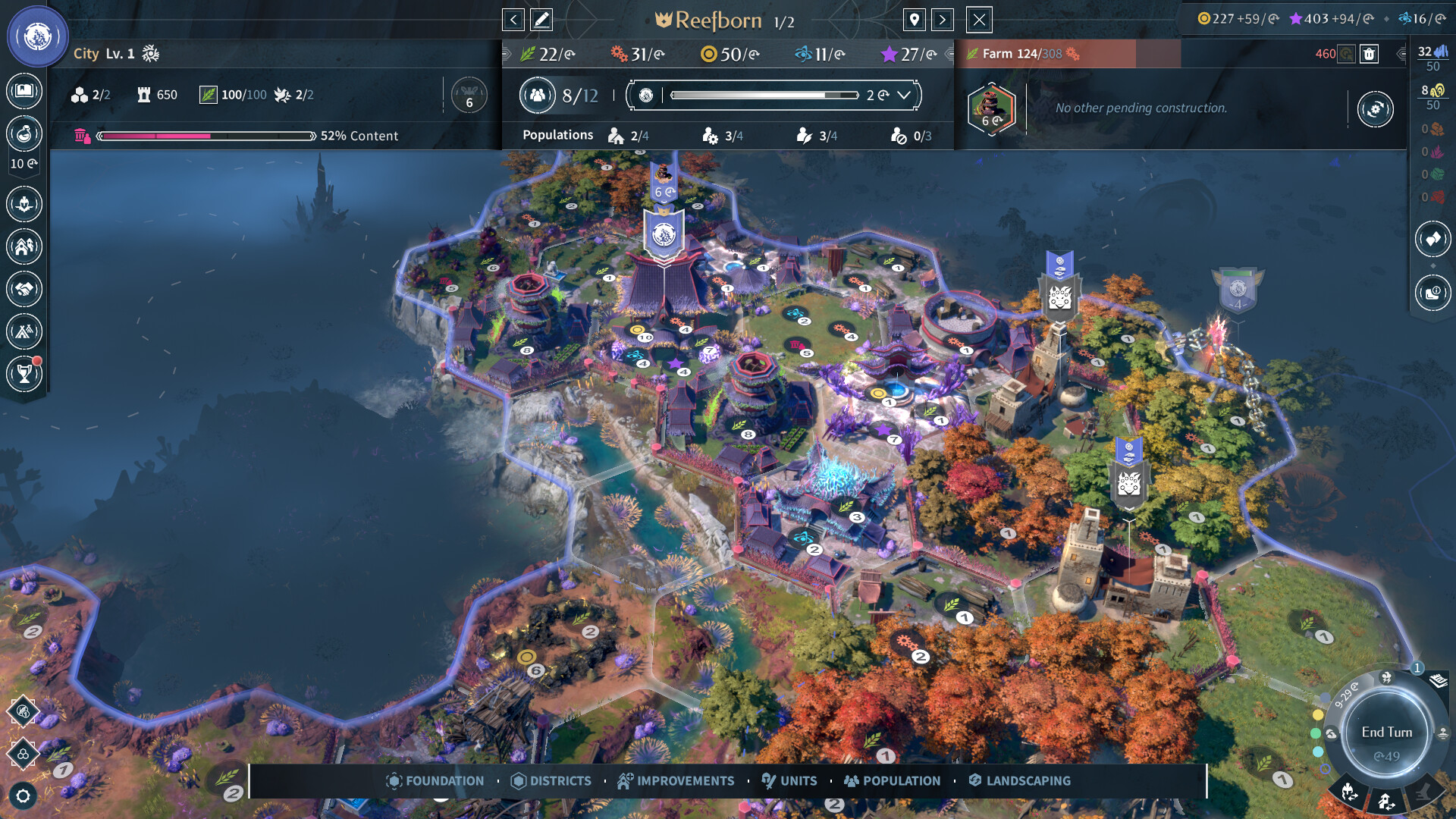
Whether you are playing as religious fanatic lizards who utilize a solar mirror laser to glass entire sectors, or managing the delicate resource ecosystem of cities via the classic FIDSI model (Food, Industry, Dust, Science, and Influence), every faction offers a wildly distinct gameplay identity.
Supporting Context & Metrics
Evaluating a massive 4X game requires rigorous testing under varied loads. Endless Legend 2 was reviewed on a robust rig featuring a Radeon RX 6800 XT, a Ryzen 9 5900 processor, and 32GB of RAM. Throughout extended playthroughs, the title ran exceptionally well, maintaining stability even during complex, late-game map states and chaotic monsoon weather effects. Furthermore, the game’s official Steam Deck verification ensures that couch-based strategy sessions are entirely viable, though the interface demands a careful eye.
Aesthetics, UI, and the Soundscape
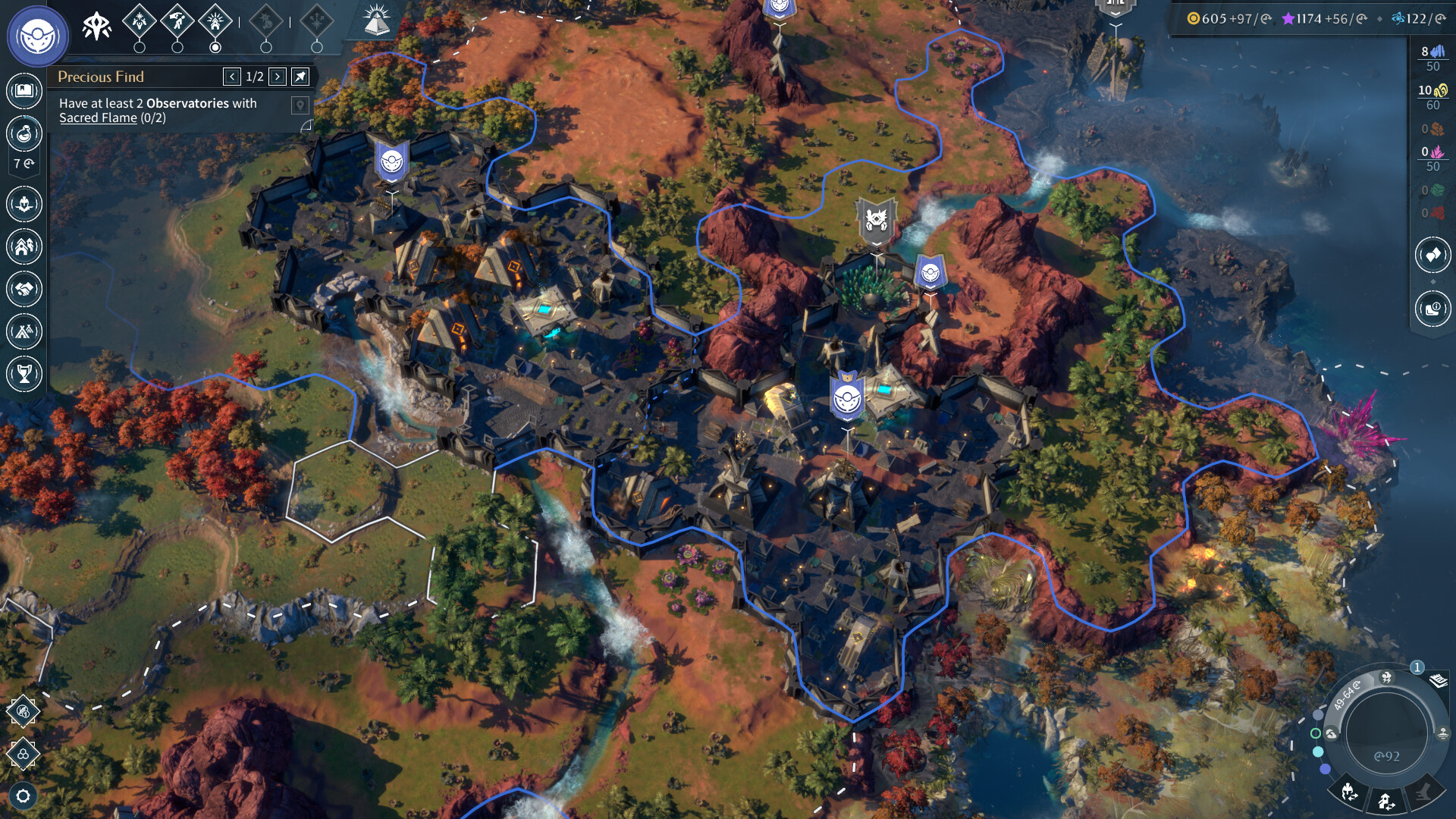
Visually, Endless Legend 2 maintains one of the most coherent and striking art directions in the strategy gaming sphere. The painterly color choices—utilizing matte and gloss finishes across terrains and units—ensure that newly uncovered biomes and standard lands remain visually distinct. However, the lighting model leans somewhat flat, shifting primarily only during monsoons. While more dynamic directional lighting could have added dramatic depth, the developers wisely opted for visual clarity over heavy post-processing effects that might muddy the map.
User interface design, while still among the best in the genre, hits a minor snag. The redesigned resource displays, menu bars, and action wheels are functional, but the heavy reliance on abstract map symbols for cities and armies rather than clear text labels introduces unnecessary friction. Players will need to spend time memorizing icon locations to distinguish between military units, urban centers, and resource nodes.
On the audio front, composer Arnaud Roy delivers another tour de force. The soundtrack is ethereal, ambient, and heavily features a crystal organ. Crucially, the music avoids repetitive loops by adapting dynamically to the active screen or combat phase. For instance, entering the diplomacy screen smoothly dampens bass frequencies, ensuring that faction leader dialogue remains crisp and distinct.
Tactical Combat and AI Balancing
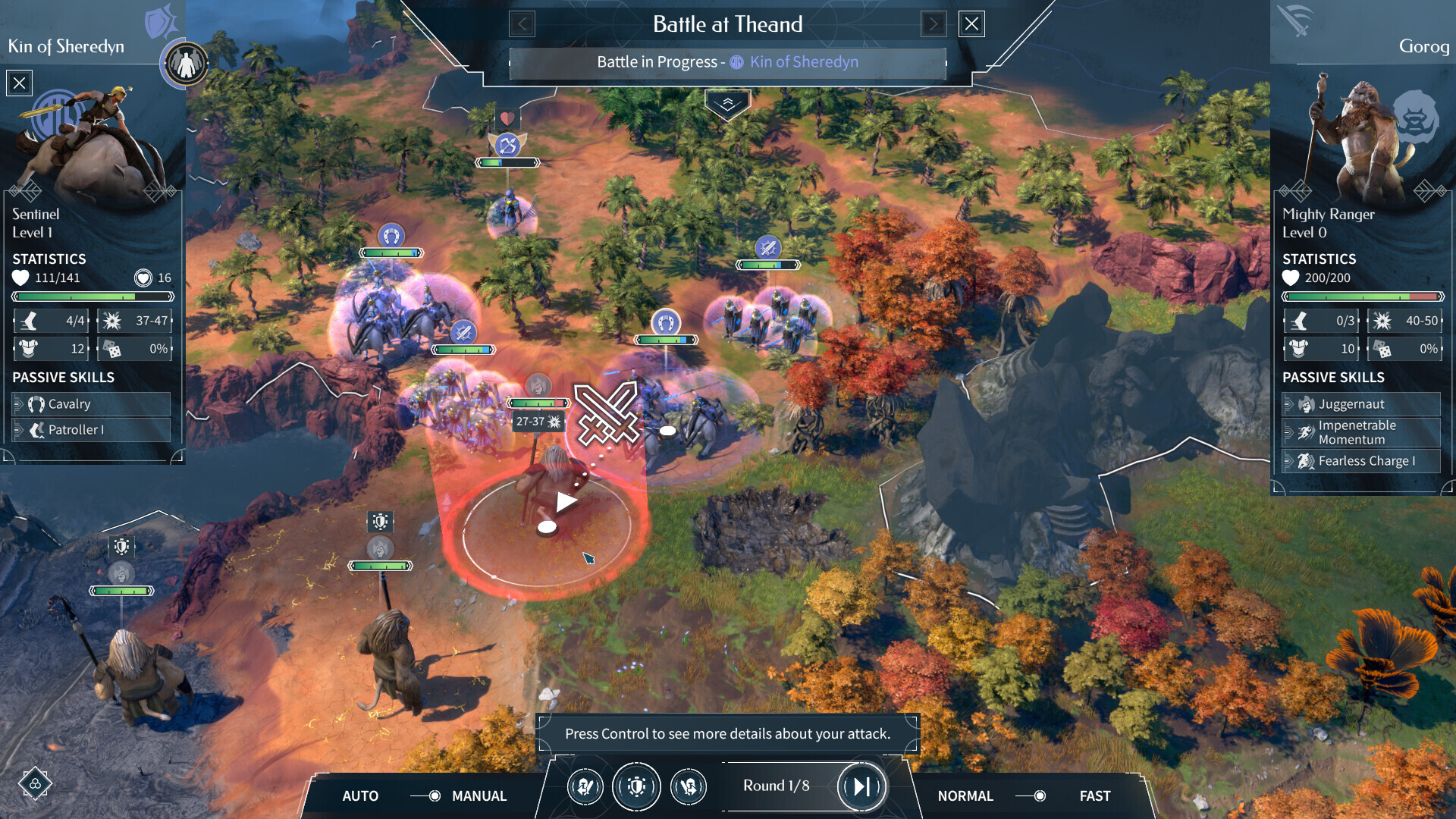
While map exploration and empire management shine brightly, turn-based tactical combat is a double-edged sword. Positioning matters intensely, especially when leveraging terrain advantages or managing chokepoints with ranged units like the Tahuks.
Yet, the combat math can feel overly rigid. Damage numbers often result in nearly equal exchanges unless a player holds a decisive 2:1 numerical advantage. Consequently, squeezing out victory requires stacking buffs and exploiting system quirks. Furthermore, while the game’s default difficulty scaling is remarkably well-tuned—offering a smooth, progressive challenge—the highest difficulties still rely on the traditional 4X crutch: inflating AI capabilities with resource bonuses rather than teaching the computer to play smarter. Overcoming these insurmountable AI production streams often forces players to lean heavily into system exploits.
Official Statements & Developer Insight
Amplitude Studios has consistently emphasized their commitment to community-driven development and narrative-rich faction design. In promotional statements surrounding the rollout via publisher Hooded Horse, the creative leads highlighted their goal to honor the legacy of the original game while modernizing the technological and environmental mechanics.
The introduction of Saiadha’s drainage system was specifically engineered to address the fatigue that often plagues the final hours of traditional grand strategy titles. By treating the planet itself as an active participant in the narrative—complete with uncovering ancient secrets left behind by the precursor Endless—the developers aimed to restore a persistent sense of wonder to the 4X loop.
Future Outlook
As Endless Legend 2 approaches its official 1.0 launch on September 17, 2026, the strategy community stands poised on the precipice of a new obsession. Hooded Horse and Amplitude Studios have positioned the game to capture both veteran strategists and newcomers looking for a rich narrative backdrop paired with robust mechanics.
Looking ahead, the foundation laid by Saiadha’s shifting tides and the wildly diverse faction mechanics provides fertile ground for future expansions, faction packs, and modding support. While minor interface hurdles and AI tuning quirks exist, they do little to eclipse the sheer joy of exploration and rule-breaking empire-building. Endless Legend 2 is more than a worthy sequel—it is a triumphant reminder of why we fall in love with sci-fantasy strategy in the first place.









Belum ada komentar. Jadilah yang pertama berkomentar!