

Executive Overview
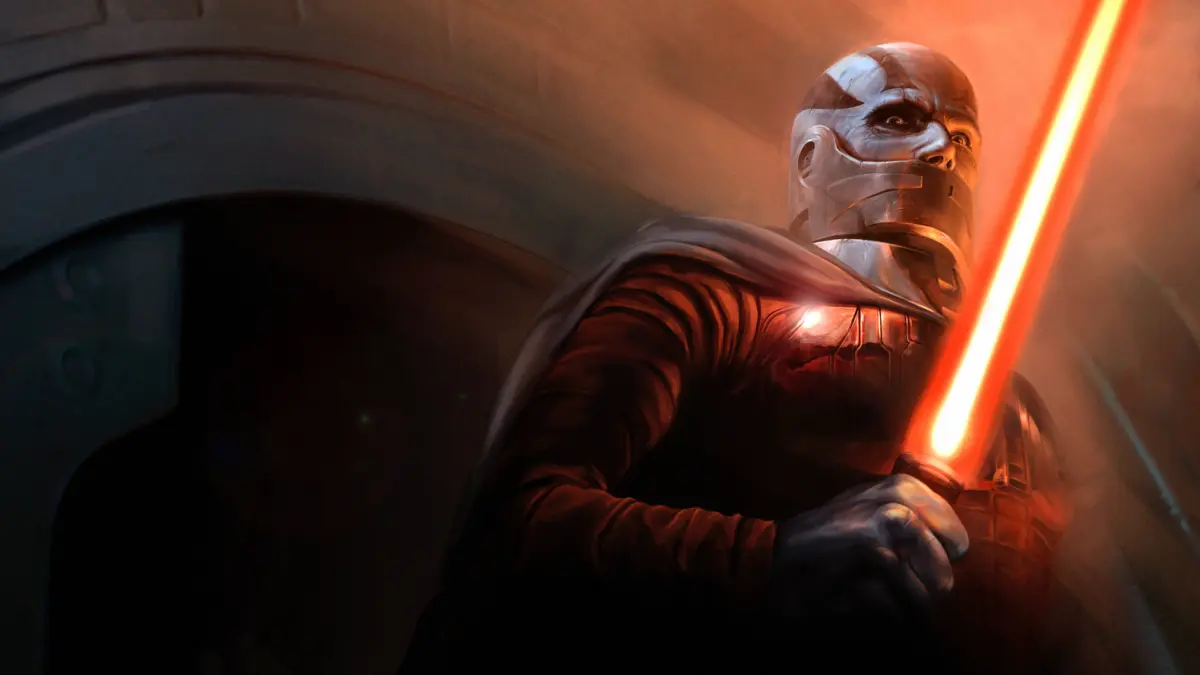
The video game industry has weathered its share of corporate upheavals, but few moments carry the symbolic weight and systemic dread of BioWare’s shuttering. The legendary role-playing game (RPG) developer—famous for defining the modern narrative-driven genre with Mass Effect, Dragon Age, Star Wars: Knights of the Old Republic, and Baldur’s Gate—has been officially closed by Electronic Arts (EA).
This devastating move follows EA’s monumental $55 billion buyout, the largest leveraged buyout in private equity history. Spearheaded by investors including entities backed by Saudi Arabia and high-profile figures such as Jared Kushner, the acquisition has sent shockwaves across the global tech and entertainment sectors.
Simultaneously, EA executed a sweeping reduction in force, laying off approximately 400 employees. For an industry already reeling from years of widespread downsizing, studio closures, and the collapse of mid-tier development, the death of BioWare represents more than just the end of a storied studio. It serves as a grim case study in how modern financial engineering—specifically private equity acquisition models—cannibalizes creative institutions for short-term liquidity, leaving systemic wreckage in its wake.
Detailed Chronology: From Development Mayhem to the Ultimate Fall
To understand how BioWare reached its terminal state, one must examine the cascading missteps that plagued the studio over the final decade of its existence, compounded by catastrophic shifts in corporate strategy.
The Live-Service Gold Rush and Internal Strife
Long before the ink dried on EA’s historic buyout, BioWare’s operational health had been severely compromised. Following the massive success of Dragon Age: Inquisition and Mass Effect 3, EA pressured the studio to pivot away from its single-player pedigree toward the lucrative, highly monetizable live-service market.
This mandate resulted in Anthem, an ambitious multiplayer action-RPG that suffered from years of directionless development—colloquially known within the studio as "BioWare magic," where teams relied on frantic, crunch-heavy crunches to pull projects together at the eleventh hour. Anthem launched to critical disappointment and commercial underperformance in 2019, cementing a narrative that the studio had lost its touch.
Subsequent efforts to right the ship were similarly plagued by turbulence. Recent industry reports detailing the troubled development of Dragon Age: The Veilguard revealed a cycle of ugly failures, including live-service flip-flops, frequent narrative rewrites, and internal friction over how the game’s tone should align with the broader Mass Effect universe. Though The Veilguard eventually released, it failed to translate its development mayhem into the kind of sales juggernaut EA required to justify its massive budgets.
The $55 Billion Acquisition and the Writing on the Wall
The true death knell for BioWare, however, was sounded outside the studio’s walls. As rumors of EA’s monumental $55 billion leveraged buyout began to circulate, employees immediately recognized the writing on the wall. Known for its progressive, LGBTQ+-inclusive storytelling, critically acclaimed narrative depth, and an explicit resistance to predatory loot box mechanics, BioWare was fundamentally mismatched with the priorities of its incoming ownership group—specifically, sovereign wealth capital and politically connected private equity interests.

According to anonymous staff accounts, developers at BioWare began updating their resumes the moment the acquisition was announced. They were not waiting to see if leadership would protect them; they understood that under the private equity model, legendary creative pedigree offers no shelter against the cold calculus of balance-sheet optimization.
Supporting Context & Metrics: The Private Equity Playbook
While public companies like EA and Microsoft have historically proven fully capable of detonating their own internal studios through mismanagement and obsession with endless growth, private equity operates on a different, more systematically destructive plane.
How Leveraged Buyouts (LBOs) Really Work
Ostensibly, the goal of a private equity acquisition is to optimize a company’s performance for long-term returns by unlocking underutilized potential—such as exploiting EA’s massive mobile portfolio to increase profit margins. However, private equity firms have earned a sinister reputation for a counter-intuitive strategy: cannibalizing their own acquisitions to extract maximum liquid profit at the direct expense of the acquired company and its workforce.
This grisly process begins with the leveraged buyout (LBO). As Kiplinger senior investing editor Karee Venema explained to PC Gamer:
"A leveraged buyout just means the company is bought using a combination of borrowed money, or debt, and private equity… The purchased company’s balance sheet is used as collateral against the loans taken out to purchase it."
In EA’s case, this involved a staggering $20 billion loan orchestrated through financial institutions like JP Morgan. The critical mechanism of an LBO is that the debt belongs to the acquired company, not the private equity firm.
Investors limit the amount of capital they personally supply while heavily insulating themselves from financial risk. If repaying a multi-billion-dollar loan proves insurmountable, the private equity firm walks away largely unscathed, having already extracted management fees, transaction overhead, and asset liquidations, while the acquired company bears the full brunt of the bankruptcy risk.
The Anatomy of Corporate Hollowing
As noted by investigations in outlets like The Guardian and the New Republic, private equity firms consistently employ a standardized playbook to drain a company of its value before cutting it loose:

- Workforce Hollowing & Price Gouging: Slashing headcounts to unsustainable levels and increasing prices to manufacture artificial short-term profit margins, exiting the investment before declining product quality tanks consumer sentiment.
- Asset Liquidation: Selling off valuable real estate, subsidiary studios, and prized intellectual property to enrich investors.
- Sale-Leaseback Agreements: Forcing companies to sell their real estate assets to pocket immediate cash, only to subject the company to crippling ongoing rent payments to occupy their own former offices.
- Fees upon Fees: Extracting standard "2-and-20" terms (charging an annual 2% of managed assets and 20% carried interest on profits), alongside a litany of monitoring and transaction fees charged directly to the acquired entity.
Empirical Evidence of the Toll
The destruction wrought by this model is not confined to video games. Private equity has severely damaged retail chains (such as Party City), decimated digital media giants (including the Gizmodo Media Group), and systematically dismantled local journalism across the United States. In healthcare, private equity ownership has been linked to deteriorating conditions in retirement homes and neglected infrastructure in hospital networks.
According to a report utilizing S&P Global data compiled by the Private Equity Stakeholder Project, private equity-backed companies accounted for more than 10% of all corporate bankruptcies and over 50% of bankruptcies with liabilities exceeding $500 million in 2024 alone. The report’s stark conclusion resonates across every sector it touches: "Despite their role in precipitating bankruptcies, private equity firms often emerge financially unscathed."
While defenders of private equity point to rare historical anomalies—such as Blackstone’s lucrative 2007 acquisition of Hilton or Dell’s multi-billion-dollar market capitalization recovery—these success stories are heavily overshadowed by high-profile disasters like the 2017 collapse of Toys ‘R’ Us.
Carnage Across the Games Industry
The video game landscape is rapidly becoming a prime hunting ground for this financial philosophy. The closure of BioWare and the termination of 400 EA employees occurred alongside concurrent bloodletting elsewhere in the sector.
Game developer Gamepires announced sweeping layoffs after being acquired a mere eight months prior by the Emona Capital-backed Splash Damage Group. Compounding the absurdity, Splash Damage itself had executed massive layoffs just two months after undergoing its own private equity acquisition in late 2025—all without having shipped a major game since 2020.
Official Statements & Industry Reaction
The gaming community, labor organizers, and financial analysts have responded to BioWare’s closure and EA’s buyout with a mixture of profound grief and mounting fury.
Game industry labor advocates have pointed to the disaster as an urgent wake-up call regarding the unchecked financialization of creative labor. Development veterans across the industry have taken to social media and professional networks to offer solidarity, portfolio reviews, and mutual aid to the hundreds of displaced developers suddenly cut adrift by EA’s restructuring.
While official corporate communications from EA attempt to project stability—emphasizing that core cash cows like EA Sports, Battlefield, and Apex Legends remain operational—the corporate silence surrounding the cultural legacy of BioWare speaks volumes. The human cost of the transition has been largely glossed over by executive leadership eager to appease creditors and investors.

Future Outlook: What Lies Ahead for EA and AAA Gaming?
While EA’s immediate financial survival is not in immediate jeopardy—thanks to the unyielding global revenue generated by annual sports franchises and live-service shooters—its creative identity has fundamentally changed.
Surviving Projects Under the New Regime
EA has confirmed that despite the restructuring and layoffs, development will continue on several high-profile projects:
- Marvel’s Iron Man
- The next installment in the Star Wars Jedi series
- Project Evergreen (codenamed next-generation Sims experience)
- A rumored Star Wars Battlefront collaboration between Respawn Entertainment and DICE
However, these projects exist under a cloud of deep uncertainty. With BioWare erased, communities surrounding titles like The Sims have expressed vocal anxieties regarding how incoming ideological pressures and corporate oversight from EA’s new owners will shape the creative direction of their favorite franchises.
The Death of Mid-Tier and Experimental Risk
The broader takeaway for the interactive entertainment medium is chilling. As triple-A game development costs skyrocket past hundreds of millions of dollars per title, and as private equity firms increasingly view interactive software purely through the lens of debt-leveraged asset extraction, the space for bold, narrative-driven, mid-budget RPGs is vanishing.
If a titan like BioWare—with decades of critical acclaim, defining cultural milestones, and millions of devoted fans—can be casually liquidated to service debt obligations in the wake of a private equity takeover, no studio in the industry is truly safe.
The era of nurturing creative risk-taking in the mainstream games industry is rapidly drawing to a close, replaced by an optimized, risk-averse corporate machine designed to squeeze every last drop of quarterly value from legendary franchises before leaving the carcass behind.





Belum ada komentar. Jadilah yang pertama berkomentar!