

Executive Overview
The video game industry was dealt a profound and historic blow when Electronic Arts (EA) shuttered BioWare, the legendary role-playing game (RPG) developer responsible for defining the modern narrative-driven adventure. The closure not only terminated hundreds of jobs at the storied Canadian studio but also abruptly halted development on what was widely considered the most anticipated sci-fi RPG in production: Mass Effect 5.
Scarcely days after the studio’s lights were turned off, an early concept trailer for the project leaked online, capturing the imaginations—and compounding the heartbreak—of millions of fans. While the footage was raw and early in development, it exuded a visual fidelity and atmospheric weight that proved BioWare was still operating at the absolute top of its artistic game.
Now, fresh details have emerged regarding the ambitious blueprint BioWare had established for the title. Through disclosures from a prominent community insider who served directly on the development team’s advisory council, a clearer, deeply tantalizing picture has formed of Mass Effect 5. Set over six centuries after the apocalyptic Reaper War, the game aimed to reinvent the franchise’s traditional "walking gun rack" combat model into a gritty, espionage-heavy hybrid of John Wick and James Bond, all while navigating a tense, multi-factional galactic Cold War.
As fans grapple with the realization that this ambitious space opera may never see the light of day, this report examines what BioWare was secretly building, how it intended to reconcile decades of player choice, and the grim economic realities that led to the studio’s untimely demise.
Detailed Chronology: From Studio Shutdown to the Great Leak
The dismantling of BioWare happened swiftly and ruthlessly, catching both industry insiders and the development teams off guard. For years, the studio had been weathering turbulent waters following the polarizing reception of Mass Effect: Andromeda (2017) and the long, arduous development cycle of Dragon Age: The Veilguard. Despite these hurdles, production on the next mainline entry in the Mass Effect universe—led by veteran franchise developer Michael Gamble—remained a beacon of hope for fans of deep, cinematic storytelling.
When EA officially pulled the plug, citing restructuring and a strategic shift away from single-player development cycles of that scale, the community erupted in grief and anger. The outpouring of corporate eulogies was quickly upstaged, however, by a digital ghost in the machine: the unauthorized leak of an early concept trailer for the upcoming project.
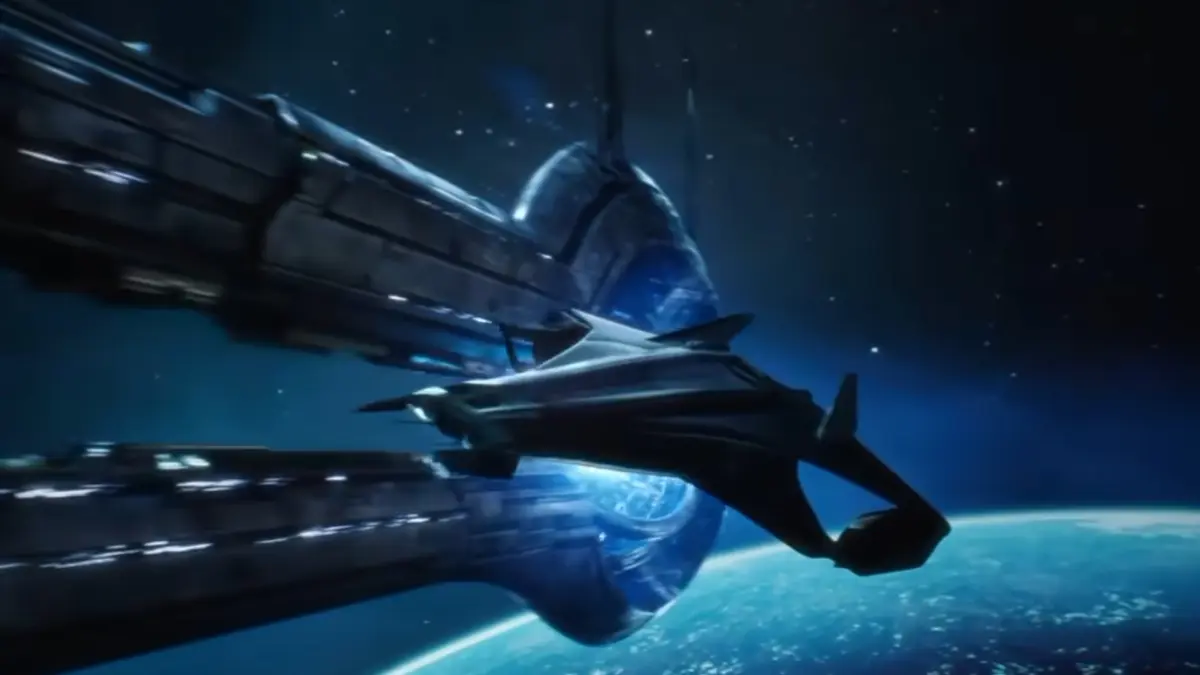
The leaked assets—displaying a sleek, high-tech vessel reminiscent of the Normandy navigating mysterious cosmos, alongside sweeping vistas of futuristic architecture and a rugged, combat-ready protagonist—sent shockwaves through digital forums. The internet went from mourning a studio to mourning an actual, tangible game that looked remarkably polished for a pre-alpha concept.

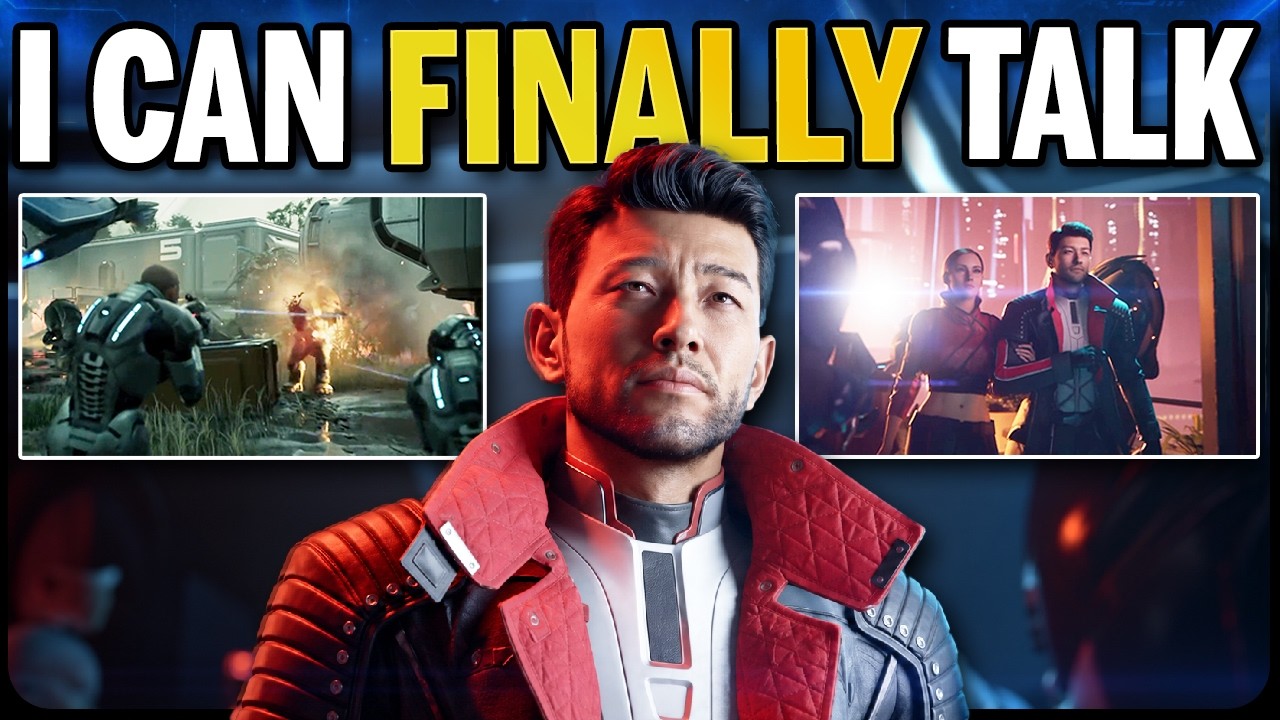
Amidst the debris of the leak, prominent YouTuber and content creator "Dantics" stepped forward to drop an unprecedented bombshell. Claiming direct involvement as a member of the official Mass Effect Community Council—a validation later supported by industry connections, including Michael Gamble following Dantics on social media—he revealed that he had spent months viewing internal builds, evaluating assets, and offering direct structural feedback to the BioWare team. What Dantics described was not merely a sequel, but a radical conceptual evolution of the Mass Effect formula.
Unpacking the Blueprint: Inside BioWare’s Vision for Mass Effect 5
According to the insider testimony, BioWare’s unproduced sequel was designed to bridge the gap between the beloved original trilogy and a bold new frontier in galactic history.
Setting the Stage: A 600-Year Quantum Leap
The narrative was mapped out to take place more than six centuries after the cataclysmic events of the Reaper War. By setting the story so far into the future, BioWare neatly bypassed the logistical nightmare of canonizing a single ending from Mass Effect 3. Instead, the timeline allowed the studio to honor Shepard’s ultimate legacy regardless of whether players chose the Destroy, Control, or Synthesis paths, treating those monumental decisions as ancient history. The Reapers themselves had become obsolete technology—relics of a bygone era rather than an existential threat.
The New Protagonist: James Bond Meets John Wick
Dantics revealed that players would have stepped into the boots of a fully customizable N7 agent. However, the combat and character design philosophies had undergone a major paradigm shift. Rather than operating as a traditional military soldier hauling an arsenal of heavy weaponry, the protagonist was styled as an elite, high-stakes operative—a fusion of cinematic action icons James Bond and John Wick.
Gameplay mechanics were slated to feature:
- Experimental Cybernetics: Built-in technological augmentations serving as both a unique character differentiator and a narrative nod to the post-Reaper technological renaissance.
- Environmental Manipulation & Hacking: Operators would possess tools allowing them to see through walls, remotely trigger systemic hazards, and manipulate the battlefield in real-time.
- Tactical Freedom: Handcrafted, narrative-driven missions reminiscent of the original trilogy, but injected with Hitman-style flexibility in approach and completion.
- Visceral Combat: Brutal, up-close-and-personal execution maneuvers designed to make close-quarters skirmishes feel dynamic and high-stakes.
A Fractured Galaxy: The Cold War Paradigm
Moving away from galaxy-eating monsters, Mass Effect 5 was framed around a complex, shifting geopolitical landscape. The post-war Milky Way had fractured into three primary power blocs:
- The Allied Coalition: A powerful alliance consisting of Humanity, the Krogan, the Batarians, and other aligned species.
- The Council Races Bloc: Traditional powers including the Asari, Salarians, and Turians maintaining their own diplomatic and military sphere of influence.
- The Geth Superpower: The synthetic race emerging as a dominant technological and political superpower, complete with newly constructed galactic megastructures.
Rather than fighting a singular existential enemy, players would find themselves caught in the razor-thin margins of a tense galactic Cold War, where espionage, sabotage, and ideological proxy conflicts ruled the day. Furthermore, the narrative promised direct, tangible connections bridging the Milky Way and the distant Andromeda galaxy, effectively canonizing and redeeming the setting of the 2017 spin-off.

Characters, Companions, and Romance
Fans starved for authentic BioWare character writing would have found much to love. The studio was reportedly refusing to sanitize its romance systems, leaning into mature, complex relationship arcs akin to contemporary standards set by Baldur’s Gate 3 and Cyberpunk 2077.
Companions were designed to have genuine autonomy, including internal squadmate clashes that could actively alter team dynamics and mission outcomes. Topping off the fan-service checklist, Liara T’Soni was set to return as a commanding, immensely powerful Asari Matriarch, anchoring the new era of the franchise to its historical roots.
Supporting Context & Metrics: The End of an Era
The cancellation of Mass Effect 5 highlights a broader, troubling trend within the AAA video game development ecosystem: the systemic vulnerability of legacy studios under massive corporate conglomerates.
| Metric / Milestone | Detail |
|---|---|
| Studio Lifespan | Founded in 1995 (Closed by EA in 2026) |
| Key Franchises Created | Baldur’s Gate, Star Wars: Knights of the Old Republic, Mass Effect, Dragon Age |
| Time Jump in ME5 | 600+ Years post-Reaper War |
| Faction Count | 3 Major Superpowers (Allied Races, Council Bloc, Geth Superpower) |
| Project Lead | Michael Gamble |
BioWare’s closure is more than just a corporate downsizing; it is the extinguishing of a creative torch that guided Western RPG development for over three decades. From pioneering party-based tactical combat in the late 90s with the original Baldur’s Gate, to redefining cinematic storytelling in sci-fi and fantasy through Mass Effect and Dragon Age, the studio consistently pushed the medium forward.
The economic pressure to produce immediate, live-service revenue streams, combined with soaring development costs and prolonged production cycles, ultimately created an environment where single-player prestige projects like Mass Effect 5 were viewed by EA executives as financial liabilities rather than cultural treasures.
Official Statements and Industry Fallout
Reactions to the studio’s shuttering and the subsequent leak have reverberated globally across political and professional spectrums. In Canada, where BioWare was deeply embedded in the tech and cultural fabric of Edmonton, local politicians have gone so far as to publicly urge the federal government to explore assistance programs that might enable former employees to buy out the studio and operate independently.
While such proposals face astronomical legal and financial hurdles—particularly regarding intellectual property rights still legally bound to Electronic Arts—they underscore the profound cultural impact of the studio’s workforce.
Electronic Arts has remained largely tight-lipped regarding the future of the Mass Effect intellectual property beyond the immediate closure statements, leaving open the question of whether the franchise will be mothballed indefinitely, handed to an external studio, or quietly buried alongside its creators.
Industry veterans and fans alike have taken to social media under banners like #SaveMassEffect, sharing concept art, retrospective essays, and tributes to a developer that taught generations of gamers what it meant to care deeply about digital companions.
Future Outlook: What Remains?
As the dust settles on the ruins of BioWare, the sobering reality of modern game development sets in. The leaked details of Mass Effect 5 paint a portrait of a game designed by people who deeply understood what made the universe special—balancing fan nostalgia with innovative mechanical risks.
Yet, unless EA undergoes a miraculous change of heart or agrees to divest the property to an entity capable of stewarding it properly, the concept trailer and insider leaks are all the gaming world will ever have of Mass Effect 5. It stands as a monument to unrealized potential: a masterclass in sci-fi world-building lost to the cold calculus of corporate restructuring.
For now, players are left to look back at the original trilogy and wonder what heights humanity, the Council races, and the Geth might have reached in a galaxy balanced on the razor’s edge of a cold war—a space opera that, tragically, ended before its opening credits could even roll.







Belum ada komentar. Jadilah yang pertama berkomentar!