

Executive Overview
For decades, the 1997 release of Final Fantasy 7 has stood as a monumental pillar in the history of video game development. Square Enix’s legendary role-playing game not only revolutionized the JRPG genre by transitioning its flagship franchise into the third dimension, but it also cemented a distinct, stylized aesthetic that remains heavily celebrated to this day. Now, a treasure trove of digital history has been unlocked for enthusiasts, developers, and preservationists alike.
The Pardall Games Library has officially introduced a comprehensive, interactive 3D model viewer dedicated entirely to the original PlayStation 1 classic. This newly launched digital archive houses virtually every 3D asset from the 1997 masterpiece—ranging from character models and summon animations to intricate, low-polygon environmental map meshes.
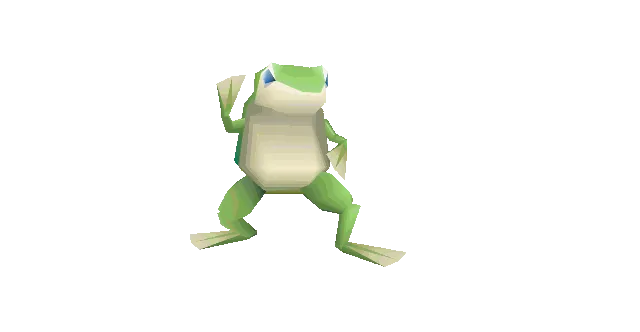
Among the countless digital artifacts suddenly rendered in granular, browser-based 3D, one specific asset has captured the collective imagination of the internet: an iconic, low-poly frog enemy originally known in the English localization as "Touch Me." This seemingly innocuous amphibian has sparked widespread amusement, online memes, and a deep-dive linguistic investigation into translation anomalies from the late 1990s.
This report examines the technological significance of the Pardall Games archive, explores the intricate mechanics behind the original game’s 3D asset structure, and unpacks the delightful history of how a Japanese loanword accidentally birthed one of gaming’s most endearing localizations.
Detailed Chronology: From Silicon Graphics Workstations to Browser-Based 3D
To understand the significance of the Pardall Games library release, one must trace the timeline of how Final Fantasy 7’s assets were created, compiled, and eventually preserved.
1996–1997: The Polygonal Pioneer
During the development of Final Fantasy 7 at Square (now Square Enix), the team faced unprecedented technical limitations. Moving away from the 2D sprites of Final Fantasy 4, 5, and 6, director Yoshinori Kitase and art director Hironobu Sakaguchi utilized powerful Silicon Graphics (SGI) workstations to render pre-rendered background plates and low-polygon character meshes.
Characters like Cloud Strife, Barret Wallace, and even background environmental entities were constructed using limited polygon counts to ensure smooth performance on Sony’s original PlayStation console. Optimization was paramount; every single vertex counted.

The Decades of Modification and ROM Hacking
In the years following its 1997 debut, Final Fantasy 7 developed a fiercely dedicated modding community. PC players, data miners, and reverse-engineers spent decades cracking open the game’s .unpacked archives, extracting compressed .prc and mesh files using custom-built tools like Makronet and Qhimm community utilities. However, viewing these assets typically required downloading specialized 3D modeling software such as Blender or 3DS Max, alongside bespoke plugins to parse obscure file formats.
The Present Day: The Pardall Games Repository Launch
The launch of the Pardall Games Final Fantasy 7 library marks a watershed moment for game accessibility. By deploying a streamlined, web-based 3D viewer, the platform removes the technical barrier to entry entirely. Users no longer need to install legacy emulation tools or complex rendering suites to inspect the inner workings of Midgar. With a few simple clicks, anyone can load up complex geometry, isolate summon animations frame-by-frame, and inspect environmental maps—revealing the brilliant optical illusions developers used to trick the human eye in 1997.
Supporting Context & Metrics: The Anatomy of 1997 3D Design
The technical marvel of Final Fantasy 7 lies in its hybrid presentation: fully interactive 3D character models traversing pre-rendered 2D backgrounds. The Pardall Games viewer allows users to strip away these layers, offering a rare glimpse into the sheer ingenuity required to build a sprawling epic on CD-ROM media.
Environmental Deconstruction: Shreddng 7th Heaven
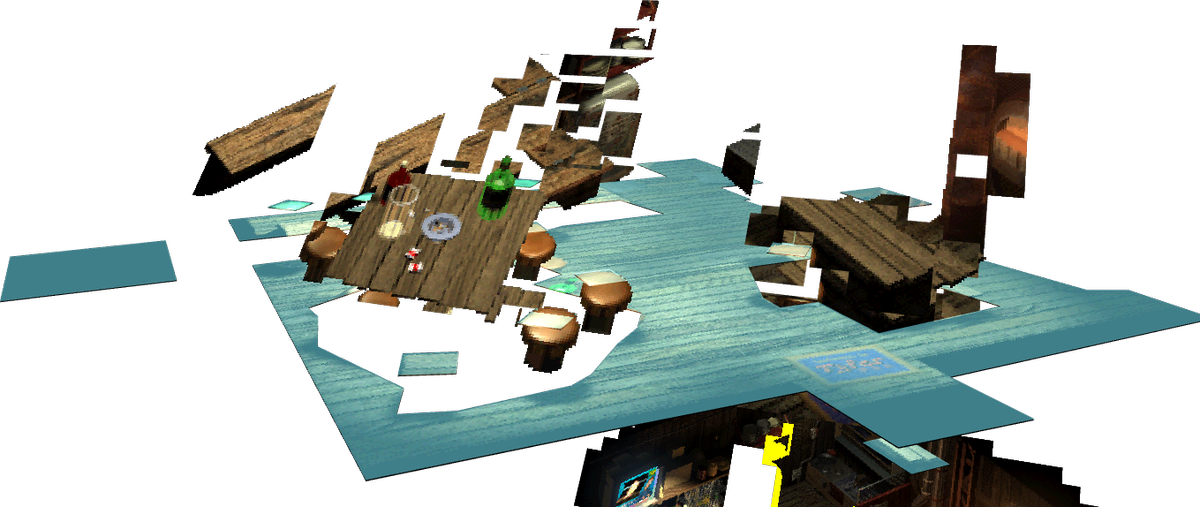
One of the most fascinating features of the new archive is the ability to inspect map screens in full 3D. In the original game, locations like AVALANCHE’s hideout, the 7th Heaven bar in Sector 7, appeared as lush, beautifully painted 2D backdrops with fixed camera angles.
When loaded into the Pardall Games 3D viewer, however, these environments reveal themselves as crude, distorted 3D collision meshes and low-poly geometry structures. Watching a familiar tavern warp and stretch into an abstract web of polygons highlights the wizardry of Square’s background artists, who painted lighting, shadows, and depth directly onto flat textures to create a cinematic illusion that far exceeded the raw hardware limitations of the PlayStation.
The Star of the Show: "Touch Me" the Frog
While massive set-pieces and iconic bosses like Sephiroth and Weapon naturally draw attention, the internet’s gaze has firmly locked onto a humble, low-poly frog: Touch Me.
Rendered up close in the browser viewer, Touch Me is a masterpiece of early 3D economy. Composed of just a handful of textured polygons, the frog features a delightfully rigid yet bouncy idle animation. When looped into a GIF, the model exhibits a charismatic, rhythmic hip-wiggle that has instantly propelled it to internet stardom.

Linguistic Investigation: Why is the Frog Named "Touch Me"?
The internet loves a good mystery, and the origin of the frog’s peculiar English name has prompted a fascinating linguistic deep dive into video game localization history.
The Japanese Origin: Tacchi Mī
In the original Japanese release of Final Fantasy 7, these amphibious adversaries are referred to as Tacchi Mī (タッチミー). To understand this name, one must examine the linguistic phenomenon known as gairaigo (外来語) — Japanese loan words imported from foreign languages, primarily English, and adapted into Japanese phonetics.
Examples of gairaigo are ubiquitous in modern Japanese culture:
- Aisu-kyandē (アイスキャンデー) translates directly to "ice candy," used to describe an ice pop or popsicle.
- Charenji (チャレンジ) derives directly from the English word "challenge."
When Japanese developers integrated English vocabulary into fantasy ecosystems, they occasionally adopted Western phrases for flavor without strictly considering how those phrases would be interpreted if translated literally back into English.
The Literal Translation Trap
When the localization team translated the text assets for the Western release of Final Fantasy 7, they encountered Tacchi Mī. Opting for a strictly literal translation, the localization crew rendered the name directly into English: Touch Me.
The result is a bizarre, unintentionally suggestive moniker for a swamp-dwelling creature that inflicts the status ailment of the same name (or simply acts as a quirky wildlife encounter).
The Passing of an Era: The Rebirth Treatment
Unfortunately, modern sensibilities often strip away such charming translation quirks. When Square Enix revisited the iconic swamp sequence in the modern project trilogy—specifically Final Fantasy VII Rebirth—caution took precedence. Developers opted to rename the creature Amphidex, retiring the legendary moniker.
Fortunately, thanks to the Pardall Games archival project, the original polygonal iteration of Touch Me lives on in glorious, interactive 3D, allowing fans to rotate, admire, and animate the digital amphibian for generations to come.
Future Outlook: Digital Preservation and the Gaming Industry
The launch of comprehensive web-based asset viewers like the one provided by Pardall Games underscores a vital, ongoing conversation within the interactive entertainment industry: Video Game Preservation.
As commercial storefronts shift increasingly toward digital-only ecosystems and live-service models, physical and historical preservation faces severe threats. Classic titles are frequently locked behind proprietary emulation barriers, corporate restructuring, or abandoned licensing agreements. Grassroots archival projects—driven by passionate communities and independent developers—play an instrumental role in ensuring that the foundational building blocks of digital art are not lost to time.
Moving forward, initiatives that catalog low-level game data, source code, and unrendered 3D assets serve an educational and cultural purpose. They provide aspiring developers with a window into the evolution of computer graphics, while offering veteran players a nostalgic lens through which to appreciate the craftsmanship of the past.
Whether you are logging in to examine the complex rigging of a Bahamut summon animation, analyzing the clever geometry of Midgar’s slums, or simply spending hours watching a low-poly frog wiggle its hips, projects like the Pardall Games archive ensure that the digital ghosts of 1997 remain vibrant, accessible, and endlessly entertaining.







Belum ada komentar. Jadilah yang pertama berkomentar!